The dusty black jeep bumbles along the winding road and screeches to a halt in front of a refurbished white bungalow. In the shimmering sky, creeping gray clouds smother half of the yellow sun. An orchestrated cacophony of shrilling insects is a background chorus for the rustling branches whose trees perch along the brown road and sampling their buttress roots in Eziokwe village, Uju’s ancestral home. This is where Obinna brought his friends when he came to pay for her bride price and for the traditional marriage proper. 

Fruit trees line the driveway. The earth beside the plastered walls of the house supports trembling corn stalks standing in disorganized rows and other germinating shrubs. An anxious Obinna, his head now full of doubts, brings out his phone from his pocket and dials. The phone is on speaker as he announces his arrival to the female voice that responds.

“I am at your place.”

“Where? “I can’t see you.”

Obinna snarls, “Your village home. In front of the house we conducted our traditional marriage.’

“That is not my house. Drive to the next compound.”

The call ends. The scowls on the faces of his three friends, Emeka, John and Raphael reveal their mockery. He enters the car and slams the door with his friends scurrying after him. No words are exchanged on the short drive. They approach the next compound. A cracked bungalow with a scruffy façade faces them when they emerge from the car. Below, rushing weeds have eaten up the brown soil in the compound. Twelve plastic chairs are arranged outside in two lines. Six chairs face six chairs on the left and right side of the compound, and six beaded elderly men are already seated on the right. Kaleidoscopic colours dance before Obinna’s eyes as they walk to the men and pay obeisance. The elders tease him for not recognizing his wife’s ancestral home in a short while. He stutters an explanation and stops halfway realizing there is no need engaging the cunning foxes.

Obinna places the earthenware jar of palm wine- the expensive up-wine variety- before the elderly men. They exchange pleasantries again before he sits with his friends on the empty chairs facing the elderly men. His arrival is announced by Mazi Omenuko, a tall, sturdy, bald man with long fingers and a rich sprinkle of white and grey facial hair. He is the uncle of Uju – the woman for whom Obinna has paid the bride price. Omenuko has beckoned Uju to greet her husband and his people. Obinna perceives the mockery, and his crossed legs shake vigorously. He diverts his attention when she emerges towards the raw and cracked fence littered with nodding lizards desperate for the flying insects hovering above their little heads. Obinna watches two agamas as they drop on the rough ground, size each other in a circular pattern, and whip their bodies with their tails. He notices as the winner scurries after female lizards and the loser limps away in humiliation. Dead leaves float to the ground beneath the numerous plantain and orange trees that bear swaying fruits. The grasses are a playground for grasshoppers hopping from blunt blade to blunt blade. The shadow of a large bird glides across the expansive ground as foraging chickens and lizards scamper to safety.

Uju’s appearance distracts him. Her face holds no enchantment. She is just a woman he once knew. She curtsies before the men, mutters some incoherent words at his party and disappears as swiftly as she arrived. Her uncle, Omenuko, mutters a prayer, “He who bring kola nut brings life, Onye wetere oji, wetere ndu.”

Omenuko hurriedly breaks the small kola nuts on an aluminium plate and disperses the lobes to be eaten after the rituals accompanying the breaking of kola nuts has been justified. Omenuko beckons Obinna to taste the wine he has brought. Obinna walks to the jar which rests on the table, seizes it with his right hand, and grabs a glass cup with his left.

The elders scream. Then, Obinna freezes, and his face contorts like a rogue caught in the act. He stares at their agape mouths, stern faces, and smouldering eyes.

“Are you not an Ibo man, a son of the soil?” asks an elder in Ankara fabrics. ‘If you knew tradition, you would know that what you just did is a sacrilege.”

Obinna blinks severally, and perspiration enters his eyes as his friends stifle their smirks. The elder continues, “You don’t hold the wine cup in the left hand. Neither is the wine jar held on the right hand. And you just don’t grab the wine jar and start pouring. No, you shake the wine jar in a circular motion thrice or four times and place it on the ground before pouring.” He glances at Obinna’s friends for full effect and continues, “When you young men are told to return to your roots, your respective villages, to learn culture and tradition, you refuse. Your coconut heads are filled with exaggerated tales of hate your parents have peddled you about your respective villages and kinsmen. Most of your parents were taught by their parents but now those teachings which they ought to pass down to you have eroded because you prefer the white man’s culture. I am not saying the white man’s culture is bad. No, the white man’s culture has paved the way for us, but charity begins at home. You learn yours before learning another’s. Anyway, these traditions are inevitable. You will learn them one way or the other, just like this one, eh.”

The arena now silent after his speech, Obinna regains composure, does the right thing, and drinks the palm wine. The stern faces dissolve into smiles as they cheer him.

The uncle, Omenuko, rises from his chair, clears his throat and bellows, “My brothers, I greet you all. We are gathered here this evening because our son-in-law believes it is necessary to summon us. I appreciate every one of us for answering this call. We have a saying that once an in-law beckons, we suspend whatever we are doing and respond. Obinna, we are here now, and our ears are itching to hear the tidings you bring.” He sits down.

Obinna rises to greet the men for the umpteenth time and blurts, “I am no longer interested in Uju and I want my bride price returned immediately.”

A light murmur spreads amongst the gathered men. Some snap their fingers and wave their hands around their heads. Omenuko stands again. “Our son, we’ve heard you, but we have laid procedures for situations like this. I’ve seen your entourage, and there is no elderly person. You young men should learn tradition. You are Ibo, yet you behave like a foreigner. Is your onye aka egbe, your intermediary man, here?’

“He is here sir,” Obinna responds with a broad grin as he pats his friend, Raphael, on his back.

“Good, at least you have gotten one thing right today. Now, intermediary man, you have heard what your man is saying, is it correct?”

“It is his choice sir. I can’t make decisions for him.”

“I asked a simple question. Leave grammar.”

“It is correct.”

Obinna interrupts him, “I may not know the rudiments of traditional divorce, but one thing I’m sure of is that I’m not leaving this place without that bride price and the funds I spent on the traditional marriage. See, here, I brought my list.” He fumbles in his pocket and brings out a crumpled sheet of paper he waves before the men.

The elderly men giggle and tell him to relax his frayed nerves. “We are one here. The anger of an in-law shouldn’t be bone deep,” the Ankara-wearing elder reminds him.

“I can see your blood is hot,” Omenuko, the uncle, continues. “Nevertheless, we must continue if you insist. Once a river is crossed, we always anticipate the return journey. With patience a hot calabash of soup is consumed. We’ve heard your hasty words my son, but we’ll also hear from our daughter and confirm if she is still interested in this union. Whatever her reply is will determine our next action. As you can see, we’ve refrained from asking you the cause of the quarrel. I didn’t ask you over the phone when you called. We won’t delve into that matter. From your demeanour you have only one task in mind, and we pray it will be handled amicably.”

Omenuko asks a young elder to fetch Uju. When she emerges, she stands in front of Omenuko who faces and addresses her softly. “We believe Obinna is your husband. We know when he approached us and performed the prerequisites for your hand in marriage and then took you away. Now he has approached us with a new tale that we cannot comprehend, that he is no longer interested in the union. What about you my daughter, are you also not interested?”

“I’m still interested.” she replies.

Obinna chuckles nervously. It is obvious she has been coached.

Omenuko faces him this time. “My son, you’ve heard your wife. What do you have to say again? Those who speak the English language have an expression which says it takes two to tango.”

Obinna remains silent as the men watch him. He shrugs off a light tap from Raphael and sighs aloud. He has been trapped, and his chauvinism has overwhelmed him. He hears as crickets chirp in accord in the fluttering grasses and a goat bleats in the distance. Still the men stare at him.

“Alright then,” continues Omenuko after a minute elapses. “There still remains one more ritual to fulfil.” He beckons Uju who kneels in front of him. Another elder is called upon again. He rises and walks to the palm wine jar, fills a glass cup to the brim, and hands it over to Omenuko. He is careful not to spill the wine. Omenuko hands the glass cup to Uju. “Take this cup of wine to your husband. Whatever he does with it will decide your fate.”

“What, what, what sort of fucking shit is, is this?” Obinna rages, his eyes bulging on his dark face.

“Relax my good man,” placates the Ankara man. “We must see the end of this fucking shit.”

Obinna’s friends calm him, and he sits down. He watches her as she walks the short distance towards him. He turns his face away from her, still watching her from the corner of his eyes. She sips from the cup when she nears him and kneels in front of him. She stretches the arm bearing the glass cup to him, an act she performed during their traditional marriage ceremony. Her face as rigid as yam peelings, Obinna ignores her. His friends cajoling him, he faces her and receives the glass cup and pauses. He looks at her, and she stifles a chuckle. All eyes are focusing on him now. He rises violently and spills the content of the glass cup on the soil. She rises and hurries to the safety of her people.

Omenuko stands up from his chair and greets the gathered men. He faces Obinna and his friends as he speaks. “Obinna, you have rejected our daughter in our presence, but we won’t reject her. We are not angry. Rather your action has shown the sincerity of your quest. We’ll definitely grant you your utmost desire. Meanwhile I won’t forget to mention something peculiar at this moment. The rejection emanated from you.”

Obinna stutters, but Omenuko holds up a finger in the air and continues, “You spilled the palm wine and so doing waived the right for a refund. What this means is that your bride price will be returned, but the expenses expended for the traditional marriage rites won’t. If the rejection had come from our daughter, we would return that as well. Only your bride price will be returned to you.’

Omenuko dips two fingers in his shirt pocket and retrieves a shiny fifty naira note. “This is what we accepted from you when you came to marry our daughter. Remember, on that day I told you our daughter isn’t for sale when I returned the bulk money you insisted I receive. Intermediary man, is it true or not?”

“It is true sir,” Raphael answers, smarting from his previous flaw.

“Good. Now intermediary man, you can have it.”

As a flummoxed Obinna snatches the money from his palm to Raphael’s chagrin, Omenuko calls the young elder again and gestures the wine jar. The man carries it shoulder high and smashes it on the ground, spreading anguish and surprise on the faces of the seated men. This time, Omenuko speaks fiercely, “The union between Uju and Obinna is hereby broken. You both can now go your separate ways.”

The elders chorus, “So shall it be.”

Omenuko faces Obinna and his friends, “Gentlemen, you are no longer welcome here.”

Obinna storms out of the compound with his friends rushing after him unsure what evil might befall them if they delay. The sky is almost swallowed by black clouds, and the chirping of crickets is louder when they reach the Jeep.  Obinna reverses the Jeep, his bright headlamps revealing when the young elder places another jar of palm wine on the table. He sees the buxom women emerge from the building and dance toward the seated men, their enormous buttocks swaying like large fruits on a tree. They embrace Uju who joins them in their exercise. The men exchange high fives, laugh boisterously at the dancing women, and clang palm wine cups.

Obinna grimaces and screeches away in a cloud of dust but not before shooting a well-aimed missile of phlegm at the foolish gathering.


Nwafor Emmanuel lives in Port Harcourt, Nigeria and has an LLB from Madonna University. He has studied fiction and screenwriting facilitated by award winning Ugandan author of Tropical Fish, Doreen Baigana, late Nigerian author of The Bottled Leopard, Professor Chukwuemeka Vincent Ike and Nigerian screenwriter, Chris Ihidero. His short stories appear in both Brittle Paper and African Writer, and Nwafor is on the shortlist for the Toyin Falola Prize 2024. He is currently adding finishing touches to a short story collection and a first novel. You can find him on X/twitter at @eyesiclenwafor and on Facebook at Spirit Emmanuel.

Jeneba paused from sweeping the red dust from her porch and looked up at the familiar sound coming from the dirt road. It was the dry season, making the dust more relentless as it hit the hot evening air after another push from her broom. The rebellious swirl of the soil annoyed Jeneba; she was determined to have a dust-free porch that would only become tainted again the next day. It was the town crier making his way through the village. His tall, lanky figure swayed with speed; one arm swinging back and forth and the other resting on top of a small drum tied to his waist. He beat the drum at the top of each new announcement, repeating in rhythmic cycle, the evening news.

Prompted by the crier’s impending approach, Jeneba’s mother, Ramatu, joined her on the porch. She stopped and opened the front door again to toss a few insults at the house girls inside.

“You no de clean well! Don’t even bother showing up tomorrow!” She sucked her teeth and slammed the door.

Jeneba looked at her mother in disbelief. “Mama, why are you always harassing those girls? I don’t need you running them off like you did those two boys. I need the help!”

Ramatu grabbed a second broom that was leaning against the far end of the porch that was decorated with two black metal chairs. “That’s the whole point. Even though the girls are supposed to do the cooking and cleaning, you still need help.!” She joined her daughter in the sweeping battle, soon taking over with her high energy and strength. Her 80-year-old full frame defied any sign of aging.

The town crier interrupted their conversation, now passing in front of Jeneba’s porch. “The Sesay family has welcomed a baby boooyyy!” He slapped the drum to break out another announcement. “The thieves, oh! Beware of the thieves who continue to disrupt in the night!” 

Ramatu put her hands on her round hips, shaking her head. “This is ridiculous! Those thieves have been here at least two times now.”

By this time, other residents of the village had gathered in front of their homes, watching and listening to the town crier as he marched by. They chatted amongst themselves, concerned about the warning of the thieves. One couple, Jubal and his wife Isatu, who were close friends of Ramatu’s family, made their way over to Jeneba’s porch. Their faces, especially Isatu’s, were washed with concern.

“But what is all of this?” The neighbor, Jubal held his hands out, waiting for an explanation to fall out of the sky.

“Did you hear the crier, Ramatu? The thieves are coming back, oh. They will attack those they didn’t attack the last time!” Isatu, the wife of Jubal, was near tears. Her voice trembled.

“Nonsense,” snapped Ramatu from the porch. “You mean to tell me you’re afraid of those fools? Let them make the mistake of coming back here!”

“These thieves are relentless,” Jubal said. “The last time, they stole all of Pa Santigi’s crops. I even heard they took one of his goats.”

“Both of you make your way back to your house so that you can crawl under your bed and cry,” Ramatu replied. “I don’t care what they took, they will learn a big lesson if they try to come here again.”

Jeneba chimed in. “It’s simple. We will be vigilant, and we will also pray.”

Ramatu delivered a cold look at Jeneba with her slanted eyes. “Please, don’t start talking that nonsense. We have the protection of our ancestors. That’s why they didn’t attack us.”

“Mama, I know you don’t like hearing about God, but it is true. Our prayers to Him will provide protection.”

“You and your silly husband, talking about this God. In fact, he should be here with you now, preparing to deal with those stupid thieves, but instead, he’s running around with those pale-looking missionaries.”

The back and forth between mother and daughter continued, with the neighbors, Jubal and Isatu, fueling the conversation with their own fears. The evening wore on into the early part of the night. Then, everyone retreated to their homes and slept incident free.

The next morning, the thieves continued to be the hot topic of discussion, with the elderly Ramatu leading the conversation, gathering fresh crops to deliver to family and friends around the village. “Even when Suleman was alive, you think I waited for him to protect me?” Ramatu reminisced about her late husband with Jubal, who had stopped by in the late morning.

Jubal laughed. “I think Suleman had to worry about protecting himself from you more than anything.”

While they continued to reminisce, Jeneba and one of the local missionaries made their way to Ramatu’s yard, where she was still sorting the crops as Jubal looked on.

“Mama, you remember Sister Catherine?” Jeneba then turned to the small-framed woman with sharp blue eyes. “Sister Catherine, you remember my mother Ramatu and our family friend Uncle Jubal.”

Sister Catherine gave a huge smile, the wrinkled sides of her mouth and eyes on her vanilla-creamed skin gave way. “Ramatu, so nice to see you again.” She nodded her head at both Ramatu and Jubal. “I wanted to stop by and thank you all for your support. The Bishop and I are so excited about the new church that’s being built. We’re hoping to see you all at this Sunday’s service.”

Jeneba smiled at Sister Catherine, then looked at her mother and Jubal for a response. Ramatu, focused on separating the remaining crops, sucked her teeth and chucked a freshly picked yam into a pile, ignoring everyone around her.

Jubal decided to give a response to break the awkward silence. “Well, Sister Catherine, we are happy about the work you and the other Catholic officials have been doing. You’ve helped us build schools, taught us English, and helped us make good relations with the nearby towns and villages.”

Sister Catherine gleaned at his response. “Oh, Jubal, we are more than happy to provide in any way we can!”

Jeneba looked at her mother out the side of her eye. Ramatu refused to make eye contact, focusing on her growing piles of crops. After more small talk, Sister Catherine and Jeneba finally left, leaving Ramatu to finish her project. All the crops were assorted for nearby family and friends with whom she took turns growing and sharing fruits and vegetables. This late morning was her turn to dispense the crops. She recruited the house girls, distributing wooden baskets full of assorted crops amongst them to deliver as instructed. She grabbed one of the baskets and walked over to Jubal and Isatu’s place. She walked up the stairs, banged on the door and went back down the stairs. Isatu let out a sharp scream from inside.

“Crazy woman, what are you screaming about? It’s me!” Ramatu stood at the bottom of the front porch stairs, with one hand around the full basket and another on her hip.

Isatu came outside, her eyes bulging from her face. “Are you trying to kill me, banging my door like that?”

“But what is wrong with you? I always bang on your door. Anyway, here’s your portion from the garden.” She gave the basket a quick and hefty toss, sending the crops all over Isatu’s porch.

“Eh, Ramatu! Why must you always deliver our food like this? We never do that when it’s our turn. Why don’t you let me use the basket?”

“Agh agh! You will take the basket and I will never see it again,” Ramatu replied, waving her finger with disapproval. Walking away and heading back to her house, she turned back and looked at Isatu, who was now gathering the crops with a scowl on her face. “You need to relax, oh. You’re jumpier than usual because of the news of the thieves. We must be prepared, not scared…silly woman.”

That Saturday, two evenings later, the village carried on with their usual routine of cleaning up, gossiping, and chasing down the children for their baths while an underlying nervousness floated from house to house. It had been two nights of quiet and no thieves, but this encroaching night felt different, especially with the elderly Ramatu.

“As I told you all, those thieves better not make the mistake of coming here.” Ramatu was sounding off on her front porch, in the company of Jubal, Isatu and Jeneba, who was braiding her two-year-old daughter’s hair.

“Eh, Mama. Why do you insist on looking for a fight? Let us just pray for protection. I even mentioned it to Sister Catherine the other day. They are all very concerned!”

“What is that frail ghost of a woman going to do,” Ramatu inquired. “Is she going to protect us? How is she going to do that when she can’t even pronounce Jubal’s name properly?” She turned to Jubal and his wife. “You heard her the other day, eh? ‘Gee-buh’, hi ‘Gee-buh,’” she mocked with a nasal tone.

Isatu chuckled. “Eh, Ramatu. You nah’ case!” She clapped her hands, giggling.

Jubal also laughed, then reflected on their surroundings. “Since the past two nights have been quiet, everyone is wondering if something will happen tonight.”

“I will be right here in front of this house, waiting for them,” Ramatu asserted.

“Well at least come with us to tomorrow’s service,” Jeneba requested. “All the tribesmen and chiefs will be there to celebrate the new church that will soon be finished.”

“As you wish, my child. I will be there,” Ramatu said playfully. “Even though I will be up all night, I will make sure I’m there to shake my head at those foolish chiefs making deals with those pale people.”

Keeping to her word, Ramatu was on guard, in the dead of the night. Her failed attempt to recruit people earlier to join her on the watch didn’t curtail her from her mission. She marched up and down the dirt road, listening out for any strange sounds or movements, even announcing out loud that they better not make the mistake of trying her. Everyone else was sound asleep in their homes. After a few rounds of marching and looking out from the porch, Ramatu heard a rustle coming from a bush near Jubal and Isatu’s backyard.

“Who is that,” she demanded. “Don’t make me come over there!”

After a few moments, another stir gave way. Ramatu shouted, “Jubal! Isatu! Wake up!”

A stern thud came from the side of their house, sounding like something fell to the ground. Then, the light of a lantern came from the couple’s bedroom. Ramatu made her way to the noise, demanding once again, “Who is that?”

Then, the sound of panicked voices. A figure dashed back into the thick bushes that led to the village’s deep forest, then another one quickly followed suit.

“The thieves!”

Another rumble rose from the side of their house, followed by a clashing sound. Isatu screamed from inside. Jubal raced out his back door, picking up a big stick that was used to build fires for cooking.

Out of the darkness from Jubal’s yard, a young boy, whose face was painted with fright, sprinted from the side of the house toward Ramatu.

“Come here, you!” Ramatu attempted to grab the boy’s arm as he ran past her. He freed himself from her grip and pushed her to the ground before taking off into the bushes.

Ramatu, now on the ground, let out a sharp cry. Her left hip took most of the fall. Jubal came racing to her rescue. More lights were turning on, and people now stood in front of their homes trying to figure out what happened. A small crowd gathered around Ramatu, then Jubal and one of the other neighbors helped her to her feet. Jeneba burst out her front door and ran to her mother.

“Mama! Mama! What happened? Are you okay?”

Brushing the dust off while being escorted to Jeneba’s porch, she said, “I told you they were coming and that I would be ready for those fools. Their mission failed!” She paused from dusting herself and stood staunch, looking at her daughter.

Jeneba’s eyes widened. “The thieves were here? They could have hurt you!”

“But they didn’t,” Ramatu declared. “They ran off like the cowards they are.”

“You stubborn old woman,” Jeneba fumed. “This could’ve been a lot worse. Only God protected you!”

“Yes, the god of our ancestors protected me!”

“Mama, please. You have to let that nonsense go. There are no ancestors protecting you. All of that is rubbish. Don’t you know things are changing now?”

 Ramatu raised her hand and gave Jeneba a swift slap across her face. Jeneba stumbled back and held the side of her face in shock. The chatter amongst the villagers came to an abrupt halt. The only sound that could be heard was the heavy breathing coming from Ramatu and Jeneba.

That next morning, everyone gathered at the makeshift pavilion for Sunday services. Once everyone was situated, Sister Catherine made her way to a small wooden podium positioned in front of the crowd.

“We want to thank each and every one of you on this blessed day,” she said. “This church being built symbolizes that friendship made with the wonderful tribal Temne chiefs who have been so gracious to us, and to the families who have been supportive and sweet, making our mission here so successful.”

Jeneba sat in the front row, representing her husband who wouldn’t be back for several more days. Ramatu, Jubal and Isatu sat behind her. There was little exchange between Ramatu and her daughter since last night’s incident. Sister Catherine continued to make more announcements and give blessings before welcoming the main speaker. Ramatu was beginning to get impatient.

“But when is this foolishness going to be over?” Ramatu whispered to Jubal, who was listening to Sister Catherine intently.

“I don’t know,” he said before fixing his gaze back on Sister Catherine.

“And now, I would like to introduce to you all, King George Cummings, the Headman from Freetown!” Sister Catherine held out her hand to welcome the tall slender man who was dressed in British militant attire. His thin, wispy hair blew in the breeze as he made his way to the podium.

Ramatu nudged Jubal again. “Who is this King George supposed to be?”

“He’s representing our tribe and the Mende tribe in establishing the churches. I heard he has a big, beautiful office in Freetown.”

She looked at Jubal with surprise. “He’s representing us…in Freetown…doesn’t look like us, but he’s our representative?” Ramatu took another look at the man, looked around the room and noticed everyone’s eyes were fixed on him with admiration and excitement. She then let out a hearty laugh that rippled through the pavilion. In an instant, all eyes were on her. She threw her head back and let out an even deeper cackle, her chest jiggling with humor.

Jeneba turned around in horror from embarrassment. “Mama, what are doing?”

Ramatu, still laughing, pointed her finger at King George and Sister Catherine at the front of the room. “There they are! The real thieves!”


Musu Bangura is an established freelance writer in the Washington DC area. She recently published a short story in Brittle Paper. Her work has been featured in local and national media outlets, such as Hello Beautiful, a leading online platform for women that covers topics on health, resilience, and beauty. While connecting and supporting other writers, Musu is currently working on her novel, The Mango Tree Shade. You can find her on her website and follow her blog at musuwrites.com.

You grabbed me! I didn’t expect it. Weren’t we smiling and greeting just moments before?

Passing each other, you and I, on our way to our own worlds, with our own errands, sent by our selves?

Your muscles were shining, sinewy, curved, beautiful even. They were strong, filled up, betraying the many fights already fought, and won. They shone with the sweat of effort.

Eating all your opponents is no small thing. Even their bones, you’d crushed in your jaws.

I felt your strength when you gripped me; it surprised me. I wasn’t expecting it nor this wrestle; yet here we now were, locked in an uncomfortable embrace. I gave my all in the tussle. I gripped back, arms around your middle, locked in, I braced myself, I would not be thrown! This way and that way we went, pushing, shoving, finding, keeping, losing ground.

My face contorted, each crease matching your own, ears closed to anything else, eyes tracking your every move. My muscles tightened as yours flexed. You would not get the better of me!

You didn’t expect my tenacity either, did you? A couple of times, you nearly had me on the floor, with your stealth and tackle, but the gazelle and the hare have taught me well. I jumped, regained balance, and pushed in new directions. We scuffed up the dust; it rose in a cloud all around us, blocking view of all but our struggle. We scarce could see it, locked in our embrace as we were.

And then — was that — a half smile — that just crossed — your face? Could it be? You enjoy this? You enjoy this! Your shiny muscles tell you that you will win, that I will tire, eventually, just now, you think you have me figured out. I can’t stand you, but I can’t bear to look away. I will keep fighting. I will NOT be thrown! Locked in this our embrace, cheek to cheek, brow to brow, muscle against muscle, jaws locked, teeth gritted, feet scuffing dust, some gain, some loss, we’ll wrestle on and on and…

You think you have me figured out? I’ll show you! I tighten my hold on your arms, put my back into it, dig my feet in, and push harder, searching for the opening to fall you.

But just as I kick at a new place, what’s that? Playing with the nape of my neck, flitting with the sweat running down my brow and shoulders? Dancing with my ears…A butterfly? A breeze? The sound of a god who is memory, who is wind…

Slow, within the quiet pupil of the noisy scuffle the message arrives, and lands: You don’t know me. You’ve only heard about me. I know myself; I know my self. I re-member. I look into your eyes and half-smile. I slacken my grip on you, dropping your arms, and our death embrace. I jump back.

Amazing, isn’t it? When I loosen my grip, you can’t hold me. I see surprise on your face, you weren’t expecting that!

Before you think to restart a fight that chases us in circles, I turn and walk away. I was on a journey before, one on which I sent myself. Butterfly song carries on the wind; I hear it.

Goodbye.


Wangũi wa Kamonji is a regeneration practitioner researching and translating Indigenous Afrikan knowledges into experiential processes, art, and honey. She centres Afrika, ancestrality and Earth in her multigenre storytelling extending ancestral invitations to rethink and reimagine everything with Indigenous Afrikan ontologies. Her children’s story “The Giraffes of the Desert” appears in the anthology Story, Story, Story Come. She is published in Shallow Tales Review, Open Global Rights, Africa is a Country, and The Elephant. Wangũi holds close Micere Mugo’s call to find the songs lying around and sing them for all to hear and sing with us. She is based in Ongata Rongai, East Afrika. She can be found on instagram at @_fromtheroots and @wakamonji and on X/twitter at @_fromtheroots.

I was struck by the complexity of South African society as I stood in line at Home Affairs. Around me were a number of people who asked where to go, what to do and amidst that, was a lot of chattering. The intercom hailed for a who-and-who to report to the staffroom, while the lady seated opposite us eventually exclaimed, “Next!” I marshalled myself to one of the front desks to her inviting, “Good morning,” followed by “Your ID number please.”

My ID, license and a few other cards fell victim to a thief whose only gain was a couple of rands and who, perhaps, had no intention of disorganizing me to the extent that he or she did. I gave the woman my particulars, answered a few questions, and then returned to where I was instructed to sit. Next to me was a man, and in front of us were two Colored women.

I caught a disturbing whiff from the man next to me. His discomfort suggested that he was aware of his odor. I tried my best to let him feel comfortable and, in a way, to let him know that I knew that life sometimes forces us to lose control of important things that qualify us as functional human beings. I wanted to let him know that it was okay and undoubtedly forgivable to lose interest in or to forget the value society places on good hygiene, especially when one’s life is consumed by more compelling issues than bathing.  

It started getting busier, the queues got longer, and the row I was in moved at a snail’s pace. The Home Affairs we were in was in the township. It was attached to a police station and a few government offices. While eavesdropping on the women’s conversation about their acquaintances, families, and lives, I kept raising my eyebrows at some of the alarming and funny things they said. I could almost picture some of the characters and events they mentioned as individuals I knew and lived with and as things I had witnessed in my neighborhood.

As the morning progressed, a white man and his daughter walked in. They went straight to where they were instructed to sit by the security guard. Heads turned in their direction, and a stillness overcame the room as they settled in. It was obvious that they had sensed the sudden silence and the attention they’d drawn. The daughter looked in our direction while she lent a smile to everyone. Her glance was poised, and her eyes seemed to acknowledge an interested yet unwelcome audience.

It was hard not to look in their direction or to feel the awkwardness their presence caused. I took a moment in clandestine fashion to peek at the entire room. I was not surprised to find everyone’s eyes fixed on the white man. He was very tall and muscular and by no doubt of Afrikaner descent. His focus remained on his phone, and not once did he lift his head unless he had something to say to his daughter.

The activity continued — everyone followed the security’s instructions and listened attentively to the tellers. In moments when my eyes weren’t fixed on my cellphone or I wasn’t listening in on the two women’s conversation, or caught between the two, I sat back, closed my eyes, and allowed my mind to wander off. It was in between these moments that I noticed another white family of four walk in. Unlike everyone, the mother, father, son and daughter walked in brazenly without noticing the security guard at the door. They walked across the room in search of a place to sit.

I sensed that everyone wanted to see if the security guard would confront the family to direct them to where they needed to sit, something she had done quite firmly all morning. We all looked in anticipation while hesitation overtook her before she finally decided to approach the family. The white woman, however, had already left her seat to speak to one of the tellers. “Hello, we’d like to make and renew our passports. Jim here has been chosen to represent South Africa at the Under-16 cricket world competitions in Australia.” She was loud enough for us to hear what she said and for us to look between her and the security guard to see what would unfold. 

To our disappointment no drama transpired. Instead, the security guard waited for the lady to finish until she escorted her and her family to the correct seats. They shared a warm exchange, and everything was back to normal. I sat there waiting to be called to the last post. It was extremely hot, and I had forgotten to bring a bottle of water. The man next to me mumbled that he couldn’t wait any longer, so he took off, and I occupied his seat.

I didn’t know whether to be relieved that I was a step closer to completing the process or to feel sorry for him because he would have to come back again. By the sound of it, his predicament was whether to miss work for a few hours with the risk of his site manager noticing that he was absent or to work without a temporary ID which might see him not get paid at the end of the month. It was a terribly sad story, but I took up his seat with little regret and waited patiently for my turn to be called.

I was finally done. I stepped out of Home Affairs to a buzz of activity. It was unusual for me to be anywhere else but at work. I relished the feeling while I tried to map out my next stop. In the distance, I saw the father and daughter hop into a beautiful huge bakkie with wheels the size of a small modern car. They didn’t say much to each other, but both looked relieved like everyone else that exited the building. 

Kids close-by pointed at their vehicle with great admiration, and adults like me couldn’t resist following it with our eyes until it was out of sight. A dream car of note, I sighed and immediately turned around in view of my surroundings. They weren’t as inspiring or beautiful as what the bakkie had signified in my heart. I lit a cigarette and stood for a while watching people go into the police station, leave Home Affairs and others, like me, hang around.

I left the premises without having figured out why I felt the way I did at Home Affairs. However, when the second white family drove past me, it was then that it occurred to me that despite my daily interactions with countless white people, their presence in today’s setting seemed to take away a lot of what they usually embody in other spaces. In retrospect and to my surprise, I suddenly forgot about the degree of influence, authority, and power they generally assume in the worlds I inhabit, especially when subjected to the security guard’s command.

I pondered on the moment a little more until I realized that the silence and awkwardness that characterized the room was a culmination of the disbelief of seeing white people in the heart of our township and having to come to terms with the possibility that they, too, could endure what has become such a norm in much of our lives. Before then, it was hard to imagine that they could also stand in long queues, sit on skewed and broken chairs, or tolerate having to wait hours on end to get something done, when what often stood as a reflection of their livelihoods was comfort and ease.

I immediately juxtaposed this with the security guard, a black middle-aged woman, who I suppose holds very little authority in society when she exits Home Affairs. Unlike the two white families, with one set to travel overseas and the other with a stunning vehicle, it was difficult to look past her — childlike in her discolored uniform — as someone who could ever experience what the two families espouse. My thinking was eventually interrupted by a long hoot from a passing taxi whose conductor almost convinced me that I had called out to it because in fact, I could have done with a lift.


Otsile Sebele Seakeco grew up in Kimberley, in the Northern Cape, South Africa. Added to his love for dogs and fiction, he is a poet interested in creating works of art that enable him to reflect, grapple with, and speak life into the reality of existence.

Eleanor entered the Tate first thing in the morning, thinking only of her son and the chaos of the previous night. She rode the escalators up to the Mark Rothko exhibit. Sitting on a bench, she sucked an orange lozenge, while she took in the vast purple-red canvas. She pictured her son driving away with a loose bag of clothes erupting on the back seat. Her breath had fluttered in her chest, like a dragonfly with transparent wings. 

The paintings appeared like bruises fading in and out in their intensity. Eleanor had worn long sleeves for years and made it her job to inhale her husband’s fits of anger. 


She listened for sirens and wondered whether the police would arrive and twist her arms behind her back, spit her rights, and push her into their car. She might confess the whole thing or completely clam up; she’d had years of keeping quiet. Now she bought time for her son zipping down the M1. She had watched him last night throwing punches at his lobster-faced father. She watched her tormentor slip down the wall and slump against the skirting board, where his pink tongue lolled like an exhibit.


Katie Coleman is a British writer living in Thailand. Her work has appeared in Roi Faineant PressGhost ParachuteThe Sunlight Press, SoFloPoJo, Bending Genres, Briefly Zine, The Odd Magazine, Ilanot Review, and more. She has received nominations for Best of the Net and Pushcart prizes and can be found on Twitter @anjuna2000 and Instagram @kurkidee.

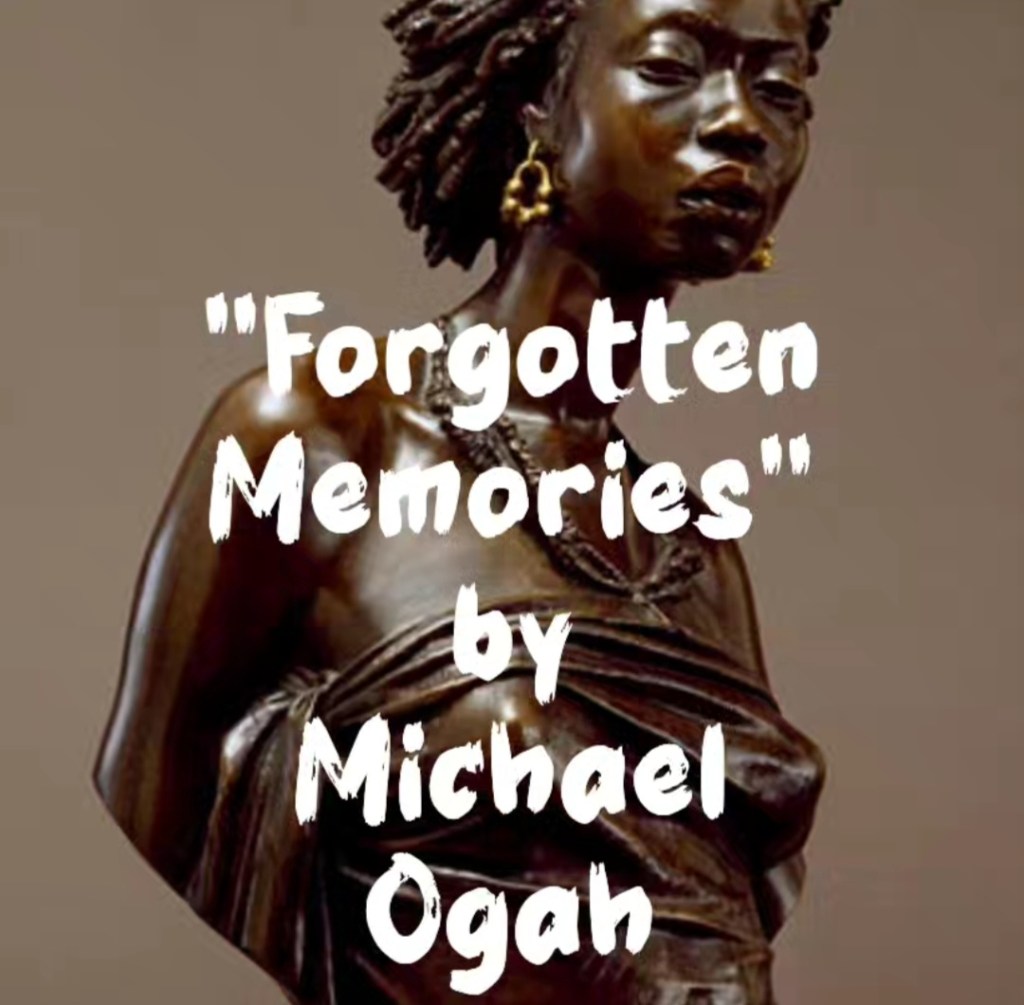
Decolonial Passage is honored to announce the nomination for the AKO Caine Prize for African Writing. The Caine Prize aims to bring African writing to a wider audience. The prizes are awarded for a short story written by an African national. The Caine Prize organization also helps emerging writers in Africa enter the world of mainstream publishing. Congratulations, Michael Ogah!

Short Story: “Forgotten Memories” by Michael Ogah

In the world of storytelling, they say true fiction serves as a smokescreen for candid conversations. I aspire to be transparent with you, opting to feature my client’s authentic name as the protagonist in this narrative. Nevertheless, given the pending court case and the imperative to sidestep legal ramifications stemming from my fiduciary ties with the client—who happens to be a murderer—I seek your consent to employ the pseudonym Ùchèchúkwù instead.

******

Ùchèchúkwù Nnàbúènyí, a man in his late thirties, carries an air of perpetual gloom. His interactions with others, even close relatives, are marked by distant greetings and a reluctance to form meaningful connections. The aura around him seems tainted with an unspoken darkness, a quality that keeps people at arm’s length. Despite his seemingly pristine exterior, a closer look reveals the shadows of a gloomy and depraved mind. Ùchèchúkwù is a walking paradox, embodying self-righteous contradictions that repel those who fear the potential repercussions of proximity to his enigmatic and foreboding presence.

At the moment, “Forgetful” is his most fitting moniker, as he struggles to recall past events; they have become distant memories, hazy and elusive—a mirage beneath the sun over the desert sands. This would not have occurred had he not been involved in an accident, an incident that wiped his memory clean.

Once, he knew a girl, his wife, Óbiágèlì. Óbiágèlì was, and still is, beautiful, though his recollection is vague. What he distinctly remembers is a plump, purple ixora flower tucked into her hair on a summer picnic day—the light-brown shade of her hair, and the red color of her lips sparkling radiantly under the afternoon sun. However, her eyes elude his memory; each attempt to recall them results in shadowy, hollow dents painted black at the back of his mind.

Maybe he will never fully remember Óbiágèlì as she once was to him. Yet, he strongly feels that there was a time when he loved her senselessly. Occasionally, when he sees her, a tiny feeling of love surfaces from deep within, urging him to remember her as she once was. The reason for their separation remains elusive. Perhaps his forgetfulness has kept her at a distance, preventing her from falling in love with a man who cannot recall the depth of looking into her eyes. After all, what more does a lady desire than to be remembered, with the fondest memories cherished by the man she loves, the one with whom she shares a heart? Love, in its truest form, requires the ability to remember the color of a heart.

What she remembers from their shared past, she chooses not to bring to his recollection. Perhaps this new life offers him an opportunity to rectify past mistakes, to be a different man from the one who once cast shadows on the canvas of their relationship, creating a portrait of pain by pulling her ponytail, tossing her upon the upholstery, and molding his fists into her frail body like an unrelenting sculptor shaping unforgiving clay.

Ùchèchúkwù is on a wheelchair. Every evening, Óbiágèlì ensures she visits him with pictures—photos of their seven-year marriage. These snapshots encapsulate memories, from their honeymoon at the Obudu Cattle Ranch in 2001 to photos of her baby bump just before the tragic miscarriage, his bachelor party, and many more; each image representing a distinct moment in their former lives

There she stands, by the vents, silently observing him take his medicine.

“Drink up, Ùchèchúkwù. Hurry, hurry, hurry!” the nurse instructs. “I see you’ve been discarding some of the drugs into the sink. Don’t think I haven’t been watching, Ùchèchúkwù. You can’t fool me. I’ve got my eyes on you.” She smiles, then walks over to the next patient seated on a wheelchair.

I won’t do this to him. How could he bear the weight of his own actions once the memories resurface? Óbiágèlì murmurs beside the window, her gaze fixed on Ùchèchúkwù as he wheels himself toward the balcony, the sun descending behind the rocks.

In her hands, she clutches an album filled with memories, a visual aid to help rekindle his lost past.

“Hey!” She calls out, waving, though he seems miles away even though he’s right in front of her. “The doctor says you’re making excellent progress. Soon, we’ll leave this place together. Wouldn’t you like that? Going home?” She squats beside him, her eyes searching his expressionless face. Ùchèchúkwù’s hair is a disheveled afro, silver tendrils curling along his receding hairline. His eyes, however, remain vacant, as if unable to acknowledge her presence.

“I brought more pictures to help you remember.” Dropping her handbag on the flagstone floor, she retrieves a photo album, placing it on his lap. She envelops his right hand with hers, guiding it as they turn the pages together. His gaze shifts from the horizon to the album.

The photograph captures their wedding anniversary, Óbiágèlì wearing a worn beach hat.

“Ha, ha, ha, ha,” she laughs, reminiscing. “I remember this one. It was our very first anniversary, spent in The Palms, Lekki. The year we were in Lagos for your junior sister’s omugwo, remember?”

Ùchèchúkwù tilts his head, his expression revealing no signs of recollection.

As Óbiágèlì turns the pages of their photo album, Ùchèchúkwù notices the flicker of light in her eyes fading with each leaf turned. In one picture, they stand alongside his mother in front of Trinity Gospel church, presumably on a Sunday. His mother’s hands are folded in a pious manner, while Óbiágèlì gazes intensely at the camera, as if silently pleading for salvation through the lenses.

“Was I good?” Ùchèchúkwù mumbles, barely audible.

“What did you say, Ùchèchúkwù?” she asks with politeness.

“I mean…” He nervously nibbles his fingernails, abruptly closing the album, and spits out the chewed remnants. “Was I good… to you?”

“Y—yes. Yes, you were,” she responds hesitantly.

“O.K.,” he mutters.

Later that night, when Óbiágèlì returns home, she retrieves a sealed plastic plate of frozen jollof rice from the freezer, placing it in the microwave. As it defrosts, she slouches to the foot of the kitchen cabinet, tears streaming down her face.

“No, you weren’t, Ùchèchúkwù. I wish you were good to me, but you weren’t. You hit me, Ùchèchúkwù. You hit me!” she cries, clutching her shirt and sliding her vein-stricken arms to her nape, interlocking her fingers and bobbing her head in sorrow, confusion, and depression. Tears fall to her jeans, leaving them damp, like she’s been crawling in the rain. Silently, she wishes he would remain lost, vulnerable, and forever forgotten. However, that’s not who she is. Tomorrow, like every day since the accident, she will visit him again, armed with relics of the past, hoping to rekindle his memories.

******

Considering Ùchèchúkwù’s amnesia, Óbiágèlì contemplates reverting her surname back to Nnaji. The doctor had informed her that a full recovery from his head trauma was unlikely, and given the chance, she wouldn’t hesitate to eliminate everything that reminds her of him as she prepares to file for a divorce.

She reaches out to a solicitor friend, Beatrice, for guidance on the process. Beatrice explains, “All you have to do is state, ‘I am abandoning my previous name. I will use my new name at all times. I require all persons to address me by my new name, only.’ And that settles it. You must sign and date the declaration in both your old and new surname. Two witnesses, who aren’t related to you, must also sign your deed poll and provide their names, occupations, and addresses.”

“Is that all?” Óbiágèlì asks.

Shikena! But wait, if there’s anything I left out, I’d be sure to give you a call.”

As they conclude their conversation over the phone, a series of knocks echo on the metal-proof gate.

“Please, knock small, small-o, before you break my gate. I’m coming!” Óbiágèlì calls out as she heads for the entrance. “Ah-ah. Mama, it’s you. Welcome.”

“You ogbanje, don’t mama me anything. You finally sent my son to the psychiatric hospital, didn’t you?” Mama hisses, standing outside the gate in her red gelle, white buba, and red wrapper.

“Mama, what have I done this time? Where is all this coming from?” Óbiágèlì parts both her arms, as if surrendering to Mama Nnàbúènyí’s never-ending hateful remarks.

“Well, I just came to cleanse this house. Meet the Dibia from our village,” Mama says, entering the house. From behind the wall, by the corner, steps forward the dibia, his face chalked in white ringlets around his left and right eye.

The dibia’s silver anklet chimes with the rhythmic thuds of his feet against the ground. “My daughter,” he says, “I have come to exorcise you of those demons that won’t let you bear children.” With his back turned, he walks into the house, the sound of his anklet fading away. Óbiágèlì notices his spinal cord protruding between his left and right scapula, resembling a large scorpion as he passes by her. She stands bewildered, her voice seemingly padlocked to the back of her tongue.

Óbiágèlì’s mouth hangs open when Mama remarks, “Close your mouth before a fly enters and you become pregnant with an insect this time.”

“Mama, I was just about to leave for the hospital to see my husband. Can’t this wait until I get back? There’s ogbono soup in the freezer; you can make yourself eba. When I return, I promise to prepare something—”

“Would you come and sit down on this floor! Where do you think you’re going? Is it not my son you are going to see? Ehn, he is fine. I’m just coming from the hospital where we (referring to herself and the Dibia) gave your husband kola nut and alligator pepper to lick, just in case the problem of your conception is from him; so you both can stop miscarrying my grandchildren anyhow. This condition of my son has taught me that anything can happen at any time, and, God forbid, were he to die tomorrow without a child to succeed him, the grief would be more difficult for me to bear. Now, come here and sit down; your husband isn’t running anywhere.”

As Óbiágèlì sits on the hassock beside the dibia, who occupies the cold, marble floor, the dibia smacks his left palm on the ground, gesturing for her to come down and sit before him.

“Do as he has instructed, my friend!” Mama says, and Óbiágèlì, awestruck, descends from the hassock, pulling up her jeans trousers as she spreads her legs on the marble floor.

The Dibia throws three white cowries onto the marble, and as they tumble and come to a stop, he holds his face steady, looks at them, closes his eyes, and begins thumping his heels against the ground.

Óbiágèlì is anxious, fearing that the dibia might have a vision of the night that led to Ùchèchúkwù’s memory loss.

“My daughter,” he begins. “Ah-ah, it’s a pity! I see it clearly now. Your womb, it has been tied. It has been tied! All those children… not many, just one, one ogbanje that keeps coming back to cause you grief. But you see this stone, this uyi-ala?” He reaches into the brown, vintage bag strapped across his shoulder and retrieves a stone. “I found it in the sand while your mother-in-law was knocking at the gate. I found it buried beside the well just outside. It was buried by your ogbanje baby, but today we shall burn this stone, and its end will mark the end of your miscarriages, and who knows, maybe the end to your husband’s memory loss. Go and bring me kerosene,” he instructs. Óbiágèlì stands up and hurries to the kitchen. When she comes out, Mama Nnàbúènyí and the dibia are standing in front of the house. Óbiágèlì peeps through the window and observes the dibia digging a shallow hole with his fingers.

“Oya, come here with it,” he says upon spotting her through the burglary proof. “I command you foul spirit, you ogbanje, you serpent of grief and miscarriages, to be destroyed!” He drops the stone into the hole, pours kerosene into it, takes out a matchbox from his bag, lights a matchstick, and sets the hole ablaze. When it is done, he points to the ground and asks Óbiágèlì to cover it up.

Using her feet to toss dirt into the shallow hole, Óbiágèlì is halted along the way.

“Use your bare hands, my daughter. That’s the way we do things where we’re from. Or do you want the ogbanje to return?”

“No, sir.”

“Then be serious,” the dibia says, and Óbiágèlì does as she is told.

“I’ll be taking my leave now,” says Mama. “I’ll visit Ùchèchúkwù tomorrow again. The doctor says he is starting to respond to treatment. Let’s hope he comes to remember you. If not, I’d have to find him some other girl from the village to marry, so he can start his life afresh. You city girls can’t be trusted. Only God knows how many babies you aborted before my son met you. Just pray he remembers you,” she says with sarcastic insolence and leaves with the dibia.

******

As Óbiágèlì drives to the hospital, her mind can’t help but wander back to the time Ùchèchúkwù first noticed her. She was in SS 3, the Head Girl of Tejuosho Girls Comprehensive College. Ùchèchúkwù, in his third year at the University of Ibadan, had been introduced to her by a mutual friend. He would drive in his father’s car to her school on visiting days, laden with groceries. With a magnetic earring clipped to his ear, a golden neck chain, and bracelets, Ùchèchúkwù adorned himself with a bit too much shine for Óbiágèlì’s liking. She would often jest about how he covered himself up in “shine-shine” like a drug dealer.

Upon arriving at the hospital and taking a bend around a small floral roundabout to park in the driveway, Óbiágèlì spots Ùchèchúkwù on his wheelchair, belongings slouched against the wheels. He looks hypnotized, eyes stoic, unfazed by the scorching sun under the arcade.

“I’ve been discharged,” he says dryly as she approaches him.

“Ah-ah, but how, why, when? Couldn’t it wait?” Óbiágèlì, exasperated, says.

“I just couldn’t wait till you got here, so I begged the nurses to help me with my things. I’m tired of this place. I want to go home.” He purses his lips and veers off.

“Uh, O.K., then. So, do I let the doctor know we’re leaving?”

“No need. He already knows. I told him.”

“Okay. If you say so,” says Óbiágèlì as she takes his sleeping pillow off the floor, his miniature box into one hand, and carts his wheelchair away toward the vehicle.

On the drive home, Óbiágèlì is unsure of what to say to him—the man who has physically abused her over the past seven years of their marriage. She still bears a scar on the right side of her eye, beneath her brow—a shallow cut from the fight they had the night before his memory loss. That night, he came home reeking of alcohol, trying to force himself on her, and she resisted. After a heated altercation, he had his way, and in response, she inflicted a wound on his forehead with an antique metal sun clock. Frightened that he might remember her attempt to harm him, she rushed him to the hospital, fabricating a story about a fight with local troublemakers.

In the morning, Ùchèchúkwù couldn’t recall a thing, not even his own name.

Óbiágèlì lives in constant fear that he might one day remember the traumatic incident she tried to bury in the depths of his forgotten memories.

******

If love is light as a feather in your heart, then that love is questionable; for love is a heavy feeling, weighing on your conscience, inquiring into the genuineness of your morals, your actions around that special someone. Love asks, “How else can I show to this one person that I am crazy about them?”

The infallible question, a heavy thinking I’ve encountered in my twenty years as a criminal prosecutor, knocked on the door of Ùchèchúkwù’s mind earlier that morning in the hospital, before Óbiágèlì showed up. He began to remember how much he had once loved Óbiágèlì, the excitement, the adrenaline rush each time he visited her in school.

On the drive home, Ùchèchúkwù turns down the radio, meets Óbiágèlì’s eyes, and says softly, “I remember, Óbiágèlì.”

Tempted to put her foot to the brake pedal, Óbiágèlì says, “You, uhm. You do? Like…uh… what exactly?”

“I remember how much I once loved you. I remember we were happy. Then I remember me changing, beating you up every time, taking my frustration out on you when I lost the job at Jumia. I remember the loss of our not one but two babies. I remember.” He nods guiltily, then stretches his hand to feel her quivering hand on the steering wheel. “Don’t be scared. I won’t hurt you. This time, I promise on the sacred memory of our departed children that things will be different.”

Óbiágèlì is silent, for she knows, someday, he’d come to remember all else, and when that happens, what then? Would he still love her when he finally comes to remember how she had tried to end him in his sleep?

“Forgive me, Óbiágèlì. Forgive me,” he begs, feeling her malleable, right hand as her left hand steers the wheel.

“There’s nothing to forgive, Ùchèchúkwù.” She looks at him.”I’m no saint, either. Forgive me, too, for the things you might never come to remember.”

“All is forgiven,” he says.

When they arrive home, Óbiágèlì comes down her side of the car, walks over to his, opens the door, takes him into her arms, and like a baby, carries him into their home to the bedroom, where she makes love to his crippled legs and forgotten memories. Right then, in the act of it, as she wriggles and moans on top of him, clawing at his chest, Ùchèchúkwù remembers. He remembers how she had thrashed the antique clock against his forehead. Vague recollections of it come flooding back to him like a nightmare—how he had gasped for air in a pool of his blood. He turns her over.

“Turn around and close your eyes,” he says airily, his breath a seductive whisper by her ear, and when she coyly does so, he reaches for the antique clock on the bedside table, she has a bad feeling and tucks her hand beneath the pillow, he raises his arm with the strength of an eagle, she pulls out a pistol, twirls swiftly, aims at him and pulls the trigger. The antique clock falls to the bed. His blood, sprinkled all over her face and the clock like red polka dots on a black ladybug.


Michael Ogah is a Nigerian screenwriter and novelist whose debut screenplay, “The Missing Link,” came to life on Africa’s Iroko TV in 2018. His short stories have graced literary platforms such as Lolwe, African Writer, and Brittle Paper. He is a law graduate from the Nigerian Law School and a Master’s degree holder in International Management from the University of the West of Scotland. He is currently working on his first novel.


In school we learnt History, but it was sanitised history about the British, the Dutch, the colonisers with their ships and riches, about how they came down south and did their business. And that was all it was: business, war and conquest—no mention of systemic sexual assault as a tool of war, no mention of the brutality women and children suffered at the hands of men. Even then.

In school we learnt about sex in Moral Education or Life Orientation or whatever they ended up calling that class so its name wouldn’t offend. (That’s the problem, isn’t it? How we cower at the idea of things, the mere mentioning of them.) So we learnt about penetration but not about bodily autonomy or consent, and when they showed us slides about menstruation or breasts the boys went Ewwwww! And the teachers never said Grow up! The teachers never said that one in three girls would be abused before eighteen, and one in six boys, and told us to look around the room and start counting.

In school we learnt Public Speaking, but when we should have been debating things like wind power versus solar, or legalising marijuana, we were arguing for the death penalty. We stood up in front of our peers at thirteen telling each other lies and our teachers never stopped us. We didn’t learn Philosophy, Sociology, or Statistics, we didn’t study any cases or watch any documentaries. We stood up in front of our classes playing Devil’s advocate and our teachers never told us that the Devil doesn’t need any more friends.

In school we learnt that boys could flash you, snap your bra straps or try and trip you. We learnt they could shout at you for blowjobs in front of their friends, they could corner you in empty corridors or backstage or behind the bins, they could spread explicit rumours about you, they could brand you a slut at fourteen, at twelve, at ten, they could call you misogynistic names and then years later they’d ask you out for a drink. And when you told them to go to Hell they’d be confused, because while we were learning how to defend ourselves they were learning rape culture.

In school we learnt a great deal about Voortrekkers and spear formations, but we never learnt about what black men went through during Apartheid, and how they left behind women who raised children in poverty and despair—alone. And they watched their mothers infantilized and their fathers worked to death in the mines, and they watched the government strip them of their humanity before they were grown. And then South Africans always want to know: who are these violent monsters? These ones who follow in the footsteps of our violent forefathers, in a country built and plagued by violence, in a violent story too familiar to us all? And then the decent folk always want to say: no, we don’t know them. No, they couldn’t be our fathers or our brothers or our friends, or the boys we went to school with who were learning how to hurt us, while we were learning how to make it out of school alive. And then we want to hang them, shock them, strap them up and inject them, we call for their death in the streets while we protest the blood that every woman in our country bleeds. We want to repeat history because it’s all we ever learnt, even though it never did us any good, it never healed our wounds, it never made us safe from the violence in our streets and in our sheets and in our homes.

In school, most of all, we learnt how to be good girls. Our gogos and oumas learnt how to be good to the men who constructed Apartheid, and our mothers and aunties learnt how to be good to the men who were traumatised by it. So we fell in line, us born-free babies, us sisis and meisies, we learnt how to be good women who raise good girls to continue this cycle. We never said no, and then when we did we were ignored, and then when we began to scream we were pushed aside for the next good girl who would shoulder the burden of damaged men. We just kept teaching that tired old history: the Zulus, the Xhosas, how they lost to the guns, how the land was won. We never said how our country was stolen by greedy men, our riches were sucked dry, our futures shaped by their sins—that being a good girl won’t save you from them. We never taught our girls that bigotry is deadly. We never said, You’re going to burn. If you don’t learn the things that school never taught you.

Girl, you’re going to burn. You’re going to burn in this fire, in this Hell, in this man’s country.


Adrian Fleur is a writer from South Africa. Her novel Zithande is a work-in-progress that explores themes of grief, joy, and the resilience of women across class and racial lines. She lives in Minneapolis with her husband, two young children, and chow-shepherd mix Ruby. You can find out more about her at her website www.adrianfleur.com.

Rain splattered across the window pane. It thwacked hard as a sheen shrouded the glass. Mensa peered across, at the dense foliage dripping outside with August globules, leaf blades ripe with gossamer as lightning flashed; at the lurid plumage trailing as birds flocked away. A big drum collected stray fluid from the roof. As his eyes dipped into the barrel, he closed the shutters. Chest heaving, he walked to another window and continued staring aloof into space, then closed the shutters. Jane walked up to him, curling her arms around his shoulders; her thick perfume that had teased him earlier, now strangling.

‘Today’s been absolutely the worst. Don’t know why I just can’t seem to get a job. I’m broke as hell. I’m shit. I’m –’ Mensa said.

‘Rest, Desi. Tomorrow is another day to hunt. Today, just rest in my arms.’

He loved when she called him Desi – shortform of Desire. She always said that he had wound his way into her heart, upended it, and set it on fire. Her warmth had always comforted him. But today, it felt like his inner demons quenched her fiery embrace.

‘Jane, what does that make me? A deadbeat lover, son, brother? I don’t even have enough money to cater to my needs. I’m still depending on daddy’s money and I’m 30.’

‘I know, love. It sucks. But I believe in you. Something will turn up. Something will change.’

‘Look at Amprofi. He has a penthouse. Four cars! Even Kwabena that I always taught in uni just got a job that’s paying in dollars. And Esi, my small sister oo, this small girl, just got an amazing job in Dubai. She was just sending me pictures of her new home. I – I can’t seem to understand why I’m still struggling when I’m intelligent and diligent.’ His shoulders slumped. ‘How the mighty have fallen!’

Jane squeezed him tighter in her embrace. ‘Hmm. It took me a while. But I realized that in life, it takes more than the conventional things we are fed with to succeed. Growing up, everyone says, ‘Study hard. Make good grades.’ But Desi, sadly, in this world it takes more than that to make it o. Sometimes it doesn’t even take hardwork to make it. Ghana is crappy as hell too. Our system is broken. Just makes everything worse!’

‘Hmmm. I have a tall list of applications whose responses are pending. If something good doesn’t turn up before this year ends, I’ll prolly apply for visa lottery and start life in a foreign land.’

‘And leave me fuckless and miserable?’

‘Jane, be serious.’ A laugh escaped his lips. Her embrace began to feel warm, like many nights before. ‘At least I have you. You’re like the best thing that happened to me since uni.’

‘I love to be wanted. What can I say?’

Their laughter poked through the still night. Raindrops pelted harder against the window pane. Mensa walked to his refrigerator to grab a sachet of water. “Want one?’

‘I want you.’

Mensa giggled. ‘You’re corny, huh?’

‘Desi, I really love you. I’ll never stop letting you know that. Bout the water, make that two. A bitch is thirsty from all that lovemaking. Weird how we can go from ecstasy to sadness in a heartbeat.’

‘Ghana for you. Will literally wreck your soul.’ Mensa dropped the sachets on the bed and lay his head on Jane’s lap. He twirled his fingers across her belly as he gulped. ‘How about we go another round. I need some joy seeping into my life again.’

‘Noo Desi. I’m supposed to be home right now. It’s past my curfew.’

‘Damn. Can’t believe your parents are giving you a curfew. You’re not a child, you know.’

‘But I’m still a college kid. You know how they get.’

‘If only they knew how naughty I make you. Scratch that, how naughty you are beneath that innocent face.’

‘Bro, sex is a need. It’s not a want. I honestly don’t see why people make it seem like it’s some evil thing. I need sex. I’m not ashamed to say that and seek it.’

‘Well, I ain’t complaining. It’s all joy from this side.’

‘Heey.’ Jane tickled his sides, then kissed him. ‘See me off?’

‘Of course. Let me put a hoodie on. You can order the Uber.’

‘And babe, you will beat this bad stroke of luck. Mark my words.’ Jane pursed her lips and shot her right arm in the air. ‘If I be a man of God.….’ her voice intensified.

‘Hahahahaha. I freaking love you Jane.


David Agyei–Yeboah holds an MA in Communication Studies from the University of Ghana. He graduated with first-class honors in English and Theatre Arts for his B.A.  His writing has been published by Deep Overstock PublishingFreshwater Literary JournalThe Quilled Ink Review, Tampered Press, Lumiere Review, Journal of the Writers Project of Ghana, and elsewhere. He was longlisted for the Totally Free Best of the Bottom Drawer Global Writing Prize in 2021. He enjoys everything art and anticipates an academic career in the future. He tweets at @david_shaddai and sings on instagram at @davidshaddai

Decolonial Passage is honored to announce the nominations for next year’s Pushcart Prize Anthology. This list includes writing published from February to October 2023. Congratulations to the nominees!

Short Story

“The Sling” by Mungai Mwangi

Poetry

“crawling toward mirage” by Kathleen Hellen

“The Giraffe Titan” by Brandon Kilbourne

“Homage to My Peruvian Brother” by Alex Anfruns

“Homeless” by Patrice Wilson

“Mammy Does the Morning Chores” by Matthew Johnson

Decolonial Passage is honored to announce the 2023 nominations for the Best of the Net Anthology.  This list includes writing published between July 1, 2022 and June 30, 2023.  Congratulations to the nominees!

Poetry

“Read the Receipts” by Nancy L. Meyer

“The Food of Our Ancestors” by Oliver Sopulu Odo

“I’ve Kept You Alive” by Mildred Kiconco Barya

“Blight” by Catherine Harnett

“We Were Always Hungry” by Leslie B. Neustadt

“Losing the Zero” by Aubrianna Snow

Short Stories

“Zain” by Sophia Khan

“Number Ninety-Four” by Mehreen Ahmed

Creative Nonfiction

“Searching for Aina in Hawaii” by Kathy Watson

“The Butterfly Harvesters” by Cheryl Atim Alexander

Part I

Her pale face radiant under an August setting sun, she sits on a bench at bus stop 94. There is a rusty covering above. The bench below has pastel green paint peeling off — hard, grim dour. Waiting for bus no 94; it is late. Instead of searching for an alternative route, she walks her quarter of a mile and waits. Day in and day out. Year in and year out, until one day she turns ninety-four herself.

Her tired eyes stare into oblivion, and notice a solitary, restless daisy through a lonely crack in the cemented road. It is across the bus stop, bobbing its breezy yellow head, anxious, to fly away, had it not been for its root spiralling down through the gaping, jagged cranny. She lets out a sigh; her eyes light up. All she is left with is desires nestled within the cozy warmth of her heart — a place gone cold from the wait.

Where is he? The man? Her one true love? He asks her to pick him up from this very bus stop — the last bus at 94. She wears a pink, floral sari which wraps around her young, smooth body. The bus never comes. She waits hours until the day is gone, afternoon and evening. Still, no sign of buses here. An empty, abandoned stop.

She continues to look at the empty road ahead, in case the bus arrives. The daisies are in full bloom of spring. She hears someone call her name. “Ayesha, Ayasha.” Then, “Look, look, I’m here.” She turns her head, and a shiver runs through her. She views a bare tree by the river, leaves growing out of it, disproportionately, insanely psychedelic. “Where are you, I don’t see you, I don’t see you anywhere, Mohabbat, Mohabbat. Where are you, my love? Do you see me?” Ayesha asks. Her heart is swelling. With shallow breaths of excitement, she inhales his faint hair oil dispersed in the air. Anytime, anytime he will be here and pick her up and hold her against his chest. His soft lips pressing down on her lips — ruby red; melding into rich hot chocolate cake.

Part II

At Fajr, Mohabbat Ali Khan wakes up to the sound of the azaan. It drifts through the minaret of a local mosque of his neighbourhood. He descends the narrow stairs and steps outside into a mosaic courtyard and through a floral, inlaid, arched architrave. This mosaic square is fenced in on two sides by stucco brick walls. He nearly sleepwalks toward a tap near the western wall and turns it on to do ablution, wazu, before the namaaz. He begins to wash his hands, elbows, face and ankles three times. Rinses his mouth three times, and three splashes into the nostrils — three splashes for each of the body extremities.

During the partition at the time of independence from the British, his parents opted to stay in India. After they passed, he continued to reside in the old capital of Delhi — in the same house too, the ancestral property. A blue arched house, beautifully antique. Accustomed to communal riots, love-hate relationships are common with Hindus and Christians, as well as with his Parsi friends. He grew up in a complex social system through a lot of political turmoil and was not alien to volatile situations.

From the other side of these thick walls, he hears the water trickle, as the neighbours, the Dilliwallas, are waking up.  Hot tea brews in a shack restaurant. The deep-frying smells of samosas, daal puri, parathas and omelette swim through the morning air. After prayer, Mohabbat Ali Khan steps outside the gates to go for his customary morning walks. Munshi Giasuddin, the local barber’s salon down the alley is open early, but he already has a client. He is sitting in a wooden, straight-backed chair by the roadside. Munshi is rubbing up soap on his beard and chatting away. He nods at Mohabbat as he walks past.         

Mohabbat walks a mile. His usual rounds are all the way up to the Jama Mosque, and then looping back. He usually performs Fajr at the mosque which takes care of both the namaaz as well as the morning walk. Today, however, he is pressed for time, and prays at home. He looks at the barber through the corners of his eyes and runs a finger absent-mindedly through his thick beard, twisting up his moustache, thinking that his beard also needs a trim. He walks a couple of steps ahead and sits down on a hard bench at the shack restaurant for some hot tea and samosa.

“Salaam Janaab, how are you this morning?” a tea boy asks.

“Walaikummassalam,” Mohabbbat replies over a slight cough. “Yeah, I’m very well.”

“Tea and samosas? Freshly fried,” The tea boy asks.

Mohabbat nods and sees that the tea boy is disappearing around the corner to fetch the order while he sits in the mellow morning light watching the barber’s precision cutting next door. His client spits betel saliva occasionally on the side at which the barber lifts his razor sharply away from his face.

Mohabbat has a date today with his Ayesha in an unkempt mossy garden near her house. His eyes dilute just thinking of her. He must wear her favourite hair oil today. His thought is interrupted as his order of tea and hot samosas arrive. He bites into its crunch carefully, sipping and savouring the white tea at the same time. He wants to pop into the barber shop next door after he finishes here.

Over to the barber shop, he looks at all the hair oil bottles from various brands shelved around a glassed window bay. He picks up Jaba Kushum which is her favourite. He pays up at the front and leaves the shop. The barber smiles at him; he leaves with a polite nod.

Mohabbat walks home. He enters through the gate and climbs up the stairs. He decides to take a shower before he leaves for his date. He puts on a white embroidered kurta and pajamas. He lavishly oils his hair with Jaba Kushum and runs a comb through his beard. He comes downstairs and steps out on the road; he hears howls closing in like the fury of tsunami. He sees a huge mob approaching his house; a sporadic riot is at his gate.

The bus no 94 arrives in time. Mohabbat is lucky to escape the mob’s scourge. He stands almost camouflaged against the wall’s whiteness. People enter his home, and they drag out his possessions, rattling rusty trunks, his books, his charpai bed, his father’s easy chair, hookah, and his violin, hurling them all out on the street in a heap. He says nothing. An innocent bystander, he trudges along the wall with caution until he arrives at the bus stop. He falls a few times before he is able to ascend the bus. He has a sweaty forehead — a few drops fall over his eyelids – and an already wet beard. He wonders if there’s a riot also at Ayesha’s place. He finds a window seat through the crowd. Stumbling, he sits down.

The bus is moving. He lets out a sigh of relief. Thankfully, there’s hope. He is thinking fast to start a new life with Ayesha some place safer, perhaps abroad where there’s peace and stability. As long as the bus is moving, there is some hope. He looks around him and sees panic in the wet frowns of his fellow passengers. This bus will take them away where all can rest in peace. Suddenly, an explosion catapults the bus.

Part III

Young Ayesha’s sweet pink sari comes undone; it is noosed around her neck, strangulated. The pink hue reflects a bluish blush on her silken, smooth skin. This place is eerily deserted. Doctors know better. She lies in a white starched hospital bed. Her skin is decrepit, mottling. Mohabbat is here, coming toward her. She waits; she hears his voice echoing through her comatose brain. She desires to go on a safari with him, maybe not on the unlucky 94 after all. He is smiling … she sniffs the odour … her favourite oil brushed into the strands of his hair. Glib winds whisper into her ears. Ninety-four years of wait cannot atone for this wrong. The bus has changed course. It does not come here anymore.  


Mehreen Ahmed is an award-winning Australian novelist born in Bangladesh. She has won multiple contests for her short fiction. Her works have been nominated for Pushcart, botN and James Tait awards. She has authored eight books and has been twice a reader and juror for international awards. Her recent publications include Litro, Otoliths, Alien Buddha, Popshot Quarterly, Metachrosis Literary, and more.

I wake up at 6:00 am to the sound of my Pa’s alarm clock. He comes into my room and sits on the edge of my bed poking at my feet and telling me to get up. I beg for five more minutes, then he sighs and sings me a song until I crawl out from under the covers hoping to stop him from starting another verse.

I walk on my toes all the way to the bathroom. The floor is cold in the morning, so I have to get used to it. Sometimes I walk on my heels, but that’s harder. And Pa says I’ll fall and crack my head.

Once I fell asleep on the toilet while waiting for the water to heat up so I could wash my face. Next thing I knew, I slipped off the stool and scraped the side of my head good on the sink. Blood dripped down my face and onto the floor, all red and messy like strawberry syrup. I tried to wash the blood away, and it just got everywhere. As soon as Pa saw me, he almost passed out.

It’s a good thing Nilah was there because she’s tougher than Pa. Nilah is Pa’s girlfriend and my buddy. I don’t remember a time when Nilah wasn’t around. She doesn’t live here, but she should. She cleaned up my blood and helped Pa take me to the doctor. They said the cut was very small, and they gave me a bandage. Pa wanted me to have an X-Ray. I wanted to too, so I could see my bones, but the doctor said we didn’t need to get an X-Ray.

Nilah told me that it’s a good thing they didn’t put me in front of the X-Ray machine that day because it would be rude to take pictures of the troll that lives inside of me without warning him first. I told her that was silly, and that I didn’t have an inside troll. She swore that I did and started poking and tickling my tummy to find him.

Anyway, I didn’t crack my head this morning, and when I was done in the bathroom, I changed into my school clothes. Nilah, Pa, and I ate breakfast and talked about our plans. This weekend we’re all going to the beach, and Nilah is going to teach me to swim. She says that six years old is already old, and if I don’t learn now, I’ll never be a mermaid. She’s goofy, but I do want to learn.

After we give each other kisses and hugs, we leave the apartment. When we get to school, I give Pa another hug and run off to find my friends.

When I run, my backpack slaps my back. And I hear my pencil box rattling around. Sometimes when I stand in one place, I still swing my backpack to hear the shaking. I find my friends by the basketball courts. They’re watching the 11th and 12th graders do their morning rap battles. I can’t tell that any of them are doing well, but sometimes a kid will jump up and go “whoaaaaa” like something crazy was just said. I like watching them, and they don’t care that we’re there.

When the bell rings, everyone walks the way they’re supposed to walk. We all split off like the branches on a tree. I’m still little at this school, so my class is on the first floor. I think they do that so we don’t get lost, or maybe it’s because we’re so small that we may get knocked over on the stairs. That’s probably it because that’s exactly what happened to me one time when I had to go to another floor for my advanced reading class. Big kids will just run on your back if you fall down in their way.

I like school, but it’s a Friday so no one wants to be here. We’re all ready for the bell to ring so it can be the weekend. My friend Chloe talks to me while we do our worksheets. She tells me that this weekend her mom and dad are going on a vacation for their anniversary. While they’re gone, she gets to stay with her aunt. And they’re going to eat all the hot chips they want and watch music videos. Chloe’s mom doesn’t like for her to watch music videos with booty shaking, but her aunt doesn’t care. So, she’s excited.

I hope Nilah and Pa get married, too. When they have their anniversary, I’ll go to my Papa’s house. And we’ll play checkers and watch old movies for the weekend.

While I’m playing, I hear a teacher say something about a shooting on the South Side of the city. That’s my side of the town. I try to listen to learn more about what happened, but Mrs. Estes asks me if I need anything. I shake my head no, so she smiles and tells me to go play. I shrug and run to an open swing.

I still want to know about it, but I’ll just ask Pa to watch the news with me tonight. Shootings happen a lot though. One time, someone shot our car; but we weren’t in it. Pa found the bullet hole in his door one morning before school. In the summer it gets really bad. Pa says it’s because people get boiled in the heat like spaghetti noodles; but spaghetti loosens up, while people get hard and break.

We have art class last. I start coloring in the picture I drew of a garden, but then I feel like I need to use the bathroom. I need to use it now! I get up and ask Mr. Long if I may go to the restroom, and he says I can’t. Well, this is a problem because you can’t just say no to urine. Pa says I should use real words like urine and not pee. Nilah agreed and said that it’s easier to make people understand things if you use the right words. So, I ask Mr. Long the question again. This time I tell him I need to urinate because maybe he’ll understand that.

Now Mr. Long looks frustrated, and he tells me if I ask him again, he’ll call my father. I ask him if I can go after he calls Pa. He looks at me funny and asks if I’m trying to be smart. Well, of course, I am. I don’t think anyone tries to be stupid on purpose. I ask to go a third time. He says yes and tells me again he will be calling Pa. I say, “Thank you,” I rush to the bathroom, and I make it just in time.

When class is over, Mr. Long lets me know that Pa said he was coming to pick me up right after the last class. Mr. Long tells me he’ll be waiting to talk to him. I say, “Okay” and go back to my coloring. I wonder why Pa is coming early. Is it to make sure I got to the bathroom okay? I still don’t know why calling him made any difference, but maybe it did if he’s coming early.

When the last bell rings, I wait by the globe with Chloe. And we tell stories about where we’ll take our vacations one day. I didn’t know Pa had come in until I heard Mr. Long say my name. Mr. Long told him I kept asking to go to the bathroom even though he said I couldn’t. Chloe makes an “oooh” sound, and now I understand. He must think Pa will be mad at me just like he is, but that’s silly because Pa knows how much I have to use the bathroom. He says I’m bad for road trips.

Pa doesn’t look interested while Mr. Long talks, and soon I hear him say that he doesn’t have time for this. They say some other things I can’t really hear because Chloe talks a lot.  Finally, Pa holds his hand out for me to take and I say, “Goodbye” to Chloe and Mr. Long.

When we get to the car, Pa straps me in. And I ask him why he came early. He looks at me kind of funny and opens his mouth to answer. Then instead of answering me, he swallows his words like sour candy. Then he smiles and says he wanted to start the weekend early. He gets in the car, and we drive for a long time. We listen to the 70’s station which is my favorite.

After a while, we pull into a big parking lot; and I see the words Kidz World. I shout out the name because I’m so happy. I’ve never been here, but I hear it’s super fun. Pa gets me a wristband and I trade my shoes for fun socks. I ask him if he wants to go through the tunnels with me, but he says he wants to sit down for a while. That makes me sad, but it’s okay. I’ll explore for us both. I crawl through the colorful tubes and rush down the slides, pretending I’m a secret agent trying to complete a mission.

I wish Nilah were here to play. They have trampolines, and she’s good at flipping. I want her to teach me that too. I could learn how to do flips like the cool spies I see on TV. I could be a spy a lot easier than I could be a mermaid.

I finally get Pa to jump with me for a while, but I get tired quickly. After we’re done playing, Pa and I go get dinner at our favorite seafood restaurant. I order fried shrimp and a bowl of fruit. We say our dinner prayers and then Pa asks a waitress to sit with me for a second while he runs to the bathroom. He comes back fast but his eyes look weird like he was crying or had allergies. He gives the waitress three dollars for sitting with me.

Pa’s phone keeps buzzing. He finally puts it on silent, but he flips it up so he can see who’s calling or texting. He never answers any of the calls or messages though. I ask Pa again what’s wrong as a tear rolls down his cheek before he could hide it. He tells me there isn’t anything wrong as he puts money on the table. I cross my arms and frown because we aren’t supposed to lie. He nods his head and says he will tell me what’s wrong but not yet. He tries to get me to order a dessert, but I’m not hungry anymore.

In the car, I sit back and watch the lights dance in the window as we drive home. On the radio, I hear a man say something about a shooting and Pa immediately switches it off.

“Pa wait!” I call out. “I think they talked about that at school. It’s on our side of town.”

Pa shakes his head and says he wants to hear something else right now and then changes to the cd player. We drive a little longer, and we get to the street we normally turn down to go home. It’s the street where Nilah’s beauty shop is. And every time we pass by, I wave; even though I know she probably isn’t in the window looking. But instead of turning, we drive right past it. I twist around to make sure I saw the street right, and there it was right there with Jimmy’s Chicken on the corner.

“Pa, you missed your turn.”

Pa shakes his head again and tells me he wanted to go a different way. He’s being so weird tonight, and I don’t like it.

“Is Nilah going to be home before bedtime tonight?” I ask. I need someone normal to talk to. Maybe Nilah can tickle out whatever weird troll has found its way into his stomach. Pa doesn’t answer me. And I know he heard me because he looked in the rearview mirror at me when I asked. I begin to re-ask the question, but I get a bad feeling in my tummy.

“Kayla, we have to talk about something important when we get home.” Pa’s voice sounds weird, and it makes my tummy feel worse. I don’t say anything. I sink into the back of my seat, and I can’t help but tap the side of the door with my foot. I don’t know why I’m doing that, but I can’t stop it.

Pa doesn’t want to hear about the shooting, and he doesn’t want to talk about Nilah. And I’m scared. I once watched a movie with Nilah and Pa. And in the movie, a family heard a gunshot. They all got on the ground so if something came through the window, they wouldn’t get hit. So, if something like that happened near her shop, I know Nilah would know to get down. Right?

So, I try to tell myself that Nilah will be home when we get home, and then Pa will tell us what’s wrong. We finally pull into our parking spot at home. I hold Pa’s hand and look up and down the street hoping I spot Nilah’s car. We get inside, and Pa takes his jacket off and hangs it up. Pa starts to talk and says that this morning something bad happened, and I immediately cover my ears. Pa puts his hand on my back, but I don’t want to take my hands down. I don’t want to know about Nilah’s blood, red and messy like strawberry syrup. I want her to just come home and tickle me. I want her and Pa to have a big wedding and anniversary trips. I want to go swimming and learn how to be a mermaid after all.

I take my hands off my ears and wrap my arms around Pa. I want to stay like this forever. I want us to stay frozen right in this spot, and then, at least, I can’t say for sure that I know anything is wrong. As long as Pa doesn’t say the words, then I can still wait for Nilah to walk in the door. Pa tries to talk to me again, and I squeeze him harder.

“Five more minutes,” I beg.

Pa rubs my back, and I can feel his tears raining on my head. He sings me a song, and I pray for a million verses.


Kelli Green is a writer, creator, and lifelong learner.  Green is from Chicago but has lived in Pensacola, Florida for most of their life. The author of three books, May, Elizabeth, and Cool and a host of poems, Green loves writing and storytelling and has always been intrigued by the creative world. The story, “Kayla’s Day,” is a narrative mixed with fictional and non-fictional events. You can find Kelli Green at @kelligreenivy on twitter, instagram, and tiktok.

The first thing Zain decided to do when he landed in New York City was walk.

He walked for blocks and blocks, breathing in air that throbbed in his skin, crawled into his lungs and choked him on the vast matrix of the city. He longed to touch the metal of the subway and see if it was as cold as it looked. He wanted to go to Brooklyn so he could come back to London and agree with his colleagues at the fin-tech start-up, that Bed-Stuy had become too gentrified.

He had never been to New York, and the journey thrilled him whilst his nerves also rattled like loose change. He sat on the plane at London Heathrow, looking outside, waiting for it to roar its monstrous engine, engulfing his ears and making him hold his breath, saying ‘Bismillah’ as it sped along the runway.

He wasn’t planning on seeing family in America, but his Amma had let it slip to relatives in New York that her son was coming, mainly for work.

‘Tell him that his cousin Jamal wants to invite him for dinner. He insists.’

Panic had risen in Zain. He was already anxious about landing at JFK airport, possibly being questioned about his Muslim surname. To make the journey and see Jamal all these years later, after what happened seemed too much. But he acquiesced for his mother’s sake.

It would be fourteen years since he’d seen his cousin on his Abba’s side. He remembered the remote, intense, forbidding presence in Jamal. The sky he kicked the football into was not the same as Zain’s sky. The shaved, zig-zag lines on the side of his head did not look the same as it did on other boys. It was cooler, sharper, more threatening. He often took two steps back when there was a crowd huddling in conversation at a gathering. Always slightly further out, aloof, never wanting for company. So when, aged fifteen, he upped and left with his parents to move to Queens in New York, everyone was surprised apart from Zain.

When Jamal started following him on Instagram two years back, he thought about removing him. But then he became curious, checking Jamal’s posts every now and then which were mainly of his two daughters and his wife, an Algerian American who wore hijabs in pastels. Sometimes he posted flowery pictures of his favourite hadiths. Only one picture showed Jamal. He had a short, crisp beard, and his big eyes and nose no longer stuck out the way they used to, but rather had smoothed into his face, soaking up the rest of his features.

Would Zain tell him everything about his life? About his boyfriend Tarun, who was half Jamaican and half Indian and cooked him a meal every evening? Then there was Ahmed, the lover they took into their bed twice a week, who ate breakfast with them wearing a silk robe, a gentlemanly version of the titans they had been in bed the night before.

Would it surprise Jamal to hear about these things? Maybe not.

As the plane took off, Zain mulled over those days they spent in their youth. Jamal grew up to be more of a man than him. That’s what he envied. Not because Zain loved other boys but because Jamal had a certain steeliness in his masculinity. He walked silently with a single cigarette behind his ear, big puffer jacket shielding his body as protection from the police carrying out stop and search on the tube. His trainers as white as snow, his gold chain, his talking about girls and pussy and teachers at school who were as dumb as fuck. Whereas Zain felt too soft, too yielding and vulnerable, always looking for approval everywhere he went. Sometimes, the fear of making eye contact with others became too strong in case they could see deep into his pain. But with Jamal, Zain couldn’t hide.

#

“You wanna kick a ball about?”

“Sure.”

It happened the day Jamal slept over when they would all be travelling to a family wedding together.

The grass was damp from the morning’s drizzle; Jamal kept consciously looking at his trainers whilst Zain looked at Jamal. Did he know? Did he know that Zain felt like he was about to blow himself up with secrets? He tried to tackle him and get the ball off him, but Jamal was too good.

“Pussy, come and get it.”

It hurt being called pussy. He tried to throw Jamal down, but he wasn’t strong enough and soon the stronger boy had him in a headlock, fists clenched, and knuckles fastening themselves like bolts under his jawline. He held him in so tight that Zain couldn’t breathe and started beating him in his stomach, his legs, his arms, fighting to be set free. But something shifted. Whether Jamal had released Zain out of pity or it was done out of mercy, Zain wasn’t sure, but tears were streaming down his face from feeling choked. He hit his aggressor square on the jaw, seeing the blood come out of his mouth with satisfaction.

“Good,” Jamal said. “Good, good.”

They sat together on the step, Jamal with a crumpled tissue on his lips to stop the blood flowing.

“I’m sorry man.”

Jamal lifted his palm up though he was looking straight ahead. They sat in silence for what felt like years. The most painful, raw silence Zain had ever felt in his life.

Later that evening, Amma told Zain that Jamal would have to share his bed. “It’s only for one night.”

His single bed could just about house both of their slender bodies. He could hear Jamal’s breathing, deep in sleep. Except Jamal wasn’t sleeping, and he wanted to move his hand along to see if he was as hard as he was.

Their bodies found each other under the covers. Jamal’s hands were delicate but brutal, murdering his body with tenderness. His mouth was warm and wet, cleansing the hurt out of every bone, every organ. When Zain woke up the following morning, his soul felt rearranged. All the objects in the bedroom from his comb to his school books felt charged with power.

But Jamal did not look at him at breakfast and during the wedding sat as far apart from him as he possibly could. The silvery shimmer in his eyes had turned to flint, and Zain knew that there would be no more football and no more sleepovers. It wouldn’t be long before he would hear from his Amma that Jamal’s family would be moving to America.

Ever since, Jamal would come to mind, less so over the years, but still with a jolt. He thought of him when seeing a group of men on the bus, victorious with fighting from the night before, or when he sat in a pub with a bunch of post-graduates, suffocating under the weight of their intellectualism, looking for a way out, into something real.

#

He closed his eyes as the plane landed and bounced along the runway.

At passport control he tensed up, but he was let through with apparent ease.

He grabbed his suitcase and exited the airport, the air feeling smooth in its warmth.  He hailed a cab and upon sitting inside, took out the crumpled piece of paper with Jamal’s address on it.

“Where to, brother?” the cab driver asked. His name badge said Hafiz.

“I’m not sure,” Zain replied.


Sophia Khan is a writer, teacher, and graduate of King’s College London. Currently residing in the city where she completed her studies, she is a member of REWRITE London — a community organisation for writers that supports and champions Black Women and Women of Colour. She is presently on their mentoring program and has been published in their online magazine. Sophia is currently working on a collection of short stories set in the UK and in Bangladesh.