Decolonial Passage is honored to announce the nominations for next year’s Pushcart Prize Anthology. This list includes writing published during the 2025 calendar year. Congratulations to the nominees!


Poetry

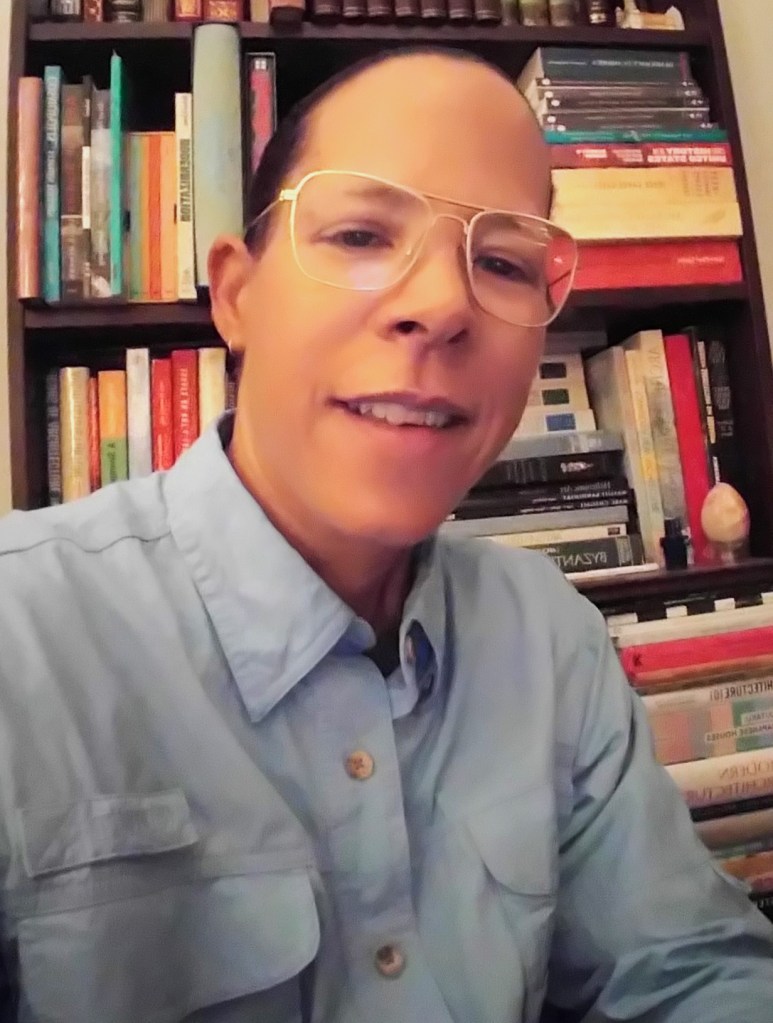
Jesse Gabriel Gonzalez – “Moon Blues”

Yanis Iqbal – “and how shall i walk when the street sings of fire?”


Short Stories

.Chisaraokwu. – “The Visitor”


Essays/Memoirs

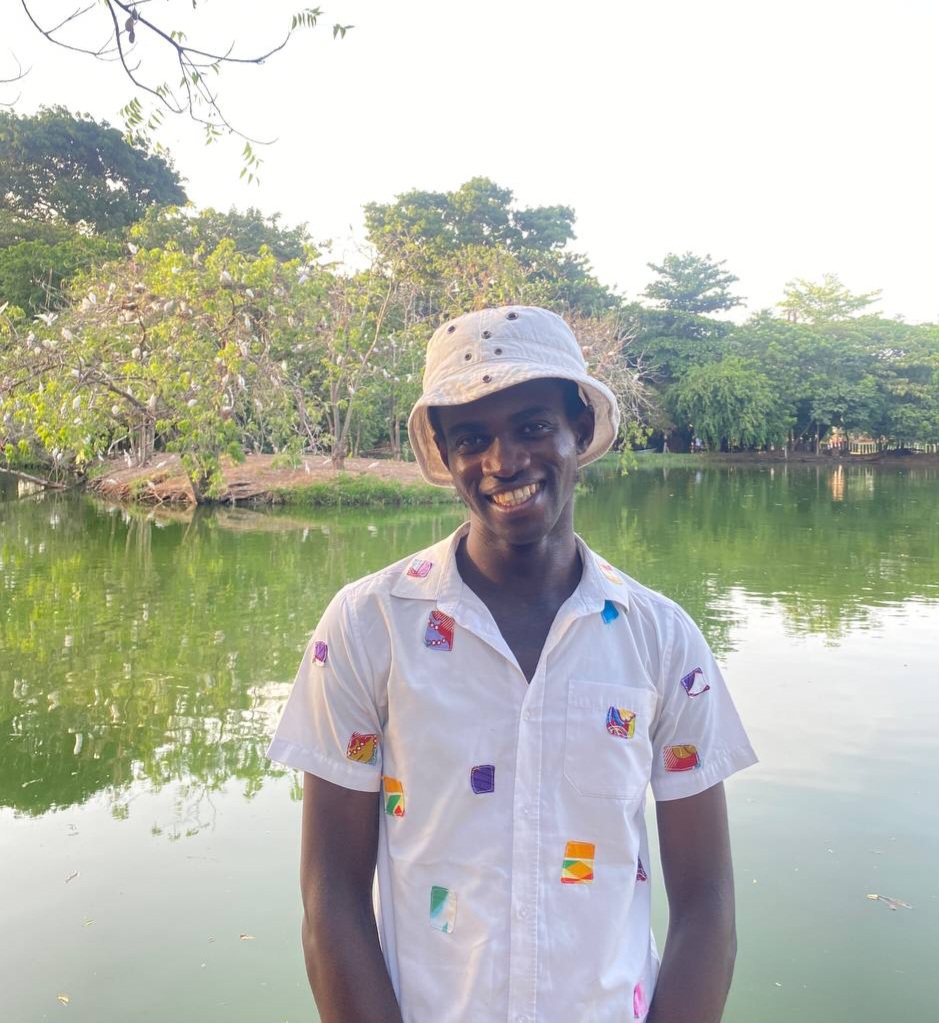
Bright Aboagye – “Do They See You?”

Stone Mims – “A Letter to My Grandfather”

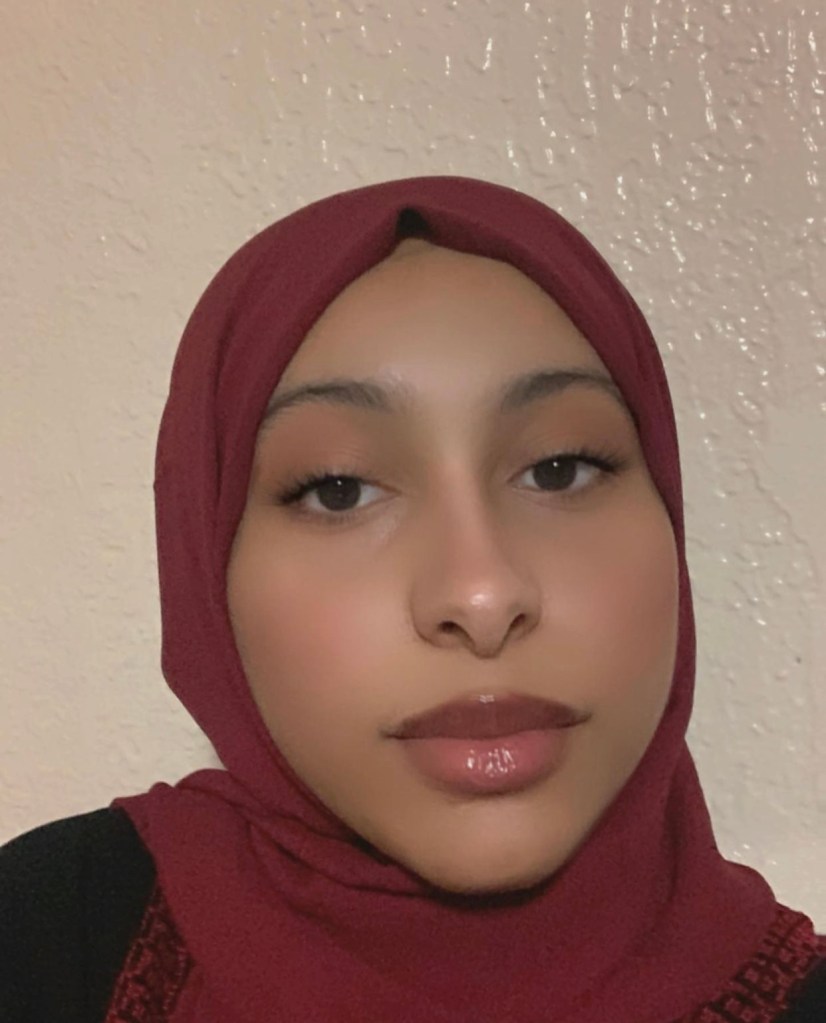
Kimberly Nao – “I, too, am California”

Decolonial Passage is honored to announce the nominations for next year’s Best American Essays Anthology. This list includes writing published in 2025. Congratulations to the nominees!


“A Letter to My Grandfather” by Stone Mims


“I, too, am California” by Kimberly Nao


“Eid Mubarak, America” by Gemini Wahhaj

All you ever wanted was to be seen. For someone to read your writing, give remarks, identify you, respond, criticize, and recognize your work. Although it never happens, you share your writing: hoping it will resonate, hoping they will love it, hoping someone will notice your tone, hoping that life will be better after all.

No retweets, no reshares, not even a casual, “This was nice.”

And every time, there’s a distinctive level to the pitch following the uncountable rejections you have received: from the magazines you admire, from people who claim to “support upcoming writers.” And every time you send work to them, there’s a beauty in how they bounce back to you with an “unfortunately”.

The sadness wells up, pushing at the back of your eyes, threatening to tumble and rain down. Your mind floats to everything you’ve tried. Every thought that has rained in your mind. You just want to be heard, to have someone see you, for people to read and cherish the gift/curse you’ve always had.

***

You’d written what you thought was your best. You spent hours reading and rereading, trying to get it just right. And still, they didn’t see you. And when someone finally did, they didn’t listen. They didn’t understand the fight in your words, the way you were writing for more than yourself, for your family, for your future, and for the dreams you thought were simply living in your head.

Every story you wrote was a piece of your life. You’d disguised it in other characters and other settings, but it was always you in there: your struggles, your hopes, your truths, dancing with reality within the lines.

***

That night, as you walk into Valco Hall, the heavens open into you, and you look for a sign to sort your problems. You think about what you’ll say to Fatau, your roommate. You’ll ask him for help for the first time. You don’t want to; nonetheless, you’re running out of options. You don’t want to bother your mother. She’s done too much already, always standing by you, always encouraging you even when things were hard. You know she doesn’t have the money.

Today feels like your last chance. You know Fatau will say yes if you ask. He’s kind, always thoughtful, and has shown you how good he can be. However, you’re not close to him. You’ve never been close to anyone.

Most of the time in the room, it’s just you. Talking to yourself, laughing at your own jokes, planning stories in your head, and speaking out loud to yourself. You’ve read your drafts alone and clapped for yourself because no one else ever did. Fatau never noticed. He probably thought you were mad. Or he never heard you probably.

When you step into the room, his friend is there. The one with the braids, the one from your mother’s home country. You’ve never told him that. He might ask too many questions, and you don’t feel the urge to answer him. You are never fond of sharing too much about yourself.

You greet them, but they don’t even look up. They’re busy, playing on the PS5, their faces lit up by the movements on the screen and their mouths shouting out words to people who only live in such realities. You move around the room, from your bed to the balcony, hoping both will notice you, say something. Recognize your agitation. They don’t.

That’s how it’s always been.

***

You think about the time you tweeted, tagging all those advertising agencies, hoping someone would see it. No one did. You remember scrolling through LinkedIn, sending messages to HR managers, and pouring out your heart into every word. One of them read your message. You saw the “seen” tick, but he never replied.

In your emails, you even said, “If you’re not interested, just send me a rejection. I’ll understand.” They didn’t bother. You followed up, again and again, sending more messages into the same nothingness.

You think back to the time you waited for a response from Ogilvy, your dream company. The delay dragged on until you gave up, deciding to move on and start school again. Then, out of nowhere, they called you for an interview. You sat across from them, explaining that you were now back in school. They nodded politely, and you knew in that second, the job was gone before it even began.

You remember that day. The day you received a call from Insel Communications, the rush of adrenaline as you checked your balance. Twenty-five Ghana cedis. Just enough for an Uber to East Legon. You booked the ride anyway, stomach tight with worry, but excitement overflowing in your soul the way a caged bird sings of freedom. You had been waiting for this.

The boss was accommodating. He was short and made sure his words carried the room, making him taller than his frame. He was in a meeting. You knew it had to be the Gong Gong Awards. You had spent nights combing through industry articles, memorizing jury members’ names like a desperate student before an exam. Your life, at that point, revolved around these professionals, their movements, their triumphs. You followed them the way the tide follows the moon — pulled, fidgety, unable to resist, and determined to play its part.

Then you saw him.

A glance. No! It was a frozen second suspended on the screen, appearing with every wish that you had once made to be near him.

 Andrew Ackah. The man whose career you had studied the way Christians study the scripture. His words had guided your dreams, his achievements, a map to places you wanted to go. You had stalked his life online, knew the places he worked, the books he recommended, the speeches he gave, and even where he stayed with his family. And now, here he was, a few feet away, discussing something with the director of Insel online. You needed the job more than anything just so you could… be so close to your industry idol, just so your dreams could sprout from the ground.

While still in the meeting, the director turned to you and asked about your favorite book.

Gone Girl” you said without thinking. A lie. A reflex. You couldn’t have told him the truth. You couldn’t have said your favorite book was by Akwaeke Emezi, a writer whose words were home to you but whose identity you feared would betray you before you even had a chance.

Then came the test. The page in front of you looked surprising. The creativity you carried as a second skin abandoned you. This is copywriting? You knew, even before handing the horrible handwriting back to them, that you weren’t going to get the job. The Uber fare had been a gamble you lost. So, you walked.

From East Legon to Bawaleshie to Legon. The rain came down in sheets, filling your shoes, soaking into every piece of your trousers and the white boxer shorts you bought before the Kantamanto fires. You prayed. Not for another job, not even for a sign. It should just be for something, anything, to remind you that you were still headed in the right direction.

Four days later, hunger was eating itself around your stomach. You lay on your bed, staring at the ceiling when your phone rang. Regina, an administrator from another company. A meeting on Monday.

This time, you borrowed from MTN Quick Loan.

The journey was long. A crawl through traffic, through neighborhoods that screamed wealth and places you had never been. The estate was lovely, your first time in one. You wanted to work there. To belong there, to smell like them. And you crossed your hands to do your best in the interview.

Thomas, the boss, liked you or so you thought. You could tell from the way his eyes shone when you spoke, the way he nodded, delighted and impressed with your background.

“Great diction,” he said. “You’re eloquent. You have quite a presence.”

And for a moment, just a moment, you believed you had finally found a place where you fit.

Then you walked out, the door clicking shut behind you. But something kept your feet planted just outside, your breath moving in rhythm to your curiosity. You listened to him and the other board members.

Laughter. Its sound had cruelty in its throat. The one that stung more than mosquito bites.

“He’s too effeminate. Probably gay. Sounds too much like a girl.”

The words cut like glass lodged in the gums, impossible to ignore. And your mouth opened in shock to the words. Your breath faster, heartbeat swifter, the promise of belonging disappearing behind the door as you bid bye to the estate.

They never called back.

And despite your follow-ups, your emails, and your polite check-ins, the silence was its own kind of answer.

***

It wasn’t the first time life had teased you with possibilities only to snatch them away. After your bachelor’s degree, you struggled just to start National Service. When you finally got a placement, you worked hard, but no one noticed. You felt invisible. It’s almost as if you didn’t exist in the same world as everyone else. You were a ghost people spoke to when needed and ignored when you desired them to see you.

You dreamed of studying abroad, of leaving everything behind to start fresh. But when you asked for help, no one came through and it was a battle too big for you to even start. After National Service, you sat at home, endlessly applying for jobs. Every email you sent felt more personal than the last, and the rejection came like rain in June.

You thought going back to school would fix everything. Another degree?! Surely that would open doors you reassured yourself. You gathered what little savings you had left to buy the university forms, not even sure where the money to pay the fees would come from.

Your mother, who always stood by you and supported you, scraped together what she could. She used the last of her savings to help pay half the fees after you got admission. That left you to figure out how to survive.

Feeding yourself? You didn’t know how you’d manage, so you left it in God’s hands and hoped for the best.

***

The first day you walked into Legon Interdenominational Church, you hoped to find something more than sermons and praises. Perhaps someone there would see you, connect with you, and perhaps help you. Instead, you got leftover food and free meals from the events you attended. You were grateful and ashamed, feeling smaller with every bite that you took.

And then there was love. Or at least, what you thought was love. It arrived like a promise and left you the way a bad memory is never forgotten. Your honesty became a joke; your confession was something to laugh about, and the betrayal following it stung so painfully in your heart that it left you questioning if anything in your life was real.

***

You think about the day you wanted to end it all. You were tired. Too tired of fighting, exhausted from trying, bushed out of feeling as though nothing you did would ever be enough. That was the day someone finally noticed you. He reached out to help, but even then, he didn’t listen. He didn’t hear the way you were saying you couldn’t take it anymore. He should have just let you be without interfering with your journey to the next life.

And you’re still here. Somehow, you kept going on.

It’s hope that keeps you moving, stubborn, and persistent in the way a weed grows out through a crack in the pavement. Or maybe it’s just the voice inside you that refuses to give up.

Now, you stand on the balcony with the cool metal rail under your fingers as you stare out at the night. You feel invisible; you always do. A part of you wants to scream, to force the world to turn and look at you. The words fail you. Your mouth is buried inside.

Sometimes, you wonder if it’s because you’re a man — the reason no one sees you and makes your struggles easy to ignore. You think about the female celebrities whose beauty seems to do all the talking, opening doors and winning attention in ways you can’t.

You blame something bigger. It’s not you at all. Possibly, it’s the country: the way it feels like it’s designed to work against you and the way your soles crack from running around. You keep trying, putting in the effort. Trying, and yielding to a lack of results. It’s as if the system is broken. As if no matter how hard you try, the soil just won’t give back your results.

It feels like God has forgotten you. He doesn’t see you. You’ve prayed so many times, poured out your heart, fasted, and still nothing changes. No answer, no sign, no rain. Just nothing. The faith you once held onto so tightly now feels shaky, and it could slip away at any point in time.

You climb into bed, your roommate and his friend still glued to their video game, still not paying you any attention. You pull the sheet over your head, trying to block out the world and let everything disappear. The sadness feels enormous. It’s pulling you under, and you let it. You let your thoughts carry you away, far from the noise, far from everything. Far into somewhere else.


Bright Aboagye counts Aja Monet and Akwaeke Emezi amongst his influences. He dreams of becoming a surrealist blues poet, writer, and restaurant entrepreneur. Bright hopes that his work inspires and gives hope to all who engage with it.  He can be found on Medium, Blogspot, and Linkedin.

The first time I saw her, she stretched as far as the eye could see in every direction. I’ve never seen God, but I imagine it’s like taking in the ocean for the first time. The ocean was my home — the only home I ever knew. The ocean kept me alive and gave me hope for the future.  

A future where I could be with her for all eternity.

At eight years old, I came home to an empty house, overwhelmed, scared, and exhausted. I could only call my mom in case of emergencies. Unfortunately, fear was not an emergency. I pulled my blue beach bucket out from the closet and meticulously laid all my shells on the floor. I carefully placed each one on paper towels and sorted them according to how they made me feel. Now, I realize why the bucket was so special to me. It represented freedom. The freedom to cry, the freedom to be heard, the freedom to be seen, and the freedom to live judgment-free.  My life seemed full of struggle, even my early years reeked of trauma.

My childhood wasn’t the worst, nor was it a cakewalk. It was marked by abuse, emotional neglect, and abandonment. I grew up in a predominantly Black neighborhood and attended a private Catholic school where I was one of six Black children. I endured years of being made fun of for having “nappy” hair, being “ashy,” “too loud,” “too ghetto,” and “too fat.” When I went home, the neighborhood kids called me “White girl,” said I “talked White,” told me I tried to sound “too smart,” and teased me for wearing a uniform.

I look back on those times, and I’m grateful my mother didn’t keep a gun in the house. Kids can be cruel. I lived in a constant state of anxiety, fear, anger, and self-loathing. I remember longing for death in elementary school. Why am I here? What’s the point of living? No one wants me here. In those moments of desperation, I imagined the ocean’s waves crashing on the shore and beckoning me to reunite with her. The second my feet hit the sand, none of that mattered. The warm sand on the soles of my feet and the grainy beads between my toes instantly cheered me up.

I always bring books to read at the beach, but I never read them. You would think that after decades of going to the beach, I would have learned to leave my books at home. I haven’t. The beach awakened my inner child — the child who didn’t get to exist outside of the beach, the latch-key kid, the kid who had too much responsibility, the child whose dad left and whose mom emotionally departed around the same time, the kid who was misunderstood and bullied.  

She came alive at the beach.

My favorite beach gift was sand dollars. I kept them on top because they were fragile, and I loved them the most. The bumpy, slightly porous texture of the outside and the beautiful pentagon star-shaped holes in the middle made them priceless to me. I held each one. I relished feeling the cold, hard shells in my hand, tracing each groove with my fingers. I rubbed the textured ones against my cheek, closed my eyes, and imagined myself lying in the sand. I felt the waves pulling and pushing my body. I didn’t know it at the time, but it was these small moments of visualization that rescued me from darkness. 

No beach trip was complete without seashells. I came home with my bucket full and happily relived the day. The beach is one of the only places on Earth that bestows gifts freely. As a kid, I remember the shore being filled with shells of all sizes. Perfectly shaped, no cracks, no holes, for as far as the eye could see.

Now, the beach gifts have changed. There are no more sand dollars. I would have better luck finding an intact kidney than an unbroken conch shell. All the years of being polluted and pillaged have finally taken their toll on her. Despite this, she still provides food, life, and shelter for countless species, including us. I decided to stop taking shells and enjoy her beauty while I still can.

The cool air reignites my childlike innocence. The saltwater, dripping down my face, cleanses me of all emotions. The once-cold water now feels like the most heavenly bath. I never want to leave. I long to be a mermaid who can swim away from this life on land and be amongst those who accept me in the sea. The ones who love me no matter the color of my skin, regardless of my pants size, and despite my shoes. They embrace me. Submerged in the blue-green water, I feel the comfort of being in the cosmic womb and the unconditional love and scorn of a parent who disciplines me whenever the limits are pushed.  

Looking out into the distance, I feel humbled by the vast open ocean. Water to my left, water to my right. The powerful waves knock me down and lure me back for more. Now and then, I feel something brushing past me, a colorful fish or a sprig of seaweed. I’m delighted and fascinated, watching schools of fish swim so close. Bright blues and pale yellows dance in the water around my feet. The water is so clear, I can see through to the bottom. No lifeguard forces me to take a 15-minute break.  I happily float for what feels like hours on my back.  The heat from the bright white sun beams down on my skin. I feel like the happiest Thanksgiving turkey.

The ocean saved my life on numerous occasions…I wonder if she knows.

Does she know that other than my daughter, she was the only one who stopped me from hurling myself off a cliff in 2023? When I lost everything within a couple of months. When I discovered the love of my life lied about our entire relationship. Resented my daughter and me. Lured me to Durham under false pretenses. Strung me along with talk of marriage. Lied about me like a dog, painted me out to be a narcissist, posted my intimate photos and videos on websites for all to see, and created fake profiles using my information to spite me. Does she know that the grief almost broke me? That the embarrassment destroyed me? I lost all trust in people. 

Can she sense that it was only memories of being with her that comforted me? The solace of feeling her warm embrace enveloping my body. I closed my eyes and imagined I was there, with her…in her, and for a moment, thoughts of her gave me respite from the torment. Focusing on her relieved me from intrusive thoughts. The times when doors were broken, laundry baskets thrown, and threats made. When I ignored red flags and inflated green ones.

It was only the smell of salt and seaweed carried by the breeze on a humid day that eased my pain. 


Lauren McNeil is thrilled to make her literary debut on Decolonial Passage and grateful for the opportunity to share her voice. Before this publication, you could find her writing in random notebooks, on scraps of paper, or on the Notes app on her phone. A former nurse turned budding creative, she eagerly seeks out opportunities to share her unique perspective. She is a beacon of light in dark places and hopes to inspire future generations. You can find her on Substack and on YouTube.

Decolonial Passage is honored to announce the nominations for next year’s Pushcart Prize Anthology. This list includes writing published during the 2024 calendar year. Congratulations to the nominees!


Poetry

Byron Armstrong – “We are Music”

Ada Chinara – “Gliding”


Short Stories

Musu Bangura – “Night Watch”

Nwafor Emmanuel – “You Are No Longer Welcome Here”

Michael Ogah – “Forgotten Memories”


Essays/Memoirs

Eraldo Souza dos Santos – “Everything Disappears”

The airport officer opened my passport on his desk and looked at my photo. He put the boarding pass on top of it and held his pen. But he didn’t mark it right away. Instead, he stared at my eyes. I tried to act normal, just being myself. Four and a half seconds passed, and I started to worry. Had I doubted myself? He finally took his eyes off me and drew a half circle on the boarding pass. Then he handed me my passport, and I took it back. I started walking toward the airport inspection point which was crowded. One of the officers was guiding people forward. Behind me, people were waiting. I just wanted to pass through quickly. My passport had been issued less than a year ago. Have I changed so much?

For as long as I can remember, I have always liked the photo on my passport; but that was never true for my driver’s license and ID photo. The picture on my very first driver’s license was a little black-and-white photo attached to a corner of an opaque white card – imagine a guy with black hair and thick brows staring out into the world from a low-res photo wrapped in plastic, featuring a small hole. There is nothing in his eyes that I could say is attractive. He doesn’t seem bold or smart. And why is he so low-spirited? Why does it seem he doesn’t have anything to offer? No, it’s not like me. I don’t like it. I have never liked it.

As the airport officer stared into my eyes, I wanted to help him out. I wanted to say, “Come on, dont bother, man. I pinky promise that its me!”

Like everyone else, I like some of my photos better than others. Perhaps the ones that were taken at a specific angle. Those taken from down and a bit to the left or maybe kitty-cornered or from some special angle! I don’t know. Those photos that reflect Ali. Those that are similar to me. In those moments when you want to be yourself in a photograph, which self do you refer to exactly?

In the photo of my very first passport, I wore a green T-shirt. I was a young pal with a pair of glossy eyes staring out of the frame. It’s like I wanted to get out of that two-by-three quadrangle. You can see the fearlessness, the soul in my eyes. I want to go . . .” “I fear nothing . . .” It’s like I was whispering something like that to myself. Why not wear more formal clothes? Who takes his passport picture with a T-shirt on? The funny thing is, I used the same picture for my l-20 letter and also for the American Embassy. I didn’t care if the officer asked what kind of picture it was. Maybe that was the reason I could take my visa sooner than others. The photo was taken ten years ago. It’s Ali during those years, those days when I wanted to prove the freedom in life, with that round neck and green T-shirt! With that uncombed gelled hair! Could all of this be compressed into just a few thousand pixels? In those few inches of paper? Maybe that’s what photographs are made for — an attempt to fit all of life into a color or black-and-white image.

I put my shoes, bag, and coat in a plastic basket and left it on the conveyor to pass through the X-ray device. In front of me, there was a huge cylindrical scanner. There was a person before me, standing in the middle of it with his hands up, staring straight, waiting for it to take his nude photo!

I have never taken a nude photo before. A full-body nude picture! Well, I have seen myself in the steamy mirror of my bathroom, of course. Or when I change my clothes at home. But even those images are half-naked in my head. Not fully. Fully naked photos are frightening. Being naked is frightening. It was my turn. I took a few steps forward. I stood inside the big cylinder and put my hands up. The device turned, and a light passed through my eyes rapidly. Electromagnetic waves record your naked picture, whether you have your clothes on or not. It doesn’t matter if you’re smiling or not. If you’re beautiful or . . . I never heard that anyone would ever want to know how his photo in the airport inspection device would actually look.

The officer pointed with his hand, meaning that I could pass. I came out of the big cylinder and stood aside. I was standing with my arms folded, looking as the conveyor was pushing the plastic baskets forward one by one. My coat, bag, passport, and shoes were closing in, inside a big plastic basket.

Why did it take so long? Was it me that had changed so much, or was it the photo that was so different from me? I reasoned that if airport officers worked eight hours a day, and took ten seconds to match a person’s face with their passport photo, it would be three thousand people a day, sixty thousand a month, and more than six hundred thousand people a year. What in the world do they see in people’s faces? Fear of going, doubt of coming. Hope of getting back? If she won’t let me go. If he won’t let me come. Hope she doesn’t notice that I have changed. Is it actually possible to put all of these in a single photo? How much can a photo tell about someone anyway? They say you should not use a photo taken more than six months ago. Six months? No, not even that long, let’s assume six weeks, six days, or even just six minutes ago! Am I the same me, even right after the photographer pushed the shutter button?

I’m thinking about the airport’s scanners. Maybe those huge cylinders might be able to take a beautiful photo of you without even trying to do so. Even without your favorite clothes. Even without a smile on your face. Without shadows and highlights and without fear. That flawless art of nudity.

I like my passport photos best. My ID card and driver’s license are nothing to me but official certificates of identification. But my passports are permits. Permits for leaving! I know this by experience that any permit to leave is a blessing to me. Its photo is closer to the Ali that I know. Whether or not it’s colorful or black-and-white, it’s bright. It’s alive. It has color! And I don’t mean “color” literally, as in a “color photograph.” I mean that it is the perception of the world I create and give in my photos. I have seen black-and-white photos of myself that had more color than the colorful ones and vice versa. My passports have always been colorful, but my certificates of identification . . . not so much.

I took my things from the basket, put on my shoes, and walked to the gate. The hallway was crowded. People were carrying their suitcases. The airport-speaker was announcing the flights one by one. On the way, I was constantly looking around. I wanted to find a mirror.


Ali Motamedi, artist and educator, explores themes of travel, immigration,
and identity. His essays and short stories, published in literary magazines in Farsi and English, intricately weave these themes. Holding a PhD in civil engineering and having studied fine
arts at the City University of New York, he seamlessly combines his
engineering background with artistic vision. Additionally, his photography graces group and solo exhibitions in Iran and the US. Since 2014, he has led students in engineering, critical
thinking, and creativity courses nationally and internationally. He can be found on twitter and instagram.

Jen Soriano’s writing pulls the reader into her memoir in essays starting with a chronological history of medicine and its approaches to the nervous system. Soriano studied the history of science at Harvard; thus, her book has abundant historic detail. Included in her chronology are the Kahun Papyrus medical documents from 1900 B.C. written by women and focusing on women’s health. These documents were later obscured during Europe’s Middle Ages when St. Thomas Aquinas warned that women were weak, those who practiced healing were minions of the devil, and that hysteria was evil. By 1486, two centuries of witch hunts began across Europe. In 1894 Santiago Ramón y Cajal, founder of modern neurosciences, described the nervous system as organic and flexible, like a system of waterways. And it wasn’t until 1980 that the American Psychological Association stopped using the term hysteria and replaced it with stress disorder.

How does this history fit into the life story of Jen Soriano? Soriano describes herself as someone who has always been nervous. From the ages of twenty-eight to forty-three, she had a series of diagnoses connected to her nervous system. Not only has she suffered from nervous disorders, but she has also had a life of chronic physical pain — pain so great that it kept her awake at night and resulted in her being prescribed meds. So chronic that it led to suicidal ideation in her twenties. Yet Soriano didn’t accept her medical and psychological suffering as an individual circumstance related only to her personal life. Because she had experienced violent dreams of her grandparents for three decades, she was left wondering if she was experiencing transgenerational flashbacks from her grandparents’ trauma in the Philippines. She became certain that the war experiences of the Philippines — including her grandfather being tortured and then disappeared as a prisoner of war and her grandmother having to eke out survival while her home was enemy-occupied — lived on inside of her.   

Born in the US, Soriano realizes that not only her personal experiences, but the history of her body is connected to her forebears and the history of the Philippines. The violence that has been inflicted on the Philippines is hidden behind the American myth of Filipinos as simply agricultural and later healthcare migrants. Yet Filipino immigration to the U.S. has been part of the push-and-pull of colonialism and revolutionary resistance that began with three and a half centuries of Spanish domination. The Spanish viewed the island territory as an outpost for trade where they didn’t even bother teaching the indigenous population Spanish as they did in Latin America. In 1896, the Filipino population revolted against Spanish rule, and during the Spanish-American War that began in 1898, Spain sold the Philippines to the U.S. for $20 million. The war lasted until 1913 and resulted in the deaths of more than one million Filipino people. In World War II, after the Japanese bombed Pearl Harbor, they went on to bomb eight targets throughout the Philippines. In the summer of 1942, the U.S. surrendered the country to Japan. And from 1941-45 more than 1.1 million Filipinos were killed, and some as a result of horrid war crimes that included skinning victims alive.

When Soriano’s parents immigrated to the U.S., they left a large portion of that tragic history behind. Her father was a medical doctor and her mother, an industrial pharmacist. Both parents focused on upward mobility in the Chicago home where they raised the writer and her two brothers. Her father viewed his nuclear family – now cut off from the larger extended family in the Philippines — as a sign of progress. And when her parents took their kids back home for vacation, they stayed in hotels instead of staying with family. The effect on a young Soriano was the absence of a sense of secure attachment with her parents. She felt she hardly knew her dad because he was constantly working. Her mom was distant and did not assume the role of a nurturer. Also, during her youth, both of her medically-trained parents dismissed her complaints about body pain – a dismissal which caused her emotional pain greater than her physical aches. In sum, the writer viewed many of the experiences with her parents as emotional neglect.

The writer’s young adult years included both a process of self-discovery and learning to cope with pain. During her studies at Harvard, Soriano felt alienated from the White elites in her environment. After moving to the San Francisco Bay Area in her mid-twenties, she became part of a Filipino population much larger than she had encountered in the Midwest or on the East Coast. The move to the West Coast brought her closer to her ancestral shores and allowed her to immerse herself in political activism as well as ethnic studies. Performing in a protest band not only served as a therapeutic ritual that advanced social transformation, but it also led to her forming lasting relationships with some of the most significant people in her life. She describes hanging out with her Filipino friends as akin to constructing her own nipa hut that sheltered her from pain and isolation.

Jen Soriano sees the connection between our personal lives, our history, our communal experiences, and the natural environment. For this reason, she can draw the conclusion that nature functions like an autonomic nervous system regulator and our human health depends on the health of our natural environment, especially our rivers. She experienced the interconnection between the personal, social, and environmental firsthand while participating in a protest to resist the damning of the Chico River – the largest river in the Philippines. For centuries, the Chico River has sustained the farming, trading, and daily life of the indigenous people who live near its shores and farther afield. For more than five decades, activists have resisted plans for the construction of hydropower dams on the river system. For Jen Soriano, the Chico River symbolizes a critical crossroads between the exploitation of natural resources and a more sustainable way of being that is not reliant on colonialism, exploitation, and trauma. To experience the full force of this crossroads, we must submerge ourselves in the crystalline whirlpool of the narrative that is her memoir in essays — Nervous.

I think about my ancestors often. Specifically, I think about matters like healing, faith, hope, and love.  Currently, my curiosity centers around how enslaved women were denied time for self-care. In historic photos enslaved women donned hair rags and hair wraps; the difference in wrapping could distinguish between a woman who worked in the house and a woman who worked in the field. Under the wrap one might find fine curls or course matted hair.  Mulattos, by no choice of their own, often inherited their enslavers hair. Some head wrappings were cultural, and some were worn as acts of resistance.

I am reflecting on hair wrapping as a result of being denied the right of self-care. Neglect of personal hygiene at the demand of an enslaver. I started thinking about this, trying to connect the lessons of self-care for our hair based on the lessons that have been passed down over generations without questioning if we should do things differently.

For most women our hair is a symbol of beauty and for some, hair can be a symbol of protest and independence.  My curiosity is focused on the emotional and mental trauma that our ancestors experienced in not being able to care for their hair. What was the psychological cost of enslaved women losing their hair because they were denied the personal right to self-care? This is what has been on my mind. The inability to relieve mental pressure by feeling water wash over their heads on a regular basis, having an itch that caused them to scratch until blood was drawn.  In some cases, if they wanted to untie the coverings, they were denied the right to expose their hair.  

I can’t imagine working in a field among flies, mosquitoes, grasshoppers, and caterpillars and not being able to return home and wash my hair. I cringe at the thought of scratching my scalp infested with lice or creating remedies out of bacon grease, butter, and kerosene while being denied the right to cleanse my scalp.  Imagine hearing a sermon in church about cleanliness being next to Godliness, but being denied the right to bathe.  I am pained by the thought that my ancestors, being treated as property, were made to feel inferior to white women enslavers. White women could flaunt their tresses that enslaved women had to wash, and comb, and care for, while covering their own tresses in a rag. Is there anything more painful than providing the highest level of care to someone that looks at you and calls you property? 

Today we are hyper-focused on our hair because our hair has a history in enslavement, oppression, rejection, and classism. Our hair has a connection to our African ancestors and our white enslavers.

I grew up getting my “hair done” —  meaning washed and pulled into an afro puff, or washed, pressed and curled once every two weeks. Unless it was summer, which meant I went swimming every day. I am grateful that my mother never required me to wear those gawd awful rubber swimming caps. She did, however, demand that I wash and deep condition my hair after my swimming excursions. Water running through my curly, wavy hair felt comforting. For me water is healing, cleansing, a source of renewal and rejuvenation. After immersing myself in water, I feel pretty, clean and shiny, like a new penny. 

My cousin and I celebrated rainy days walking in the rain, no umbrella. We bought Tropical Punch soda pop and walked home slowly. The fun and laughter on those walks still rank as the best days of my youth. Our faces so wet, raindrops hitting the top of our heads; it was magical.

During COVID, I stopped using chemical straightening products in my hair, gaining the pleasure of washing my hair more. I love how water opens my mind, clears my head. Great ideas come to me in the shower. Watering my crown from the top with no protective covering is like watering my garden on a summer’s day. I ache thinking of how the ancestors, after laboring until broken, after being beaten, raped, and forced to produce babies, survived the atrocities of enslavement without being able to wash them away.  What kind of monster was an enslaver to make bathing an option? I mean, water is recovery.

Harriet Jacobs wrote about her life of enslavement; she hid in the attic of a shed for almost seven years to avoid the wrath of her enslaver. She survived summer heat, the cold of winter, fever, and near death. Harriet writes in Incidents of a Slave Girl, “I suffered much more during the second winter than I did during the first period my limbs were benumbed by inaction, and the cold filled them with cramp. I had a very painful sensation of coldness in my head; even my face and tongue suffered, and I lost the power of speech. Of course, it was impossible, under the circumstances, to summon my physician. My brother William came and did all he could for me. Uncle Philip also watched tenderly over me; And poor grandmother crept up and down to inquire whether there were any signs of returning life. I was restored to consciousness by the dashing of cold water in my face.” The mental trauma, emotional toil, and physical hardships are unmeasurable. Thinking about her hair might appear trivial. Yet imagine what she must have felt when her scalp started to itch uncontrollably? Surely, it must have felt like the torture experienced by prisoners of war. I would love to ask her about her journey back to health. I am sure it began with water. Water. I wonder how they made it over, from enslavement to freedom, without the daily ritual of a water dance.

When a mother’s water breaks, she brings life into the world. Water is a representation of all things new. Water is used to dedicate our lives back to the Creator. Water is used to keep the body hydrated, the earth moist, plants, animals, and the universe from overheating and dying. Water is the spiritual renewal of life. When water hits my face in the mornings, I feel renewal. Enslaved women, rising at daybreak with stiff bones, and aching backs, were crippled early in life by the demands of a slave breaker daring them to bring underweight sacks into the storehouse. If working in the field didn’t break you, a whip for not meeting your quota would. I linger in the shower knowing it is a privilege provided me by my ancestors.

I decided to make washing my hair a priority, not for styling, but for connecting to my crown chakra and, in a sense, connecting to my ancestors. The crown chakra gives us access to our intuitive energy and wisdom. The divine feminine is supported innately by the spirit of the Creator through our intuitive understanding. I require connection to creativity, nurturing, maternal connections, and healing support for my self-care. I can be more supportive of others when I am fully centered. The process for spiritual renewal is immersing the whole body, starting at the top of our crown, in water, dedicating ourselves back to life. My water dance feels like that moment after the rain; my body opens like a flower, tired muscles relax, my skin softens, letting the rain roll down my body.

After experiencing macro and micro-aggressions, our crown requires renewal.  I believe our ancestors would consider washing our hair several times a week a privilege. I want to honor them as I work to ensure my own self-care at the highest level of love. Maybe our blood pressure would be lower, maybe our mental health would be better, maybe our thoughts would be clearer. Just like the dew of morning, the mist of water on my brow connects me to something greater than myself.

Black women were not created to be a human resource, a tool for production, an appliance for usage like a machine. We were not created to support everything, everyone, and women of other cultures while neglecting ourselves. We are not made of steel. We can’t carry the anger of the world around us because everyone except us, men included, are immersing their entire bodies in water for renewal daily; meanwhile we wait to refresh our entire body when it is convenient to wash our hair. We are delicate, we are made to be graceful, we are meant to seek our help from the Creator. Ours is a culture of peace.

Our hair is not our crown; it is the ornament of protection decorating our crown. Our hair doesn’t determine how the rest of our body, mind, and soul respond to the issues of life. Yet, great hair is beautiful when topping a nurtured crown. In the end, it is our crown that enables us to radiate from the inside out. When we care for ourselves, we honor our ancestors. 


April L. Smith is a writer, literary agent, and motivational speaker. She is committed to eliminating mindsets that obstruct diversity, equity, and inclusion initiatives, especially for African American women. April is a Yale Writers Workshop alumnus. She loves spending time with her two adult children Kinnidy and Zackary. April lives in Raleigh, NC. She can be found at The Kinzac Group Literary Agency and Marketing Company and on instagram and facebook.

There is no place like home. So, the idiom goes. And generally, it is agreed upon as true. Or, as containing some element of truth at the very least. Not every idiom about home is as literal as this one though. To say a man’s home is his castle doesn’t mean exactly that. To say, in a patriarchal sense, that it is the responsibility of a man to bring home the bacon doesn’t exactly mean that either. If it did, one might ask, jokingly, where that leaves the vegetarian or vegan family.

In a recent PSA by PETA, the animal rights organization appealed to people to stop using anti-animal language. I agree, words matter, but I disagree that using an idiom like “bring home the bacon,” is comparable to using language that would be considered racist, homophobic, or ableist. I’m sure this would likely have me tagged as a proponent of speciesism, which PETA insists is part of our daily conversations. Much like idioms are. Besides “bringing home the bacon” other examples noted by the PSA include “beating a dead horse,” “killing two birds with one stone,” and “taking the bull by the horns.” PETA, of course, provided alternatives for what we might say instead. For “bring home the bacon,” it suggests “bring home the bagels.” For “beat a dead horse,” “feed a fed horse.” For “take the bull by the horns,” “take the flowers by the thorns.”

I love the fact that things mean more than what they purport to mean. It’s why idioms fascinate me. More often than not, I incorporate them in my work. However, I deploy them in a literal sense, usually to emphasize the absurd, but also to find what new thing might show up. Consider, as an example, “beating a dead horse.” In a poem that is a meditation on Coltrane about joy, I wrote:

—born running from lord-knows-what… 

            No. Let allusion find no stable in this song.

No room for measurements, or compromise.

            It’s dead, I know, the horse is dead—

                                    but what to do with the music


trapped under its hide?

In an earlier draft of the poem, which invokes the idiom even more directly, I wrote: “Yes, I know the horse is dead and I want to stop beating it / like a percussion instrument, but what about the music / that’ll stay hidden under its hide if no one lets it out?” I hate to think about what would be lost if I were to follow PETA’s recommendation. The poem is, as I wrote earlier, a meditation on joy. To be more specific, it is about the reality of joy as something one must fight for, especially when there seems to be so much that seeks to rob one of it. By virtue of my name, which translated means joy fills the house, joy should be natural for me, to me, and in some ways, it is. However, it is a difficult thing to think about joy when the reality of death is always at the foreground, especially in this country where one isn’t able to escape the constancy of news about the killings of unarmed Black people. To be sure, the question of home is political. As is the body. And really, what in this country (or anywhere else for that matter) isn’t?

Last year, I couldn’t stop obsessing about death. About the reality that I could be next to have my name included in the long list of names — known and unknown — of people who have been victims of police brutality. It is a terrifying thing. I wrote feverishly. As if my death were near. I could not escape, as my mother pointed out, metaphors about being swallowed. Every poem was essentially about death or dying. As has been the case for me since I started writing, writing was a way for me to figure out all the questions I had. Why is this happening? What can I do to make sure I am not next? Is this even possible? And so, poem after poem after poem, I sought to explore what it means to live inside my body. With this constant fear of death. How exhausting it was. How exhausting it is. The poem above came at a period when I was indeed tired. I wanted to write about something other than death, but it almost seemed impossible.

According to the Merriam-Webster dictionary, to beat a dead horse is:

  1. to keep talking about a subject that has already been discussed or decided
  2. to waste time and effort trying to do something that is impossible

In a way, I became the horse. I couldn’t stop beating myself up for my inability to come up with a solution for systemic issues that are, essentially, the foundation and the building blocks of this country, if we are to think of it as a house. My poems didn’t mean shit. In another poem I ask: “What good is a poem? What good is a poem if it can’t stop a bullet?” In yet another, I ask, “What is a Black body if not an unending question?” I have no answers.

For this poem, I was curious what it means to literally beat a dead horse. It isn’t too far a leap to consider how once, at a point in history, Black people were subjected to burden in the way mules are. Still are. One only needs to consider, for instance, how mass incarceration is just a modern iteration of slavery. It turns out that we are nowhere past the reality of Du Bois’s treatise about  striving in The Souls of Black Folk. Even then, I was curious if there was music to be found in the beaten hide, something akin to joy. My name, as I mentioned above, means joy fills the house. And though a house is not exactly a home (that distinction matters), the body too is, in some ways, a house. Or a home. Can be at least. Whatever language we decide on, however, we can agree that not everyone feels at home in their body. I don’t always.

I don’t always feel at home in most places. Born in Nigeria, in Ilesa, Osun State, I have lived in the United States since I was seventeen. First, in Cypress, TX. Then, Houston, TX. Huntsville, TX. Kingwood, TX. Humble, TX. I have also travelled a bit across the United States. A few years ago, in 2016, I took my first and only trip thus far outside the U.S., to Costa Rica which reminded me so much of home — the gravel road, the hills and mountains on the way to Monteverde were reminiscent of the trips to Imesi-Ile, where my grandparents lived, where my dad was born.

In a recent interview, the question of home came up. “Tell me about home,” the interviewer says. In response, I say:


My relationship with home is kind of a complicated one. For the most part, I believe it is nowhere or rather, everywhere we make ours. I believe we find it, or sometimes, it finds us. In the geographical sense, Nigeria is home. I was born and lived there till I was 17. It was home then. In some ways, it still is though it doesn’t quite feel like home anymore. For the most part, I’ve lived in Houston since 2007. That means it’s been home for that long. In some ways, it too doesn’t feel like home anymore. I still live in Houston, or at least around its perimeters — I currently live in Humble. So, in some other ways, it still very much is home. Home for me isn’t really a fixed place. However, both places have equally been home in the way I understand home — anywhere you belong, where you’re known and always welcome and, where you can return to if you ever leave it.


In the scientific sense of the word, displacement is quite simply a change in position. In a sense, it can be argued that the word displaced is an accurate descriptor for everyone who leaves — either by choice, or otherwise – the place they’ve historically known as home. This, I think is what it means to be in diaspora. No matter how settled one might be in a new home, I think it’s impossible to escape the feeling of homelessness. Of restlessness, which is, for me, a default.

As with my poems, this essay was prompted by a question: Is there still no place like home? The straightforward answer to the question is either a yes or no, but I think it’s more complicated than that. It has something to do with the word ‘still’ which was, in 2018, my word for the year. I don’t remember when I first started deciding on a word for a new year, but the earliest documentation I have of this practice is 2012. The word for that year was “run.”.

I love that a word can have more than one meaning. Still. Still. Still. By definition, being without motion, the continuance of an action or condition, or a static photograph (specifically one obtained from a motion picture). In retrospect, I think the word ‘still’ was important to me in 2018 because the year before that, I was everywhere. I was hardly home. Even when I was home, I spent the majority of my time away from my apartment – a residence I really had so I could have somewhere to sleep when I returned. I almost didn’t do anything else there. In 2017, touring for a book took me to 11 cities outside Houston, across 3 states. Texas: College Station, Laredo, San Antonio, Austin, Galveston, Huntsville, San Marcos. Louisiana: New Orleans, Baton Rouge, Lafayette. Missouri: Kansas City.

To return to the idiom, I found out that its origins trace back to a time in Europe, “before the 14th century when the institution of family started taking precedence over other factors. Society, environment and family life all came into being and also the realization that the person is truly at ease when at home” (theidioms.com). In so many ways, the family we grow up with (or without) shapes our understanding of home. The world outside isn’t always a safe place, and the family, home, in the most ideal circumstance, provides a sense of safety, a sense of refuge.

True as that may be, a question remains for some of us. How can one, how does one, feel at home in a country that wants one dead? I have no answers. Still.


Ayokunle Falomo is Nigerian, American, and the author of Autobiomythography of (Alice James Books, 2024), AFRICANAMERICAN’T (FlowerSong Press, 2022), two self-published collections and African, American (New Delta Review, 2019; selected by Selah Saterstrom as the winner of the New Delta Review‘s eighth annual chapbook contest). A recipient of fellowships from Vermont Studio Center, MacDowell, and the University of Michigan’s Helen Zell Writers’ Program, where he obtained his MFA in Creative Writing–Poetry, his work has been anthologized and published widely.

It takes a reminder, a compelling moment, to bring the scope of sorrow and beauty back into focus. As I entered an RV park in Payson, Arizona, a mountain town favored by locals for its mild summer months, I had such an experience.  Often, in the light of something truly magnificent and inspiring, equal measures of sorrow and beauty mingle. We might know it as poignance, wherein joy and sadness combine to become a sweet fermentation of experiences. This is generally reserved for later years of life. And yet, despite its power, this condition often goes unnoticed.  

Upon arriving, I immediately noticed towering cottonwood trees, their leaves gently agitated by the wind. Safely away from the Phoenix sun, I felt a sense of freedom; no scorching heat would triumph against the breeze or bear with us into the evening. With that thought in mind, I felt refreshed. However, as I drove my motorhome over the winding path to my site, I took note of other things, situations contrary to the beauty of trees and sunlight.

Although called a “resort,” the place is really a trailer park in a small town, pleasantly overshadowed by mountains. Those of us with modest means either vacation here or live in “park model” homes year-round. And, with that, a sense of sorrow prevails, despite the sheltering cottonwoods that resist summer heat. I spoke to a few residents who were older and very concerned about skyrocketing rent. In a mobile home park, you must purchase your unit and then continue to lease the land—until you either sell or vacate the structure. For some residents, the latter option might be their only choice. Few people consider this as they enter such communities. Park owners present new units, ready for purchase, and emphasize the conveniences and amenities of the arrangement. Most people forget that the homes are very costly to move, and they devalue quickly. Moreover, the rent will increase annually—without fail, rent control being very much a thing of the past. Even with this in mind, I am still intrigued by the contrasts of the place.  

A tour of the park reveals a large, well-maintained clubhouse, a handful of newer Class-A motorhomes, and the shiny “park models” awaiting their new owners. Also in evidence are dilapidated structures, dreary with the neglect and desperation of older people who simply cannot afford to move. I spoke to one woman who cares for her 96-year-old husband. After he passes, she plans to walk away from their mobile home and live in a renovated van. And there are other stories, as well.

My nearest neighbor to the west had a number of drunken arguments with her son, when he came to visit and brought his little dog. Hailing from Tennessee, the family has been devastated by opioid addiction and the tragic death of a daughter and sister. Across the road and just to the north, a frail woman in her forties smiles in the mornings, attempting to be cordial as she hurries to work. She was ostracized when her pedophile boyfriend arrived to share her trailer. Although it’s nearly July, they keep Christmas lights blinking in the yard, draped around stone cherubs and pots of wilted flowers. With such occurrences, tragedy feels like the prevailing aspect of life here in the “RV resort.”  However, there is still the soft beauty of nature to enjoy, a power that abides throughout the seasons. And the place is not without a bit of charming irony.

As the only African American in the park, I was greeted in an interesting manner by a white neighbor. She said, quite sternly, “It’s a nice place, very quiet. We don’t have any riff-raff here.” Right. I tried not to laugh out loud or take offense at her insinuations. After all, I am not the owner of a park model. As a full-time writer and RV nomad, I am free — merely passing through as a seasonal guest. Although I am relieved to be leaving, I feel a strong sense of sympathy for this environment, this place of contrasting themes.

For the moment, mountains and pine trees prevail, as I regard the poignance before me. The glories of nature and a gentle climate are powerful in their role, softening an atmosphere of desperation with a sense of beauty, albeit temporarily. And this is the way of things in so many small towns. Such places embody poignance, demonstrating the scope of sorrow and beauty. I will be grateful to move on in a couple of weeks, as new horizons await.    


A. M. Palmer is a writer, graphic designer, and retired park ranger with work appearing in Belle Ombre, Adelaide Literary Magazine, Dissident Voice, and other publications. Inroads: An Urban Park Anthology is the author’s first book. Palmer holds a master’s degree in history from the University of San Diego and continues to research art and social history with a variety of upcoming projects. The author is a member of the National Association of Independent Writers and Editors.  Read the author’s latest work at A.M. Palmer, Literary Nonfiction.

Decolonial Passage is honored to announce the 2023 nominations for the Best of the Net Anthology.  This list includes writing published between July 1, 2022 and June 30, 2023.  Congratulations to the nominees!

Poetry

“Read the Receipts” by Nancy L. Meyer

“The Food of Our Ancestors” by Oliver Sopulu Odo

“I’ve Kept You Alive” by Mildred Kiconco Barya

“Blight” by Catherine Harnett

“We Were Always Hungry” by Leslie B. Neustadt

“Losing the Zero” by Aubrianna Snow

Short Stories

“Zain” by Sophia Khan

“Number Ninety-Four” by Mehreen Ahmed

Creative Nonfiction

“Searching for Aina in Hawaii” by Kathy Watson

“The Butterfly Harvesters” by Cheryl Atim Alexander

JESSICA and ANNIE were two of the most super-duper, uber forces in my second-grade class at Brethren Missionary School where I had been banished by my professor parents. Run by and for White expatriates, the admissions practice at Brethren meant no colour bar impeded wealthy Nigerian locals and rare hybrids.

At seven years of age, I was aware that these two big timers’ energetic vibrations seeped insidiously into everything – everywhere – altogether — without discrimination.

Yes indeed, everything about JESSICA and ANNIE was big, bold, brassy and BOMBASTIC.

Boom! Boom! Boom! KABOOM!

Reverberating echoes flared, flinched and flickered every time these two beauties entered any    room with their long, loose limbs, luxurious locks of accessorized hair, high top sneakers and empty, shell-blue peepers. It seemed that everywhere I went, they were there too. Not because they relished gazing at my brown face but because they took up SO-MUCH-SPACE, evidently enjoying using their invisible elbows to prod me out of their way with impunity.

OUCH!

My motley-type of mother said JESSICA and ANNIE were “strapping yet striking in response to my query about how pretty she thought they were. Come again, Mummy?

Strapping and striking like the Vikings?” I further inquired.

“That’s right, Cher!” she chuckled. Then smiling, she stated dryly, “Hitler would have been proud of those two”.

Her pointed wink and suppressed girlish giggle told me the last point wasn’t intended to be a compliment, and so I garnered she was trying to comfort me in her familiar, feeble-while-bizarre kind of way. Regardless, I was under no illusion that I was of any significance when standing alongside the two little-girl giants christened JESSICA and ANNIE. Me, with my cornrow hair; them, with their corn-colored hair seemed to say it all.

Corn-colored was better than cornrowed.

I didn’t know exactly why this had to be so, but it seemed incontestable by the way JESSICA and ANNIE looked right through me as if I wasn’t there.

I will never look like them, no matter how hard I try.

From their imperious ribbon hair ties all the way down to their frilly ankle socks, these two outdid me in every way. Even more hellacious were their voguish backpacks hanging side by side in their respective cubbies; one red and one blue, sequined embroidered initials and all, commanding attention from every corner of the room.

One warm morning, swaddled by the green-grey, partially misty hills of the Jos Plateau — an emerald shawl, perfectly draped, ethereal as a scene from the Brigadoon of my wildest daydream — all thirty of us children were sitting cross legged on the floor of our open-door classroom, when Miss Rose chose JESSICA and ANNIE to show and tell where they were in their science project. Springing to their feet in unison, and speaking accordingly, these beauties proudly yet aloofly held up their once empty jam jars now filled to the brim with piles of brown pellets. They explained that they had spent the previous week collecting the pellets, which were actually called cocoons — if you pleaseand were going to keep a close watch on them until they turned into butterflies. Up until this point, I had been staring at these two in reluctant admiration.

A shrill, sane voice from the back of the class asked Miss Rose, “What are they going to do with the butterflies?”

Now grinning in unison, JESSICA and ANNIE produced a glass frame divided into separate compartments, the way a pair of premeditating magicians might, and said they were going to poke the butterflies through the heart in order to kill them, using colored pins (they gestured to their weapons) then place them in the glass frame as a gift to the class so we could all admire them forever and ever.

Silence.

Then, the worst type of stabbing pain began to form in my gut, a sort of wretched chronic punch, as I slowly digested the information amidst these monsters’ beaming faces.

Jagged red evil eyes.

Why was Miss Rose nodding and clapping?

Looking around the room, I noticed some of the other children in my class with accentuated downward-turned smiles.

☹☹☹

I didn’t need to find out how many of them felt the same way that I did.

I just knew that I had to act stealthily and FAST!

***

If anyone had been paying close attention, they might have perceived that I became very quiet for a good portion of that whole day. Indeed, they might have noticed that I went missing at lunch time. But I don’t think that was the case. Nobody noticed at all that during our tennis class, on the tennis courts, while everyone else was baking in the generous Nigerian sun, under the scrupulous watch of three large birds of prey– stately as the magisterial magi of Persian fame and biblical proportions — I stole my wily way back up to the second-grade classroom.

HA-alleluia! It was my lucky day. (No one was there.)

Feverishly I made a bee line for those cocoons, and wouldn’t you know, when I ransacked the red and blue sequined embroidered backpacks, those darlings rose to the top almost immediately, making things easy peasy. I grabbed the two teaming-full jars, wrapped them in paper towels, wedged them under my arms and fled the scene running and running and running until I came to the old, prickly briar patch that nobody liked to go anywhere near — the one that I had always fancied the plantation proverbial Brer Rabbit would have loved. Then my seven-year-old fingers successfully prised off those ghastly jam jar lids, and I threw those darlings into that briar patch as far back as I possibly could.

 “You’re free now!” I whispered, gleefully.

***

Immediately fleeing the scene, my surroundings became more nether-worldly with each step. Somewhere in the not-too-distant landscape I pensively observed my sister, Clare, milling her way around the school compound.

Hmm. What was this?

Not only was Clare a whole three years older than me, but she was also quite a bit taller, and skinnier too, and she walked with a slight stoop. Her eyes were larger than mine, with a slight bulge about them, and she wore her dark brown hair in a short, tightish, slightly unkempt afro. Sometimes when she poked around aimlessly, she reminded me of an ostrich, and other times she seemed like Olive Oil (the cartoon character with the annoyingly high-pitched American voice).

Today my sister is an odd-looking ostrich.

At school, Clare was devilish in her modus operandi. As an interesting consequence of her “unacceptable acting-out behaviors” she was often to be found enjoying enviable coloring activities — during which she was allowed to use thick, bright, smelly, and interesting-looking crayons in the counselor’s office — and otherwise wander around, unfettered, to her hearts content.

Mmm, how I love the scent of those pens. Especially the grape.

Ordinarily Clare despised, and saddened me, but today I felt so happy and lucky to see that weirdo sister of mine en route to rejoin my classmates at the tennis courts! A potentially positive interaction had to be possible.

What if I tell Clare?

As I got closer to her, I became aware that my sister was not alone. Elouise, her orange-haired, freckle-faced partner in crime — as coined by my mother — had popped up like a bad penny, and now they both were looking at me with slightly sardonic grins on their faces. My feet, in seeming concert with my heart became languid with apprehension. I hesitated.

Don’t be a fraidy cat. Shuku shuku is for supper tonight!

Feeling a small burst of hopeful energy, I began to open my mouth…but before I could get a word out, the dubious duo vomited gibberish at me, projectile style, in the “secret language,” that existed only between the two of them, and ran off laughing, apparently metamorphosed into a pair of frenzied, howling hyenas.

I’d been effectively ditched by the feathered critter and its sidekick.

Once detached from Daliesque reality, it was easy to slide back onto the tennis courts unnoticed. Next to JESSICA and ANNIE, I was not that visible after all. Later on, back in the classroom, my spine trembling like a jellyfish, I watched and waited to see what would happen if per chance these two huntresses decided to furrow into their bags before the end of the day.

Well, they did of course.

Oh, my. Big ugly tears!

And later, threats that when found, their missionary daddies would expel whichever uncivilized thief it was who stole from them. I shrugged (inwardly, of course).

Oh, well. I suppose the crème de la crème did not get the cream today?

Jesus is watching, he will PUNISH you!” was J and A’s final ominous warning, followed up by a long menacing stare unmistakably directed towards the five darkest-skinned pupils in the room. I must have been momentarily unrestrained for I accidentally allowed something sounding like a scoff to escape from my throat. Upon so doing, my thunderously unhelpful heartbeat dropped into my gut…and then, WHAT in the? Suddenly a storm of butterflies was trapped in that hysterical tummy of mine. Well, a real MIRACLE must have happened, right around that time, because somebody without any type of face that Iwas able to see, ever so swiftly transformed my scoff into a camouflage cough.

Ahem. Ahem, AHEM…!

Oh, thank you, Miss Rose”. I watched the words float out of my mouth in a big fluffy thought bubble, syrupy sweet, and soft as candy floss, as I reached for the partial glass of lukewarm water my missionary teacher had extended in my direction as I furtively rubbed my belly.

Relax butterflies.

Jesus was not going to punish me. Up until this point, I don’t think I had ever been as sure about anything in my whole, little-kid life.

A little later on, the boarders and I watched the Nigerian Sun set

slowly;

a hazy, lazy red eye, filled up and fed up

with enough hungry secrets to last one hundred lifetimes,

its hot sultry stare seeming to devour my mulatto skin, knowingly

nurturing my Blackness without my consent,

and it was then that I remembered, something my misfit-of-a-mother liked to say:

“Cheryl wears her heart on her sleeve”.

Well, maybe—I thought, with the most insolent-looking, inward eyeroll that my mother could have possibly imagined. But, not this time. This time, my poker face was simply superlative.


Cheryl Atim Alexander is an African European woman primarily of Nigerian, Greek, and British descent.  Born into a family of readers and writers, she has never known a time when she wasn’t reading or writing lyrics, poems and stories. Currently an MFA student, Cheryl is enjoying leaning into a newer identity as a multi-genre writer. Her writing material emanates from lived, professional, and educational experiences surrounding holistic mental health and wellness, new thought spirituality, and human and animal rights. She aims to entertain, educate, agitate, and activate soul-filled inspiration to anyone who may have temporarily misplaced their voice. You can find her on LinkedIn at Cheryl Atim Alexander, LICSW, RMT.

In 2000, I was working at Shell in Bangladesh as a reservoir engineer, when I was sent abroad to Netherland for training. The training center was a microcosm of Shell’s global operations, with new employees from Scotland, Spain, France, and America, as well as countries that were just starting to hire local employees where Shell was developing oil and gas. There were geologists and engineers in training from Venezuela, Brunei, Syria, and other Arab countries.

In the Bangladesh office, I was the only Bangladeshi engineer in the explorations team, besides two local geologists. I had fought to join the explorations team, at great opposition from the explorations manager. The country manager had forcefully inserted me into that team. I forget what they, the expats, called us, the local employees, in the Bangladesh office. Perhaps we were locals, or perhaps we were called natives. The global employees sat separately at lunch, and, in general, expressed vicious frustrations about the country and the local employees working for them. They complained about the air quality – they were concerned about their children’s health, and many of the employees’ spouses wanted to leave Bangladesh. One geologist referred to Dhaka as a block of concrete. There were other, constant snide remarks, about the corruption of Bangladeshis, the laziness of Bangladeshis, and the lack of technological capacity. Once I made the mistake of asking an expat if they had traveled in Bangladesh, mentioning the Sundarbans, and the man looked at me with shocked eyes before replying that his children were too small to travel.

Most of the global employees were Dutch or British, with a few Americans. The atmosphere was toxic. In the explorations team, no one spoke to me, except for the reservoir engineer who was training me. When I did speak to someone, they were hostile, and they let me know what they thought of me. I had studied in the US for my undergraduate and master’s degrees and just returned to the country, so this level of open racism was shocking to me. It felt like I was back in colonial times. Once, I was asked to prepare a report. When I was about to send it out, the English engineer who was supervising me, a tall, bald-headed, smooth-faced guy, one of the nicest people in the office, said that he would check over my work first, as he was a native speaker of the language.

After months of facing constant prejudice and humiliation in Bangladesh, being in the Netherlands among other bright-eyed international trainees was a welcome change. Everyone was friendly, and there were no barriers among us. The training center was located between Noordwijk and Noordwijkerhout, beside the North Sea. I believe this was the Hotel NH Noordwijk Conference Center in Leeuwenhorst. At the end of the day, we went out to either town, Noordwijkerhout or Noordwijk, for shopping or dining. We hired out cycles to bike to the North Sea and walk on a beach scattered with striking blue jellyfish.

I was there to attend two courses. The first course was introductory. Expensive consultants had been hired to facilitate team building among new employees. We were split into several groups. Each group had to arrive by themselves at a retreat in Liege, in Belgium, while performing some wild tasks en route. The first challenge was that we had to hit about five or six countries on the way. We cracked the riddle ecstatically, putting our heads together. We would simply visit the embassies of these countries in Hague, and then take a train to Maastricht. On the train, we had to sing a song and get strangers to sing along with us. In Maastricht, we slept outside the train station all night in the cool fall weather, till finally making it to our cabin, where we slept on bunk beds and cooked and cleaned the cabin ourselves. By the end of the first week, we were fast friends.

When we returned to the training center, many of the trainees would show up at the Schiphol airport on the weekends to catch a flight to another European city. Others rode the super-fast trains to cities in the Netherlands, Belgium, or Paris. There were other kinds of entertainment. Some of the men went to a live sex show, or they brought women home with them to have sex and then later clean up after them. At our training center, no outside visitors were allowed. It was a big hotel, with a dining hall downstairs that served the same food for weeks. The only relief was the Indonesian sambal served on the side, an acquirement from the Dutch colonization of Indonesia. This bottled sambal added some spice to our bland food. We used to all dream of our native foods at night. Once, the young American engineer from Texas begged me to go out to a McDonald’s restaurant with her. I forget where the McDonald’s was. Amsterdam? Hague? Or in the local village? I will never forget that meal. We relished our burgers and fries, marveling that Europeans ate their fries with mayonnaise. The American engineer, whom I remember as a round-faced, blonde-haired, jolly person in T-shirts and jeans, was my favorite person there. She was charming in her innocence and earnestness, and we soon bonded over our nostalgia for America.

On a November day in 2000, as I watched the US election results from my hotel room, there was a shocking turn of events. George W. Bush had won the election. When I rode the elevator downstairs, all the international trainees at the dining table were stunned, either speaking in fast voices or sitting mutely with ashen faces. There was a heavy sense of bad things to come. Only my dear American friend from the Houston office seemed blithely unaware of the cataclysm the rest of us feared. Despite being my favorite person, she often made remarks with which the rest of us vehemently disagreed. We would round on her and educate her on the spot.

Once we had been having breakfast in the dining room, digging into fried eggs and fried tomatoes and paring grapefruit, when she had said, “America is trying to help world poverty by sending food and money to other countries, but how much can America keep giving?”

The rest of us had challenged her, saying that was not what caused poverty or famine, not a lack of food, and that America was not helping by keeping countries in debt. Through these debts, America and other Western countries controlled these countries’ government budgets by spending, siphoning off poor countries’ resources and controlling their policies by holding them hostage.

In a few weeks, we finished the introductory course of team building and bonding. I stayed on for another course with the other engineers and geologists. Downstairs in the hotel lobby, a large poster showed the price of oil in barrels. One day, an Iraqi employee arrived. We were immediately put on high security. Even before the man stepped foot on campus, all the trainees were briefed on the conduct we would have to follow. We were not to speak to him. He was not allowed in several areas. I believe he was not allowed access to the computers. I never saw him, but like others, I was disturbed by the tense atmosphere in the conference center. I couldn’t stop thinking about how he must feel, moving through this sea of hostility, restricted access, closed doors, and frightened faces turning away from him.

In 2008, when I read Joseph O’Neill’s Netherland about 9/11 and its aftereffects on a Dutchman living in New York, a novel the former President Barack Obama gave his seal of approval by telling the New York Times magazine that he was tired of briefings and was relaxing at nights with the novel Netherland, I was already familiar with the Netherlands, its colonial history and its neocolonial present. In 2000, I had sat together at meals with young people from all over the world with a dread in the pits of our stomachs that President George W. Bush was going to turn the world upside down. For O’Neill’s character in Netherland, 9/11 was a shocking, lifechanging event that struck a blow to his comfortable cosmopolitan existence in New York. His character didn’t seem too concerned about the US invasion of Iraq — a war that would result in over a million dead Iraqis, over five million orphans, the torture of Iraqi civilians, depleted uranium waste left behind that caused widespread cancer, and the rise of ISIS. But from where we were sitting in 2000, the people outside of America, we could already see the future, beyond the scope of the novel Netherland.


Gemini Wahhaj is the author of the novel The Children of This Madness (7.13 Books, Fall 2023) — a complex tale of modern Bengalis that illuminates the recent histories not only of Bangladesh, but of America and Iraq, and the short-story collection Katy Family (Jackleg Press, Spring 2025). Her fiction has been published or will be forthcoming in Granta, Third Coast, Chicago Quarterly Review, and other magazines. She has a PhD in creative writing from the University of Houston, where she received the James A. Michener award for fiction (judged by Claudia Rankine) and the Cambor/Inprint fellowship. She is Associate Professor of English at Lone Star College in Houston.

I stack up the memories of my defeat, one on top of the other, until a mountain of setbacks is facing me. Once again, I am my mother. I am the dreams she had to bid farewell for the sake of a happy marriage, a happy husband, a happy family. I would rather we were miserable — since dreams that don’t live long enough to see the light always turn into nightmares ready to hunt down our peace of mind.

I often observe my mother’s blank face. I wonder in what alternate universe her dreams would have become reality and what she would have had to sacrifice in the process. I wonder if she often imagines a child-free life as her own, if she embraces, when no one’s looking, the possibilities that she left behind, and if she would have had any regrets in the depths of her heart had she prioritized academic success over the mechanized duty of motherhood.

Now that I think about it, almost every single one of my aspirations had something to do with my mother’s miscarried dreams. She wanted to go to med school, to become a university professor, to have a career in writing, to live in the United States. And when none of those dreams came true, I dreamt of doing all those things on her behalf. I sit alone, I wonder and wonder, but I never find the courage to ask her. What if she finds it insulting that I would ever think her life didn’t go as planned? What if she wasn’t even aware of her potential when she settled for a regular job that kills creativity, a slow torturous death?

My mother wrote a whole dissertation about the evolution of Muslim societies when it comes to women’s assumption of leadership roles. She made sure I read her work before I was old enough to understand the dynamics of sexism in academia, before I could even comprehend the weight of being a woman and a scholar — the responsibility and the burdens, the times when giving up feels like the best option at hand, the state of being in the shadow of your male colleagues or in the outskirts of your professor’s vision. My mom’s dissertation made me think that I knew it all, that I’ve officially found the ultimate cheat codes, the road that leads to academic success even when your crippling sense of self feels like the biggest obstacle in your way.

 I smiled every time someone reminded me of the similarities between me and my mother. “Even your dreams and life goals are similar” they say, not knowing that it was all too deeply engraved in my conscience, that I had planned every part of this puzzling resemblance that they now praise so effortlessly with words so easy to utter when you’re not the one putting in the work.

My grandmother’s face comes to mind whenever the word resilience graces my hearing. I remember her miscarried dreams too, and when I do, I find myself trying to overcome a strong urge to cry. My grandmother was married off at fourteen, forced to let go of what her once young heart desired. Her brothers grew up to become successful in their fields of study — one is a lawyer and the other is a doctor of medicine. While they worked hard to achieve their goals, she cooked and cleaned and raised the children who came from her infantile uterus. At sixty, she learned to make bitter jokes about the childhood stolen from her, careful not to laugh too hard at what still pains her heart until this day. Her youth a ripe fruit, a blossoming flower, carelessly thrown away.

My womanhood has taught me to live for the sole purpose of embodying the dreams of my female ancestors. Despite all the stories of the unfulfilled desires of the women in my bloodline, I long to dream freely and live my life in service to every dream that got away.


Aya Anzouk is a college student from Morocco, Rabat. She‘s pursuing her higher education in Clinical Psychology and Sociology. She’s an opinion writer for Arabic Post, formerly known as HuffPost Arabi, and an Arabic fiction writer for ida2at and The New Arab. Aya enjoys reading in her free time and is interested in philosophy and history. One of her favorite books is The Society of the Spectacle by Guy Debord.

The Book of Mormon, questioning the representation of Uganda in the musical:

In recent years, burgeoned by efforts to decolonise education, literature and general popular culture, we’ve seen an increase in critical engagement with classics and their depiction of what is considered as the racialised “other”.

These include Shakespeare’s plays Othello (1603) and The Tempest (1611), Conrad’s novella Heart of Darkness (1899) and Camus’ novel The Stranger (1942). However, what is still needed is a greater scrutiny of plays which are currently running — plays which are offering up diversity and inclusion as a facade, and by doing so reinforcing racial stereotypes, rather than combatting them. 

You might have heard of The Book of Mormon, a Broadway musical first staged in 2011 and still celebrated today. When I went to watch it, I knew nothing about it other than that it was hailed as “the best musical of all time” and had won a cabinet of Tony Awards. My analysis comes from the fact that I am African myself working on colonial, postcolonial, and decolonial issues. Therefore, the musical was racist rather than humorous to me.

From the outset, Uganda is represented as an undesirable location. Upon hearing their destination, the two white missionaries who are sent to Uganda are not only shocked but also unhappy and jealous of their counterparts with missions in other countries like France, Norway, and Japan.

As soon as they arrive, their belongings are stolen by armed men who terrify them and the whole village, which goes back to what Edward Said (1978) referred to that “the East has always signified danger and threat”. People of the village also laugh when the missionaries ask for the police, which mirrors the dichotomy of order and disorder, developed and underdeveloped.

The staging highlights a gloomy yellowish and dull green landscape, mud huts, dirt , and other disturbing images (a cast member pulling a dead animal around the village, another one pulling a wheel around, and a skeleton of another dead animal kept outside in the open).

These images correlate one of the Mormons saying, “there are a lot of disturbing things in Uganda”. These images differ from the residence of the Mormons in the village with light, a colourful sofa, a board, and books with bright colours around them. This depiction accentuates a dichotomy of “civilised”, “uncivilised”, and “primitive, developed” that implicitly insinuates how the “racial Others” and “white civilisers” are seen and understood.

Other problematic aspects of the play are the stories of rape (raping babies to cure AIDS), circumcision of women, AIDS among the people, militia threatening the villagers, poverty, and violence. However, it did not seem that people were aware of the stereotypes and the racist depiction of people from Uganda while the stories of AIDS among other issues made people laugh in the room.

So how is this depiction of Africa, precisely Uganda, different from other works and depictions that postcolonial and decolonial studies have tried to deconstruct? How is it different from the negative representation of Africa and Africans in Conrad’s novella Heart of Darkness that the postcolonial author Chinua Achebe criticised for its racist illustration of Africa and Africans?

The theatre plays an important role in the quest for decolonisation. The Theatre can have a positive impact by raising awareness, educating the public and bringing people together while addressing past and present inequalities.

However, it can also have the opposite effect by emphasising certain stereotypes. Some shows problematically enforce labels using comedy.   This idea  is referred  to as “Ironic racism” which has been criticised in the media for tolerating  shows’  absurd racist tropes by actors and comedians.

Jason Osamede Okundaye discussed ironic racism in comedy considering it naïve and dangerous. What is alarming is that racism often hides behind humour. Thus, there are limits to humour especially when it is racist. Moreover, the world is moving towards decolonisation, which means speaking against stereotypes and labels attached and following certain people (in the play, Africa) from the past.

White Missionaries and the colonial image of Africa in the musical:

In colonial times, missionaries were sent to colonised lands to spread their religion and educate the “uncivilised Africans,” while colonised people were seen and portrayed as “primitive”.  Frantz Fanon highlighted the role played by the missionaries in colonised lands as calling to the white man’s ways rather than to God’s ways (Fanon, 1967). In the musical, one of the missionaries taught false information to the villagers because he had not read the book himself.

The people of the village are portrayed as naïve and simple-minded in accepting the new religion even when the information communicated by one of the missionaries is an invention. For instance, one of the Mormons convinced the people of the village to have coitus with frogs to treat AIDS. Therefore, the dichotomy thinking of civilised and uncivilised, victim and saviour, white and black (one of the characters was referred to as Nicotine), East and West, order and disorder, developed and underdeveloped are strongly and directly accentuated throughout the musical.

The white missionaries are portrayed as the rescuers of the village and its people from their “primitive uncivilised” ways. One of the characters said “the Book of Mormon will do those Africans a lot of good”. The message implies that the two white missionaries and their book are bringing a positive message and way of life to Africans, and that they need it. This mirrors the past through the role played by white missionaries in colonised countries reinforcing the stereotypes that have long followed Africa and Africans.

While the show title centres around the Book of Mormon calling it a religious satire musical, the story centres around the racist depiction of Africa. It emphasises colonial legacies of a set of stereotypes attached to Africa in general, and Uganda specifically (Aids, violence, superstitious beliefs, poverty, rape, primitiveness) that the “white man” can change, and which the show reinforces. It is the image of Africa through the lens of colonialism, which Edward Said (1978) refers to as the “recurring image of the other” (p4).

The show could take place in France, Norway, or Japan. Nevertheless, there is a deliberate depiction of an African country, stressing colonial stereotypes, not challenging them. It was not France or Japan or Norway that was laughed at in the show; it was Uganda.

The arguments presented in this article serve to raise awareness about the reproduction of racial stereotypes in the theatre and decolonise these reproductions. Decolonisation is about depicting and speaking about these issues that are racist, dangerous, and provoking. It is not only the show, but also the laughs across the room and the silence around its racist messages and depiction of people in Africa which is dismissed by people saying “it is a joke”.

Decolonising the theatre means educating ourselves about the past and using it to raise awareness. It is acknowledging how the past, shaped by colonisation, still has an impact on today’s national and international landscape between “the West and the rest”. The theatre can and should be used to combat stereotypes — not reinforce them — and change the colonial narrative about locations and people outside the Western world, decentring white supremacy.

Decolonisation is not only for academics to tackle but also for everyone. Decolonization of the theatre “rests with the people, the theatre audiences”. Depicting and speaking about racism is not only for academics as well as it is for everyone, everywhere to reach a level of decolonisation.

Who is Edward Said?

Edward Said (1935-2003) is one of the pillars of postcolonial studies. He authored several books that are still the starting points for colonial, postcolonial, and decolonial theory. Some of his most celebrated books are Orientalism (1978) and Culture and Imperialism (1993).

Concepts and terms:

The dichotomy references in the article come from the representation of the East and the West, self and other, orient and occident in Edward Said (1978), orientalism, as well as the dichotomy of coloniser and colonised others in the work of Franz Fanon. This dichotomy thinking underpins the colonial system at the time as well as the colonial legacies of our time.

Decolonisation’s definition in general can be a contested concept that bridges different foci from Frantz Fanon (1967) questioning the colonial system and structure to Ngũgĩ wa Thiong’o (1981) writing on decolonising language and the use of colonial language to Chinweizu decolonising the literature and the mind (1980/1987). However, the definition used here is thinking about decolonisation as a “way of thinking about the world which takes colonialism, empire, and racism as its empirical and discursive objects of study” Bhambra et al, 2018, p.2


  • For further readings on the subject please check:
  • Ben Luxon (2018) The Book of Mormon is as racist as Conrad’s Heart of Darkness.
  • Bill Ashcroft, Gareth Griffiths, and Helen Tiffin (2002) The Empire Writes Back: Theory and Practice in Post-Colonial Literature.
  •  Chinua Achebe (1975) An Image of Africa: Racism in Conrad’s Heart of Darkness https://genius.com/Chinua-achebe-an-image-of-africa-racism-in-conrads-heart-of-darkness-excerpt-annotated
  • Claire G Harris (2019) “The Book of Mormon Musical Is Extremely Racist”
  • “Colonial Legacies” https://spheresofinfluence.ca/colonial-legacies/
  • Dane Kennedy (2004) “Decolonization: A Very Short Introduction”
  • Decolonisation inpractice The strangers case https://www.archives.org.uk/news/decolonising-in-practice-the-strangers-case
  • Edward Said (1978) Orientalism.
  • Gurminder K. Bhambra, Dalia Gebrial and Kerem Nişancıoğlu(2018) Decolonising the University.
  • Herb Scribner (2020) “It’s Time to Talk About Race and ‘The Book of Mormon’ Musical”
  • Johnston, A. (2003) “The British Empire, Colonialism, and Missionary Activity,” in Missionary Writing and Empire, 1800–1860.
  • Udengwu, Ngozi (2018) “Decolonize or Else – Negotiating Decolonization through Popular Theatre”

Sarah Elmammeri is a final year PhD candidate at the University of Liverpool working on refugee and border policies in Europe from a postcolonial perspective. She tackles issues surrounding the othering of refugees and asylum seekers at the level of external, internal, and everyday borders in Europe. She is interested in issues surrounding migration in general and refugee and border policies, specifically colonial, postcolonial and decolonial theory, inclusion, and diversity.