Growing up in the Motor City (aka Motown) during the sixties, I was a politically precocious child. My parents had been Black members of the Communist Party when they lived in Greenwich Village, a decade before moving to Detroit. McCarthyism had been at its height, and Americans, Black and white, suspected of being pro-Communist were publicly rebuked, blacklisted, jailed, and, sometimes, had their passports revoked. The country frenetically searched for Communists under beds and behind closed doors. I can only imagine that the raging anti-communist sentiment of that era contributed to my parents’ decision to remain close-mouthed about their political beliefs, even to their own children. Fortunately, two Negro graduates from the University of Michigan, my father from the medical school and my mother from the school of nursing, who both hailed from unassuming southern families, were not high on McCarthy’s radar. And although they never shared their political history with me or my siblings, the books they made accessible to us, the television programs we could and could not watch, and their discourse about the Civil Rights movement and of Black historical events, all helped shape my worldview.  My father established a large medical practice in Detroit, where a majority of the Black populace had migrated from the South and where the labor union movement was robust. He exposed us to values and practices he hoped would give us a head start in a society he knew did not nurture Negroes.

As soon as I was old enough to hold up a sign, my mother drafted me to accompany her to labor union rallies and civil and human rights marches where we protested nuclear bomb testing, demanded an end to the Cold War, urged the legalization of abortion, and called for freedom for all political prisoners.


Each time we attend a march,

she clasps my hands around the wooden handle

to demonstrate how I should hold my sign

as we join fellow protesters . . .

My mother is a patient teacher in the art of protest

and explains the how’s and whys of saying “no”

to the Establishment, her word, not mine.


Among my childhood friends, mine was the only mother who was a self-proclaimed existentialist and whose bookshelves contained authors such as Simone de Beauvoir, Camus, Sartre, and Bertrand Russell. I do not recall seeing bookshelves in most of my friends’ homes.  My mother also made clear her intentions to visit every socialist and/or communist country on the globe.

One of the most interesting aspects of my mother’s parenting style, is that she did not simply read existentialist philosophical theory, she embodied it. When I left home to attend Stanford University for undergraduate education, she said, “If I don’t hear from you, I will assume that everything is alright.” That became her mantra. While my freshman classmates were fielding calls from their parents who were anxious for an update about classes, or adjustment issues, or grades, my phone was silent. My mother believed in the singular freedom of the individual to grow and follow his or her own path. When she accompanied my brother, Paul, to Yale College for the start of his freshman year, she kissed and hugged him at the quadrangle gates and then walked past other students’ mothers carrying supplies to decorate their darlings’ dorm rooms.

The ideologies of my parents were best reflected in the music they played in our home. During weekday dinners or on weekends, their vinyl records filled the house with a rich mixture of folk protest songs, prison work songs, Negro spirituals, and classical music. My mother’s record collection included Odetta, Paul Robeson, Pete Seeger, the Weavers, and Harry Belafonte, along with a smattering of blues singers. My dad was a classical music aficionado. He also shared with my mother a fondness for Paul Robeson’s deep tenor and his unrelentingly passionate songs highlighting the plight of the oppressed. It made sense that their firstborn boy, my first sibling, was named Paul, in honor of Mr. Robeson. Paul Robeson was blacklisted on charges of un-American activities during the 1950s. I knew that story inside and out, like some children knew the story of Hansel and Gretel. I had a vague awareness that my parents were oddities compared to my friends’ parents and that our household was not your typical Negro household.

Immersion in books was my solace, my joy, and my retribution, even when I could not comprehend all what I read. My parents had a large library to which I was given free range. No book in the room escaped my perusal. They possessed a bound copy of the petition presented to the United Nations in 1951 entitled We Charge Genocide. The book was compiled by William L. Patterson of the Civil Rights Congress and charged the United States government with genocide against Negro Americans. Page after page of this document contained black and white photographs of Black men hanging awkwardly from trees, each with a synopsis detailing the circumstances that resulted in their murder.

Curled up on a plush sofa in our family room with the book in my lap, I peered at the photos, pondering them with morbid fascination. I traced the dark figure with my finger and tried to imagine the scene. What did this man feel when the crowd held him down? Did the smells–of chewing tobacco, putrid sweat—make him recoil? Did the crowd jeer or was there anticipatory silence as they slung the rope tight around his neck? Did he flail and kick in anger until some rednecks beat him into submission? Or did icy fear prevent any resistance on his part? In those last seconds before his neck snap-popped, did he ask himself or his God, “Why me?” I asked this question for him and for each person pictured on those pages:  Why? Who would do such a thing as string another human being to a tree by his neck?


Who does this? It’s a rhetorical question,

because I see the white people gathered around the trees, watching.


Why would anyone even consider burning a person alive? What type of society was this that condoned atrocities such as cutting off a man’s penis and stuffing it in his mouth? Yet, these narratives were about real people whose lives ended in horrific and grotesque ways because of their skin color. The revulsion and the disquietude that I experienced after reading the book resonated deep within me.

After reading, We Charge Genocide, something within me snapped. I felt as though I was standing on the bank of an island watching as the rest of the country drifted further off into the distance. I felt disenfranchised, disembodied, and, disconnected from the concept of being American. I no longer wanted to have anything to do with this country or the things that America stood for. This was my first experience of feeling like an outsider in my own country and the point at which I pledged to someday become a native expatriate.

Around this time, I began writing poetry and titled my small collection of poems, Poems of Black Pessimism. I wrote in reaction to sociopolitical events and my poems were deeply introspective. At fourteen, I grappled with the question of what it meant to be a Black person in America. The Detroit Free Press, a local newspaper, ran a poetry contest around the same time and my poems were front and center:


The French are home in France

Spaniards retreat to Spain

I looked in vain for Negro-land, But

The whereabouts of the country escaped me

Perhaps it has been drained for lack of popularity.


Not long thereafter, I was contacted by Dudley Randall, the then-editor of Broadside Press, a Black literary press based in Detroit. He expressed interest in seeing more of my work and I made a slow motion note of his request. I say slow motion because giving him a copy of my poems meant my having to retype each one of them. Computers did not yet exist. Circumstances would prevent me from executing my plan. Some fifty-plus years later, I marvel that my poetry is being published by the same press.

My father disavowed formal membership in organizations that embraced class distinctions within our Black community, although, such groups were popular. I attended public schools, from elementary through high school. My brothers and sister attended private Quaker schools. We were forbidden to participate in Detroit’s elite Jack and Jill social club. We were shipped off to private summer camps but could not attend Cotillion balls—another hallmark of Black high society. My parents frowned upon membership in Black fraternities and sororities. As a result, I didn’t grow up yearning for the social trappings of Black society. That is not to say that I was not comfortable with material trappings. I was. But I harbored a modicum of outrage that racial, class, and economic disparities needed to exist. From my oversimplified perspective, there was enough wealth to go around such that everyone could be provided the basics.

It was the mid-sixties, and the tumult of the Civil Rights struggle was front and center in the news.


On black and white TV, Civil Rights marches chokehold the news. 

Aunties are composed, in shirtwaist dresses and tiny-heeled pumps.

Uncles stand proud, in suits, white shirts, and ties. They’re dressed to vote.

They try to be brave as German Shepherds chomp at their ankles.

Fire hoses squelch their will. Dying to vote. They are dying to vote.


Other competing news items included the Vietnam War, Malcolm X’s death, the 1967 Detroit Rebellion, and the emergence of the Black Panther Party.

I initially joined the Young Socialist Alliance, an organization at my high school. The group was comprised of white teenagers whose political idealism surpassed my own. Then I enlisted in the Black Panther Party at the age of fifteen. The group was not sponsored by my high school. I was attracted to the fact that these were young Black people, knowledgeable of our history and oppressed status, who were taking matters into their hands and pushing back at the system.


they render the revolution

an enticing taboo and brandish big guns–

these black activists–shaking, moving,

molding history with their hands


I wish I could say that my political activities were supported by my parents, particularly, given their own historical political involvement. Quite the opposite. My father’s reaction was so extreme as to haunt me for many years to come. It was one of the reasons I invested in therapy as soon as I began working and could afford it. When I began writing, after many years, it was the one thing I dared not write about. Why? Too triggering.

 Of course, when I began my MFA program, my first professor, Kwame Dawes, said, “You should write about that which you are afraid to write.” He inspired me to take the plunge, peel back the time, and enter the era of my teenage participation with the Detroit Black Panther Party. Initially, I was scared to reminisce. I was terrified to touch the wound. But I began writing, little by little. I am still unsure whether I will share the work with the elders in my family who are alive. The jury is still out on that issue. Some of my elders insist that their memories of what transpired in the 1960s are different than mine.

In my very first poem about the Black Panthers, I evoked the image of myself hailing a Black cat like a cab and climbing on.


I hailed that Cat

like a gypsy cab     

threw my leg 

over its wild part        

and clutched its warm recesses

I rode with revolutionary wile 

into the city’s bowels 

then rose up through its consciousness

flying high like Icarus


It did not then occur to me to employ the myth of Icarus, either in the title or as a recurrent theme throughout the collection. It took my attendance at a lecture on mythology by Mahtem Shiffraw in which she emphasized the importance of creating echoes employing myth to provide cohesion in a body of work.

Initially, I thought of titles such as Running with the Panthers. The manuscript was a coming-of-age narrative, and I envisioned myself hanging out with the Panthers, in the vernacular sense. As the collection grew and I began to weave in the poetic connection with Icarus, it became clear to me that, as much as this was my story, it was really about the rise and fall of the Black Panther Party. Fall as in the literal sense. The title declared itself:  How the Black Panthers Fell from the Sky. The explicitness of the title allowed me to situate my personal story within the larger framework of the Black Panther Party’s decimation by the federal government. It also gave me room to create speculative narratives as to why the Black Panther Party was destroyed.
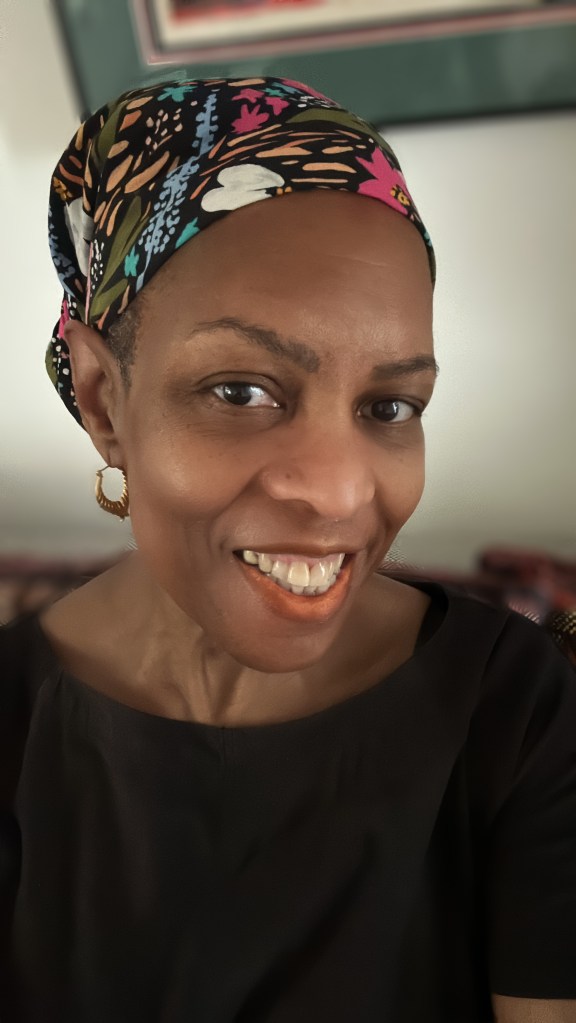

Joanne Godley is a thrice-nominated Pushcart and Best of the Net poet and writer, and a recent MFA graduate from Pacific University. Godley’s work has appeared or is forthcomingin Crab Orchard Review, The Kenyon Review Online, and The Massachusetts Review, among others. She is an Anaphora Arts Fellow in poetry and fiction. How the Black Panthers Fell From the Sky, is a memoir-in-verse and Godley’s first poetry collection. It won the Naomi Long Madgett award for 2025 and will be published in 2026. You can find her at Joannegodley.com, on Instagram at @indigonerd, and on Bluesky at jgodley-doctorpoet.bsky.social

The first time I saw her, she stretched as far as the eye could see in every direction. I’ve never seen God, but I imagine it’s like taking in the ocean for the first time. The ocean was my home — the only home I ever knew. The ocean kept me alive and gave me hope for the future.  

A future where I could be with her for all eternity.

At eight years old, I came home to an empty house, overwhelmed, scared, and exhausted. I could only call my mom in case of emergencies. Unfortunately, fear was not an emergency. I pulled my blue beach bucket out from the closet and meticulously laid all my shells on the floor. I carefully placed each one on paper towels and sorted them according to how they made me feel. Now, I realize why the bucket was so special to me. It represented freedom. The freedom to cry, the freedom to be heard, the freedom to be seen, and the freedom to live judgment-free.  My life seemed full of struggle, even my early years reeked of trauma.

My childhood wasn’t the worst, nor was it a cakewalk. It was marked by abuse, emotional neglect, and abandonment. I grew up in a predominantly Black neighborhood and attended a private Catholic school where I was one of six Black children. I endured years of being made fun of for having “nappy” hair, being “ashy,” “too loud,” “too ghetto,” and “too fat.” When I went home, the neighborhood kids called me “White girl,” said I “talked White,” told me I tried to sound “too smart,” and teased me for wearing a uniform.

I look back on those times, and I’m grateful my mother didn’t keep a gun in the house. Kids can be cruel. I lived in a constant state of anxiety, fear, anger, and self-loathing. I remember longing for death in elementary school. Why am I here? What’s the point of living? No one wants me here. In those moments of desperation, I imagined the ocean’s waves crashing on the shore and beckoning me to reunite with her. The second my feet hit the sand, none of that mattered. The warm sand on the soles of my feet and the grainy beads between my toes instantly cheered me up.

I always bring books to read at the beach, but I never read them. You would think that after decades of going to the beach, I would have learned to leave my books at home. I haven’t. The beach awakened my inner child — the child who didn’t get to exist outside of the beach, the latch-key kid, the kid who had too much responsibility, the child whose dad left and whose mom emotionally departed around the same time, the kid who was misunderstood and bullied.  

She came alive at the beach.

My favorite beach gift was sand dollars. I kept them on top because they were fragile, and I loved them the most. The bumpy, slightly porous texture of the outside and the beautiful pentagon star-shaped holes in the middle made them priceless to me. I held each one. I relished feeling the cold, hard shells in my hand, tracing each groove with my fingers. I rubbed the textured ones against my cheek, closed my eyes, and imagined myself lying in the sand. I felt the waves pulling and pushing my body. I didn’t know it at the time, but it was these small moments of visualization that rescued me from darkness. 

No beach trip was complete without seashells. I came home with my bucket full and happily relived the day. The beach is one of the only places on Earth that bestows gifts freely. As a kid, I remember the shore being filled with shells of all sizes. Perfectly shaped, no cracks, no holes, for as far as the eye could see.

Now, the beach gifts have changed. There are no more sand dollars. I would have better luck finding an intact kidney than an unbroken conch shell. All the years of being polluted and pillaged have finally taken their toll on her. Despite this, she still provides food, life, and shelter for countless species, including us. I decided to stop taking shells and enjoy her beauty while I still can.

The cool air reignites my childlike innocence. The saltwater, dripping down my face, cleanses me of all emotions. The once-cold water now feels like the most heavenly bath. I never want to leave. I long to be a mermaid who can swim away from this life on land and be amongst those who accept me in the sea. The ones who love me no matter the color of my skin, regardless of my pants size, and despite my shoes. They embrace me. Submerged in the blue-green water, I feel the comfort of being in the cosmic womb and the unconditional love and scorn of a parent who disciplines me whenever the limits are pushed.  

Looking out into the distance, I feel humbled by the vast open ocean. Water to my left, water to my right. The powerful waves knock me down and lure me back for more. Now and then, I feel something brushing past me, a colorful fish or a sprig of seaweed. I’m delighted and fascinated, watching schools of fish swim so close. Bright blues and pale yellows dance in the water around my feet. The water is so clear, I can see through to the bottom. No lifeguard forces me to take a 15-minute break.  I happily float for what feels like hours on my back.  The heat from the bright white sun beams down on my skin. I feel like the happiest Thanksgiving turkey.

The ocean saved my life on numerous occasions…I wonder if she knows.

Does she know that other than my daughter, she was the only one who stopped me from hurling myself off a cliff in 2023? When I lost everything within a couple of months. When I discovered the love of my life lied about our entire relationship. Resented my daughter and me. Lured me to Durham under false pretenses. Strung me along with talk of marriage. Lied about me like a dog, painted me out to be a narcissist, posted my intimate photos and videos on websites for all to see, and created fake profiles using my information to spite me. Does she know that the grief almost broke me? That the embarrassment destroyed me? I lost all trust in people. 

Can she sense that it was only memories of being with her that comforted me? The solace of feeling her warm embrace enveloping my body. I closed my eyes and imagined I was there, with her…in her, and for a moment, thoughts of her gave me respite from the torment. Focusing on her relieved me from intrusive thoughts. The times when doors were broken, laundry baskets thrown, and threats made. When I ignored red flags and inflated green ones.

It was only the smell of salt and seaweed carried by the breeze on a humid day that eased my pain. 


Lauren McNeil is thrilled to make her literary debut on Decolonial Passage and grateful for the opportunity to share her voice. Before this publication, you could find her writing in random notebooks, on scraps of paper, or on the Notes app on her phone. A former nurse turned budding creative, she eagerly seeks out opportunities to share her unique perspective. She is a beacon of light in dark places and hopes to inspire future generations. You can find her on Substack and on YouTube.

Decolonial Passage is honored to announce the nominations for next year’s Pushcart Prize Anthology. This list includes writing published during the 2024 calendar year. Congratulations to the nominees!


Poetry

Byron Armstrong – “We are Music”

Ada Chinara – “Gliding”


Short Stories

Musu Bangura – “Night Watch”

Nwafor Emmanuel – “You Are No Longer Welcome Here”

Michael Ogah – “Forgotten Memories”


Essays/Memoirs

Eraldo Souza dos Santos – “Everything Disappears”

Written by a person deemed ethnically ambiguous.

I know France isn’t a racist country, and I am not Arabic, so to speak. I’d like to believe that my resume, my showreel, my social media, or even my face speak for themselves, but apparently, they don’t. My mom has been fully integrated in France since she moved there as a child; yet she’s experienced systemic racism her whole life. She thought that giving me a French first name would be sufficient since I was born in Paris, white and atheist. Apparently not. In primary school, a kitchen server refused to serve me pork, said I should ask my mom if I could have some. That was just the beginning.

But France isn’t a racist country.

I started auditioning as an actress. Casting directors kept asking me about my origins, my ethnicity. I told them I didn’t speak Arabic, that I was born here in Paris, and raised in French culture. They continued asking about my origins.

But France isn’t a racist country.

They asked me to audition for a masseuse role, a Middle-Eastern-looking woman who loses her temper and starts “acting ghetto” with the customers of a five-star hotel because she “just can’t help it, it’s her nature”.  Then they asked me to audition for Fatima’s sister and learn a bit of Arabic. I could do that, right? They asked me to wear a hijab, to play a Syrian refugee. They asked me to play a Muslim YouTuber doing a DIY on how to put on a hijab. They asked me to play Samia, sitting by her husband’s side in a car before being pulled over by the police. “Hey, can you come in and audition for Suburban Arabic Girl Number Four? Basically, you’re with your homies in the subway, and you make a fuss, start yelling at people, throwing things around!”

 But France isn’t a racist country.

You can easily tell France isn’t a racist country when you walk around Paris accompanied by my mom who has dark skin. Besides the aggressive stares and whispers when we go to posh places, I have witnessed her getting pushed by a Karen’s trolly in a fancy market and followed by security guards when we stepped inside various stores. We even had a saleswoman tell my mom as she tried on clothes that she looked more like “someone dealing narcotics at the bottom of the building.” And then: “Are you going to pay cash? Wonder where that money comes from,” followed by condescending laughter. For the record, this last incident happened when my mom tried on a three-thousand-dollar coat that we bought despite everything.

But France isn’t a racist country.

It’s actually easy finding work in France when you have Middle Eastern ancestry. I’ve recently come across the most encouraging video on social media, about a Middle Eastern man who graduated as an airline pilot but couldn’t find work because of his name. A few years ago, I remember reading about another Middle Easterner who applied for a managerial position, got an interview where the employer told him he had the right qualifications, but couldn’t be hired because frankly, “no one will accept being managed by an Arabic man”. For my part, I remember when I applied for a job as a receptionist, and the recruiter pressured me to know if I had a criminal record. Because she “would find out eventually.”

 But France isn’t a racist country.

“So, tell me something: Where are you from? Really from? Oh, gee, why are you getting so cranky about it? It’s just a question! I’m trying to get to know you better! Are you ashamed of your roots? Don’t you want to act as a standard-bearer for all Arabic peoples? Stop playing the victim already! How dare you call me racist. I was about to introduce you to the best couscous restaurant in town! I bet it’ll taste exactly like the one in your country! What did you think of the movies directed by Riad Sattouf?”

But France isn’t a racist country.


Zoé Mahfouz is an award-winning actress, screenwriter and content creator. Her humor pieces have been published in Defenestration Mag, Wingless Dreamer Publisher, Spillwords Press, A Thin Slice of Anxiety and Witcraft. You can follow her on Tiktok @lessautesdhumeurdezoe.

“It’s okay, we’re talking about those Black people. You’re different.”

“You can’t possibly be cousins with her (with your dark hair and brown skin); you   look nothing alike.”

“I know that you think he’s cute, but Koreans don’t go for darker-skinned people.”

“You’re so beautiful and olive complected.”

“She’s an Oreo; more Black than White. She talks White.”

“What’s up with your hair?”

“Your Mama doesn’t know how to do your hair; you shoulda let me do it.”

“Do you feel like you’re more Black or White?”

“What are you?”

“You look exotic; where are you from?”

“My Dad doesn’t know that your Dad’s Black; he thinks you’re Mexican, so it’ll be okay.”

“There’s not supposed to be a Black person in this show; it’s not historically accurate! Oh, sorry. You’re half. That shouldn’t offend you, right?”


Jassy Ez, or Jasmine Ezeb, is an English Literature instructor in New Orleans, Louisiana. She enjoys teaching World Literature to her students and witnessing their light bulb moments as they make connections between old myths and modern-day society. She has a Bachelor’s degree in English Literature from the University of Holy Cross, and she was awarded Best English Student at her graduation. When not working, she likes to spend time with family and friends, explore small bookshops, and record audiobooks.

My momma, who woke up before the roosters crowed and before the early birds tickled worms from the earth, was always the last person ready. As I walked by her room before gracing my spot on the couch for the morning wait, she had on her robe and was just setting the temperature of her curling irons. The third time I checked, she was scrutinizing two almost identical necklaces. Holding one to her chest in front of the mirror, then shaking her beautiful black curls to and fro as she reached across the basin for the other. 

I remember bouncing on the edge of the couch, Bible gripped tightly, as Bobby Jones’ gospel played in the background. Pink peacoat layered on top of a pastel-colored dress, ruffled matching socks, gloves, and polished shoes. Momma assured us that rather than vain pageantry, our attire was symbolism of our adoration for the Lord. When she said this, I imagined angels seated like a panel holding large boxing-style score cards in their wings and watching each of us as we entered the sanctuary. Their task: to rank our attire in order of holiness. As I pondered their nodding in approval or blushing in disdain, I spun my head from the clock to the television so quickly it appeared the hands stood still. Nonetheless, we would be late to church once again.

Throughout the washing of dishes, and syruping all of our pancakes, and ensuring each hair on all four of our heads was in place, she licked her thumb. Swiping a lingering crumb from Leilon’s face, she was finally ready. En route, I begged to crack a window as our dusty van seemed oversaturated with my anxiety and momma’s bitter perfume. The ride usually took about eighteen minutes allowing either for a nap or several minutes of my wishing my mother were a more aggressive driver. She drove as if we were floating on clouds, cranking up The Clark Sisters’ Living in Vain as we coasted. My stomach could have easily competed with the world’s best on beam — tossing and turning in and out of knots. Fifteen minutes late and probably missing all of praise and worship, I struggled to place each foot in front of the other while entering the double doors to the church. Not a single thing would be different on the program; yet I scanned its contents, feeling as though I heard an ominous “tisk” and vowing to make up what we had missed later at home. Momma said God was our everything – a healer and a way maker. And we should be grateful for all He’d done for us — life, groceries, and clothes. But we were always late.

It never made sense to my tween brain. How could she love God so much, dedicate an entire day to honoring Him, but show up late every time? How could she be so rude?  How would God know we took him seriously as we slumped into the last pew of the sanctuary? During my Saturday night scarries — what I called my anxiety-filled dreams on Saturday nights –each church member would turn around in unison, heads shaking in disgust, as we dragged in like stale bread. How many points off would we receive on the scales of good and evil? How would God know I truly cared if we missed half the sermon or praise and worship? As I pondered God’s love evaluation system, questions bounced around in my dome like pickle balls at a senior center. I soon realized I’d left my eyes open, and my head was up instead of bowed during the benediction. How would I ever make it to heaven?


Jasmine Harris is a multi-genre writer and educational specialist featured in the Hidden Sussex Anthology, Prometheus Dreaming, Syndrome Magazine, and several others. She most recently served as the 2023 Arts and Science Center of Southeast Arkansas Arts in Education Artist in Residence.  Harris focuses her writing on celebrating Black culture and community, intersectional identities, and the evaluation of popular culture. She frequently quotes her inspirations as Maya Angelou, Ntozake Shange, and Tupac Shakur. Stay updated with her work and projects through her website https://jasminemharris.weebly.com or on instagram at dr_harris.

Jen Soriano’s writing pulls the reader into her memoir in essays starting with a chronological history of medicine and its approaches to the nervous system. Soriano studied the history of science at Harvard; thus, her book has abundant historic detail. Included in her chronology are the Kahun Papyrus medical documents from 1900 B.C. written by women and focusing on women’s health. These documents were later obscured during Europe’s Middle Ages when St. Thomas Aquinas warned that women were weak, those who practiced healing were minions of the devil, and that hysteria was evil. By 1486, two centuries of witch hunts began across Europe. In 1894 Santiago Ramón y Cajal, founder of modern neurosciences, described the nervous system as organic and flexible, like a system of waterways. And it wasn’t until 1980 that the American Psychological Association stopped using the term hysteria and replaced it with stress disorder.

How does this history fit into the life story of Jen Soriano? Soriano describes herself as someone who has always been nervous. From the ages of twenty-eight to forty-three, she had a series of diagnoses connected to her nervous system. Not only has she suffered from nervous disorders, but she has also had a life of chronic physical pain — pain so great that it kept her awake at night and resulted in her being prescribed meds. So chronic that it led to suicidal ideation in her twenties. Yet Soriano didn’t accept her medical and psychological suffering as an individual circumstance related only to her personal life. Because she had experienced violent dreams of her grandparents for three decades, she was left wondering if she was experiencing transgenerational flashbacks from her grandparents’ trauma in the Philippines. She became certain that the war experiences of the Philippines — including her grandfather being tortured and then disappeared as a prisoner of war and her grandmother having to eke out survival while her home was enemy-occupied — lived on inside of her.   

Born in the US, Soriano realizes that not only her personal experiences, but the history of her body is connected to her forebears and the history of the Philippines. The violence that has been inflicted on the Philippines is hidden behind the American myth of Filipinos as simply agricultural and later healthcare migrants. Yet Filipino immigration to the U.S. has been part of the push-and-pull of colonialism and revolutionary resistance that began with three and a half centuries of Spanish domination. The Spanish viewed the island territory as an outpost for trade where they didn’t even bother teaching the indigenous population Spanish as they did in Latin America. In 1896, the Filipino population revolted against Spanish rule, and during the Spanish-American War that began in 1898, Spain sold the Philippines to the U.S. for $20 million. The war lasted until 1913 and resulted in the deaths of more than one million Filipino people. In World War II, after the Japanese bombed Pearl Harbor, they went on to bomb eight targets throughout the Philippines. In the summer of 1942, the U.S. surrendered the country to Japan. And from 1941-45 more than 1.1 million Filipinos were killed, and some as a result of horrid war crimes that included skinning victims alive.

When Soriano’s parents immigrated to the U.S., they left a large portion of that tragic history behind. Her father was a medical doctor and her mother, an industrial pharmacist. Both parents focused on upward mobility in the Chicago home where they raised the writer and her two brothers. Her father viewed his nuclear family – now cut off from the larger extended family in the Philippines — as a sign of progress. And when her parents took their kids back home for vacation, they stayed in hotels instead of staying with family. The effect on a young Soriano was the absence of a sense of secure attachment with her parents. She felt she hardly knew her dad because he was constantly working. Her mom was distant and did not assume the role of a nurturer. Also, during her youth, both of her medically-trained parents dismissed her complaints about body pain – a dismissal which caused her emotional pain greater than her physical aches. In sum, the writer viewed many of the experiences with her parents as emotional neglect.

The writer’s young adult years included both a process of self-discovery and learning to cope with pain. During her studies at Harvard, Soriano felt alienated from the White elites in her environment. After moving to the San Francisco Bay Area in her mid-twenties, she became part of a Filipino population much larger than she had encountered in the Midwest or on the East Coast. The move to the West Coast brought her closer to her ancestral shores and allowed her to immerse herself in political activism as well as ethnic studies. Performing in a protest band not only served as a therapeutic ritual that advanced social transformation, but it also led to her forming lasting relationships with some of the most significant people in her life. She describes hanging out with her Filipino friends as akin to constructing her own nipa hut that sheltered her from pain and isolation.

Jen Soriano sees the connection between our personal lives, our history, our communal experiences, and the natural environment. For this reason, she can draw the conclusion that nature functions like an autonomic nervous system regulator and our human health depends on the health of our natural environment, especially our rivers. She experienced the interconnection between the personal, social, and environmental firsthand while participating in a protest to resist the damning of the Chico River – the largest river in the Philippines. For centuries, the Chico River has sustained the farming, trading, and daily life of the indigenous people who live near its shores and farther afield. For more than five decades, activists have resisted plans for the construction of hydropower dams on the river system. For Jen Soriano, the Chico River symbolizes a critical crossroads between the exploitation of natural resources and a more sustainable way of being that is not reliant on colonialism, exploitation, and trauma. To experience the full force of this crossroads, we must submerge ourselves in the crystalline whirlpool of the narrative that is her memoir in essays — Nervous.

I think about my ancestors often. Specifically, I think about matters like healing, faith, hope, and love.  Currently, my curiosity centers around how enslaved women were denied time for self-care. In historic photos enslaved women donned hair rags and hair wraps; the difference in wrapping could distinguish between a woman who worked in the house and a woman who worked in the field. Under the wrap one might find fine curls or course matted hair.  Mulattos, by no choice of their own, often inherited their enslavers hair. Some head wrappings were cultural, and some were worn as acts of resistance.

I am reflecting on hair wrapping as a result of being denied the right of self-care. Neglect of personal hygiene at the demand of an enslaver. I started thinking about this, trying to connect the lessons of self-care for our hair based on the lessons that have been passed down over generations without questioning if we should do things differently.

For most women our hair is a symbol of beauty and for some, hair can be a symbol of protest and independence.  My curiosity is focused on the emotional and mental trauma that our ancestors experienced in not being able to care for their hair. What was the psychological cost of enslaved women losing their hair because they were denied the personal right to self-care? This is what has been on my mind. The inability to relieve mental pressure by feeling water wash over their heads on a regular basis, having an itch that caused them to scratch until blood was drawn.  In some cases, if they wanted to untie the coverings, they were denied the right to expose their hair.  

I can’t imagine working in a field among flies, mosquitoes, grasshoppers, and caterpillars and not being able to return home and wash my hair. I cringe at the thought of scratching my scalp infested with lice or creating remedies out of bacon grease, butter, and kerosene while being denied the right to cleanse my scalp.  Imagine hearing a sermon in church about cleanliness being next to Godliness, but being denied the right to bathe.  I am pained by the thought that my ancestors, being treated as property, were made to feel inferior to white women enslavers. White women could flaunt their tresses that enslaved women had to wash, and comb, and care for, while covering their own tresses in a rag. Is there anything more painful than providing the highest level of care to someone that looks at you and calls you property? 

Today we are hyper-focused on our hair because our hair has a history in enslavement, oppression, rejection, and classism. Our hair has a connection to our African ancestors and our white enslavers.

I grew up getting my “hair done” —  meaning washed and pulled into an afro puff, or washed, pressed and curled once every two weeks. Unless it was summer, which meant I went swimming every day. I am grateful that my mother never required me to wear those gawd awful rubber swimming caps. She did, however, demand that I wash and deep condition my hair after my swimming excursions. Water running through my curly, wavy hair felt comforting. For me water is healing, cleansing, a source of renewal and rejuvenation. After immersing myself in water, I feel pretty, clean and shiny, like a new penny. 

My cousin and I celebrated rainy days walking in the rain, no umbrella. We bought Tropical Punch soda pop and walked home slowly. The fun and laughter on those walks still rank as the best days of my youth. Our faces so wet, raindrops hitting the top of our heads; it was magical.

During COVID, I stopped using chemical straightening products in my hair, gaining the pleasure of washing my hair more. I love how water opens my mind, clears my head. Great ideas come to me in the shower. Watering my crown from the top with no protective covering is like watering my garden on a summer’s day. I ache thinking of how the ancestors, after laboring until broken, after being beaten, raped, and forced to produce babies, survived the atrocities of enslavement without being able to wash them away.  What kind of monster was an enslaver to make bathing an option? I mean, water is recovery.

Harriet Jacobs wrote about her life of enslavement; she hid in the attic of a shed for almost seven years to avoid the wrath of her enslaver. She survived summer heat, the cold of winter, fever, and near death. Harriet writes in Incidents of a Slave Girl, “I suffered much more during the second winter than I did during the first period my limbs were benumbed by inaction, and the cold filled them with cramp. I had a very painful sensation of coldness in my head; even my face and tongue suffered, and I lost the power of speech. Of course, it was impossible, under the circumstances, to summon my physician. My brother William came and did all he could for me. Uncle Philip also watched tenderly over me; And poor grandmother crept up and down to inquire whether there were any signs of returning life. I was restored to consciousness by the dashing of cold water in my face.” The mental trauma, emotional toil, and physical hardships are unmeasurable. Thinking about her hair might appear trivial. Yet imagine what she must have felt when her scalp started to itch uncontrollably? Surely, it must have felt like the torture experienced by prisoners of war. I would love to ask her about her journey back to health. I am sure it began with water. Water. I wonder how they made it over, from enslavement to freedom, without the daily ritual of a water dance.

When a mother’s water breaks, she brings life into the world. Water is a representation of all things new. Water is used to dedicate our lives back to the Creator. Water is used to keep the body hydrated, the earth moist, plants, animals, and the universe from overheating and dying. Water is the spiritual renewal of life. When water hits my face in the mornings, I feel renewal. Enslaved women, rising at daybreak with stiff bones, and aching backs, were crippled early in life by the demands of a slave breaker daring them to bring underweight sacks into the storehouse. If working in the field didn’t break you, a whip for not meeting your quota would. I linger in the shower knowing it is a privilege provided me by my ancestors.

I decided to make washing my hair a priority, not for styling, but for connecting to my crown chakra and, in a sense, connecting to my ancestors. The crown chakra gives us access to our intuitive energy and wisdom. The divine feminine is supported innately by the spirit of the Creator through our intuitive understanding. I require connection to creativity, nurturing, maternal connections, and healing support for my self-care. I can be more supportive of others when I am fully centered. The process for spiritual renewal is immersing the whole body, starting at the top of our crown, in water, dedicating ourselves back to life. My water dance feels like that moment after the rain; my body opens like a flower, tired muscles relax, my skin softens, letting the rain roll down my body.

After experiencing macro and micro-aggressions, our crown requires renewal.  I believe our ancestors would consider washing our hair several times a week a privilege. I want to honor them as I work to ensure my own self-care at the highest level of love. Maybe our blood pressure would be lower, maybe our mental health would be better, maybe our thoughts would be clearer. Just like the dew of morning, the mist of water on my brow connects me to something greater than myself.

Black women were not created to be a human resource, a tool for production, an appliance for usage like a machine. We were not created to support everything, everyone, and women of other cultures while neglecting ourselves. We are not made of steel. We can’t carry the anger of the world around us because everyone except us, men included, are immersing their entire bodies in water for renewal daily; meanwhile we wait to refresh our entire body when it is convenient to wash our hair. We are delicate, we are made to be graceful, we are meant to seek our help from the Creator. Ours is a culture of peace.

Our hair is not our crown; it is the ornament of protection decorating our crown. Our hair doesn’t determine how the rest of our body, mind, and soul respond to the issues of life. Yet, great hair is beautiful when topping a nurtured crown. In the end, it is our crown that enables us to radiate from the inside out. When we care for ourselves, we honor our ancestors. 


April L. Smith is a writer, literary agent, and motivational speaker. She is committed to eliminating mindsets that obstruct diversity, equity, and inclusion initiatives, especially for African American women. April is a Yale Writers Workshop alumnus. She loves spending time with her two adult children Kinnidy and Zackary. April lives in Raleigh, NC. She can be found at The Kinzac Group Literary Agency and Marketing Company and on instagram and facebook.

There is no place like home. So, the idiom goes. And generally, it is agreed upon as true. Or, as containing some element of truth at the very least. Not every idiom about home is as literal as this one though. To say a man’s home is his castle doesn’t mean exactly that. To say, in a patriarchal sense, that it is the responsibility of a man to bring home the bacon doesn’t exactly mean that either. If it did, one might ask, jokingly, where that leaves the vegetarian or vegan family.

In a recent PSA by PETA, the animal rights organization appealed to people to stop using anti-animal language. I agree, words matter, but I disagree that using an idiom like “bring home the bacon,” is comparable to using language that would be considered racist, homophobic, or ableist. I’m sure this would likely have me tagged as a proponent of speciesism, which PETA insists is part of our daily conversations. Much like idioms are. Besides “bringing home the bacon” other examples noted by the PSA include “beating a dead horse,” “killing two birds with one stone,” and “taking the bull by the horns.” PETA, of course, provided alternatives for what we might say instead. For “bring home the bacon,” it suggests “bring home the bagels.” For “beat a dead horse,” “feed a fed horse.” For “take the bull by the horns,” “take the flowers by the thorns.”

I love the fact that things mean more than what they purport to mean. It’s why idioms fascinate me. More often than not, I incorporate them in my work. However, I deploy them in a literal sense, usually to emphasize the absurd, but also to find what new thing might show up. Consider, as an example, “beating a dead horse.” In a poem that is a meditation on Coltrane about joy, I wrote:

—born running from lord-knows-what… 

            No. Let allusion find no stable in this song.

No room for measurements, or compromise.

            It’s dead, I know, the horse is dead—

                                    but what to do with the music


trapped under its hide?

In an earlier draft of the poem, which invokes the idiom even more directly, I wrote: “Yes, I know the horse is dead and I want to stop beating it / like a percussion instrument, but what about the music / that’ll stay hidden under its hide if no one lets it out?” I hate to think about what would be lost if I were to follow PETA’s recommendation. The poem is, as I wrote earlier, a meditation on joy. To be more specific, it is about the reality of joy as something one must fight for, especially when there seems to be so much that seeks to rob one of it. By virtue of my name, which translated means joy fills the house, joy should be natural for me, to me, and in some ways, it is. However, it is a difficult thing to think about joy when the reality of death is always at the foreground, especially in this country where one isn’t able to escape the constancy of news about the killings of unarmed Black people. To be sure, the question of home is political. As is the body. And really, what in this country (or anywhere else for that matter) isn’t?

Last year, I couldn’t stop obsessing about death. About the reality that I could be next to have my name included in the long list of names — known and unknown — of people who have been victims of police brutality. It is a terrifying thing. I wrote feverishly. As if my death were near. I could not escape, as my mother pointed out, metaphors about being swallowed. Every poem was essentially about death or dying. As has been the case for me since I started writing, writing was a way for me to figure out all the questions I had. Why is this happening? What can I do to make sure I am not next? Is this even possible? And so, poem after poem after poem, I sought to explore what it means to live inside my body. With this constant fear of death. How exhausting it was. How exhausting it is. The poem above came at a period when I was indeed tired. I wanted to write about something other than death, but it almost seemed impossible.

According to the Merriam-Webster dictionary, to beat a dead horse is:

  1. to keep talking about a subject that has already been discussed or decided
  2. to waste time and effort trying to do something that is impossible

In a way, I became the horse. I couldn’t stop beating myself up for my inability to come up with a solution for systemic issues that are, essentially, the foundation and the building blocks of this country, if we are to think of it as a house. My poems didn’t mean shit. In another poem I ask: “What good is a poem? What good is a poem if it can’t stop a bullet?” In yet another, I ask, “What is a Black body if not an unending question?” I have no answers.

For this poem, I was curious what it means to literally beat a dead horse. It isn’t too far a leap to consider how once, at a point in history, Black people were subjected to burden in the way mules are. Still are. One only needs to consider, for instance, how mass incarceration is just a modern iteration of slavery. It turns out that we are nowhere past the reality of Du Bois’s treatise about  striving in The Souls of Black Folk. Even then, I was curious if there was music to be found in the beaten hide, something akin to joy. My name, as I mentioned above, means joy fills the house. And though a house is not exactly a home (that distinction matters), the body too is, in some ways, a house. Or a home. Can be at least. Whatever language we decide on, however, we can agree that not everyone feels at home in their body. I don’t always.

I don’t always feel at home in most places. Born in Nigeria, in Ilesa, Osun State, I have lived in the United States since I was seventeen. First, in Cypress, TX. Then, Houston, TX. Huntsville, TX. Kingwood, TX. Humble, TX. I have also travelled a bit across the United States. A few years ago, in 2016, I took my first and only trip thus far outside the U.S., to Costa Rica which reminded me so much of home — the gravel road, the hills and mountains on the way to Monteverde were reminiscent of the trips to Imesi-Ile, where my grandparents lived, where my dad was born.

In a recent interview, the question of home came up. “Tell me about home,” the interviewer says. In response, I say:


My relationship with home is kind of a complicated one. For the most part, I believe it is nowhere or rather, everywhere we make ours. I believe we find it, or sometimes, it finds us. In the geographical sense, Nigeria is home. I was born and lived there till I was 17. It was home then. In some ways, it still is though it doesn’t quite feel like home anymore. For the most part, I’ve lived in Houston since 2007. That means it’s been home for that long. In some ways, it too doesn’t feel like home anymore. I still live in Houston, or at least around its perimeters — I currently live in Humble. So, in some other ways, it still very much is home. Home for me isn’t really a fixed place. However, both places have equally been home in the way I understand home — anywhere you belong, where you’re known and always welcome and, where you can return to if you ever leave it.


In the scientific sense of the word, displacement is quite simply a change in position. In a sense, it can be argued that the word displaced is an accurate descriptor for everyone who leaves — either by choice, or otherwise – the place they’ve historically known as home. This, I think is what it means to be in diaspora. No matter how settled one might be in a new home, I think it’s impossible to escape the feeling of homelessness. Of restlessness, which is, for me, a default.

As with my poems, this essay was prompted by a question: Is there still no place like home? The straightforward answer to the question is either a yes or no, but I think it’s more complicated than that. It has something to do with the word ‘still’ which was, in 2018, my word for the year. I don’t remember when I first started deciding on a word for a new year, but the earliest documentation I have of this practice is 2012. The word for that year was “run.”.

I love that a word can have more than one meaning. Still. Still. Still. By definition, being without motion, the continuance of an action or condition, or a static photograph (specifically one obtained from a motion picture). In retrospect, I think the word ‘still’ was important to me in 2018 because the year before that, I was everywhere. I was hardly home. Even when I was home, I spent the majority of my time away from my apartment – a residence I really had so I could have somewhere to sleep when I returned. I almost didn’t do anything else there. In 2017, touring for a book took me to 11 cities outside Houston, across 3 states. Texas: College Station, Laredo, San Antonio, Austin, Galveston, Huntsville, San Marcos. Louisiana: New Orleans, Baton Rouge, Lafayette. Missouri: Kansas City.

To return to the idiom, I found out that its origins trace back to a time in Europe, “before the 14th century when the institution of family started taking precedence over other factors. Society, environment and family life all came into being and also the realization that the person is truly at ease when at home” (theidioms.com). In so many ways, the family we grow up with (or without) shapes our understanding of home. The world outside isn’t always a safe place, and the family, home, in the most ideal circumstance, provides a sense of safety, a sense of refuge.

True as that may be, a question remains for some of us. How can one, how does one, feel at home in a country that wants one dead? I have no answers. Still.


Ayokunle Falomo is Nigerian, American, and the author of Autobiomythography of (Alice James Books, 2024), AFRICANAMERICAN’T (FlowerSong Press, 2022), two self-published collections and African, American (New Delta Review, 2019; selected by Selah Saterstrom as the winner of the New Delta Review‘s eighth annual chapbook contest). A recipient of fellowships from Vermont Studio Center, MacDowell, and the University of Michigan’s Helen Zell Writers’ Program, where he obtained his MFA in Creative Writing–Poetry, his work has been anthologized and published widely.

It takes a reminder, a compelling moment, to bring the scope of sorrow and beauty back into focus. As I entered an RV park in Payson, Arizona, a mountain town favored by locals for its mild summer months, I had such an experience.  Often, in the light of something truly magnificent and inspiring, equal measures of sorrow and beauty mingle. We might know it as poignance, wherein joy and sadness combine to become a sweet fermentation of experiences. This is generally reserved for later years of life. And yet, despite its power, this condition often goes unnoticed.  

Upon arriving, I immediately noticed towering cottonwood trees, their leaves gently agitated by the wind. Safely away from the Phoenix sun, I felt a sense of freedom; no scorching heat would triumph against the breeze or bear with us into the evening. With that thought in mind, I felt refreshed. However, as I drove my motorhome over the winding path to my site, I took note of other things, situations contrary to the beauty of trees and sunlight.

Although called a “resort,” the place is really a trailer park in a small town, pleasantly overshadowed by mountains. Those of us with modest means either vacation here or live in “park model” homes year-round. And, with that, a sense of sorrow prevails, despite the sheltering cottonwoods that resist summer heat. I spoke to a few residents who were older and very concerned about skyrocketing rent. In a mobile home park, you must purchase your unit and then continue to lease the land—until you either sell or vacate the structure. For some residents, the latter option might be their only choice. Few people consider this as they enter such communities. Park owners present new units, ready for purchase, and emphasize the conveniences and amenities of the arrangement. Most people forget that the homes are very costly to move, and they devalue quickly. Moreover, the rent will increase annually—without fail, rent control being very much a thing of the past. Even with this in mind, I am still intrigued by the contrasts of the place.  

A tour of the park reveals a large, well-maintained clubhouse, a handful of newer Class-A motorhomes, and the shiny “park models” awaiting their new owners. Also in evidence are dilapidated structures, dreary with the neglect and desperation of older people who simply cannot afford to move. I spoke to one woman who cares for her 96-year-old husband. After he passes, she plans to walk away from their mobile home and live in a renovated van. And there are other stories, as well.

My nearest neighbor to the west had a number of drunken arguments with her son, when he came to visit and brought his little dog. Hailing from Tennessee, the family has been devastated by opioid addiction and the tragic death of a daughter and sister. Across the road and just to the north, a frail woman in her forties smiles in the mornings, attempting to be cordial as she hurries to work. She was ostracized when her pedophile boyfriend arrived to share her trailer. Although it’s nearly July, they keep Christmas lights blinking in the yard, draped around stone cherubs and pots of wilted flowers. With such occurrences, tragedy feels like the prevailing aspect of life here in the “RV resort.”  However, there is still the soft beauty of nature to enjoy, a power that abides throughout the seasons. And the place is not without a bit of charming irony.

As the only African American in the park, I was greeted in an interesting manner by a white neighbor. She said, quite sternly, “It’s a nice place, very quiet. We don’t have any riff-raff here.” Right. I tried not to laugh out loud or take offense at her insinuations. After all, I am not the owner of a park model. As a full-time writer and RV nomad, I am free — merely passing through as a seasonal guest. Although I am relieved to be leaving, I feel a strong sense of sympathy for this environment, this place of contrasting themes.

For the moment, mountains and pine trees prevail, as I regard the poignance before me. The glories of nature and a gentle climate are powerful in their role, softening an atmosphere of desperation with a sense of beauty, albeit temporarily. And this is the way of things in so many small towns. Such places embody poignance, demonstrating the scope of sorrow and beauty. I will be grateful to move on in a couple of weeks, as new horizons await.    


A. M. Palmer is a writer, graphic designer, and retired park ranger with work appearing in Belle Ombre, Adelaide Literary Magazine, Dissident Voice, and other publications. Inroads: An Urban Park Anthology is the author’s first book. Palmer holds a master’s degree in history from the University of San Diego and continues to research art and social history with a variety of upcoming projects. The author is a member of the National Association of Independent Writers and Editors.  Read the author’s latest work at A.M. Palmer, Literary Nonfiction.

Decolonial Passage is honored to announce the 2023 nominations for the Best of the Net Anthology.  This list includes writing published between July 1, 2022 and June 30, 2023.  Congratulations to the nominees!

Poetry

“Read the Receipts” by Nancy L. Meyer

“The Food of Our Ancestors” by Oliver Sopulu Odo

“I’ve Kept You Alive” by Mildred Kiconco Barya

“Blight” by Catherine Harnett

“We Were Always Hungry” by Leslie B. Neustadt

“Losing the Zero” by Aubrianna Snow

Short Stories

“Zain” by Sophia Khan

“Number Ninety-Four” by Mehreen Ahmed

Creative Nonfiction

“Searching for Aina in Hawaii” by Kathy Watson

“The Butterfly Harvesters” by Cheryl Atim Alexander

JESSICA and ANNIE were two of the most super-duper, uber forces in my second-grade class at Brethren Missionary School where I had been banished by my professor parents. Run by and for White expatriates, the admissions practice at Brethren meant no colour bar impeded wealthy Nigerian locals and rare hybrids.

At seven years of age, I was aware that these two big timers’ energetic vibrations seeped insidiously into everything – everywhere – altogether — without discrimination.

Yes indeed, everything about JESSICA and ANNIE was big, bold, brassy and BOMBASTIC.

Boom! Boom! Boom! KABOOM!

Reverberating echoes flared, flinched and flickered every time these two beauties entered any    room with their long, loose limbs, luxurious locks of accessorized hair, high top sneakers and empty, shell-blue peepers. It seemed that everywhere I went, they were there too. Not because they relished gazing at my brown face but because they took up SO-MUCH-SPACE, evidently enjoying using their invisible elbows to prod me out of their way with impunity.

OUCH!

My motley-type of mother said JESSICA and ANNIE were “strapping yet striking in response to my query about how pretty she thought they were. Come again, Mummy?

Strapping and striking like the Vikings?” I further inquired.

“That’s right, Cher!” she chuckled. Then smiling, she stated dryly, “Hitler would have been proud of those two”.

Her pointed wink and suppressed girlish giggle told me the last point wasn’t intended to be a compliment, and so I garnered she was trying to comfort me in her familiar, feeble-while-bizarre kind of way. Regardless, I was under no illusion that I was of any significance when standing alongside the two little-girl giants christened JESSICA and ANNIE. Me, with my cornrow hair; them, with their corn-colored hair seemed to say it all.

Corn-colored was better than cornrowed.

I didn’t know exactly why this had to be so, but it seemed incontestable by the way JESSICA and ANNIE looked right through me as if I wasn’t there.

I will never look like them, no matter how hard I try.

From their imperious ribbon hair ties all the way down to their frilly ankle socks, these two outdid me in every way. Even more hellacious were their voguish backpacks hanging side by side in their respective cubbies; one red and one blue, sequined embroidered initials and all, commanding attention from every corner of the room.

One warm morning, swaddled by the green-grey, partially misty hills of the Jos Plateau — an emerald shawl, perfectly draped, ethereal as a scene from the Brigadoon of my wildest daydream — all thirty of us children were sitting cross legged on the floor of our open-door classroom, when Miss Rose chose JESSICA and ANNIE to show and tell where they were in their science project. Springing to their feet in unison, and speaking accordingly, these beauties proudly yet aloofly held up their once empty jam jars now filled to the brim with piles of brown pellets. They explained that they had spent the previous week collecting the pellets, which were actually called cocoons — if you pleaseand were going to keep a close watch on them until they turned into butterflies. Up until this point, I had been staring at these two in reluctant admiration.

A shrill, sane voice from the back of the class asked Miss Rose, “What are they going to do with the butterflies?”

Now grinning in unison, JESSICA and ANNIE produced a glass frame divided into separate compartments, the way a pair of premeditating magicians might, and said they were going to poke the butterflies through the heart in order to kill them, using colored pins (they gestured to their weapons) then place them in the glass frame as a gift to the class so we could all admire them forever and ever.

Silence.

Then, the worst type of stabbing pain began to form in my gut, a sort of wretched chronic punch, as I slowly digested the information amidst these monsters’ beaming faces.

Jagged red evil eyes.

Why was Miss Rose nodding and clapping?

Looking around the room, I noticed some of the other children in my class with accentuated downward-turned smiles.

☹☹☹

I didn’t need to find out how many of them felt the same way that I did.

I just knew that I had to act stealthily and FAST!

***

If anyone had been paying close attention, they might have perceived that I became very quiet for a good portion of that whole day. Indeed, they might have noticed that I went missing at lunch time. But I don’t think that was the case. Nobody noticed at all that during our tennis class, on the tennis courts, while everyone else was baking in the generous Nigerian sun, under the scrupulous watch of three large birds of prey– stately as the magisterial magi of Persian fame and biblical proportions — I stole my wily way back up to the second-grade classroom.

HA-alleluia! It was my lucky day. (No one was there.)

Feverishly I made a bee line for those cocoons, and wouldn’t you know, when I ransacked the red and blue sequined embroidered backpacks, those darlings rose to the top almost immediately, making things easy peasy. I grabbed the two teaming-full jars, wrapped them in paper towels, wedged them under my arms and fled the scene running and running and running until I came to the old, prickly briar patch that nobody liked to go anywhere near — the one that I had always fancied the plantation proverbial Brer Rabbit would have loved. Then my seven-year-old fingers successfully prised off those ghastly jam jar lids, and I threw those darlings into that briar patch as far back as I possibly could.

 “You’re free now!” I whispered, gleefully.

***

Immediately fleeing the scene, my surroundings became more nether-worldly with each step. Somewhere in the not-too-distant landscape I pensively observed my sister, Clare, milling her way around the school compound.

Hmm. What was this?

Not only was Clare a whole three years older than me, but she was also quite a bit taller, and skinnier too, and she walked with a slight stoop. Her eyes were larger than mine, with a slight bulge about them, and she wore her dark brown hair in a short, tightish, slightly unkempt afro. Sometimes when she poked around aimlessly, she reminded me of an ostrich, and other times she seemed like Olive Oil (the cartoon character with the annoyingly high-pitched American voice).

Today my sister is an odd-looking ostrich.

At school, Clare was devilish in her modus operandi. As an interesting consequence of her “unacceptable acting-out behaviors” she was often to be found enjoying enviable coloring activities — during which she was allowed to use thick, bright, smelly, and interesting-looking crayons in the counselor’s office — and otherwise wander around, unfettered, to her hearts content.

Mmm, how I love the scent of those pens. Especially the grape.

Ordinarily Clare despised, and saddened me, but today I felt so happy and lucky to see that weirdo sister of mine en route to rejoin my classmates at the tennis courts! A potentially positive interaction had to be possible.

What if I tell Clare?

As I got closer to her, I became aware that my sister was not alone. Elouise, her orange-haired, freckle-faced partner in crime — as coined by my mother — had popped up like a bad penny, and now they both were looking at me with slightly sardonic grins on their faces. My feet, in seeming concert with my heart became languid with apprehension. I hesitated.

Don’t be a fraidy cat. Shuku shuku is for supper tonight!

Feeling a small burst of hopeful energy, I began to open my mouth…but before I could get a word out, the dubious duo vomited gibberish at me, projectile style, in the “secret language,” that existed only between the two of them, and ran off laughing, apparently metamorphosed into a pair of frenzied, howling hyenas.

I’d been effectively ditched by the feathered critter and its sidekick.

Once detached from Daliesque reality, it was easy to slide back onto the tennis courts unnoticed. Next to JESSICA and ANNIE, I was not that visible after all. Later on, back in the classroom, my spine trembling like a jellyfish, I watched and waited to see what would happen if per chance these two huntresses decided to furrow into their bags before the end of the day.

Well, they did of course.

Oh, my. Big ugly tears!

And later, threats that when found, their missionary daddies would expel whichever uncivilized thief it was who stole from them. I shrugged (inwardly, of course).

Oh, well. I suppose the crème de la crème did not get the cream today?

Jesus is watching, he will PUNISH you!” was J and A’s final ominous warning, followed up by a long menacing stare unmistakably directed towards the five darkest-skinned pupils in the room. I must have been momentarily unrestrained for I accidentally allowed something sounding like a scoff to escape from my throat. Upon so doing, my thunderously unhelpful heartbeat dropped into my gut…and then, WHAT in the? Suddenly a storm of butterflies was trapped in that hysterical tummy of mine. Well, a real MIRACLE must have happened, right around that time, because somebody without any type of face that Iwas able to see, ever so swiftly transformed my scoff into a camouflage cough.

Ahem. Ahem, AHEM…!

Oh, thank you, Miss Rose”. I watched the words float out of my mouth in a big fluffy thought bubble, syrupy sweet, and soft as candy floss, as I reached for the partial glass of lukewarm water my missionary teacher had extended in my direction as I furtively rubbed my belly.

Relax butterflies.

Jesus was not going to punish me. Up until this point, I don’t think I had ever been as sure about anything in my whole, little-kid life.

A little later on, the boarders and I watched the Nigerian Sun set

slowly;

a hazy, lazy red eye, filled up and fed up

with enough hungry secrets to last one hundred lifetimes,

its hot sultry stare seeming to devour my mulatto skin, knowingly

nurturing my Blackness without my consent,

and it was then that I remembered, something my misfit-of-a-mother liked to say:

“Cheryl wears her heart on her sleeve”.

Well, maybe—I thought, with the most insolent-looking, inward eyeroll that my mother could have possibly imagined. But, not this time. This time, my poker face was simply superlative.


Cheryl Atim Alexander is an African European woman primarily of Nigerian, Greek, and British descent.  Born into a family of readers and writers, she has never known a time when she wasn’t reading or writing lyrics, poems and stories. Currently an MFA student, Cheryl is enjoying leaning into a newer identity as a multi-genre writer. Her writing material emanates from lived, professional, and educational experiences surrounding holistic mental health and wellness, new thought spirituality, and human and animal rights. She aims to entertain, educate, agitate, and activate soul-filled inspiration to anyone who may have temporarily misplaced their voice. You can find her on LinkedIn at Cheryl Atim Alexander, LICSW, RMT.

In 2000, I was working at Shell in Bangladesh as a reservoir engineer, when I was sent abroad to Netherland for training. The training center was a microcosm of Shell’s global operations, with new employees from Scotland, Spain, France, and America, as well as countries that were just starting to hire local employees where Shell was developing oil and gas. There were geologists and engineers in training from Venezuela, Brunei, Syria, and other Arab countries.

In the Bangladesh office, I was the only Bangladeshi engineer in the explorations team, besides two local geologists. I had fought to join the explorations team, at great opposition from the explorations manager. The country manager had forcefully inserted me into that team. I forget what they, the expats, called us, the local employees, in the Bangladesh office. Perhaps we were locals, or perhaps we were called natives. The global employees sat separately at lunch, and, in general, expressed vicious frustrations about the country and the local employees working for them. They complained about the air quality – they were concerned about their children’s health, and many of the employees’ spouses wanted to leave Bangladesh. One geologist referred to Dhaka as a block of concrete. There were other, constant snide remarks, about the corruption of Bangladeshis, the laziness of Bangladeshis, and the lack of technological capacity. Once I made the mistake of asking an expat if they had traveled in Bangladesh, mentioning the Sundarbans, and the man looked at me with shocked eyes before replying that his children were too small to travel.

Most of the global employees were Dutch or British, with a few Americans. The atmosphere was toxic. In the explorations team, no one spoke to me, except for the reservoir engineer who was training me. When I did speak to someone, they were hostile, and they let me know what they thought of me. I had studied in the US for my undergraduate and master’s degrees and just returned to the country, so this level of open racism was shocking to me. It felt like I was back in colonial times. Once, I was asked to prepare a report. When I was about to send it out, the English engineer who was supervising me, a tall, bald-headed, smooth-faced guy, one of the nicest people in the office, said that he would check over my work first, as he was a native speaker of the language.

After months of facing constant prejudice and humiliation in Bangladesh, being in the Netherlands among other bright-eyed international trainees was a welcome change. Everyone was friendly, and there were no barriers among us. The training center was located between Noordwijk and Noordwijkerhout, beside the North Sea. I believe this was the Hotel NH Noordwijk Conference Center in Leeuwenhorst. At the end of the day, we went out to either town, Noordwijkerhout or Noordwijk, for shopping or dining. We hired out cycles to bike to the North Sea and walk on a beach scattered with striking blue jellyfish.

I was there to attend two courses. The first course was introductory. Expensive consultants had been hired to facilitate team building among new employees. We were split into several groups. Each group had to arrive by themselves at a retreat in Liege, in Belgium, while performing some wild tasks en route. The first challenge was that we had to hit about five or six countries on the way. We cracked the riddle ecstatically, putting our heads together. We would simply visit the embassies of these countries in Hague, and then take a train to Maastricht. On the train, we had to sing a song and get strangers to sing along with us. In Maastricht, we slept outside the train station all night in the cool fall weather, till finally making it to our cabin, where we slept on bunk beds and cooked and cleaned the cabin ourselves. By the end of the first week, we were fast friends.

When we returned to the training center, many of the trainees would show up at the Schiphol airport on the weekends to catch a flight to another European city. Others rode the super-fast trains to cities in the Netherlands, Belgium, or Paris. There were other kinds of entertainment. Some of the men went to a live sex show, or they brought women home with them to have sex and then later clean up after them. At our training center, no outside visitors were allowed. It was a big hotel, with a dining hall downstairs that served the same food for weeks. The only relief was the Indonesian sambal served on the side, an acquirement from the Dutch colonization of Indonesia. This bottled sambal added some spice to our bland food. We used to all dream of our native foods at night. Once, the young American engineer from Texas begged me to go out to a McDonald’s restaurant with her. I forget where the McDonald’s was. Amsterdam? Hague? Or in the local village? I will never forget that meal. We relished our burgers and fries, marveling that Europeans ate their fries with mayonnaise. The American engineer, whom I remember as a round-faced, blonde-haired, jolly person in T-shirts and jeans, was my favorite person there. She was charming in her innocence and earnestness, and we soon bonded over our nostalgia for America.

On a November day in 2000, as I watched the US election results from my hotel room, there was a shocking turn of events. George W. Bush had won the election. When I rode the elevator downstairs, all the international trainees at the dining table were stunned, either speaking in fast voices or sitting mutely with ashen faces. There was a heavy sense of bad things to come. Only my dear American friend from the Houston office seemed blithely unaware of the cataclysm the rest of us feared. Despite being my favorite person, she often made remarks with which the rest of us vehemently disagreed. We would round on her and educate her on the spot.

Once we had been having breakfast in the dining room, digging into fried eggs and fried tomatoes and paring grapefruit, when she had said, “America is trying to help world poverty by sending food and money to other countries, but how much can America keep giving?”

The rest of us had challenged her, saying that was not what caused poverty or famine, not a lack of food, and that America was not helping by keeping countries in debt. Through these debts, America and other Western countries controlled these countries’ government budgets by spending, siphoning off poor countries’ resources and controlling their policies by holding them hostage.

In a few weeks, we finished the introductory course of team building and bonding. I stayed on for another course with the other engineers and geologists. Downstairs in the hotel lobby, a large poster showed the price of oil in barrels. One day, an Iraqi employee arrived. We were immediately put on high security. Even before the man stepped foot on campus, all the trainees were briefed on the conduct we would have to follow. We were not to speak to him. He was not allowed in several areas. I believe he was not allowed access to the computers. I never saw him, but like others, I was disturbed by the tense atmosphere in the conference center. I couldn’t stop thinking about how he must feel, moving through this sea of hostility, restricted access, closed doors, and frightened faces turning away from him.

In 2008, when I read Joseph O’Neill’s Netherland about 9/11 and its aftereffects on a Dutchman living in New York, a novel the former President Barack Obama gave his seal of approval by telling the New York Times magazine that he was tired of briefings and was relaxing at nights with the novel Netherland, I was already familiar with the Netherlands, its colonial history and its neocolonial present. In 2000, I had sat together at meals with young people from all over the world with a dread in the pits of our stomachs that President George W. Bush was going to turn the world upside down. For O’Neill’s character in Netherland, 9/11 was a shocking, lifechanging event that struck a blow to his comfortable cosmopolitan existence in New York. His character didn’t seem too concerned about the US invasion of Iraq — a war that would result in over a million dead Iraqis, over five million orphans, the torture of Iraqi civilians, depleted uranium waste left behind that caused widespread cancer, and the rise of ISIS. But from where we were sitting in 2000, the people outside of America, we could already see the future, beyond the scope of the novel Netherland.


Gemini Wahhaj is the author of the novel The Children of This Madness (7.13 Books, Fall 2023) — a complex tale of modern Bengalis that illuminates the recent histories not only of Bangladesh, but of America and Iraq, and the short-story collection Katy Family (Jackleg Press, Spring 2025). Her fiction has been published or will be forthcoming in Granta, Third Coast, Chicago Quarterly Review, and other magazines. She has a PhD in creative writing from the University of Houston, where she received the James A. Michener award for fiction (judged by Claudia Rankine) and the Cambor/Inprint fellowship. She is Associate Professor of English at Lone Star College in Houston.

I never need to open my refrigerator to know what produce it houses; I keep a mental file of what I have purchased. For instance, I know that right now nestled next to the long-lived carrots and celery are a single red pepper and a package of cremini mushrooms.

These vegetables nag at my memory because they must be used soon, or they will spoil.  Fruit is easier to track; it mounds in changing patterns, visibly, in a bowl on the counter.  I bought a bowl from a Signals and Wireless catalog warehouse sale nearly twenty years ago, and since then it has been a focal point of my kitchen.  Today I removed a large cantaloupe from it and cut it up; I peeled an orange yesterday, and as I bit each section in half, its sweet, sticky juice ran down my fingers.   I will keep eyeing the lemons this week, pondering—muffins? lemon-sauced chicken?

Somehow, I have become a person who plans meals around produce—around a deep-seated fear of wasting.  It should not be surprising to anyone that fear leads to oversight—to order. For me, this particular fear manifests as a steady anxiety as I move through each week—even before that, as I shop, agonizing over the amount of fresh goods to buy. Often, I place three apples in a bag, then return one to the display, calculating: how many days will I cut one up for lunch? I weigh a bag of hearts of Romaine in one hand and a bundle of Brussels sprouts in the other—too much for a single week? 

I used to plan meals enthusiastically for my three boys and myself, the years we were alone, especially as they reached high school, and I had to maintain a budget.  They could eat enormous amounts of food. It was my job to make sure there was enough, that it was affordable, and that it was relatively healthy. I always went to the store with a list of dinner ideas for that week—hearty meals, often pasta-based, that would feed these young men who ate like a crowd — chicken lasagna, spaghetti pie, brown rice hotdish. Buying extra ingredients, especially fresh ones, was a burden I avoided.  I could succeed only if I avoided waste.

I made up rules in those days, too, allowing myself permission to buy certain items that were stocked in abundance—say, cereal—only when they were both on sale and I had a coupon.  It was never onerous to remember the parameters I set for myself; I was proud of my frugality and practicality.

Now, things have shifted; I have shifted. I go to the store with a list and some vague ideas, but I prefer to plan as I cook. This week, I will make a pinto-bean and vegetable casserole on Monday that will use peppers, zucchini, loads of onions; chicken drumsticks and a potato kugel on Thursday that will incorporate one package of mushrooms hiding in the crisper drawer and the remnants of a carton of sour cream. As the week progresses, I will worry more and more, scour through cookbooks to find the recipe that will allow me to use what I have before it goes bad.

When I wake in the middle of the night, I wonder: What will I do with that red pepper? An egg bake? I experience a strange mixture of triumph and relief as I figure it out, plot to avoid my shame — letting food spoil.

*                *                      *                      *                      *

The kitchen of my childhood was not always a happy place. My mother stayed at home with my two sisters, my brother, and me for many years, filling our table with hearty meals she had grown up with on the farm — fried chicken, pot roast, meat loaf. She served what my father wanted, always—never scrambled eggs because he preferred them fried; bacon that was limp rather than crisp.  We begged her to make our Sunday frozen orange juice in the blender; we craved the light froth at the top of our glass and, as we kept sipping, the cold tart taste of orange that followed. Though she made it that way sometimes, she seemed annoyed that we would constantly ask.

She did some canning in those days, too. I remember standing next to her, my nose just above the cupboard’s edge, watching her pour hot paraffin onto jars of chokecherry jelly. I sensed she did not like this work; she spoke sharply to me when I asked to have a jelly sandwich for lunch.  I knew even then she was trying to be frugal, having watched her peel a sink full of the tiny apples that grew on the tree right outside the kitchen window for a measly pie or two. The thin spirals of peel mounded in the sink, as she turned each fruit in her hand, boring out the bruises, their sweet, cidery odor filling the kitchen. She did the work because she knew she ought to and because she had helped my grandmother on their farm do it as she grew up, but it didn’t seem to give her much joy.

Then, my parents divorced (my father was an alcoholic and a philanderer), and my only brother died — twin tragedies that would change the whole trajectory of our childhoods and family life. My mother had to take multiple jobs to support us, since at the time she had no marketable skills. She’d gotten married at 19, having given up a decent secretarial job and independence, as did many women in the early 1960’s. She had four children in quick succession and had to use her energy to clean and cook and keep us out of her hair. What spare energy she had was spent to defend my father against bosses made angry when he missed work or came in hung over. She had little energy left over to hold my father accountable for his dalliances; the lipstick collars (the worst clichés) slid by with little fuss, until he confessed to my mother that he had carried on an affair with the next-door neighbor couple. That was enough for her, and the Catholic faith she treasured, to permit divorce.

After the divorce, my father rarely paid child support (which we discovered only years later), and so my mother shouldered the entire burden of feeding us on a very strict budget.  I wonder if she was as proud of her efforts as I am of mine now.

The divorce changed the way we ate, of course. Dinner was whatever could be made quickly — Kraft macaroni and cheese, Dinty Moore beef stew, spaghetti with Ragu sauce, fried Spam sandwiches.  I assumed some of the responsibility for cooking—really, heating—those simple meals because I was interested and because I knew it would help my mother.  The mood in our kitchen, not surprisingly, was often lighter without my father and the tension his drinking had brought to the family. But there was still a hint of tension underneath.

We were not destitute, but we were poor.  We had enough. Mostly. Sitting around the kitchen table on Sunday mornings, we scoured the newspaper—together, all of us, my mother, my two sisters, and I—for grocery coupons and sale items. Eventually, I shouldered this task of meal planning for the entire family. Trips to the grocery store would be as purposeful and efficient as I could design them—there was no extra money for frivolous food we didn’t explicitly need for meals.  I relished the task, took pride in making sure we ate well on our skimpy budget.

Toward the end of the month, inevitably, money dwindled. No more shopping could be done.  We ate generic canned chicken noodle soup (with its salty, slightly rancid broth) or oatmeal, sometimes bread and gravy — a dish I despised. I understood that using up leftovers was our only choice, but I swallowed my mouthfuls grudgingly.

Once the beginning of the month came, my mother got paid, and the welfare check came, we’d have a full cupboard — beginning again a cycle of abundance and want that became a familiar element of the landscape of my childhood.

We were not unhappy.  Dinners were full of conversation; we cleared the kitchen table and did homework there.  A single box of Chef Boyardee pizza mix, embellished with a bit of hamburger, fostered a celebratory mood. We picked up slices speckled with small mounds of meat, bit off greasy mouthfuls, tangy with the flavor of the sauce.  A simple bowl of Dinty Moore beef stew over a toasted English muffin satisfied; its gravy scent was overlaid with the sweet, earthy smell of carrots. The glory was not that the food tasted good; it was that we were together, fighting—though we wouldn’t have said it at the time—for our place in the world, in spite of setbacks.

The older I got, the easier it got; my mother gained job experience. She moved into accounts payable and then into credit — work that was both higher paying and more satisfying.  It took less effort to make ends meet.  She eventually began cooking again, as she transitioned from multiple jobs to just one.  She cooked for pleasure now: rich manicotti, affordable sirloin steak — seasoned and broiled –, mashed potatoes, baby peas.

When we three girls were in high school, she bought a dishwasher and had my uncle install it, though that did mean no more nights when my two sisters and I stood at our separate stations—washing, rinsing, drying and putting away the dishes—with music and good-natured bickering our soundtrack for this simple work.

*                *                      *                      *                      *

The kitchen of my present is a perfect room. It is large and square, painted recently a pale gray green with one wall—the one above the windows that face the front yard (with its bird feeders, hosting cardinals and chickadees)—painted a rich lavender-blue for contrast. Cupboards line three walls, including a tall pantry cupboard.

This is the room that sold the house to me. I spend most of my time here—it’s where the music is, where guests gather.  It’s where I scan cookbooks and magazines, looking for creative ways to use the vegetables in my crisper drawer.

This morning, as I diced that red pepper I was so worried about for scrambled eggs, I smelled its sweet acidity and felt a deep satisfaction with my life; I did not know I would end up here, in such abundance. I lead a life of privilege, one that still takes me by surprise. As a child, we rarely had fresh vegetables, except for potatoes and carrots from our garden. As I chop, I feel enduringly grateful for what I have.

Out of abundance comes vigilance.  I must not waste what I am lucky to have. To have enough also enables me to give, to extend my good fortune to others.

My son Nate stopped by yesterday because he was sick and needed to borrow a thermometer.  He took his temperature in my kitchen, then pocketed the thermometer because he needs to make sure he’s fever-free for work. Before he left, I also managed to place in his hands a few bottles of non-alcoholic beer I bought for him for a recent family gathering. I offered packets of tea for his cold, and a lemon — too good in the tea — for the vitamin C.

On rare occasions, a stalk of celery browns and wilts, or a bowl of leftover gravy or spaghetti sauce (always homemade) molds in its dark corner of the refrigerator.  I throw the celery into the compost bucket—a good save since most food that goes bad in my house can be saved in some way.  If I had a dog, I’d save even more:  I’d feed him whatever I couldn’t eat, as my grandmother did on the farm. 

I have wrestled my demons and won, warded off the certain shame that comes with failure. The reward is the wrestling.  I keep my convictions in a world of ease and waste, with muscular effort.


Tracy Youngblom earned her MFA in Poetry from the Warren Wilson College Program for Writers. She has published two chapbooks of poems and two full-length collections, including her most recent, Boy, set to release in February 2023. Her work has appeared in journals such as Shenandoah, Big Muddy, Cortland Review, New York Quarterly, Potomac Review, North Dakota Quarterly, and many other places. She has twice been nominated for a Pushcart Prize in Poetry, most recently in 2017.

We pronounce them “luckies,” which always made sense growing up because we felt so lucky to eat them. It was their salty richness, their fluffy potato innards, their cascade of oil soaking the paper towels ensconcing them on the dinner table.

There were other delights at Hanukah every year, from sweet gelt munched far too early in the day, to strips of corned beef I adorably termed “Hanukah bacon,” to the classic gefilte fish only the adults looked forward to. But latkes, for our ever-secularizing family, were the reason for the season.

It was my aunt, Sherri, who guarded the latke recipe. As a teenager and young adult, Sherri had been a wayward rebel, eschewing her parents’ warnings as she threw herself from one reckless adventure to the next. But in her mellow middle age, she had come to adopt a respect for tradition that even Tevya from Fiddler on the Roof would have been proud to see.

Sherri diligently grated potatoes every winter, carefully sprinkled matzo meal into the gloopy mess, and unfailingly watched for the telltale browning on the little pancakes. Her partner, Ron, stood by her side at the stove, piling the sizzling latkes on the paper-towel-laden plates. Early on, I learned that if I helped dish out the spoonfuls of batter into the boiling oil, I might be able to snag a latke or two fresh off the stove.

And as the years went by, I also gradually learned the family recipe for latkes. I learned the delicate but entirely unscientific proportions—one to two potatoes per person, two onions per ten potatoes. I learned how to identify just the right consistency of the mush—it should be gloppy, but not runny. And I learned how to navigate the all-important oil that brought the whole ceremony together, turning spoonfuls of lifeless goop into morsels no one could put down—it had to be sizzling, but not popping. That was the key.

While my three younger siblings washed their hands as soon as potato-peeling duty was over, I, like my aunt before me and who knows how many eldest daughters before us, hovered in the kitchen learning the family lessons.

But would it be enough to make latkes on my own?

I wouldn’t have a choice, moving from Pittsburgh and its rich multicultural heritage, to a Montana town with just over 20,000 people and no synagogue.

I wrung my hands as I drove from outlying town to outlying town, scouring each small grocery store for the crucial Manischewitz ingredient. I eventually thought to google matzo meal, and my kind Jewish forebears directed me to the exact aisle where a tub of the essential item could be found.

I carted my treasure back to my studio apartment, along with my eggs, onions, potatoes, salt and, of course, oil. I bought a cheese grater and sat down to work, pulling the trash can beneath me like we had always done at home. I sawed with a small knife and missed my aunt’s Rotato device.

My fingers bled, potato chunks flew, and I found myself missing the camaraderie of peeling — the familiar arguments over music and the competitions over potatoes peeled. I glanced at my new menorah, still gleaming and free of wax. It had been a gift from my mom when I moved to Montana.

I wrung my fingers out after the unending chore of grating. I mixed in all of the ingredients and, with more than a little trepidation, began to pour the oil.

My first spoonful sizzled sharply, and I winced. Hot oil splashed out of the pan at me. I reached for another dollop, and then the fire alarm started blaring.

I panicked and grabbed the entire pan, yanking it off the burner and running with it out onto the apartment lawn. I threw the hot pan into the snow and fanned at the smoky air with the door. Eventually, the alarm stopped sounding, and I gingerly picked up the pan.

With a fan blaring and the door propped open to the cold December air, I carefully ladled out the rest of my batter. I let the latkes cool in the soaked paper towels and seasoned them generously with salt before I dared try one.

They looked like my aunt’s, they smelled like my aunt’s, but after six hours of nonstop work in the kitchen, I couldn’t bear it if they didn’t taste like my aunt’s. I selected a cooling latke from the top of my pile. And there it was. The salty flavor. The flaky texture. As good as I had tasted in my grandmother’s small apartment in Pittsburgh.

Glowing, I eagerly wrapped up the rest and piled Tupperware upon Tupperware into my green VW Beetle. I careened into my office, my arms laden with latkes, ecstatic to share my triumph with my coworkers.

“Latkes,” I called out breathlessly. “I made latkes, everybody.”

The newsroom stared at me. No one made a move to get out of a chair. I remembered how my family always pronounced Yiddish and Hebrew words differently, from latke, to kebosh, to l’chaim.

“Lat-kuhs,” I deliberately enunciated. “There are lat-kuhs here.”

Still, no commotion.

I wasn’t deterred. I picked up one of the Tupperware containers and carried it to my nearest coworker. He just looked at me blankly. Then the next just stared, and the next, until I found that not a single Montanan in my forty-person newsroom had ever heard of a latke.

Bewildered, I tried to explain their potato-filled flavor without dumbing them down to simple potato pancakes. I couldn’t help but start to panic as I saw the steam on the sides of the Tupperware begin to vanish, signifying the beloved latkes were cooling at an alarming rate.

“Try one!” I insisted.

My friend Jake, a blonde-haired Idaho transplant, lumbered his way over to me and my sprawling latke collection. I babbled about applesauce and sour cream as he took his first bite.

“A little oily,” he noted as he chewed.

I grinned and grabbed one for myself. “I know.”


Bret Anne Serbin is a journalist in Montana. Her nonfiction has been featured in Deep Wild Journal and is forthcoming in Archer Magazine. She graduated from Swarthmore College with a degree in English. She’s originally from Pittsburgh, Pennsylvania.