Decolonial Passage is honored to announce the nominations for next year’s Pushcart Prize Anthology. This list includes writing published during the 2025 calendar year. Congratulations to the nominees!


Poetry

Jesse Gabriel Gonzalez – “Moon Blues”

Yanis Iqbal – “and how shall i walk when the street sings of fire?”


Short Stories

.Chisaraokwu. – “The Visitor”


Essays/Memoirs

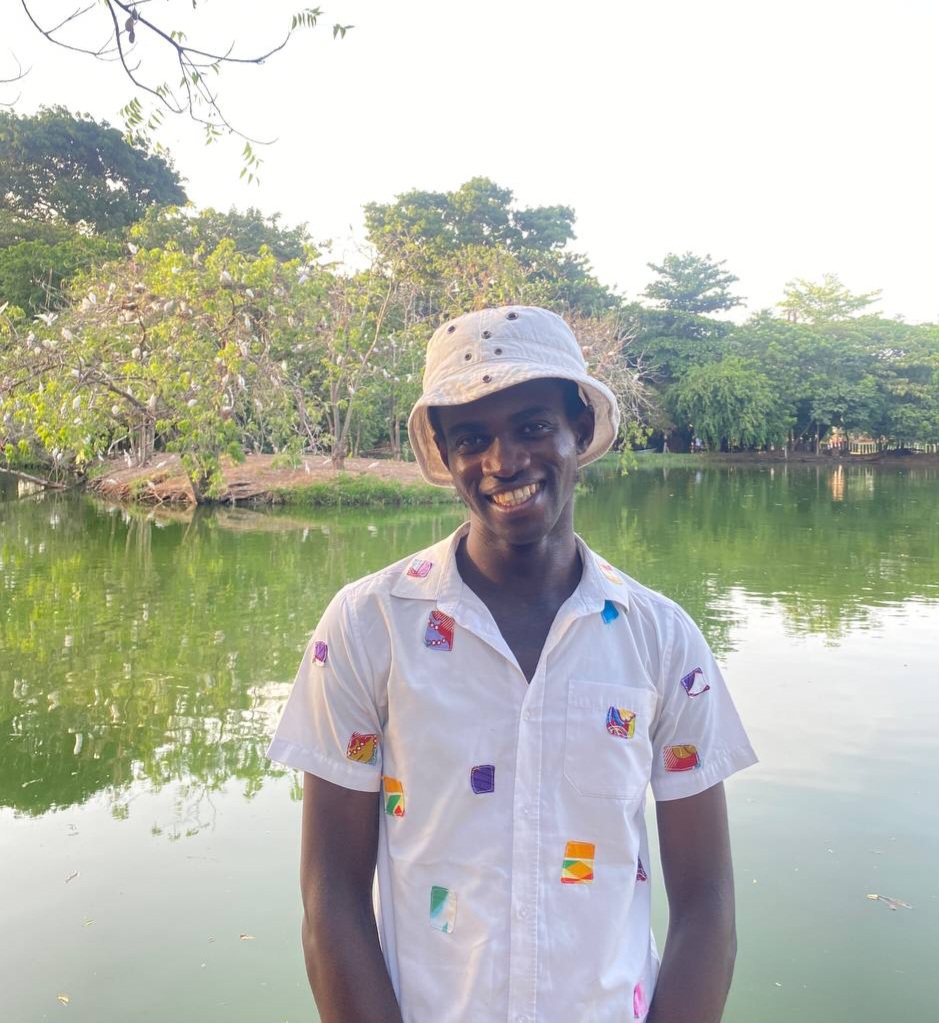
Bright Aboagye – “Do They See You?”

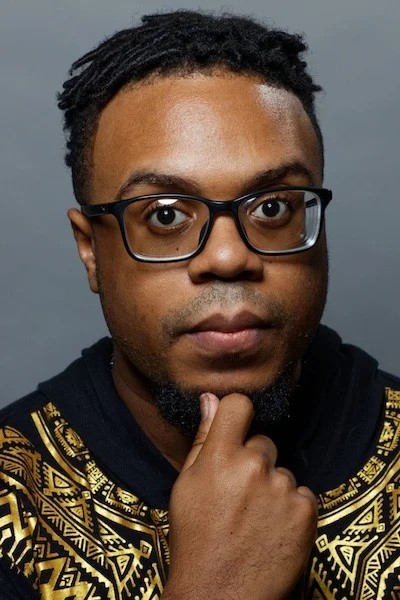
Stone Mims – “A Letter to My Grandfather”

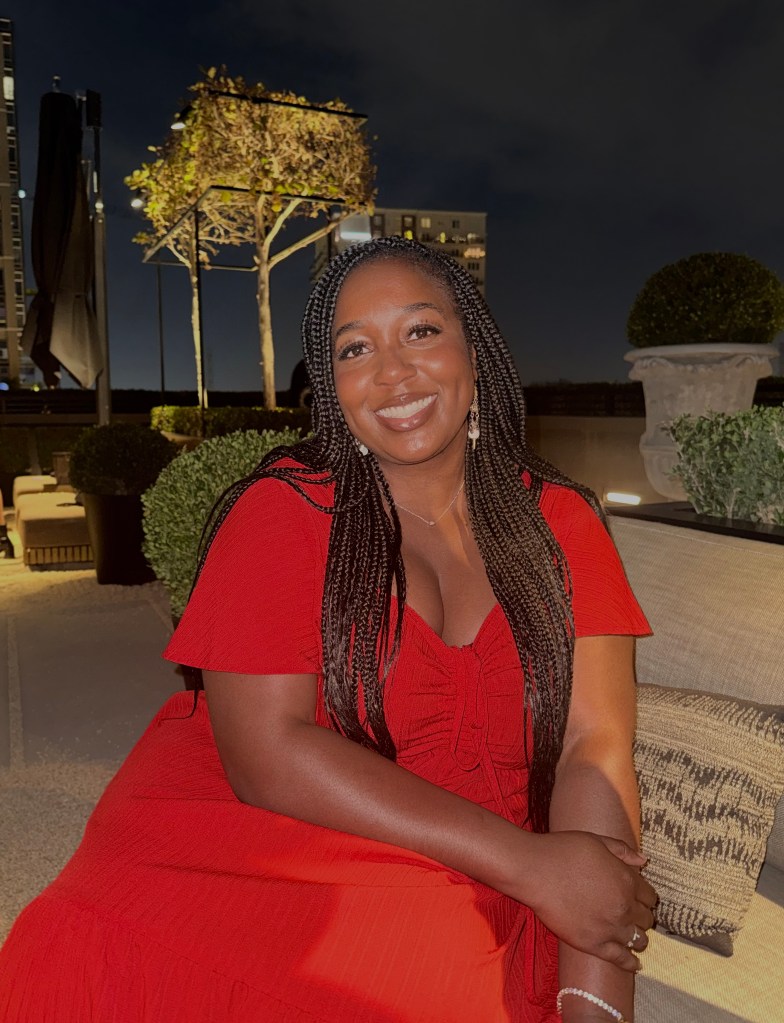
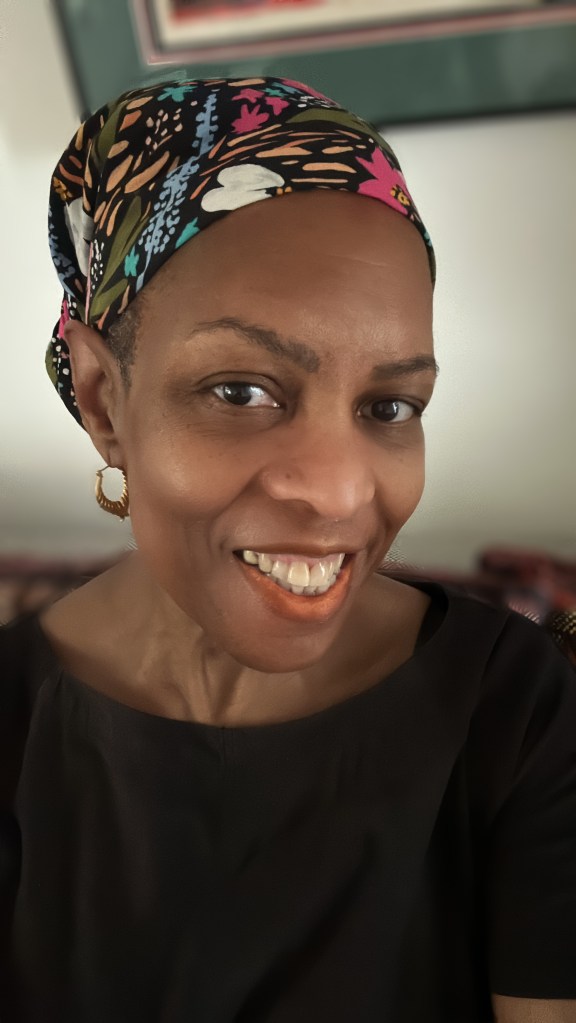
Kimberly Nao – “I, too, am California”

Decolonial Passage is honored to announce the nominations for next year’s Best American Essays Anthology. This list includes writing published in 2025. Congratulations to the nominees!


“A Letter to My Grandfather” by Stone Mims


“I, too, am California” by Kimberly Nao


“Eid Mubarak, America” by Gemini Wahhaj

“and neither of them ever/

said what they meant/

and i guess nobody ever does”

  • Nikki Giovanni

“Sometimes you gotta’ take a stand. You can’t let people do what they do—you don’t have any representation anywhere. Don’t nobody in Baton Rouge give a flip about you…If you don’t take a stand, that means that you are giving consent for people to do what they do.”

  • Samuel E. Mims


12/15/2024 – 11:00 PM

To Samuel Earl Mims, my Paw Paw:

I don’t know if people are conscious of their last moments when they go; I will always remember yours. You were lying next to my father, watching the Packers trounce the Seahawks. The hospice nurse had just informed you—precisely and clinically—that you had very little time left. But while we were all reckoning with disbelief, you seemed devoid of panic; you chose to spend the rest of your life with your son and your wife and all the other people who mattered to you the most. You were always decisive that way. I got to call you briefly before you went quiet for the last time. I used that brief window of time to tell you all the things that I should have said to you when you weren’t standing in such intimate proximity to death.


I know now, after the fact, that I should have called you more, but calling you, every time, meant confronting the fact that you were leaving. The evidence of that passing showed itself in the thinning of your bones and the weariness behind your steps. Death loomed over you in such a way that I could not help but avert my gaze, to look anywhere and at anything other than reality; but in those short moments of courage in which I was able to confront death (and therefore see you),  I noticed a brilliant irony: you were stronger than ever. Even with your hollowed-out muscles and wobbling limbs, you beat death back from you with such intensity and determination. You were the immovable object standing in the way of the unstoppable force that comes, eventually, for us all.


Last summer, another white nurse in a white lab coat told us that you would not make it through the fall, and yet here you were, on the phone with me, still fighting, in the middle of December. I recognize now that you were the type of Black man who lived his entire life defying the condemnations and expectations of white people; it only made sense that your death would be a similar demonstration of that old John Henryism. Still, regret seized my heart and mind; it occurred to me, as I was confessing to you the things that needed to be said between us, that we Black men have nurtured a counter-intuitive, and perhaps violent, tradition.

 
Why is it that we only share the most necessary words when we are hanging so perilously close to a precipice? It also occurred to me that, because you couldn’t reply in your condition, this might be the only conversation we ever have where I get the last word. It may be the only conversation you’ve ever had where someone else procured the last word. And then you slipped; that’s the best way I can articulate it. One moment you were here moaning and groaning, caught in that invisible struggle against time, and then you were gone; silence and death rushed in to fill you up—all the spaces that had, only moments ago, been saturated with love, wisdom, and strength. And as your body emptied itself of you, I felt something dense, firm, and perfectly unnamable fill my own. I suspect that I may spend my entire life trying to define this sense of transference, but in trying to define this new weight, I have been forced to reflect on your life and, therefore, my own.


You were raised in Louisiana; I was raised in Georgia. From a young age, we both witnessed what is undoubtedly a genocide ferociously nipping at the heels of Black children. The great orators of the Sorrow Songs, folks like Bessie Smith and Billie Holiday, and Nina Simone, gave form to the reality of this genocide in their songs and wailings. Every American has seen, in all its horrible glory, the strange fruit—the bleeding, broken body of a Black child taken too early. And with each bloody rendition of this American archetype, that festering rot that we call injustice grows ever more pervasive, embittering the air all around us.

 
Everyone can see the fruit, but few are cognizant of the roots, the seeds, or even the stems of the issue. The branches of the massacre tree run its fingers through the prisons, where 1.1 million men who look like us remain enslaved under a caveat of the 13th Amendment, and through White America’s obsession with guns, the same ones that fire disproportionately through the streets of Atlanta, Chicago, and Shreveport. A long and verdant field of white supremacy nurtures these violent realities, maintained only by the phenomena described so eloquently by Ralph Ellison. The modern American has rendered himself selectively mute, blind, and deaf to his history; he refuses to see that he has constructed his democracy atop the bones of an entire people!

Still, the roots of the problem, the source of that willful disability, undoubtedly begin in the classroom. You know as well as I do that Fred Hampton does not exist in Southern history books, and Angela Davis’s testimonies have similarly been obliterated from the curriculum. The classrooms of Georgia Public Schools consistently fail to mention the lives of Baldwin, Cleaver, and Giovanni.

The only images of Black excellence my classmates and I received were the vague silhouette of Martin Luther King Jr., intentionally watered down, and perhaps a (hyperbolically propagandized) caricature of X. I did not discover those other heroes until I went to college; instead, every February, for seventeen long years, we were told that we descended from slaves and that King was the sole Black participant in American history—an eloquent accident of the white man’s burden. Anyone could see how a student who was told that he emerged from a culture without value would struggle to even dream of self-esteem under these conditions. To make matters worse, the reality taught in the classrooms, of Black people in bondage, is corroborated by the news networks in the homes; thus, many of my friends and associates viewed the prisons as an inevitable destination on the horizon. This is the deathly pedagogy that instructs its darker-hued students to march dutifully, unquestionably towards death.


I grew up under this system, but I did not struggle, like so many do, to develop a sense of self-worth. I’ve never imagined myself in chains, and I have, for the most part, always assumed that some relative success would come my way. And I managed this without Baldwin or Giovanni or Du Bois; I managed to construct a dream for myself out of nothing. But what I now realize is that the only reason I was able to escape the mental trap of the not-so-far-from-Jim-Crow South is that I had the privilege of watching you do it first. In a state known for having the highest incarceration rate for Black men, you went to college. Not only that, but you did it only ten years after the country began to, legally, move towards integration.

You went on to join the US Military in 1969, where you served in Germany and Korea and attained the rank of colonel, after finishing your bachelor’s degree, and you only allowed yourself the relief of retirement after thirty long years of commendable service. That was in ‘99, two years after I emerged into this world. By then, you’d shifted your focus to activism. You’ve facilitated peaceful protests between the Minden Police Department and local citizens. Later, you went on to adorn the uniform yourself as a school resource officer, hoping to intervene in the lives of young people before they were swallowed up in our world of narratives.

As a leader in the Concerned Citizens Campaign, you helped advocate for the safe disposal and removal of fifteen million pounds of explosives at Camp Minden and the prevention of “open burn”, ultimately preserving the environment of the area to this day. But I think the work that you were most proud of was that which you did as a religious leader. After spending eleven years serving as a minister at Galilee Ministry Baptist Church, you built your own church, the Shepherd’s Hut, which has donated thousands of dollars to local public schools throughout Webster Parish.

I have realized, growing up, that to many members of our community, you are some strange amalgamation of folklore hero and legend, but to me, you’ve always just been my grandfather. That is not to say that I did not realize that you were a great man. On the contrary, you always made exceptionalism and greatness seem so natural; it emanated from you in such a way that success seemed as inexorable, for you, as the tide’s coming and going. Now that you have passed, I can admit to myself that there have been times when I have wondered if I could ever live up to the standard you set before me. I now realize that your example was never meant to be a shadow from which I should emerge; rather, your legacy has served as a shield, protecting me from the fate that has overcome so many of my friends and associates, the children of the world who wear skin painted so much like my own. In a time and place carefully constructed to ensure your failure, you have managed to navigate the world with integrity. And so, once again, even though I did not stumble upon the Harlem Renaissance or the Black Arts Movement or the Black Power concept until many later years, I never had to wonder what type of man or person I wanted to be in this world. I always had you to model that for me. Your example has unhindered me from many of the challenges that I could have all too easily faced. 


Last year, when this all began, before you were diagnosed, but after the pain started to needle at your heart, we snuck out of the house while my grandmother was busy, loaded ourselves into your pickup truck, and absconded with some meat pies from the local gas station. GG had just put you on what you called a “vegan diet,” —which was really just a diet with slightly less salt, and you asked me to help you cheat the warden. After we had our pies, you wiped the grease off your stained overalls and said to me, “You watch a baby grow up into a man and then a man regress right into a baby.” It occurred to me then that you’d impossibly waged war against Jim Crow for your entire life to maintain your dignity, and you feared that death would rob you of it. As I said before, I don’t know if people are conscious of their final moments, but I can assure you that you left this world with the same grace and dignity with which you lived. And for me, a child who has grown up as a grim spectator to the slaughters of Trayvon Martin, Freddie Gray, and so many others, I cannot tell you enough how much I needed you to show me that it is possible to live beyond the terms set forth by the historical record. You spent twenty-seven years teaching me how to live in this world with integrity; you have now shown me, like a gilded north star, how to die with it intact. Throughout this week, I have felt your passing in waves of terrible anaphora; the grief truly comes and goes. But one thing that has stayed with me all my life is pride in being your grandson.

I want you to know, wherever you are now, I will not allow time to end your sermons. Your words will continue on through my voice and actions, and in every single word I write from this point forward. My father, uncle, sister, and I carry your initials; this Christmas, you gifted us each with the weight of your legacy.

Rest easy, Paw Paw. We will carry it from here.

–Your Grandson,


Stone Erickson Mims


Stone Mims is a writer and educator based in Northern Michigan. His work, both in the classroom and on the page, examines the complexities of Black life. He holds an MFA in Creative Writing from The New School and a BA from Bard College. Mims has been a writer-in-residence at Château d’Orquevaux and attended the Kenyon Review Writers Workshop. His memoir-in-essays, Just Another Native Son, was a category winner in the 2025 Memoir Prize for Books from Memoir Magazine. His writing has appeared in Politics/Letters Live and Ignatian Literary Magazine. He is currently represented by Midnight Literary Agency. You can find him on Instagram.

All you ever wanted was to be seen. For someone to read your writing, give remarks, identify you, respond, criticize, and recognize your work. Although it never happens, you share your writing: hoping it will resonate, hoping they will love it, hoping someone will notice your tone, hoping that life will be better after all.

No retweets, no reshares, not even a casual, “This was nice.”

And every time, there’s a distinctive level to the pitch following the uncountable rejections you have received: from the magazines you admire, from people who claim to “support upcoming writers.” And every time you send work to them, there’s a beauty in how they bounce back to you with an “unfortunately”.

The sadness wells up, pushing at the back of your eyes, threatening to tumble and rain down. Your mind floats to everything you’ve tried. Every thought that has rained in your mind. You just want to be heard, to have someone see you, for people to read and cherish the gift/curse you’ve always had.

***

You’d written what you thought was your best. You spent hours reading and rereading, trying to get it just right. And still, they didn’t see you. And when someone finally did, they didn’t listen. They didn’t understand the fight in your words, the way you were writing for more than yourself, for your family, for your future, and for the dreams you thought were simply living in your head.

Every story you wrote was a piece of your life. You’d disguised it in other characters and other settings, but it was always you in there: your struggles, your hopes, your truths, dancing with reality within the lines.

***

That night, as you walk into Valco Hall, the heavens open into you, and you look for a sign to sort your problems. You think about what you’ll say to Fatau, your roommate. You’ll ask him for help for the first time. You don’t want to; nonetheless, you’re running out of options. You don’t want to bother your mother. She’s done too much already, always standing by you, always encouraging you even when things were hard. You know she doesn’t have the money.

Today feels like your last chance. You know Fatau will say yes if you ask. He’s kind, always thoughtful, and has shown you how good he can be. However, you’re not close to him. You’ve never been close to anyone.

Most of the time in the room, it’s just you. Talking to yourself, laughing at your own jokes, planning stories in your head, and speaking out loud to yourself. You’ve read your drafts alone and clapped for yourself because no one else ever did. Fatau never noticed. He probably thought you were mad. Or he never heard you probably.

When you step into the room, his friend is there. The one with the braids, the one from your mother’s home country. You’ve never told him that. He might ask too many questions, and you don’t feel the urge to answer him. You are never fond of sharing too much about yourself.

You greet them, but they don’t even look up. They’re busy, playing on the PS5, their faces lit up by the movements on the screen and their mouths shouting out words to people who only live in such realities. You move around the room, from your bed to the balcony, hoping both will notice you, say something. Recognize your agitation. They don’t.

That’s how it’s always been.

***

You think about the time you tweeted, tagging all those advertising agencies, hoping someone would see it. No one did. You remember scrolling through LinkedIn, sending messages to HR managers, and pouring out your heart into every word. One of them read your message. You saw the “seen” tick, but he never replied.

In your emails, you even said, “If you’re not interested, just send me a rejection. I’ll understand.” They didn’t bother. You followed up, again and again, sending more messages into the same nothingness.

You think back to the time you waited for a response from Ogilvy, your dream company. The delay dragged on until you gave up, deciding to move on and start school again. Then, out of nowhere, they called you for an interview. You sat across from them, explaining that you were now back in school. They nodded politely, and you knew in that second, the job was gone before it even began.

You remember that day. The day you received a call from Insel Communications, the rush of adrenaline as you checked your balance. Twenty-five Ghana cedis. Just enough for an Uber to East Legon. You booked the ride anyway, stomach tight with worry, but excitement overflowing in your soul the way a caged bird sings of freedom. You had been waiting for this.

The boss was accommodating. He was short and made sure his words carried the room, making him taller than his frame. He was in a meeting. You knew it had to be the Gong Gong Awards. You had spent nights combing through industry articles, memorizing jury members’ names like a desperate student before an exam. Your life, at that point, revolved around these professionals, their movements, their triumphs. You followed them the way the tide follows the moon — pulled, fidgety, unable to resist, and determined to play its part.

Then you saw him.

A glance. No! It was a frozen second suspended on the screen, appearing with every wish that you had once made to be near him.

 Andrew Ackah. The man whose career you had studied the way Christians study the scripture. His words had guided your dreams, his achievements, a map to places you wanted to go. You had stalked his life online, knew the places he worked, the books he recommended, the speeches he gave, and even where he stayed with his family. And now, here he was, a few feet away, discussing something with the director of Insel online. You needed the job more than anything just so you could… be so close to your industry idol, just so your dreams could sprout from the ground.

While still in the meeting, the director turned to you and asked about your favorite book.

Gone Girl” you said without thinking. A lie. A reflex. You couldn’t have told him the truth. You couldn’t have said your favorite book was by Akwaeke Emezi, a writer whose words were home to you but whose identity you feared would betray you before you even had a chance.

Then came the test. The page in front of you looked surprising. The creativity you carried as a second skin abandoned you. This is copywriting? You knew, even before handing the horrible handwriting back to them, that you weren’t going to get the job. The Uber fare had been a gamble you lost. So, you walked.

From East Legon to Bawaleshie to Legon. The rain came down in sheets, filling your shoes, soaking into every piece of your trousers and the white boxer shorts you bought before the Kantamanto fires. You prayed. Not for another job, not even for a sign. It should just be for something, anything, to remind you that you were still headed in the right direction.

Four days later, hunger was eating itself around your stomach. You lay on your bed, staring at the ceiling when your phone rang. Regina, an administrator from another company. A meeting on Monday.

This time, you borrowed from MTN Quick Loan.

The journey was long. A crawl through traffic, through neighborhoods that screamed wealth and places you had never been. The estate was lovely, your first time in one. You wanted to work there. To belong there, to smell like them. And you crossed your hands to do your best in the interview.

Thomas, the boss, liked you or so you thought. You could tell from the way his eyes shone when you spoke, the way he nodded, delighted and impressed with your background.

“Great diction,” he said. “You’re eloquent. You have quite a presence.”

And for a moment, just a moment, you believed you had finally found a place where you fit.

Then you walked out, the door clicking shut behind you. But something kept your feet planted just outside, your breath moving in rhythm to your curiosity. You listened to him and the other board members.

Laughter. Its sound had cruelty in its throat. The one that stung more than mosquito bites.

“He’s too effeminate. Probably gay. Sounds too much like a girl.”

The words cut like glass lodged in the gums, impossible to ignore. And your mouth opened in shock to the words. Your breath faster, heartbeat swifter, the promise of belonging disappearing behind the door as you bid bye to the estate.

They never called back.

And despite your follow-ups, your emails, and your polite check-ins, the silence was its own kind of answer.

***

It wasn’t the first time life had teased you with possibilities only to snatch them away. After your bachelor’s degree, you struggled just to start National Service. When you finally got a placement, you worked hard, but no one noticed. You felt invisible. It’s almost as if you didn’t exist in the same world as everyone else. You were a ghost people spoke to when needed and ignored when you desired them to see you.

You dreamed of studying abroad, of leaving everything behind to start fresh. But when you asked for help, no one came through and it was a battle too big for you to even start. After National Service, you sat at home, endlessly applying for jobs. Every email you sent felt more personal than the last, and the rejection came like rain in June.

You thought going back to school would fix everything. Another degree?! Surely that would open doors you reassured yourself. You gathered what little savings you had left to buy the university forms, not even sure where the money to pay the fees would come from.

Your mother, who always stood by you and supported you, scraped together what she could. She used the last of her savings to help pay half the fees after you got admission. That left you to figure out how to survive.

Feeding yourself? You didn’t know how you’d manage, so you left it in God’s hands and hoped for the best.

***

The first day you walked into Legon Interdenominational Church, you hoped to find something more than sermons and praises. Perhaps someone there would see you, connect with you, and perhaps help you. Instead, you got leftover food and free meals from the events you attended. You were grateful and ashamed, feeling smaller with every bite that you took.

And then there was love. Or at least, what you thought was love. It arrived like a promise and left you the way a bad memory is never forgotten. Your honesty became a joke; your confession was something to laugh about, and the betrayal following it stung so painfully in your heart that it left you questioning if anything in your life was real.

***

You think about the day you wanted to end it all. You were tired. Too tired of fighting, exhausted from trying, bushed out of feeling as though nothing you did would ever be enough. That was the day someone finally noticed you. He reached out to help, but even then, he didn’t listen. He didn’t hear the way you were saying you couldn’t take it anymore. He should have just let you be without interfering with your journey to the next life.

And you’re still here. Somehow, you kept going on.

It’s hope that keeps you moving, stubborn, and persistent in the way a weed grows out through a crack in the pavement. Or maybe it’s just the voice inside you that refuses to give up.

Now, you stand on the balcony with the cool metal rail under your fingers as you stare out at the night. You feel invisible; you always do. A part of you wants to scream, to force the world to turn and look at you. The words fail you. Your mouth is buried inside.

Sometimes, you wonder if it’s because you’re a man — the reason no one sees you and makes your struggles easy to ignore. You think about the female celebrities whose beauty seems to do all the talking, opening doors and winning attention in ways you can’t.

You blame something bigger. It’s not you at all. Possibly, it’s the country: the way it feels like it’s designed to work against you and the way your soles crack from running around. You keep trying, putting in the effort. Trying, and yielding to a lack of results. It’s as if the system is broken. As if no matter how hard you try, the soil just won’t give back your results.

It feels like God has forgotten you. He doesn’t see you. You’ve prayed so many times, poured out your heart, fasted, and still nothing changes. No answer, no sign, no rain. Just nothing. The faith you once held onto so tightly now feels shaky, and it could slip away at any point in time.

You climb into bed, your roommate and his friend still glued to their video game, still not paying you any attention. You pull the sheet over your head, trying to block out the world and let everything disappear. The sadness feels enormous. It’s pulling you under, and you let it. You let your thoughts carry you away, far from the noise, far from everything. Far into somewhere else.


Bright Aboagye counts Aja Monet and Akwaeke Emezi amongst his influences. He dreams of becoming a surrealist blues poet, writer, and restaurant entrepreneur. Bright hopes that his work inspires and gives hope to all who engage with it.  He can be found on Medium, Blogspot, and Linkedin.

The first time I saw her, she stretched as far as the eye could see in every direction. I’ve never seen God, but I imagine it’s like taking in the ocean for the first time. The ocean was my home — the only home I ever knew. The ocean kept me alive and gave me hope for the future.  

A future where I could be with her for all eternity.

At eight years old, I came home to an empty house, overwhelmed, scared, and exhausted. I could only call my mom in case of emergencies. Unfortunately, fear was not an emergency. I pulled my blue beach bucket out from the closet and meticulously laid all my shells on the floor. I carefully placed each one on paper towels and sorted them according to how they made me feel. Now, I realize why the bucket was so special to me. It represented freedom. The freedom to cry, the freedom to be heard, the freedom to be seen, and the freedom to live judgment-free.  My life seemed full of struggle, even my early years reeked of trauma.

My childhood wasn’t the worst, nor was it a cakewalk. It was marked by abuse, emotional neglect, and abandonment. I grew up in a predominantly Black neighborhood and attended a private Catholic school where I was one of six Black children. I endured years of being made fun of for having “nappy” hair, being “ashy,” “too loud,” “too ghetto,” and “too fat.” When I went home, the neighborhood kids called me “White girl,” said I “talked White,” told me I tried to sound “too smart,” and teased me for wearing a uniform.

I look back on those times, and I’m grateful my mother didn’t keep a gun in the house. Kids can be cruel. I lived in a constant state of anxiety, fear, anger, and self-loathing. I remember longing for death in elementary school. Why am I here? What’s the point of living? No one wants me here. In those moments of desperation, I imagined the ocean’s waves crashing on the shore and beckoning me to reunite with her. The second my feet hit the sand, none of that mattered. The warm sand on the soles of my feet and the grainy beads between my toes instantly cheered me up.

I always bring books to read at the beach, but I never read them. You would think that after decades of going to the beach, I would have learned to leave my books at home. I haven’t. The beach awakened my inner child — the child who didn’t get to exist outside of the beach, the latch-key kid, the kid who had too much responsibility, the child whose dad left and whose mom emotionally departed around the same time, the kid who was misunderstood and bullied.  

She came alive at the beach.

My favorite beach gift was sand dollars. I kept them on top because they were fragile, and I loved them the most. The bumpy, slightly porous texture of the outside and the beautiful pentagon star-shaped holes in the middle made them priceless to me. I held each one. I relished feeling the cold, hard shells in my hand, tracing each groove with my fingers. I rubbed the textured ones against my cheek, closed my eyes, and imagined myself lying in the sand. I felt the waves pulling and pushing my body. I didn’t know it at the time, but it was these small moments of visualization that rescued me from darkness. 

No beach trip was complete without seashells. I came home with my bucket full and happily relived the day. The beach is one of the only places on Earth that bestows gifts freely. As a kid, I remember the shore being filled with shells of all sizes. Perfectly shaped, no cracks, no holes, for as far as the eye could see.

Now, the beach gifts have changed. There are no more sand dollars. I would have better luck finding an intact kidney than an unbroken conch shell. All the years of being polluted and pillaged have finally taken their toll on her. Despite this, she still provides food, life, and shelter for countless species, including us. I decided to stop taking shells and enjoy her beauty while I still can.

The cool air reignites my childlike innocence. The saltwater, dripping down my face, cleanses me of all emotions. The once-cold water now feels like the most heavenly bath. I never want to leave. I long to be a mermaid who can swim away from this life on land and be amongst those who accept me in the sea. The ones who love me no matter the color of my skin, regardless of my pants size, and despite my shoes. They embrace me. Submerged in the blue-green water, I feel the comfort of being in the cosmic womb and the unconditional love and scorn of a parent who disciplines me whenever the limits are pushed.  

Looking out into the distance, I feel humbled by the vast open ocean. Water to my left, water to my right. The powerful waves knock me down and lure me back for more. Now and then, I feel something brushing past me, a colorful fish or a sprig of seaweed. I’m delighted and fascinated, watching schools of fish swim so close. Bright blues and pale yellows dance in the water around my feet. The water is so clear, I can see through to the bottom. No lifeguard forces me to take a 15-minute break.  I happily float for what feels like hours on my back.  The heat from the bright white sun beams down on my skin. I feel like the happiest Thanksgiving turkey.

The ocean saved my life on numerous occasions…I wonder if she knows.

Does she know that other than my daughter, she was the only one who stopped me from hurling myself off a cliff in 2023? When I lost everything within a couple of months. When I discovered the love of my life lied about our entire relationship. Resented my daughter and me. Lured me to Durham under false pretenses. Strung me along with talk of marriage. Lied about me like a dog, painted me out to be a narcissist, posted my intimate photos and videos on websites for all to see, and created fake profiles using my information to spite me. Does she know that the grief almost broke me? That the embarrassment destroyed me? I lost all trust in people. 

Can she sense that it was only memories of being with her that comforted me? The solace of feeling her warm embrace enveloping my body. I closed my eyes and imagined I was there, with her…in her, and for a moment, thoughts of her gave me respite from the torment. Focusing on her relieved me from intrusive thoughts. The times when doors were broken, laundry baskets thrown, and threats made. When I ignored red flags and inflated green ones.

It was only the smell of salt and seaweed carried by the breeze on a humid day that eased my pain. 


Lauren McNeil is thrilled to make her literary debut on Decolonial Passage and grateful for the opportunity to share her voice. Before this publication, you could find her writing in random notebooks, on scraps of paper, or on the Notes app on her phone. A former nurse turned budding creative, she eagerly seeks out opportunities to share her unique perspective. She is a beacon of light in dark places and hopes to inspire future generations. You can find her on Substack and on YouTube.

When my daughter was in daycare, I wanted to let everyone know about Eid. I bought dates, teamed up with another mom, asked to go to a class and share what Eid was with the class. I read a Bengali folk tale for children from a children’s book.  Then, we lit candles, and the smoke alarm went off. It was her third year in daycare — a time when my daughter was falling off the end of the world. In her first year, she was happy. At first, she didn’t know the language, so she would wait the whole day until she saw me, then run towards me and burst into tears.

 But the third year, it was the bullying. She wanted to be white. She drew herself white with blonde, straight hair and blue eyes. When a friend bleached his hair white, she kept asking him questions. Another friend and I locked eyes. We both knew what was going on in her mind. At that time, I asked many friends what to do. I asked my classmates who then referred me to other moms who also spoke to me about what children of color face in school at a young age and how to deal with it. So much figuring out, how to fit in, how to make things better for my daughter — a child growing up in America. 

“I sacrifice so much for her. Why doesn’t she understand how loved she is?” I said to my husband. “I don’t even brush my hair!”

“Why don’t you brush your hair? Why do you look like that? Maybe if you dressed nicely, she would look up to you.”

In the end, this was the strategy I chose, which seems strange to me now. I’m not the same person. I dressed up in shalwar kamiz with the gold earrings my mother had given me. I also wore a teep on my forehead.

 I went to pick up my daughter.

“What’s that on your head?” a child asked, pointing.

“Hush,” the teacher said, as if what I had on my head was something shameful.

I brought teeps for all the girls as gifts. I went to Bangladesh in the summer, and I brought back bangles and little cloth dolls to give away. We watched Hindi movies on a VCR, and I dressed my daughter in gaudy dresses, jewelry, teep, so she would have her own standard of beauty, her own role models, her own cheap, cheesy way of being feminine. 

The atmosphere among girls at that age in America is toxic. Girls watch Disney movies and dress and think of themselves as Disney princesses. She didn’t watch TV. She didn’t know anything the other girls were talking about, so they excluded her. But also, the clownish racist exclusion of someone with dark skin and curly hair, and adoration of another girl with white skin seems outlandish to even write about. The teacher said, “There is no racism here.” Of course. So, we watched these movies so my daughter would be able to join in the conversation and fit in. My professor explained that at this age, girls are arranged in hierarchies according to the status of the moms — like a hive around the queen bee. I scheduled playdates, threw parties, positioned us as a family in the hive.

Another dad with a daughter in an older class suggested bending the princess trope, introducing her to other versions of fairy tales, so we read The Paper Bag Princess and watched Kiki’s Delivery Service at his recommendation. (I really admired a lot of these fractured, fairy tale picture books and still love them.)

I surrounded myself with allies and we survived.

I don’t do that anymore. I don’t want to share, to be known, accepted. I write fiction rather than essays because what I have to say is not welcome. Even in my stories, I want to establish a faraway voice at a remove. It seems so long ago, the earnestness, the frenzy of wanting to be known, to explain. I would be embarrassed by the me of that time.

I don’t enjoy being in these spaces or the ways in which I have to compromise, grovel, demean myself to be in the room. In 2014, Obama had iftar in the White House. Many Muslims attended, gleeful, while Gaza was being bombed, with full support from Obama and the Senate. I asked one of them online why they would go to such an event, and they mumbled something about making space for Muslims. During the Ramadan one year while I was a student at Princeton, Bill Clinton was bombing Iraq. All the years that I have lived in the US — first as an international student, then as a mom, and an employee — have left me wandering the halls alone during Ramadan and Eid. I associate Ramadan and Eid now with silence, a complete erasure in our schools and places of work, with the added bonus of a bombing campaign somewhere.  

Now it is Eid again. My daughter is in college. Sick, I asked for leave from work. I asked to teach online. While negotiating, I realized it’s Eid. Every year, I either have to take the day off as a personal day, have my children miss school, or come to work, and just go about quietly pretending nothing is going on.

I am an atheist. 

I thought I would send an email out to everyone at work, wish them Eid Mubarak. Just to let them know. Then I asked myself, “Why? What does it matter when countries are being bombed?”


Gemini Wahhaj is the author of the short story collection Katy Family (Jackleg Press, Spring 2025) and the novel The Children of This Madness (7.13
Books, Fall 2023). Her fiction is in or forthcoming in Granta, Third
Coast, River Styx, Chicago Quarterly Review
, and other magazines. You can find her at GeminiWahhaj.com.

I never had a crush on David Lee Roth, but he had a crush on me.  And, he sang a song about it. You remember the video. David dressed as a tour guide leading tourists through sunny California, dancing around bikini clad girls singing, “I wish they all could be California girls…” On the beach, at a movie studio, so many girls in bikinis and with big Aqua Net stiff hair teased up much higher than David’s golden locks. He just loves these California girls. And well, that’s me. But wait…

There are no brown-skinned girls in this video. Tan, yes. Brown? No. And my hair? My hair is actually too big to be teased up to look big. My hair is long almost down my back, but it’s thick and frizzy and more like Diana-Ross-Central-Park-in-the-rain concert hair than bikini-clad-blonde-on-Venice-Beach hair. So, am I a California girl?

In fact, it wasn’t David Lee Roth’s song anyway. It was the Beach Boys’ song. They’re the original ones who loved California girls. As long as they had blonde-bobs-on-the-beach hair. Yes, bikinis and tanned bods. Not the 80s, but women in the 60s doing the jerk while the band defines the quintessentially endless summer sound and California lifestyle. And there are no brown skinned girls.

There’s cute, perky surfer girl Gidget. Not Sally Field Gidget. But Sandra Dee Gidget. The one that personified the California vibe in the 60s. The one that made everyone who wasn’t a Californian want to move to California and buy a surfboard and live on a Malibu beach for the summer. And it was always summer. Blonde Gidget. Is it her? Is Gidget the culprit? Is she the one that made every media image of a California girl thereafter blonde, tan, and bikini clad?

Seriously there are so many California blondes. Not just any blondes but the ones that defined the “California girl.” The Bionic Woman. I did not have a crush on David Lee Roth, but I did have a crush on the Bionic Woman. She was blonde and beautiful and could rip the yellow pages in half. And she had a bionic ear that could hear across long distances. I mean miles. She would push a blonde lock behind her ear and listen.  Apparently bionic ears can hear for miles, but they cannot hear through hair. I couldn’t push a lock of hair behind my ear. Well, I could but it wouldn’t stay there. My hair was not tame. It was wild and did what it wanted to do. The Bionic Woman was indeed a California girl. She lived in Ojai. You can’t get more California than that. Unless, of course, you lived in Malibu.

The Bionic Woman’s boyfriend was the Six Million Dollar Man. The Ken to Jamie Somers’s Barbie. The Six Million Dollar Man was played by Lee Majors who was married to the very blonde Farrah Fawcett. Another quintessentially California girl (even though she was from Texas).  Fawcett was Jill Monroe — the blonde on Charlie’s Angels with feathered hair bouncing in the wind as she chased down criminals. She ran the way boys run when their peers say, “You run like a girl.” Farrah was the breakout star of that show. And yes, you can find pics of the ultra-feminine Fawcett trying to look like a tomboy skateboarding Dogtown style down the street. But more importantly, there is the poster — Farrah, sitting in front of a striped Mexican blanket wearing a red bikini, one knee up, one leg down, head cocked back in a smile that shows all of her white, perfectly straight teeth. It is very California, and it is said to be the best-selling poster ever. I did not look like Farrah Fawcett. I tried to cut and feather my own bangs and ended up with an afro on my forehead.

Maybe that’s when I stopped trying to be the California girl. Yeah, I was born and raised in L.A. and went to school so close to the beach that the boys would surf every morning before making their way to class. I said “grody” and “gag me with a spoon” and “groovy.” But I wasn’t Gidget, or Farrah Fawcett or Lindsay Wagner. I wasn’t Pamela Anderson in another red bathing suit saving lives on a Malibu Beach. I wasn’t Angelyne or Malibu Barbie. I wasn’t even Bo Derek, hair adorned in cornrows, running in slow motion on a misty seashore.

I was the brown-skinned, frizzy-haired girl. Born of a Japanese American mother and Black father. My Japanese grandmother was Nissei, first generation born in San Francisco, California in 1913. My paternal grandparents came to California from Baton Rouge, Louisiana. My parents met in the Bay Area, and I was born and raised by my single mom in L.A. We did not live near the beach. We did not live in a sprawling, ranch-style home like all those blonde Brady girls. We lived in a two-bedroom apartment in a neighborhood both affectionately and derisively called the Jungle. With its grassy lawns and abundant foliage, it was the perfect playground for bike riding, hula hooping, sock ball, and tree climbing. But the crack-laden 80s and 90s made it resemble more the urban hellscape of Boyz in the Hood than the dreamy paradise of The Endless Summer.

But this, too, is a California story. Better than the glossy, glamorized image projected on television, this California is real. It’s brown-skinned and frizzy-haired, and mixed-race, and multicultural, and queer, and it’s me. I’m it. California is after all named after me. Not as if  David Lee Roth had a crush on me but instead, where the name comes from. According to the book, California Place Names, “[t]he term originally referred to a mythical land of Amazons, ruled by the beautiful black queen Calafia, as described in the Spanish novel, Las Sergas de Esplandian.” It’s me!

The city of my birth, Los Angeles, was inhabited by the indigenous Tongva people and was founded by a band of 44 pobladores who settled the area in the 1700s. These pobladores were of Spanish, Indigenous, and African origin. Brown-skinned. Pio Pico, the first governor of California under Mexican rule, designated Los Angeles the state’s capital. Yes, the Pico that the boulevard is named for, and he was mestizo, mixed with African, Indigenous, and Spanish ancestry. Brown-skinned.

The bouncy, blonde surfer girl version of California leaves out the Chinese immigrants who worked in the Gold Rush, the Japanese farmers who were later interned in concentration camps, the Mexicans and Native Americans who were here before the state was annexed to the U.S. The African Americans who brought jazz and soul and hip hop to waft along the Santa Ana winds with the Beach Boys and Van Halen and the Red Hot Chili Peppers. It left out the non-blondes who made the state what it was and is today. And by the way, surfing was invented by brown-skinned Polynesians, and Malibu is a Chumash word meaning “it’s loud over there” in reference to the waves of the unruly sea. Wild like my untamed hair.

I want to take a black crayon to plain white paper and draw a thickly bordered square. Above it, I want to draw a triangle and give the square a roof to make a house I never lived in. I want to take a brick red crayon and draw a rectangle for a chimney. And a gray crayon to draw a curlicue of smoke coming from the chimney I never had. I want to take a yellow crayon and draw a circle for the sun and a sky-blue crayon to outline perfectly fluffy clouds. It will be the home I never had but for some reason the one I always drew at school when my teachers asked me to draw a house. I imagine it on a perfectly manicured California street. Under it, I want to  pick up a black marker like a French teacher and write “Ceci n’est pas une maison.” This is not a house. Like that painting of a very realistic, very idealized pipe under which Magritte wrote “Ceci n’est pas une pipe.” Because it wasn’t a pipe, it was a painting of a pipe. And this drawing wasn’t my house. And that California was not California at all.


Kimberly Nao was born and raised in Los Angeles, California where she works as a professor of education at Mount Saint Mary’s University. She is the founder of Nao & Associates, a DEI and antiracism consulting agency. Her current projects include integrating contemplative practices in education, helping organizations engage in antiracist practices, and researching the historical landscape of Black Los Angeles. As a certified yoga and mindfulness facilitator, Kimberly believes that self-awareness and compassion for others leads to social transformation.

Decolonial Passage is honored to announce the nominations for next year’s Pushcart Prize Anthology. This list includes writing published during the 2024 calendar year. Congratulations to the nominees!


Poetry

Byron Armstrong – “We are Music”

Ada Chinara – “Gliding”


Short Stories

Musu Bangura – “Night Watch”

Nwafor Emmanuel – “You Are No Longer Welcome Here”

Michael Ogah – “Forgotten Memories”


Essays/Memoirs

Eraldo Souza dos Santos – “Everything Disappears”

Decolonial Passage is honored to announce the 2024 nominations for the Best of the Net Anthology.  This list includes writing published between July 1, 2023 and June 30, 2024.  Congratulations to the nominees!


Poetry

“reflection” by Matthew E. Henry

“Embargo” by Fabienne Josaphat

“towncrier.” by Dana Francisco Miranda

“Reclamation” by Emma Ofosua Donkor

“Bones Beneath the Plow” by Joel Savishinsky

“O!” by Salimah Valiani


Short Stories

“Number Ninety-Four” by Mehreen Ahmed

“Home Affairs” by Otsile Sebele Seakeco


Creative Nonfiction

“Fading Away” by Ewa Gerald Onyebuchi

“Everything Disappears” by Eraldo Souza Dos Santos

November 2023: Trans-ekulu, Enugu.

All my life I have viewed death at arm’s length, through the lens of a stranger. Even the death of other family relatives smelled differently, almost like a faraway thing. But when I think about my parents, I wonder the colour grief would assume when they exit this earth. When it finally strikes home, would death take on a smell too putrid for catharsis? Would grief succeed in stealing the rooms in my body, becoming too intimate to eject?

*

A light rain patters down the roof of our house while I thumb through an old album of pictures. I am sitting in one of the four black sofas, tucked in a rectangular ring. I don’t know if this is my mother’s favourite chair, but she never fails to plop down on it whenever she strolls into the living room. I believe when someone does something or uses a thing, unconsciously, over time, that action or thing becomes a vital part of them. Just like this sofa has become a repository of my mother’s body, imbibing her scent and warmth. The sofa sits on the left, beside a glass center table, directly opposite the TV plastered to the wall. It’s a privilege to take my mother’s seat, to rock my body against the spaces she’s been. At this point, I stop fiddling with the pages, and close my eyes. Instead of me, I imagine her on this chair, and train my ears to the gentle tap of her hands on the arms of the chair. On most evenings after a shower, my mother wears a faded blue and black patterned wrapper. Even now, I picture the wrapper flung around her body and inhale the dry muskiness that speaks of age.

Mama, a retrenched bursar, is not dead. She’s in Abuja, with my father, who works with the Ministry of Mines and Steel Development. My parents are both alive but sometimes I fear that one day, the thread holding their existence in place would snap and all that would remain are memories heaped on history’s back. My father is 5.8 feet, taller than my mother, and he wears a dark skin, while my mother is the colour of ripe pawpaw. Both have fairly large noses to accommodate their round faces; unlike Papa, Mama has a pair of beautiful bright eyes. But sadly, these features are slowly eroding with the passage of time. My mother’s hair is now glazed with specks of white, and unlike her, my father wears a cleanshaven head and beard, as if he’s determined to make a case against nature, a demand for his youth. In the pictures, my parents’ bodies have witnessed a series of metamorphoses. There’s a picture of them, taken when their eyes were full of light and ardor. A time when they wore their afros with style, thick and glossy, and grinned. Against a black and white background, Papa can be seen sporting an afro, a craggy beard and a pair of bootcut trousers. He poses in front of a tree, his arm resting on the shoulder of another man in afro. There’s a tenderness to my mother’s pose: the tilt of her head to one side, the smile on her face, the graceful arch of her back as she plants a hand on her waist, her knee-length gown devoid of pleats. In today’s world, their pose could be tagged prosaic and their clothes too simple to meet the new wave of high fashion taste.

There are other pictures of my parents taken at different places and events. Some of them make me laugh, smile and cry at intervals. I hold a picture against the light and blink back hot tears. It was probably taken in 2013, but the memories are fresh as dew. Somewhere in Kogi State, we are standing in front of a church building, posing before a camera: our parents and three brothers, my sister and I dressed in white beside the Bishop clad in a purple vestment. We have just been confirmed, newly conscripted soldiers of Christ, and everyone else is radiant with smiles except me. I don’t know how to smile before a camera and each time I force it, my face comes out squeezed. I remember that day, the sun boiling over our heads, the sweat dribbling down my face as the photographer urged me to smile a little, and my parents glaring at me.

Years later, I wish I had smiled. I wish I wasn’t a mimosa plant, always shutting myself out of the world, away from my parents each time they stepped into my space. Growing up, love was measured in small dosages and passed around. When we greeted our parents, we added sir or ma, thanked them after every meal, chanted“Daddy welcome, Mummy welcome”, following their return from work or the market. There were no hugs. It wasn’t a taboo to hug our parents or siblings, but it could be viewed as perfunctory, too elastic to be real. Our parents were the adults I was first introduced to early in life, and without the strings of cordiality properly binding us together, I saw them only as parents—people who had decided to be married, have children, protect them and provide their needs. I didn’t fully understand the reason for the chasm between my parents and me or my sudden withdrawal each time they tried to reach out, to show affection. Perhaps, it had something to do with the countless times they fought in our presence without a speck of regard for us, their children, our feelings. Or the moments Papa launched vile words at Mama from the quiver of his mouth that ran like a faulty tap, unashamedly, even while we pleaded with him to stop. Maybe I couldn’t comprehend how two individuals, living under one roof, could become depositories of distinct attributes. How they could so easily morph from the sweet-loving couple they had been moments ago into ravenous wolves determined to tear each other to smithereens.

Still, one thing stood out among us: our love for the mundane. Like telling stories or spending the whole weekend huddled in front of the screen, watching Africa Magic or Telemundo (despite my love for both gradually fading away). My parents, especially Mama, fed us with stories of people, places and moments in their past life. She told us about the Biafran war, how some people fled their homes in terror, and those who could not escape the onslaught ended up as dead bodies lining the streets of Okigwe. How a mother had flung her crying baby into the bush to escape being seen by the soldiers and returned hours later to find the spot where she had thrown the child empty. The baby was gone.

My growing up was bushwhacked by bouts of illnesses that ate into my time for school and house chores. Yet, I remember being struck by malaria and fever at the same time. It was so profound that I was confined to my bed for days, only wriggling off to the toilet to vomit. I thought I was going to die. One evening, the door squealed open, and my father walked in.“Imeriagha?” he said. “How is your body?”I could barely nod or open my mouth. His eyes were laced with fear as he asked if I had vomited again, and I nodded my response. He leaned in and touched my head and said my body was too hot. It felt awkward, his hand on my body, his outright display of warmth and affection, the way he said “ndo.” I was so used to my mother’s touch—her hand running down my body, as if trying to massage the hotness away, her measure of love—that his felt alien.

*

Over the years, the gulf between my parents and me has congealed into walls; so, I’m making a deliberate effort to break through them. I am 27 and still living with my mother. As a teacher working at a private school, it’s almost suicidal to plant my hope on monthly salary. After school, I scuttle from house to house for home lessons, because I’m trying to make ends meet. Because I’m so passionate about being successful, and because I want to be available for my parents. To help oil their path towards senescence, to support them financially just as they’ve done for me.

Despite all these, I try to carve out time to be with my family; and although it’s difficult to fully comprehend my parents when they talk, I provide a listening ear. Where needed, I humour their dry jokes, cringe at the death of an old friend, stifle the urge to lash back at my father when he insults me. I don’t blame them when they fail to recall what I told them some days ago. Neither do I remind them of the staleness of their stories. On second thought, who gets tired of old wine?

Maybe everything happening to my parents—the sudden loss of memory, the stories they tell that sound like songs on repeat—is all part of the ageing process. But I’m scared of losing them. In the pictures, I compare their lives from whence they started to where they are, and I feel so hog-tied at the hapless reality of their slipping away. I scroll through my phone’s gallery and pause at a photo of them standing beside my younger brother, dressed in a convocation gown. This picture is the most recent I have of my parents, and I can’t help but imagine how stilted they look from those wrinkled lines, how fragile the smiles on their faces appear, the exhaustion on my mother’s face. It’s mentally tiring to picture a moment when their smiles, faces and voices would become bags of memories I’d have to carry throughout my life.

*

Two months ago, Mum slipped off a flight of stairs at the back of the house and twisted an ankle. Whenever I remember this incident, how I had been absent from home when it occurred, my heart hammers against my chest. Sometimes I imagine a different scenario: what if her head had landed heavily against the block of cement and not her hands? What if she lay on the ground, still, her eyes wide with tears, blood oozing out of a gash in her skull, the world moving on without her?

The X-ray showed that she sustained a fracture, and the doctor suggested a bed rest. Still, Mama has a resilient spirit. “I’m healed in Jesus name, no need for any bed rest. That doctor thinks I’m going to return to that hospital. God forbid!”she says each time I beg her to take it easy on herself. Then, my father calls to complain about his sight failing him, perhaps cataract, and he wants to go under the knife. I don’t tell him that I hope he doesn’t have the surgery, that I’m scared of losing him. Instead, I pray for him to be healed so he doesn’t have to go under the knife.

Nowadays, I know I have no control over anything: my parents’ complaints, the fear of losing them to the cold grip of death before I finally find my balance in this shifting world.

In “The Slipping Away,”Chinonso Nzeh concludes his essay on a brighter note, stating his resolution to live in the moment that includes his parents.“I want to enjoy the now with them. Every moment with them holds meaning for me. I count one to ten when they provoke me; it cools the burning fury in me. I ask them if they need water or food. I call them to check up on them.”

Just like Chinonso, I do my best to live in the moment with my parents. I don’t wait for birthdays or any such precious occasions in their lives to gift them presents; I do it before, when the means unfurl. I strive to make them laugh while I continue to fill my head with the possibility of having them alive for many years. I choose to bask in the euphoria of their joy, laughter and tears.


Ewa Gerald Onyebuchi is an Igbo storyteller from Nigeria. He writes short stories, essays and poems with deep interest in feminism, sexuality, queerness and religion. His works have been published in Isele, Afritondo, Uncanny, Brittle Paper, and elsewhere. He was long listed for the Abubakar Gimba Prize for Creative Nonfiction 2023 and the Brigitte Poirson Short Story Prize 2023 amongst others.