The first thing Zain decided to do when he landed in New York City was walk.

He walked for blocks and blocks, breathing in air that throbbed in his skin, crawled into his lungs and choked him on the vast matrix of the city. He longed to touch the metal of the subway and see if it was as cold as it looked. He wanted to go to Brooklyn so he could come back to London and agree with his colleagues at the fin-tech start-up, that Bed-Stuy had become too gentrified.

He had never been to New York, and the journey thrilled him whilst his nerves also rattled like loose change. He sat on the plane at London Heathrow, looking outside, waiting for it to roar its monstrous engine, engulfing his ears and making him hold his breath, saying ‘Bismillah’ as it sped along the runway.

He wasn’t planning on seeing family in America, but his Amma had let it slip to relatives in New York that her son was coming, mainly for work.

‘Tell him that his cousin Jamal wants to invite him for dinner. He insists.’

Panic had risen in Zain. He was already anxious about landing at JFK airport, possibly being questioned about his Muslim surname. To make the journey and see Jamal all these years later, after what happened seemed too much. But he acquiesced for his mother’s sake.

It would be fourteen years since he’d seen his cousin on his Abba’s side. He remembered the remote, intense, forbidding presence in Jamal. The sky he kicked the football into was not the same as Zain’s sky. The shaved, zig-zag lines on the side of his head did not look the same as it did on other boys. It was cooler, sharper, more threatening. He often took two steps back when there was a crowd huddling in conversation at a gathering. Always slightly further out, aloof, never wanting for company. So when, aged fifteen, he upped and left with his parents to move to Queens in New York, everyone was surprised apart from Zain.

When Jamal started following him on Instagram two years back, he thought about removing him. But then he became curious, checking Jamal’s posts every now and then which were mainly of his two daughters and his wife, an Algerian American who wore hijabs in pastels. Sometimes he posted flowery pictures of his favourite hadiths. Only one picture showed Jamal. He had a short, crisp beard, and his big eyes and nose no longer stuck out the way they used to, but rather had smoothed into his face, soaking up the rest of his features.

Would Zain tell him everything about his life? About his boyfriend Tarun, who was half Jamaican and half Indian and cooked him a meal every evening? Then there was Ahmed, the lover they took into their bed twice a week, who ate breakfast with them wearing a silk robe, a gentlemanly version of the titans they had been in bed the night before.

Would it surprise Jamal to hear about these things? Maybe not.

As the plane took off, Zain mulled over those days they spent in their youth. Jamal grew up to be more of a man than him. That’s what he envied. Not because Zain loved other boys but because Jamal had a certain steeliness in his masculinity. He walked silently with a single cigarette behind his ear, big puffer jacket shielding his body as protection from the police carrying out stop and search on the tube. His trainers as white as snow, his gold chain, his talking about girls and pussy and teachers at school who were as dumb as fuck. Whereas Zain felt too soft, too yielding and vulnerable, always looking for approval everywhere he went. Sometimes, the fear of making eye contact with others became too strong in case they could see deep into his pain. But with Jamal, Zain couldn’t hide.

#

“You wanna kick a ball about?”

“Sure.”

It happened the day Jamal slept over when they would all be travelling to a family wedding together.

The grass was damp from the morning’s drizzle; Jamal kept consciously looking at his trainers whilst Zain looked at Jamal. Did he know? Did he know that Zain felt like he was about to blow himself up with secrets? He tried to tackle him and get the ball off him, but Jamal was too good.

“Pussy, come and get it.”

It hurt being called pussy. He tried to throw Jamal down, but he wasn’t strong enough and soon the stronger boy had him in a headlock, fists clenched, and knuckles fastening themselves like bolts under his jawline. He held him in so tight that Zain couldn’t breathe and started beating him in his stomach, his legs, his arms, fighting to be set free. But something shifted. Whether Jamal had released Zain out of pity or it was done out of mercy, Zain wasn’t sure, but tears were streaming down his face from feeling choked. He hit his aggressor square on the jaw, seeing the blood come out of his mouth with satisfaction.

“Good,” Jamal said. “Good, good.”

They sat together on the step, Jamal with a crumpled tissue on his lips to stop the blood flowing.

“I’m sorry man.”

Jamal lifted his palm up though he was looking straight ahead. They sat in silence for what felt like years. The most painful, raw silence Zain had ever felt in his life.

Later that evening, Amma told Zain that Jamal would have to share his bed. “It’s only for one night.”

His single bed could just about house both of their slender bodies. He could hear Jamal’s breathing, deep in sleep. Except Jamal wasn’t sleeping, and he wanted to move his hand along to see if he was as hard as he was.

Their bodies found each other under the covers. Jamal’s hands were delicate but brutal, murdering his body with tenderness. His mouth was warm and wet, cleansing the hurt out of every bone, every organ. When Zain woke up the following morning, his soul felt rearranged. All the objects in the bedroom from his comb to his school books felt charged with power.

But Jamal did not look at him at breakfast and during the wedding sat as far apart from him as he possibly could. The silvery shimmer in his eyes had turned to flint, and Zain knew that there would be no more football and no more sleepovers. It wouldn’t be long before he would hear from his Amma that Jamal’s family would be moving to America.

Ever since, Jamal would come to mind, less so over the years, but still with a jolt. He thought of him when seeing a group of men on the bus, victorious with fighting from the night before, or when he sat in a pub with a bunch of post-graduates, suffocating under the weight of their intellectualism, looking for a way out, into something real.

#

He closed his eyes as the plane landed and bounced along the runway.

At passport control he tensed up, but he was let through with apparent ease.

He grabbed his suitcase and exited the airport, the air feeling smooth in its warmth.  He hailed a cab and upon sitting inside, took out the crumpled piece of paper with Jamal’s address on it.

“Where to, brother?” the cab driver asked. His name badge said Hafiz.

“I’m not sure,” Zain replied.


Sophia Khan is a writer, teacher, and graduate of King’s College London. Currently residing in the city where she completed her studies, she is a member of REWRITE London — a community organisation for writers that supports and champions Black Women and Women of Colour. She is presently on their mentoring program and has been published in their online magazine. Sophia is currently working on a collection of short stories set in the UK and in Bangladesh.

–For Myesha Jenkins, who transitioned in 2020, after 72 years in Africa and the Diaspora


still bringing us together

two and a half years on

Tuesday poets what’s app group

you created for Myesha’s Memoirs

podcasting our poetry and jazz

to celebrate your life

soon to end


Jozi House of Poetry

where we first met

at the Bioscope where you started it

and chose to move to the Afrikan Freedom Station

when Maboneng became too lit


Out There Sessions you spawned at The Orbit

adding a new instrument    stanzas

to valves reeds and keys

featuring so many poets  musicians

rarely yourself


you and a few springing

Feelah Sistah! Collective

poets still backstage early

21st century Africa

Soft fists…

Heaving the needles

as Plath once wrote


how in Laughter Remembered you

rendered the poetry of a young girl’s

fierce hug

raw truth

unfurling art for humanity in schools branching beyond

the choice few into South Africa’s many languages 

spoken  written  drawn 


mushrooms that first appeared

in my mint patch day after you passed

orange on green yesterday

white on green today

What are you doing out so late, ma?

you once wrote

playing mushrooms in mint

you answer

like stanzas and jazz


Salimah Valiani is a poet, activist and researcher. Her poetry collection, 29 leads to love (Inanna 2021), is the 2022 winner of the International Book Award for Contemporary Poetry. She has published four other poetry collections: Breathing for Breadth (TSAR), Letter Out: Letter In (Inanna), land of the sky (Inanna), and Cradles (Daraja). Her story-poem, “Dear South Africa,” was selected for publication in Praxis Magazine’s 2019-2020 Online Chapbook Series. Her audio and chapbook, Love Pandemic, was released in late 2022 by Daraja Press. See more about her work on Facebook at SalimahValianiPoet.

JESSICA and ANNIE were two of the most super-duper, uber forces in my second-grade class at Brethren Missionary School where I had been banished by my professor parents. Run by and for White expatriates, the admissions practice at Brethren meant no colour bar impeded wealthy Nigerian locals and rare hybrids.

At seven years of age, I was aware that these two big timers’ energetic vibrations seeped insidiously into everything – everywhere – altogether — without discrimination.

Yes indeed, everything about JESSICA and ANNIE was big, bold, brassy and BOMBASTIC.

Boom! Boom! Boom! KABOOM!

Reverberating echoes flared, flinched and flickered every time these two beauties entered any    room with their long, loose limbs, luxurious locks of accessorized hair, high top sneakers and empty, shell-blue peepers. It seemed that everywhere I went, they were there too. Not because they relished gazing at my brown face but because they took up SO-MUCH-SPACE, evidently enjoying using their invisible elbows to prod me out of their way with impunity.

OUCH!

My motley-type of mother said JESSICA and ANNIE were “strapping yet striking in response to my query about how pretty she thought they were. Come again, Mummy?

Strapping and striking like the Vikings?” I further inquired.

“That’s right, Cher!” she chuckled. Then smiling, she stated dryly, “Hitler would have been proud of those two”.

Her pointed wink and suppressed girlish giggle told me the last point wasn’t intended to be a compliment, and so I garnered she was trying to comfort me in her familiar, feeble-while-bizarre kind of way. Regardless, I was under no illusion that I was of any significance when standing alongside the two little-girl giants christened JESSICA and ANNIE. Me, with my cornrow hair; them, with their corn-colored hair seemed to say it all.

Corn-colored was better than cornrowed.

I didn’t know exactly why this had to be so, but it seemed incontestable by the way JESSICA and ANNIE looked right through me as if I wasn’t there.

I will never look like them, no matter how hard I try.

From their imperious ribbon hair ties all the way down to their frilly ankle socks, these two outdid me in every way. Even more hellacious were their voguish backpacks hanging side by side in their respective cubbies; one red and one blue, sequined embroidered initials and all, commanding attention from every corner of the room.

One warm morning, swaddled by the green-grey, partially misty hills of the Jos Plateau — an emerald shawl, perfectly draped, ethereal as a scene from the Brigadoon of my wildest daydream — all thirty of us children were sitting cross legged on the floor of our open-door classroom, when Miss Rose chose JESSICA and ANNIE to show and tell where they were in their science project. Springing to their feet in unison, and speaking accordingly, these beauties proudly yet aloofly held up their once empty jam jars now filled to the brim with piles of brown pellets. They explained that they had spent the previous week collecting the pellets, which were actually called cocoons — if you pleaseand were going to keep a close watch on them until they turned into butterflies. Up until this point, I had been staring at these two in reluctant admiration.

A shrill, sane voice from the back of the class asked Miss Rose, “What are they going to do with the butterflies?”

Now grinning in unison, JESSICA and ANNIE produced a glass frame divided into separate compartments, the way a pair of premeditating magicians might, and said they were going to poke the butterflies through the heart in order to kill them, using colored pins (they gestured to their weapons) then place them in the glass frame as a gift to the class so we could all admire them forever and ever.

Silence.

Then, the worst type of stabbing pain began to form in my gut, a sort of wretched chronic punch, as I slowly digested the information amidst these monsters’ beaming faces.

Jagged red evil eyes.

Why was Miss Rose nodding and clapping?

Looking around the room, I noticed some of the other children in my class with accentuated downward-turned smiles.

☹☹☹

I didn’t need to find out how many of them felt the same way that I did.

I just knew that I had to act stealthily and FAST!

***

If anyone had been paying close attention, they might have perceived that I became very quiet for a good portion of that whole day. Indeed, they might have noticed that I went missing at lunch time. But I don’t think that was the case. Nobody noticed at all that during our tennis class, on the tennis courts, while everyone else was baking in the generous Nigerian sun, under the scrupulous watch of three large birds of prey– stately as the magisterial magi of Persian fame and biblical proportions — I stole my wily way back up to the second-grade classroom.

HA-alleluia! It was my lucky day. (No one was there.)

Feverishly I made a bee line for those cocoons, and wouldn’t you know, when I ransacked the red and blue sequined embroidered backpacks, those darlings rose to the top almost immediately, making things easy peasy. I grabbed the two teaming-full jars, wrapped them in paper towels, wedged them under my arms and fled the scene running and running and running until I came to the old, prickly briar patch that nobody liked to go anywhere near — the one that I had always fancied the plantation proverbial Brer Rabbit would have loved. Then my seven-year-old fingers successfully prised off those ghastly jam jar lids, and I threw those darlings into that briar patch as far back as I possibly could.

 “You’re free now!” I whispered, gleefully.

***

Immediately fleeing the scene, my surroundings became more nether-worldly with each step. Somewhere in the not-too-distant landscape I pensively observed my sister, Clare, milling her way around the school compound.

Hmm. What was this?

Not only was Clare a whole three years older than me, but she was also quite a bit taller, and skinnier too, and she walked with a slight stoop. Her eyes were larger than mine, with a slight bulge about them, and she wore her dark brown hair in a short, tightish, slightly unkempt afro. Sometimes when she poked around aimlessly, she reminded me of an ostrich, and other times she seemed like Olive Oil (the cartoon character with the annoyingly high-pitched American voice).

Today my sister is an odd-looking ostrich.

At school, Clare was devilish in her modus operandi. As an interesting consequence of her “unacceptable acting-out behaviors” she was often to be found enjoying enviable coloring activities — during which she was allowed to use thick, bright, smelly, and interesting-looking crayons in the counselor’s office — and otherwise wander around, unfettered, to her hearts content.

Mmm, how I love the scent of those pens. Especially the grape.

Ordinarily Clare despised, and saddened me, but today I felt so happy and lucky to see that weirdo sister of mine en route to rejoin my classmates at the tennis courts! A potentially positive interaction had to be possible.

What if I tell Clare?

As I got closer to her, I became aware that my sister was not alone. Elouise, her orange-haired, freckle-faced partner in crime — as coined by my mother — had popped up like a bad penny, and now they both were looking at me with slightly sardonic grins on their faces. My feet, in seeming concert with my heart became languid with apprehension. I hesitated.

Don’t be a fraidy cat. Shuku shuku is for supper tonight!

Feeling a small burst of hopeful energy, I began to open my mouth…but before I could get a word out, the dubious duo vomited gibberish at me, projectile style, in the “secret language,” that existed only between the two of them, and ran off laughing, apparently metamorphosed into a pair of frenzied, howling hyenas.

I’d been effectively ditched by the feathered critter and its sidekick.

Once detached from Daliesque reality, it was easy to slide back onto the tennis courts unnoticed. Next to JESSICA and ANNIE, I was not that visible after all. Later on, back in the classroom, my spine trembling like a jellyfish, I watched and waited to see what would happen if per chance these two huntresses decided to furrow into their bags before the end of the day.

Well, they did of course.

Oh, my. Big ugly tears!

And later, threats that when found, their missionary daddies would expel whichever uncivilized thief it was who stole from them. I shrugged (inwardly, of course).

Oh, well. I suppose the crème de la crème did not get the cream today?

Jesus is watching, he will PUNISH you!” was J and A’s final ominous warning, followed up by a long menacing stare unmistakably directed towards the five darkest-skinned pupils in the room. I must have been momentarily unrestrained for I accidentally allowed something sounding like a scoff to escape from my throat. Upon so doing, my thunderously unhelpful heartbeat dropped into my gut…and then, WHAT in the? Suddenly a storm of butterflies was trapped in that hysterical tummy of mine. Well, a real MIRACLE must have happened, right around that time, because somebody without any type of face that Iwas able to see, ever so swiftly transformed my scoff into a camouflage cough.

Ahem. Ahem, AHEM…!

Oh, thank you, Miss Rose”. I watched the words float out of my mouth in a big fluffy thought bubble, syrupy sweet, and soft as candy floss, as I reached for the partial glass of lukewarm water my missionary teacher had extended in my direction as I furtively rubbed my belly.

Relax butterflies.

Jesus was not going to punish me. Up until this point, I don’t think I had ever been as sure about anything in my whole, little-kid life.

A little later on, the boarders and I watched the Nigerian Sun set

slowly;

a hazy, lazy red eye, filled up and fed up

with enough hungry secrets to last one hundred lifetimes,

its hot sultry stare seeming to devour my mulatto skin, knowingly

nurturing my Blackness without my consent,

and it was then that I remembered, something my misfit-of-a-mother liked to say:

“Cheryl wears her heart on her sleeve”.

Well, maybe—I thought, with the most insolent-looking, inward eyeroll that my mother could have possibly imagined. But, not this time. This time, my poker face was simply superlative.


Cheryl Atim Alexander is an African European woman primarily of Nigerian, Greek, and British descent.  Born into a family of readers and writers, she has never known a time when she wasn’t reading or writing lyrics, poems and stories. Currently an MFA student, Cheryl is enjoying leaning into a newer identity as a multi-genre writer. Her writing material emanates from lived, professional, and educational experiences surrounding holistic mental health and wellness, new thought spirituality, and human and animal rights. She aims to entertain, educate, agitate, and activate soul-filled inspiration to anyone who may have temporarily misplaced their voice. You can find her on LinkedIn at Cheryl Atim Alexander, LICSW, RMT.

In 2000, I was working at Shell in Bangladesh as a reservoir engineer, when I was sent abroad to Netherland for training. The training center was a microcosm of Shell’s global operations, with new employees from Scotland, Spain, France, and America, as well as countries that were just starting to hire local employees where Shell was developing oil and gas. There were geologists and engineers in training from Venezuela, Brunei, Syria, and other Arab countries.

In the Bangladesh office, I was the only Bangladeshi engineer in the explorations team, besides two local geologists. I had fought to join the explorations team, at great opposition from the explorations manager. The country manager had forcefully inserted me into that team. I forget what they, the expats, called us, the local employees, in the Bangladesh office. Perhaps we were locals, or perhaps we were called natives. The global employees sat separately at lunch, and, in general, expressed vicious frustrations about the country and the local employees working for them. They complained about the air quality – they were concerned about their children’s health, and many of the employees’ spouses wanted to leave Bangladesh. One geologist referred to Dhaka as a block of concrete. There were other, constant snide remarks, about the corruption of Bangladeshis, the laziness of Bangladeshis, and the lack of technological capacity. Once I made the mistake of asking an expat if they had traveled in Bangladesh, mentioning the Sundarbans, and the man looked at me with shocked eyes before replying that his children were too small to travel.

Most of the global employees were Dutch or British, with a few Americans. The atmosphere was toxic. In the explorations team, no one spoke to me, except for the reservoir engineer who was training me. When I did speak to someone, they were hostile, and they let me know what they thought of me. I had studied in the US for my undergraduate and master’s degrees and just returned to the country, so this level of open racism was shocking to me. It felt like I was back in colonial times. Once, I was asked to prepare a report. When I was about to send it out, the English engineer who was supervising me, a tall, bald-headed, smooth-faced guy, one of the nicest people in the office, said that he would check over my work first, as he was a native speaker of the language.

After months of facing constant prejudice and humiliation in Bangladesh, being in the Netherlands among other bright-eyed international trainees was a welcome change. Everyone was friendly, and there were no barriers among us. The training center was located between Noordwijk and Noordwijkerhout, beside the North Sea. I believe this was the Hotel NH Noordwijk Conference Center in Leeuwenhorst. At the end of the day, we went out to either town, Noordwijkerhout or Noordwijk, for shopping or dining. We hired out cycles to bike to the North Sea and walk on a beach scattered with striking blue jellyfish.

I was there to attend two courses. The first course was introductory. Expensive consultants had been hired to facilitate team building among new employees. We were split into several groups. Each group had to arrive by themselves at a retreat in Liege, in Belgium, while performing some wild tasks en route. The first challenge was that we had to hit about five or six countries on the way. We cracked the riddle ecstatically, putting our heads together. We would simply visit the embassies of these countries in Hague, and then take a train to Maastricht. On the train, we had to sing a song and get strangers to sing along with us. In Maastricht, we slept outside the train station all night in the cool fall weather, till finally making it to our cabin, where we slept on bunk beds and cooked and cleaned the cabin ourselves. By the end of the first week, we were fast friends.

When we returned to the training center, many of the trainees would show up at the Schiphol airport on the weekends to catch a flight to another European city. Others rode the super-fast trains to cities in the Netherlands, Belgium, or Paris. There were other kinds of entertainment. Some of the men went to a live sex show, or they brought women home with them to have sex and then later clean up after them. At our training center, no outside visitors were allowed. It was a big hotel, with a dining hall downstairs that served the same food for weeks. The only relief was the Indonesian sambal served on the side, an acquirement from the Dutch colonization of Indonesia. This bottled sambal added some spice to our bland food. We used to all dream of our native foods at night. Once, the young American engineer from Texas begged me to go out to a McDonald’s restaurant with her. I forget where the McDonald’s was. Amsterdam? Hague? Or in the local village? I will never forget that meal. We relished our burgers and fries, marveling that Europeans ate their fries with mayonnaise. The American engineer, whom I remember as a round-faced, blonde-haired, jolly person in T-shirts and jeans, was my favorite person there. She was charming in her innocence and earnestness, and we soon bonded over our nostalgia for America.

On a November day in 2000, as I watched the US election results from my hotel room, there was a shocking turn of events. George W. Bush had won the election. When I rode the elevator downstairs, all the international trainees at the dining table were stunned, either speaking in fast voices or sitting mutely with ashen faces. There was a heavy sense of bad things to come. Only my dear American friend from the Houston office seemed blithely unaware of the cataclysm the rest of us feared. Despite being my favorite person, she often made remarks with which the rest of us vehemently disagreed. We would round on her and educate her on the spot.

Once we had been having breakfast in the dining room, digging into fried eggs and fried tomatoes and paring grapefruit, when she had said, “America is trying to help world poverty by sending food and money to other countries, but how much can America keep giving?”

The rest of us had challenged her, saying that was not what caused poverty or famine, not a lack of food, and that America was not helping by keeping countries in debt. Through these debts, America and other Western countries controlled these countries’ government budgets by spending, siphoning off poor countries’ resources and controlling their policies by holding them hostage.

In a few weeks, we finished the introductory course of team building and bonding. I stayed on for another course with the other engineers and geologists. Downstairs in the hotel lobby, a large poster showed the price of oil in barrels. One day, an Iraqi employee arrived. We were immediately put on high security. Even before the man stepped foot on campus, all the trainees were briefed on the conduct we would have to follow. We were not to speak to him. He was not allowed in several areas. I believe he was not allowed access to the computers. I never saw him, but like others, I was disturbed by the tense atmosphere in the conference center. I couldn’t stop thinking about how he must feel, moving through this sea of hostility, restricted access, closed doors, and frightened faces turning away from him.

In 2008, when I read Joseph O’Neill’s Netherland about 9/11 and its aftereffects on a Dutchman living in New York, a novel the former President Barack Obama gave his seal of approval by telling the New York Times magazine that he was tired of briefings and was relaxing at nights with the novel Netherland, I was already familiar with the Netherlands, its colonial history and its neocolonial present. In 2000, I had sat together at meals with young people from all over the world with a dread in the pits of our stomachs that President George W. Bush was going to turn the world upside down. For O’Neill’s character in Netherland, 9/11 was a shocking, lifechanging event that struck a blow to his comfortable cosmopolitan existence in New York. His character didn’t seem too concerned about the US invasion of Iraq — a war that would result in over a million dead Iraqis, over five million orphans, the torture of Iraqi civilians, depleted uranium waste left behind that caused widespread cancer, and the rise of ISIS. But from where we were sitting in 2000, the people outside of America, we could already see the future, beyond the scope of the novel Netherland.


Gemini Wahhaj is the author of the novel The Children of This Madness (7.13 Books, Fall 2023) — a complex tale of modern Bengalis that illuminates the recent histories not only of Bangladesh, but of America and Iraq, and the short-story collection Katy Family (Jackleg Press, Spring 2025). Her fiction has been published or will be forthcoming in Granta, Third Coast, Chicago Quarterly Review, and other magazines. She has a PhD in creative writing from the University of Houston, where she received the James A. Michener award for fiction (judged by Claudia Rankine) and the Cambor/Inprint fellowship. She is Associate Professor of English at Lone Star College in Houston.

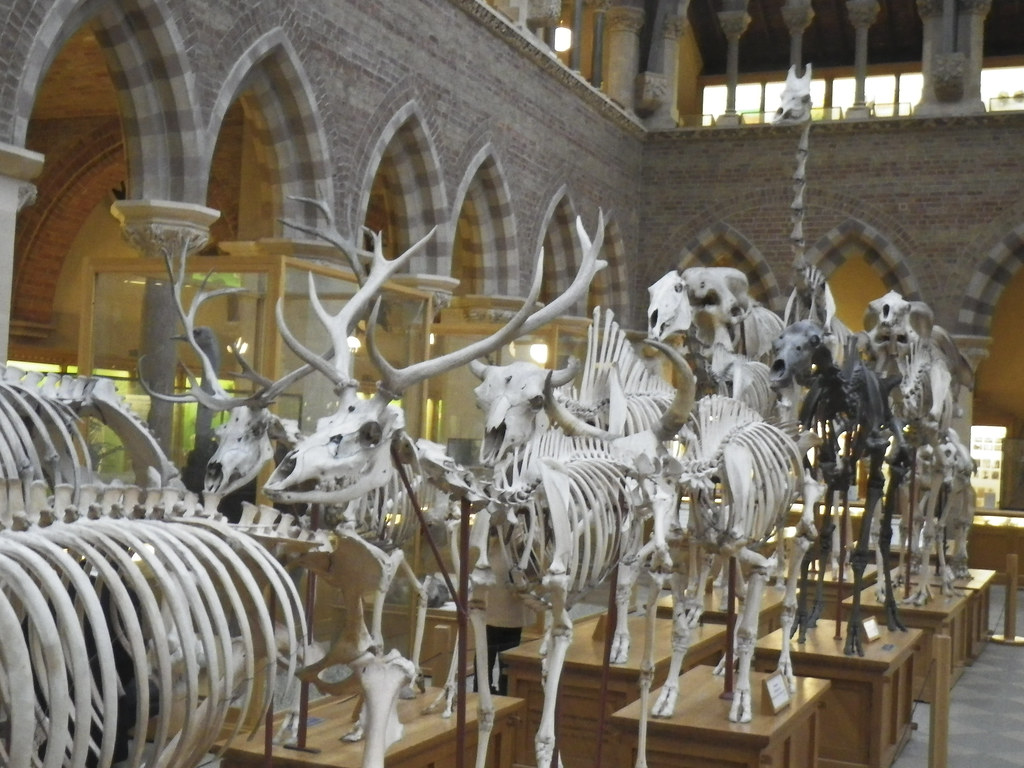
On exhibit at the Berlin Museum of Natural History is the dinosaur Giraffatitan brancai, which, like a giraffe, had a long upright neck and forelimbs longer than its hindlimbs. Notably, Giraffatitan is a specimen of colonialism, having been collected from the locality of Tendaguru in the colony of German East Africa (Tanzania today) between 1909 and 1912 and brought back to the German Empire’s capital.


Here in Berlin from Africa,

taken from Tendaguru’s hills!


Lofty among the atrium’s

glass and steelwork high overhead,


eye-socketed summit of bone—

The Giraffe Titan, astride Earth


once again! Do not strain your necks

as you gaze upward in awe, dwarfed


by Mesozoic proportions—

Depleting a continent green,


between this cavernous ribcage

and pelvis sat the source of its


insatiable appetite that

was fed by devouring its way


across Africa’s rife lushness

Strung along these gargantuan


bones were insensate muscles, their

violent contractions swinging


the limbs lumbering wantonly

to leafy troves snatched by its maw.


Next, note how the skull would look out

from this neck tall as a tree’s trunk,


the inhuman heights distancing

higher thoughts from the disasters


waged as each footfall would convulse

the earth, the trail of footprint scars.


Do grasp ladies and gentlemen,

that before you stands the terror


of its time, hunger incarnate

covered in scales, a creature who


by a glutton’s nature, would not

leave a single leaf on a twig


as whole forests suffered its teeth,

entire lakes flowing as rivers


guzzled down a sluice-long throat,

vast wilds fouled to wastes by sludge dung.


My good people, I implore you

to know that this scourge preyed upon


lands homing other animals,

availing itself of food


that would sustain them, untroubled

by whether then they might perish.


Woeful species that could not flee

Were left to the famines sprouting


from its presence, fields of ribs bleached

by the sun, with any challenge


extinguished by the immense weight

crushing bodies beneath four feet.


Be thankful that our Berlin Beast

is but a nightmare’s memory


bound to this defunct skeleton—

Please though take care to remember:


Evolution has a knack for

repetition, reinventing


wings among birds, bats, and beetles,

sleek fins among sharks and dolphins—


She’s likewise over the ages

rehashed her ravaging Titan,


finding a new form to harbor

its continent-gorging greed.


From Europe’s soil, her behemoth’s

avarice arose once again,


albeit in a much smaller

human’s stature. Staking feeding


grounds in Africa through charnel

colonies, this voracity


without end tries in vain to cram

itself full, stuffing its mouth with


diamonds and sapphires, rubbers sap,

gold and copper, clear-cut timber


medicinal herbs, ivory

and hides, animals bound for zoos,


fossils destined for museums,

plantation-grown cocoa and cane,


coffee, sisal, and palm’s red oil,

despoiled rivers and vistas, lands


fertile, grasses for cattle, men

yoked faceless for beast’s hard labor.


If you were to tremble at just

the mention of such crazed desire


not content until Africa

was consumed down to mere pebbles,


I could not blame you. However,

do know I tell you these horrors


alongside the bones showcased here,

so you can recognize as truth


that a rapacity apt for

a dinosaur can masquerade


as something human, giving you

no future reason to gawk, breath


stopped by a gasp betraying

an ignorance of our darkest


nature. Take this chance to acquaint

yourselves with this recurring bane


so to know when it walks the Earth

again, as we can but surely


wager that this monstrosity

will be reborn at a mere whiff


of wealth wafting from soil, luckless

lands left to fend off famished jaws.


Brandon Kilbourne is a Pushcart-nominated poet and research biologist from Louisiana who is currently based at the Museum of Natural History Berlin. Since 2018, his work has appeared, or is forthcoming, in Poet Lore, Ecotone, Obsidian, Tahoma Literary Review, Artemis, West Trade Review, Split Rock Review, The Fourth River, Santa Fe Literary Review, Panel Magazine, Slant, Sky Island Journal, Catamaran Literary Reader, and elsewhere. His work has also been translated into Estonian in Sirp.

I didn’t visit the country by choice. But grandma was happy to see me. Her surgery earlier in the year had left her unable to help herself as much. I knew my mom wanted to finally get rid of me. Now instead of spending the summer flirting with boys and browsing aisles of overpriced makeup, I would be here. Hours away from the city.

Grandma asks me to help her clean the house. I find myself enjoying some of the cleaning and the way my nostrils burn from the fumes. The nothingness around the small house surrounded by forest trees. My body craves that unknown feeling.

In the mornings, I wake to the chirping near a pine tree outside my window. I grab water from the nightstand and take a few sips. My dry throat feeling some slight comfort. From the edges of the windowsill, I see what I make out to be a few feathers. I pull myself out of bed and open the window trying to grab one. They fall to the ground looking like glass shards ready to impale my body.

I never actually see the crows, but sometimes I hear them.  Hanging laundry on the clothesline is usually when I hear them the most. From the tops of the redwood trees. Sometimes it feels like the forest behind the home is their playground. I find myself wondering what it feels like to be pecked to death by them. Grandma calls me back inside. They continue laughing, knowing I’ll be back near them soon.

The neighbor girl, Esther, tells me the crows are very smart. She’s about my age, a little nice but slightly weird. I could see someone like her not fitting in with other kids. She explains she can understand birds. I don’t know how to respond. I agree with her about the ways city folk are not in tune with nature. The city is surrounded by skyscrapers and sidewalks. Brief trips to the park are not the same as being on the Reservation surrounded by nature.

When I left the treatment facility, I knew my mother was embarrassed to take me back. The way she looked at me as I was being discharged made me feel ashamed. The life she wanted was limited by having me around. Her new husband hated kids. There was no space for me in the cramped apartment. The resentment from the years of being a single mom, and the drama with my father in and out of prison.

Grandma has always been kinder to me than my mother was. But she lived too far for us to regularly visit. I knew she would not treat me like a burden. The only feeling I knew my entire life. Around her I didn’t need to pretend, try to satisfy like I did around mother. My grandma, at her old age, chose to move back onto our ancestral lands.

For once in my life, I felt a freedom I never felt. The iron cage I always imagined holding me down inside, loose. When mother drives away, I feel it swelling. That feeling of knowing I will probably never have to see her again. The freshly lacquered nails and her peony-stained cheeks. I won’t miss the rude comments she makes about the plainness of my face or how my new haircut makes me look like my father.

Esther is the first person besides my mother I allow to touch my hair. I let her braid it for me. Her delicate fingers weave in and out of each strand. She is the first person I tell, outside of my family, about my time at the facility. Never does she judge me or make me feel as if I am being observed. When the sunlight hits Esther’s round face, her eyes look a pretty golden brown.

I tell Esther about the time my mother came to visit me at the facility. The meeting was short and awkward. My mother’s makeup looked dark, and her outfit overdone. The echo of her heels against the linoleum floor louder than I had remembered before. We didn’t hug or say we loved each other. That was when I realized I would never be wanted in her life.

In the evenings, I sit and watch grandma do her beadwork. She tells me she will teach me if I want to learn, and even the tricky peyote stitch. Sometimes I want to ask her how my mom was when she was younger. Was she a kind girl like Esther? Was she as selfish as she is now? These questions seem important but when I want to ask, it’s time for bed.

In the city, I struggled to make friends, as much as I hate to admit it. There was always something I desired more than I could find. But I hid it from myself. I tried to make my mother happy. I stained my lips and cheeks. Dressed like the girls I envied. Starved myself so she wouldn’t comment about my figure anymore. Wore dresses even though I hated them.

For months, I stole medication from her new husband. I’d swallow them to see how I felt. He didn’t notice at first. His eyes stayed glued watching old cowboy shows when he got home from work. The type of man who wanted a wife to wait on him. I watch her trying to mold into a role she can never be. Especially as a Native American woman married to an older White man like him.

When I eat dinner, I do so in my room. I avoid my mother and stepfather as much as I can. Sometimes I steal his cigarettes. Occasionally I ration the ones I have so he won’t notice. When everyone is asleep, I go on the balcony and pretend I am someplace else. I enjoy watching the blanket of stars greet me. A sense of comfort as I exhale the smoke.

They found me on the bathroom floor. The doctors thought it was a suicide attempt. I don’t remember much. But I remember that almost dying felt better than living. Felt that missing desire for something I didn’t understand. The room of the hospital felt so quiet. The white walls, hearing each patient breathing. When I sleep, I see friends that don’t exist in real life.

The unusual thing about watching baby crows hatch is the sliminess of their skin. The way their mama seems to understand naturally how to care for them. How defenseless they seem. But I desire to see what they will become. Esther tells me about a dance she heard about that some tribes do called a Crow Hop, and I find myself wishing I could see this. She promises me one day we will go to a Pow Wow to see it. Somehow, I envy the baby crows even more.

Sometimes, when I’m busy in the house, I look out the window to make sure the baby crows are okay. When it rains, I worry they might not survive. I try to imagine their mother is nearby, ready to conceal them with her leathery black wings. I worry about the wind knocking down their nest. But maybe once the sunshine comes, it will warm their small little beaks.

Esther comes and asks for me one morning. Usually, we meet in the evening. I peek my face through the cracked window near the door telling her to wait. I grab a basket of freshly washed laundry preparing to hang it as we talk. I notice a new parka on her body. It’s black and almost looks a bit too large for her small frame.

We walk near the clotheslines as I begin quickly hanging the clothing. I want to ask her about the baby crows. But I wonder if she already knew. Would she feel sad as I did realizing they might finally leave us? My grandma’s house was closer to the nest than hers so I felt responsible. Because of the weather, I hadn’t checked in a few days. Her mood told me not to be worried.

Beneath the early morning sun, her brown eyes looked lighter than I noticed before. We walked towards the tree. I wanted to tell her I saw the nest empty last evening, but I didn’t want her to know my obsession with the crows caused me to peek before her. My stomach churned slightly, unsure how to proceed.

Beneath our feet we see it. A small black trail of feathers scattered around the dirt floor. We both stay quiet until we finally hear them. She looks up and seems slightly surprised. The wind hits some of the branches making a swishing sound. I look up and see it. On a small dogwood branch I see what appears to be small crows swaying. Something about it makes me cherish this moment between us. These baby crows are motherless, and ready to face the world.


Delaney R. Olmo is a writer who graduated from the MFA program at California State University, Fresno. She has been a finalist and semifinalist for several poetry prizes. She is an enrolled member of the Kashia Band of Pomo Indians. Her work has appeared or is forthcoming in Feminist Formations at John Hopkins University Press, Green Linden, Solstice Literary Review, Abalone Mountain Press, and many others. Read more of her work at delaneyolmo.com.

Dey said to sit and wait behind dees bars

and as it was, I heeded dey commands

because I knew dey light and I was dark.

Dey promised me a trial was at hand,

but damn if I ain’t tryna lee dis place.

No food and all dis heat sho’ ain’t no joke

but lissen here, da smile on my face

was big when all dem boys came in and broke

me out! And I could hardly stand but dey

paraded me aroun’ fo’ all to see.

Befo’ dey took me to da bridge, I say,

Dat white girl dere, she happy as can be!

They didn’t let me turn around to check.

The trial was the noose around my neck.


K.O. Bailey is a recent graduate of Washburn University, earning his English degree, with an emphasis in Creative Writing, and a minor in Film & Video. As a member of Sigma Tau Delta, he is a well-rounded author of fiction, non-fiction, poetry, and screenplays and is currently working on a historical-drama screenplay about the real-life lynching of four people in Shubuta, Mississippi in 1918. In addition, he is working hard on a poetry collection inspired by a recent grant-funded trip to the National Memorial for Peace and Justice in Montgomery, Alabama. Follow K.O. (@kobaileybooks) on Instagram.”

“Welcome to Owuooo.[i] We promise you nothing but the pain you deserve. Lucifer kingdom alande.”[ii] Five hooded figures gesticulated to market women. Passersby inched away from them. Some market women screamed when they approached. The way they pronounced the word, “owuoo,” their tongues coiling up between their teeth, like snakes, made a few women leap from their workstations and topple over. Kenny giggled. Before those buffoons performed their act, oh, for that’s what it was, they’d approached him thirty minutes earlier to join in and be the sixth member because in their words, he towered, had a broad chest, and would be feared and loved in like measure. He’d declined. Definitely wasn’t ready to partner with Luciferian acting. Pastor Jefferson would not be pleased.

He’d only wanted fruits from the market so he wound up on Ntreh Avenue hoping to grab a few and head back home. KIDI’s music blared through. I go kill you with.. Enjoyment. Enjoyment. Herh. And then Kenny’s eyes scanned the perimeter. It had been cleared of animals and men. A celestial figure gleamed before him. Weirdly enough, he could hear the bustle of the market. At the same time, he could see the eyes of this being searing through him. It called out to him. Or was it a her? It was about 11 feet tall, with eyes that seemed dunk in fire, robe of magenta and mane of icy-white. Then it fizzled out of sight.

“Herh, young man, why are you drooling?”

 He composed himself. “I was?”

“Why do you look like you just woke up?”

“Cos I literally just did,” he muttered. “Please hand me some apples and pineapples.”

“50 cedis.”

“Ahhbaa!”

“Herh, εnfa saa nkwasiasεm no mma ha o. M’ayε hye. Sε wontɔ a, kɔ wo baabi.”[iii]

“Oh, madam, but it’s just apples and pineapples.” He scratched his head. “Alright.” Carefully removing five crumpled 10-cedi notes, he handed it to the buxom lady and took a bite out of the juiciest apple on his way home.

What the hell was that? What figure was that? He couldn’t seem to get the image out of his head as he stepped into his one-bedroom, chamber-and-hall apartment at Teshie.

He knew he had been told he had prophetic gifts. Were they manifesting?

                                                                *

Sundays were always ferocious. There were always blobs of sweat swirling around the room. Pastor Jefferson would boom and lay hands and the congregants would fall dramatically, the ground littered with their bodies, hope-filled, yearning for redemption, manifestation and stolen glory.

Kenny would always munch on apples after service before packing the plastic chairs.

“PJeff,” Kenny called out. Pastor Jeff had just returned from escorting the wealthiest member to her SUV and was sauntering into his office. “Something weird happened yesterday. You always told me I had prophetic gifts.”

“Kenny, my beloved son, I know you saw something strange yesterday. That white figure.”

“How- dd- id – you – know –“

“That was me, boy.”

“Huh?”

“I’m always watching over you.”

That was the day that Kenny realized that he had to leave Pastor Jefferson’s church. He had always seen the negative signs. Something always irked him, jarred him even, the way people were overly sentimental about his messages and overextended themselves in pleasing him. Then there were those messages he would preach that would shroud the room in fear.

“Eben didn’t listen to me the last time I advised him. Are you all surprised that a tipper truck split his body into two? Montie afutusεm oo.”[iv] A restless calm arrested the atmosphere.

Kenny had always stayed. He needed Pastor Jefferson. Needed his money. His mason job didn’t fetch much. Although he’d graduated top of his class at the university, he’d failed to get any job after graduation. Postmodern Ghana was rough, from the prestigious jobs offered to recent grads on a who-you-know-basis to the numerous job applications that required three years plus experience. Like how?  It seemed like his country just wanted him to lose it.

It was about that time that he roamed from church to church, seeking a solution to his problems. The church at Mamobi hadn’t helped. The Pastor there secretly sent him DMs for sexual favors following their exchanging numbers after the alter call. Abokobi’s ‘Fire for Fire, Brimstone for Brimstone’ Ministries hadn’t helped a wink either, what with their mortal combat with Satan every Sunday, each congregant armed with boxing gloves. I mean, he should have known. Brimstone for Brimstone?  But desperation had a voice that couldn’t be silenced even in the face of danger and hoodwink. As for Nungua Love Centre, the ushers were so rude; all they cared about was gathering everyone so the pastor could pull congregants onto the floor by sheer force of will. Their violence was staggering. Church culture just generally seemed steeped in mystery and pomp; no depth to satisfy parched souls.

Pastor Jeff seemed genuine the minute he walked into the Community 12 Covenant Family church. But over time, his character unraveled and became unrivaled. It was too late then because the money that Pastor Jeff supported him with became his lifeblood.

But tonight was different; the way Pastor Jeff cocked his head to the side; the way his mustache suddenly marched to a devious tone, arched like a Mafioso’s; the way his eyes burned into him. All of a sudden, new scales fell off his eyes. Then Kenny finally gathered courage and did what he’d felt compelled to even in the face of complete failure. Step into the unknown with no bulwark.

Yes, he’d starve for a while but goddamn these pastors. They were clearly not the answer! At least the kind he’d found.

He would find out what his vision meant. On his own.                                                      

                                                                      *

There was a wide lake before Kenny. He would see a crocodile dip into it and re-emerge a golden antelope. A mouse would sip and emerge a deer. Then he saw that creature again. It stared intently at him and smiled. Then he woke up.

The plates around him clinked. Grains of gari layered the plate like a sickle. Shito lay dotted all over the floor. “Shit.” He looked around and saw the bottle of shito, ajar because of his restlessness during the night, the floor a cream of black and auburn.

His phone beeped.

“Kenny, we get some job bi for Lashibi oo. Make you make ready,”[v] Diaka, who’d recommended him for his last job, said.

He prepped and within minutes, the flaming sun slapped his back as he carried blocks to an uncompleted building. As he narrowed the curve to the entrance, he saw a group of young women ogling at him. One licked her lips. He wondered how she could be so crude in her opulent expression of desire. I mean, he knew that his body had definitely packed on some muscle from two years of consistent mason work. He also knew it was natural to feel things. But these were teen girls on the cusp of womanhood. They should be ogling at their textbooks. Not him. And the way they leered, unashamed with longing, eschewing the courtesy to bridle and expunge desire in secrecy or behind a screen was utterly bewildering to bear, to say the least.

“Kenny, mortar, mortar, mortar!”

He dropped the blocks and picked up the empty ceramic slate before him. One of the girls giggled when he crossed the bend again.

“You know Kenny, you should stop wondering about those lustful daughters of Eve over there.”

Enningful stifled a laugh, eyes burning bright as he joined Kenny to carry off mortar in his own slate. The dji, dji, dji sounds from the concrete mixer blared through the air as they trudged along.

“Ah Enning. These are not daughters of Eve. They are daughters of Satan.”

They both laughed heartily.

“Stop exaggerating. Don’t tell me you’re not enjoying it. I know I am.”

“Ah, so you too?”

“Those Gen Z girls have been here since morning oo. Staring at us like we are well glistened trophies. They want a piece of us, chale. We be hot cake. I for make my move soon kraa.[vi] Na body no be firewood.”

“Hahaha. You that. Shocked you haven’t yet.”

“Biding my time. The longer they want me, the easier my move. They will fall like flies soon.”

Their laughter echoed in the distance.

“But eii Enning how far with the new job applications?”

“Hmm, broooo, same old oo.”

Enningful had struggled after school to get a job too. In fact, he met Kenny at a Uniliever interview, they vibed and then exchanged contacts. After both failed to get the job, Enningful began mason work to while away time and make a little money at the side while still applying for jobs. He advised Kenny to join in the mason work.

“Why did we even break our backs to make first-class degrees, hoping that Ghana would open up to us. See the way all these organizations are rejecting us!” Kenny said.

Enning shrugged right before they reached the mound of mortar that the other masons had rounded.

“Kenny, I no de barb sef. This country be forking, rough.”[vii]

                                                                     *

It thundered. Rain poured out of the sky in a flurry dance. A dim mist arrested the bed. Then a blast of white light filtered through the dark. Kenny awakened. Stared into nothingness. There was no one in sight. Suddenly, voices rang out.

“Rainbow-whisker, you are chosen! You are chosen! You are chosen!” Voices uttered. He could hear honey-thick baritones and soaring boy sopranos.

“Who are you?”

“Kenny! You are chosen! You are chosen!”

He placed his hands over his ears. Then awoke. A dream within a dream. Beads of sweat paddled across his face.

“What the hell? This has to stop. All these weird stuff. Naa, naa.”

He picked up his phone.

“Nancy, I know it’s late. I just have to talk to someone.”

“Okay.” Nancy hesitated, groggy. “Is anything the matter?”

“Yeaaah. Everything is the matteeeer. Okay, you-you-you wait. Maybe I shouldn’t talk to you about this on phone. I’ll come to your place early tomorrow morning.”

“You sound terrified. Are you sure we can’t talk now so you feel a bit better?”

“Nancy, I think I’m losing it! Freakin losing it. Pastor Jeff said prophetic gift or whatever but I think I’m just going coo-koo.” Kenny’s voice cracked and he began sobbing.

“You know what? Don’t move. I’m coming over.”

Nancy just lived two blocks away. She was the only female friend he’d made since he moved into his beat down one-bedroom apartment.                                                 

                                                                         *

“I keep seeing a super tall and big creature.” Kenny’s voice was calmer. “He looks at me like he knows me. I saw him like I’m seeing you fili fili[viii] in the market. Then I had a dream about him the other day. Or her. I don’t know. He seems androgynous. Then just tonight, I heard voices saying I’m chosen. They called me a rainbow-whisker. What the hell?”

“Hmmm. Let me boil a pot of hot tea for you.”

“Sure.”

Nancy began walking over to the cupboard at the corner to grab a teabag.

“Wait.” She stopped, turned and stared intently at Kenny. “Before then, I think you need a hug. A big one.” She smiled. Nancy always had a way of calming him and stealing a smile out of him, even in the direst of situations. In the past when Pastor Jeff’s financial assistance delayed, he’d hit her up and she’d loan him some money. Then she’d hug him afterwards. He kinda knew she had the hots for him. He would use it, somehow. In the future. But tonight, all he needed was his friend.

“Honestly, Nancy, what do you make of all of this?”

Nancy smiled again, and shrugged, “I don’t know Kenny. I’m no spiritual person, to be honest. Why didn’t you tell Pastor Jeff?”

“That charlatan.” Kenny scoffed. “Can you believe he told me that he is that creature?”

Nancy burst into uncontrollable laughter. “Ah, akoa wei paa.”[ix]

Somehow, her laughter comforted him.

“I need answers.”

“Clearly. And you won’t get the right ones from him. I always told you he was fake. It doesn’t even take a blind man to see that.”

“I always knew oo. But na mehia sika no oo.[x] Hmm. Ghana is sooo hard. But you know, when he said it, it’s like something just came over me. I knew then and there I was done with his ass.”

“Hahaha. I’m glad about that. Maybe you should go see a genuine prophet in the land.”

“Prophet?” Kenny’s eyes widened. “I’ve seen so many fake ones, they are all the same to me.”

“Just as much as there are many fake ones, there are genuine ones too. You never know. What about your friend that you said is now a prophet?”

“Hmmm.” He began rummaging through his drawer. “Charles. He always seemed like a kind fellow. Maybe he can help me.” He tore a leaf out of a book and peeked.  “Got it. Class list, college 2015.”

“I hope you’re ready for what all this means.”

“Nancy, I don’t care. I just want all this madness to stop.”

                                                                *

“Charlessseeey gbemi.”

Kenny hollered as he noticed Charles seated at the bench in their former Psychology Department. The night sang a quiet song; no one in sight at the department except the two.

“Brooo.” Charles got up and hugged Kenny.

“Don’t call me that no more. I work for the Lord now.”

Kenny lowered his arms, in a symbolic bow to his old friend.

“Pressure! Hahaha, chale, what have you been up to?”

“Me? Oh, hmm. Mason work oo. M’asoa blocks saa.”[xi]

“Oh.” Charles face was etched in a frown.

“But bro,” Kenny laughed. “That conversation will be for another day.”

“Okay. You seemed anxious when you hit me up. What dey go on?”[xii]

“Been having crazy visions and hearing weird shit. Sorry, stuff.”

“Bro. Flooow.”

 Kenny giggled.

“What are you seeing in your visions?”

“I see a tall figure staring at me like it knows me. Then I hear voices saying I’m chosen. It’s crazy bro.”

“When you hear these things and see these things, how do you feel?”

“Uncomfortable. The sounds I was hearing were literally beating my eardrums.”

“Wow.”

“Let’s pray a bit.” Charles spoke in tongues. A frigidity arrested the atmosphere. It tingled Kenny’s skin. He suddenly stared at Kenny, a wildness waltzing in his eyes.

“Heaven and hell are fighting over you. You do have a divine assignment. But the things you are seeing and hearing are not from God. Your mother’s clan served the enemy in the past. Your father’s clan is the direct opposite. You are destined to be a prophetic painter. You will see things in the spirit realm and translate this to your drawings.”

“But I don’t even draw.”

“Be careful of your associations. All the people in your life at the moment have been sent to distract you. Enningful, Nancy are out for blood.”

“But Nancy. How? She encouraged me to seek you out.”

“And that’s why I’ll take you out. Before you become what we all fear.”

Whack, whack.

Something suddenly hit Kenny’s head from behind and he fell. The last thing he saw was blurry images of Nancy, Enningful and Charles. They sneered at him with eyes of pity and disgust.

Nancy glowered. “You were chosen to die. Eventually. We’ll take you to the creature you saw. He has a looot of plans for you.”


[i] Death

[ii] Has landed

[iii] I don’t condone such foolishness. I’ve got a lot on my plate. If you won’t buy, leave.

[iv] Listen to good advice.

[v] Kenny, we’ve got a job offer at Lashibi. Prepare.

[vi] We’re desirable. I have to make my move soon.

[vii] Kenny, I don’t even understand. This country is so pathetic.

[viii] In the flesh/for real

[ix] Ah, really, this dude?

[x] I needed the money oo.

[xi] I’ve carried blocks on my head for so long.

[xii] What’s going on?


David Agyei–Yeboah holds an MA in Communication Studies from the University of Ghana. He graduated with first-class honors in English and Theatre Arts for his B.A.  His writing has been published by Deep Overstock PublishingFreshwater Literary JournalThe Quilled Ink Review, Tampered Press, Lumiere Review, Journal of the Writers Project of Ghana, and elsewhere. He was longlisted for the Totally Free Best of the Bottom Drawer Global Writing Prize in 2021. He enjoys everything art and anticipates an academic career in the future. He tweets at @david_shaddai and sings on instagram at @davidshaddai

Reputation for decay, for violence


where billie used to sing. The rows in a tableau, the decades of eviction

and their fruits. Strange


the murals brightly painted, icons I’ve not heard of.

Conflicted histories in the list


for English B: Wilkerson and Hooks, Staples, Ta-Nehisi.

How to know what’s implicit? Black


communities fanning out like wings. Black

on the map the outline of an etherized


insect: what you see when you pin the red

line of a city slinging plaques


for people you’ve not thought of.

Around the picturesque, the lakes and parks


“You see a spot on a window, and sometimes you don’t see

past that spot,” the heritage director says,


though tourist maps will scrub the areas in gray. Invisible?

No gift shops where the cops go rogue in episodes of Homicide.

No iridescence.


crawling toward mirage

EL PASO—If only you can get therefrom desiccated beds along

forests of saguaro, in fiendish shade of canyons … to walk out in the open


Some argue

the narrative becomes too difficult to understand

if you give away


the ending first, cut

from the bottom


who? for instance, the bones under the bones exposed,

scattered by the coral snakes and rattlers

for instance, what? the tatty blankets hanging on barbed wire 


somewhere near black mountains, where?

flayed in dehydrations, when?


why and why?

Notes, below the fold: Anything you want

Shrewd coyotes making the arrangements


cities at dusk, winter light

“As long as I kept walking I didn’t hear [the cries] ….” — Beckett


Water sounds like wind, wind like water over riprap, over

fallen masts that straddle the embankment. Black

rocks form entanglements. Black

ballast for the ship of night the wind is navigating.


Fog settles in the darkening. Along the falls, a figure with a dog.

A figure backing books, looks to where a deer is bounding

toward the bus. Near miss

where children in my thinking

wait with flashlights for their mothers’

gas-lit stoves. Light from cell phones.


Flash of the explosion. They cover themselves with cardboard.

They fall with their mouths open.


Kathleen Hellen is an award-winning poet whose latest collection Meet Me at the Bottom was released in Fall 2022. Her credits include The Only Country Was the Color of My Skin, Umberto’s Night, which won the poetry prize from Washington Writers’ Publishing House, and two chapbooks, The Girl Who Loved Mothra and Pentimento. Featured on Poetry Daily and Verse Daily, Hellen’s poems have won the Thomas Merton prize for Poetry of the Sacred and prizes from the H.O.W. Journal and Washington Square Review, as well as from the Maryland State Arts Council and Baltimore Office of Promotion & the Arts. She can be found at KathleenHellen.com and on Facebook.

Zero is equilibrium, balance

The moment before overdraft

And every night, I watch you lose the zero

Stumbling, falling, cussing these four walls into blank discursive space

Swaying back and forth, like a flag for the nation of our trauma

Back and forth, beyond the negatives or positives

Fumbling, dropping, spilling

You lose the zero in so many ways

But never more than when you stand in front of me with your child eyes

And 50 becomes 5


Snake Charming

For thousands of chainmail-clad nights

I watched you cleanse yourself of demons on the kitchen floor

Pulling snakes from your throat

And hope from your head

Years of resentment under foot

I step softly

And laugh as you watch me

Swallow the serpent of our collective pain


Worldly

Where the train goes, my heart goes

Getting off at every station

Stay for a minute, stay for a year

Each place the same in culmination


In every new city, I worry

There’s nowhere further to go

Yet eventually, the trip continues

Always a new place down the road


Most places, there’s nothing to keep me

Nowhere to rest my head

A quiet escape in the morning

An empty impression left on the bed


But what is it to stay here

To breathe with the seasons change

To know this place throughout

To sing and praise its name


Aubrianna Snow is a Mi’kmaw writer and feminist living and working in Treaty Six Territory, Canada. A graduate of MacEwan University’s journalism program, she writes primarily creative non-fiction and poetry. As a survivor and violence prevention worker, she centres themes of healing from interpersonal and systemic violence. You can find her work in Chatelaine and Muskrat Magazine. Find her on twitter at @aubrisnow or on her webpage aubriannasnow.com.

I stack up the memories of my defeat, one on top of the other, until a mountain of setbacks is facing me. Once again, I am my mother. I am the dreams she had to bid farewell for the sake of a happy marriage, a happy husband, a happy family. I would rather we were miserable — since dreams that don’t live long enough to see the light always turn into nightmares ready to hunt down our peace of mind.

I often observe my mother’s blank face. I wonder in what alternate universe her dreams would have become reality and what she would have had to sacrifice in the process. I wonder if she often imagines a child-free life as her own, if she embraces, when no one’s looking, the possibilities that she left behind, and if she would have had any regrets in the depths of her heart had she prioritized academic success over the mechanized duty of motherhood.

Now that I think about it, almost every single one of my aspirations had something to do with my mother’s miscarried dreams. She wanted to go to med school, to become a university professor, to have a career in writing, to live in the United States. And when none of those dreams came true, I dreamt of doing all those things on her behalf. I sit alone, I wonder and wonder, but I never find the courage to ask her. What if she finds it insulting that I would ever think her life didn’t go as planned? What if she wasn’t even aware of her potential when she settled for a regular job that kills creativity, a slow torturous death?

My mother wrote a whole dissertation about the evolution of Muslim societies when it comes to women’s assumption of leadership roles. She made sure I read her work before I was old enough to understand the dynamics of sexism in academia, before I could even comprehend the weight of being a woman and a scholar — the responsibility and the burdens, the times when giving up feels like the best option at hand, the state of being in the shadow of your male colleagues or in the outskirts of your professor’s vision. My mom’s dissertation made me think that I knew it all, that I’ve officially found the ultimate cheat codes, the road that leads to academic success even when your crippling sense of self feels like the biggest obstacle in your way.

 I smiled every time someone reminded me of the similarities between me and my mother. “Even your dreams and life goals are similar” they say, not knowing that it was all too deeply engraved in my conscience, that I had planned every part of this puzzling resemblance that they now praise so effortlessly with words so easy to utter when you’re not the one putting in the work.

My grandmother’s face comes to mind whenever the word resilience graces my hearing. I remember her miscarried dreams too, and when I do, I find myself trying to overcome a strong urge to cry. My grandmother was married off at fourteen, forced to let go of what her once young heart desired. Her brothers grew up to become successful in their fields of study — one is a lawyer and the other is a doctor of medicine. While they worked hard to achieve their goals, she cooked and cleaned and raised the children who came from her infantile uterus. At sixty, she learned to make bitter jokes about the childhood stolen from her, careful not to laugh too hard at what still pains her heart until this day. Her youth a ripe fruit, a blossoming flower, carelessly thrown away.

My womanhood has taught me to live for the sole purpose of embodying the dreams of my female ancestors. Despite all the stories of the unfulfilled desires of the women in my bloodline, I long to dream freely and live my life in service to every dream that got away.


Aya Anzouk is a college student from Morocco, Rabat. She‘s pursuing her higher education in Clinical Psychology and Sociology. She’s an opinion writer for Arabic Post, formerly known as HuffPost Arabi, and an Arabic fiction writer for ida2at and The New Arab. Aya enjoys reading in her free time and is interested in philosophy and history. One of her favorite books is The Society of the Spectacle by Guy Debord.

Dad. You thrive in my dreams. You fly on a magic carpet

of colors. I wish to join you, but you don’t involve me.


I see you falling from the sky. You look like a ship,

large, mechanical, and terrifying. When you land at my feet,

you transform into an organism, a salamander.

Even so, you look more threatening than the ship.


As if you’re hearing my thoughts, you decide to become

a lungfish with a large head. I stroke your head, your eyes

so beautiful. You’ve evolved in your choice of breathing

organs and sound, equipped with extra lungs. How perfect!

No more fluid build-up, oxygen therapy, or the pills you hated.


We laugh about how we both love eating fish. We walk to my

house which is big and made of glass like a greenhouse of plants.

You do not use the door but squeeze in-between the wall and floor,

then crawl into the living room. There’s no telling your limits.


I step outside to call an aquatic company that owns a swimming pool

and specializes in creatures like you. I want to buy you a tank. I fidget

with my phone and desperately press numbers which get erased

the moment they reach three. How to dial a full ten? Eventually,

I return to the room and find that you’ve died in a blue bucket

after chopping yourself to pieces. My sister appears and wants

to cook you. I am distressed. I tell her you’re not a fish! A slice

of salmon materializes and my sister says, Some fish are red,

others whitish-brown—which is the color you are now. Like tilapia,

she adds. I don’t see her point, although I feel less troubled.


The Man Who Changed His Name Twice

Is now old. He lives in the country

plowing land from sunrise to twilight.


He grows carrots, cucumbers and

cauliflower, but he never eats them.


He tends an orchard—mixed fruit trees

and grapes. He makes wine he drinks.


Smells of rancid olives, bitter,

and the color of bruised blackberries.


Every time he squeezes grapes

he cries, remembering the lives


he took, and those he’d promised

to serve and protect but left behind.


He buries the pain in the soil

while tending the veggies.


Can’t stand chopping,

Can’t stop breaking.


Are You Now Afraid for Your Color?

Awake, my people, awake

To love, to burning love

Feel once more the heat of your desire,

Sensuous needs you so callously crucify.


The world does not need your decorum,

your modicum, your sacrifice

The world needs your rage,

your radiant joy, your outrageous gladness.


Rake the logs, rouse the embers

Breathe the fire and consume the darkness

Ignite the bones that have forgotten the power

of touch. Dispel the blanket of sepia gloom.


Bring back pleasure, delicious flavor

And the music that’s your heartbeat.

Aching joy, astounding joy,

The sound of your laughter.


Mildred Kiconco Barya is a writer from Uganda now living in North Carolina. Her publications include three poetry books, as well as prose, hybrids, and poems published in Shenandoah, Joyland, The Cincinnati Review, Tin House, and elsewhere. Her fourth full-length poetry collection, The Animals of My Earth School, is forthcoming from Terrapin Books, 2023. She’s working on a collection of creative nonfiction essays, Being Here in This Body. Barya is a board member of African Writers Trust and coordinates the Poetrio Reading events at Malaprop’s Independent Bookstore/Café. She teaches creative writing and literature at UNC-Asheville. She blogs at MildredBarya.com . She is on twitter at MidiBarya and on instagram at MidiBarya.

The Book of Mormon, questioning the representation of Uganda in the musical:

In recent years, burgeoned by efforts to decolonise education, literature and general popular culture, we’ve seen an increase in critical engagement with classics and their depiction of what is considered as the racialised “other”.

These include Shakespeare’s plays Othello (1603) and The Tempest (1611), Conrad’s novella Heart of Darkness (1899) and Camus’ novel The Stranger (1942). However, what is still needed is a greater scrutiny of plays which are currently running — plays which are offering up diversity and inclusion as a facade, and by doing so reinforcing racial stereotypes, rather than combatting them. 

You might have heard of The Book of Mormon, a Broadway musical first staged in 2011 and still celebrated today. When I went to watch it, I knew nothing about it other than that it was hailed as “the best musical of all time” and had won a cabinet of Tony Awards. My analysis comes from the fact that I am African myself working on colonial, postcolonial, and decolonial issues. Therefore, the musical was racist rather than humorous to me.

From the outset, Uganda is represented as an undesirable location. Upon hearing their destination, the two white missionaries who are sent to Uganda are not only shocked but also unhappy and jealous of their counterparts with missions in other countries like France, Norway, and Japan.

As soon as they arrive, their belongings are stolen by armed men who terrify them and the whole village, which goes back to what Edward Said (1978) referred to that “the East has always signified danger and threat”. People of the village also laugh when the missionaries ask for the police, which mirrors the dichotomy of order and disorder, developed and underdeveloped.

The staging highlights a gloomy yellowish and dull green landscape, mud huts, dirt , and other disturbing images (a cast member pulling a dead animal around the village, another one pulling a wheel around, and a skeleton of another dead animal kept outside in the open).

These images correlate one of the Mormons saying, “there are a lot of disturbing things in Uganda”. These images differ from the residence of the Mormons in the village with light, a colourful sofa, a board, and books with bright colours around them. This depiction accentuates a dichotomy of “civilised”, “uncivilised”, and “primitive, developed” that implicitly insinuates how the “racial Others” and “white civilisers” are seen and understood.

Other problematic aspects of the play are the stories of rape (raping babies to cure AIDS), circumcision of women, AIDS among the people, militia threatening the villagers, poverty, and violence. However, it did not seem that people were aware of the stereotypes and the racist depiction of people from Uganda while the stories of AIDS among other issues made people laugh in the room.

So how is this depiction of Africa, precisely Uganda, different from other works and depictions that postcolonial and decolonial studies have tried to deconstruct? How is it different from the negative representation of Africa and Africans in Conrad’s novella Heart of Darkness that the postcolonial author Chinua Achebe criticised for its racist illustration of Africa and Africans?

The theatre plays an important role in the quest for decolonisation. The Theatre can have a positive impact by raising awareness, educating the public and bringing people together while addressing past and present inequalities.

However, it can also have the opposite effect by emphasising certain stereotypes. Some shows problematically enforce labels using comedy.   This idea  is referred  to as “Ironic racism” which has been criticised in the media for tolerating  shows’  absurd racist tropes by actors and comedians.

Jason Osamede Okundaye discussed ironic racism in comedy considering it naïve and dangerous. What is alarming is that racism often hides behind humour. Thus, there are limits to humour especially when it is racist. Moreover, the world is moving towards decolonisation, which means speaking against stereotypes and labels attached and following certain people (in the play, Africa) from the past.

White Missionaries and the colonial image of Africa in the musical:

In colonial times, missionaries were sent to colonised lands to spread their religion and educate the “uncivilised Africans,” while colonised people were seen and portrayed as “primitive”.  Frantz Fanon highlighted the role played by the missionaries in colonised lands as calling to the white man’s ways rather than to God’s ways (Fanon, 1967). In the musical, one of the missionaries taught false information to the villagers because he had not read the book himself.

The people of the village are portrayed as naïve and simple-minded in accepting the new religion even when the information communicated by one of the missionaries is an invention. For instance, one of the Mormons convinced the people of the village to have coitus with frogs to treat AIDS. Therefore, the dichotomy thinking of civilised and uncivilised, victim and saviour, white and black (one of the characters was referred to as Nicotine), East and West, order and disorder, developed and underdeveloped are strongly and directly accentuated throughout the musical.

The white missionaries are portrayed as the rescuers of the village and its people from their “primitive uncivilised” ways. One of the characters said “the Book of Mormon will do those Africans a lot of good”. The message implies that the two white missionaries and their book are bringing a positive message and way of life to Africans, and that they need it. This mirrors the past through the role played by white missionaries in colonised countries reinforcing the stereotypes that have long followed Africa and Africans.

While the show title centres around the Book of Mormon calling it a religious satire musical, the story centres around the racist depiction of Africa. It emphasises colonial legacies of a set of stereotypes attached to Africa in general, and Uganda specifically (Aids, violence, superstitious beliefs, poverty, rape, primitiveness) that the “white man” can change, and which the show reinforces. It is the image of Africa through the lens of colonialism, which Edward Said (1978) refers to as the “recurring image of the other” (p4).

The show could take place in France, Norway, or Japan. Nevertheless, there is a deliberate depiction of an African country, stressing colonial stereotypes, not challenging them. It was not France or Japan or Norway that was laughed at in the show; it was Uganda.

The arguments presented in this article serve to raise awareness about the reproduction of racial stereotypes in the theatre and decolonise these reproductions. Decolonisation is about depicting and speaking about these issues that are racist, dangerous, and provoking. It is not only the show, but also the laughs across the room and the silence around its racist messages and depiction of people in Africa which is dismissed by people saying “it is a joke”.

Decolonising the theatre means educating ourselves about the past and using it to raise awareness. It is acknowledging how the past, shaped by colonisation, still has an impact on today’s national and international landscape between “the West and the rest”. The theatre can and should be used to combat stereotypes — not reinforce them — and change the colonial narrative about locations and people outside the Western world, decentring white supremacy.

Decolonisation is not only for academics to tackle but also for everyone. Decolonization of the theatre “rests with the people, the theatre audiences”. Depicting and speaking about racism is not only for academics as well as it is for everyone, everywhere to reach a level of decolonisation.

Who is Edward Said?

Edward Said (1935-2003) is one of the pillars of postcolonial studies. He authored several books that are still the starting points for colonial, postcolonial, and decolonial theory. Some of his most celebrated books are Orientalism (1978) and Culture and Imperialism (1993).

Concepts and terms:

The dichotomy references in the article come from the representation of the East and the West, self and other, orient and occident in Edward Said (1978), orientalism, as well as the dichotomy of coloniser and colonised others in the work of Franz Fanon. This dichotomy thinking underpins the colonial system at the time as well as the colonial legacies of our time.

Decolonisation’s definition in general can be a contested concept that bridges different foci from Frantz Fanon (1967) questioning the colonial system and structure to Ngũgĩ wa Thiong’o (1981) writing on decolonising language and the use of colonial language to Chinweizu decolonising the literature and the mind (1980/1987). However, the definition used here is thinking about decolonisation as a “way of thinking about the world which takes colonialism, empire, and racism as its empirical and discursive objects of study” Bhambra et al, 2018, p.2


  • For further readings on the subject please check:
  • Ben Luxon (2018) The Book of Mormon is as racist as Conrad’s Heart of Darkness.
  • Bill Ashcroft, Gareth Griffiths, and Helen Tiffin (2002) The Empire Writes Back: Theory and Practice in Post-Colonial Literature.
  •  Chinua Achebe (1975) An Image of Africa: Racism in Conrad’s Heart of Darkness https://genius.com/Chinua-achebe-an-image-of-africa-racism-in-conrads-heart-of-darkness-excerpt-annotated
  • Claire G Harris (2019) “The Book of Mormon Musical Is Extremely Racist”
  • “Colonial Legacies” https://spheresofinfluence.ca/colonial-legacies/
  • Dane Kennedy (2004) “Decolonization: A Very Short Introduction”
  • Decolonisation inpractice The strangers case https://www.archives.org.uk/news/decolonising-in-practice-the-strangers-case
  • Edward Said (1978) Orientalism.
  • Gurminder K. Bhambra, Dalia Gebrial and Kerem Nişancıoğlu(2018) Decolonising the University.
  • Herb Scribner (2020) “It’s Time to Talk About Race and ‘The Book of Mormon’ Musical”
  • Johnston, A. (2003) “The British Empire, Colonialism, and Missionary Activity,” in Missionary Writing and Empire, 1800–1860.
  • Udengwu, Ngozi (2018) “Decolonize or Else – Negotiating Decolonization through Popular Theatre”

Sarah Elmammeri is a final year PhD candidate at the University of Liverpool working on refugee and border policies in Europe from a postcolonial perspective. She tackles issues surrounding the othering of refugees and asylum seekers at the level of external, internal, and everyday borders in Europe. She is interested in issues surrounding migration in general and refugee and border policies, specifically colonial, postcolonial and decolonial theory, inclusion, and diversity.

I beg permission to trample emotions

I am writing to only one of the twenty-eight

outraged lovers of Peru

(who have now become forty-one)


Perhaps I stand alone in wanting

to be certain that there are bodies

that the bullets didn’t harm or leave cold?


That there are deceased similar to those, to those that

sometimes result unharmed, when the martyr

is completely transformed by martyrdom?

So much so, that his retina took in the casing

that killed the assassin?


What fault do I have in wanting to know today the person

who no longer exists?


In wanting to know how many barefoot kids

were in the school,


How many elderly remained

sitting in the walkway,


How many sisters sell in that spot 

that which matters to no one anyway


How many names of girls were tallied

in the evenings

or if it was just one that kept him from sleeping.


I will speak in a low voice near the place where they buried you

That many have remained quiet and she

didn’t wait.

But these are the emblems worn by all the defeated.

It is because the passion of this predisposition

Has been forgotten by humankind.

Listen: they said that death attracted you more

than your own spine.

That remains true beyond doubt.


Song for Aida

Against a background of green paint chipping

a rude white cross stands out

shields surge in a line

In the embroidered backpack, full of pebbles

the boy is missing.


The rebellious woman has become an atom

Violet bruises call our attention

One more jarring movement and order established.

She is one with her flag

contemplating her Wiphala.


We now are all brothers

A bandage falls apart

as if exhibiting his thigh finely sculpted

by labor both urgent and primitive.

You realize how we need each other.


Today they carried away Aida.

Meanwhile, in the hills,

the female relatives rock in their arms the hard stones

Barely twelve noon… and already scheming!


Not allowing even a slit!

They close ranks!

She disappears…

Into pure heart!

They want to hug you comrade.


They Sat on Stones

They are not women, they are vigilantes

Who sat on the stone

Out of love for the land, and thus

their discussion carried their dreams


They are not women, they are warriors

Who put pardons in storage

Out of loathing for the sky, and besides

they didn’t give in to beatings or insults


They are the mothers of martyrs

Who remain complete and their fabric is sincere

They become fired-up miners

in tunnels where explosion is imminent


They are moms, sometimes, of traitors

Who don’t know the monologue of power

They discuss the commands of the powerful in conversation

And their desire is adulterous and parricidal


I understand them and even approve of their reasoning

They have made of suffering a work of art

They are the birthers of this battle for Humankind


Alex Anfruns is a professor, an educator, and a Spanish militant anti-war activist. Co-author of the documentary, “Palestine the Besieged Truth” (Agencia Catalana de Cooperación, 2008), he has lived in Spain, France, and Belgium — the country where he worked as a journalist (Association des Journalistes Profesionnels, AJP). His articles have been translated and published across a wide array of international media outlets. He has worked as a political analyst at Telesur, RT, and Abya Yala TV. The topics he investigates include international relations between the Northern and Southern Hemispheres and development in Latin America. He can be found on his website AlexAnfruns and on twitter.

Laid off from my job, given one day to pack

thirty years into two copy machine paper boxes.


Rolled them out to my car with my bike and never looked back.

I hear school buses come and go in the morning and late afternoon


and witness light shifting and shadows pouring out

like ghosts from another life.


I go to the thrift store, buy a new top

in case for a zoom interview.


Make chicken noodle soup and write sad poems.

Inside of every poem is a God trying not to forget you.


Pick fruit from the abundant tree

bake crisp, pie, bread.


Apply for jobs, apply for jobs, apply for jobs.

Change my middle name to Wait. 


Apply for jobs some more

Inside of every poem is a God saying


Thank you for your interest but.

Browse the internet, sweep the floors, do the dishes.


In the seconds between rejection and acceptance

look in the mirror to see who I am.


Fold the laundry, wait for a delivery

fumble then rise, fumble then rise.


Upload my resume, then retype the whole thing

into a separate application page.


Watch the spinning death of my computer.

Weed the garden, plow through mail.


Watch my severance dwindle.

Inside of every poem is a God


with nothing left to say.


Labor Day, After A Layoff

We move the chairs

from shade to sun and back


as September light cascades.

Shadows, fickle, move and change


like memory into our minds and out.

The sky spills blue from its dusty cup


as a glossed, glassed stillness seeds us with inertia.

Somewhere an apple waits upon a desk.


I taught and more for forty years. 

When I was young before the first bell rang,


I bought new socks and underwear

for everyone in the house. 


The day yellow now

has changed the sound of traffic


even the engines are filled with less desire.

I taught them words for living


One student wrote

After my mother died,

I stopped playing the piano. 


Ann Iverson, writer and artist, is a graduate of both the MALS and MFA programs at Hamline University. She is the author of five poetry collections. Her poems have appeared in a wide variety of journals and venues including six features on Writer’s Almanac.  Her poem “Plenitude” was set to a choral arrangement by composer Kurt Knecht. She is also the author and illustrator of two children’s books. She is currently working on her sixth collection of poetry, a book of children’s verse, and a collection of personal essays.