The floating white fire in the night sky dims

An outline looms, is golden-hewn

Across the crag, beyond the clouds

Our home seen in the horizon.


It’s no mere delf, a realm at the hilly toe

Halls of diamond, a silver grotto from days of old

Far down below, rills of jewels

Fall and tumble, fountains still flow.


At the cliff’s edge, we gaze and smile

Happy faces once weather-beaten

We traipsed for miles, our heads covered

To hide the shame that we lost our abode.


In rain and storms of hail, we bled

Our eyes focussed on the end

Where the thrush and eagles will fly

Oak and pine will welcome us soon

The scent of air, guide and chaperone.


We murmur notes of fog and snow

Passing by rocks of jagged stone

Through towns of wealth and lakes distrait

Inching closer, waiting domicile.


The quarters always gleamed bright

Seats of silks, burnished floors, a crystal sight

Our looks of hope, well-pleased, content

Even before we tapped on the door.


For those asleep, we play a song

For those missing, we sound the bell

We walk past fields and stacks of hay

The vales recounting the number of days.


If we falter, our brothers will support

If we are wounded, our mates will heal

A family knit, red-threaded unit

To stand beside in dire need.


The floating white fire in the night sky dims

An outline looms, is golden-hewn

Across the crag, beyond the clouds

The mountains call, a lullaby for home.


Dibyasree Nandy began writing in 2020, after completing M.Sc and M.Tech. She has authored poetry and short-story collections, as well as full-length fiction. Her works have appeared in more than 60 anthologies and literary journals.

fourteen years old

on a westward-bound plane

i become an american.

not really,

i was always

american and mexican and

mexican-american and

just another

foreigner, especially

to those who’d say:


watch the way those people talk,

why is that daughter’s skin dark

when her mother’s is white

let’s charge them 200 yuan

instead of 50

but my mother is good at bartering

na tai gui la

we don’t need the extra 150 yuan

like they must


in the lift they ask where

i come from and i

respond, to their astonishment

in poorly-toned mandarin

with a place i barely know

but to them have more in common with

than my real home, right past

the bustling road

in the gated culdesac of

high-rise apartments reserved for

wealthy chinese diplomats

and expats, like us


english at home, english at

school, except for an hour

mandarin in the metro station

spanish when grandma calls

que inteligente son mis chinitos

american when my british friends

call it football

i stop calling it soccer, too


four years old, i hold my nose in the fish market,

savour the salmon my ayi brings home

in the basket of her little black moped

street stinky tofu stains my nostrils

sweet tanghulu strips them clean

let’s get family market baozi for the freezer

the ones with red inside, not green

if the video pirates are outside the store

can we watch something new tonight?


taxi cabs go

requested, but unhailed

because we look like we

probably don’t speak

mandarin. sometimes we catch one

only for it to be sent away by my

father, it has no seatbelts, laura

the roads are dangerous here, you know

but i was upset

because it was one of those cabs

with a TV in the back


the plane lands firmly

you’re home, you must feel so at home

i roll my suitcase

into a home with

fifty fewer stories

welcome back to the land of

grocery aisles miles long,

not kilometers

you love doritos, don’t you?

welcome back to

drive-thrus and

trash trucks,

youtube and

tap water

no more water bottles

to brush our teeth

this is your home.


everyone asks

what it was like to grow up

in china

but no one has

asked what it was like

to grow up in

a bubble of

america that is not america,

in some ways

not even close


Olivia Andrade is an English major at Cal Poly San Luis Obispo pursuing an emphasis in creative writing and a minor in music. Despite being of Mexican-American heritage and born in Pasadena, California, Olivia grew up in Hong Kong and Shanghai, China. She is a trained vocalist with a lifetime of experience and has worked as a vocal instructor. A lifelong lover of poetry and lyricism, she writes her own songs and performs them in the San Luis Obispo area with her band, 7blu. After graduation, she will embark on a career as a professional songwriter. Find her on instagram at ohliiveeyuh

–For Myesha Jenkins, who transitioned in 2020, after 72 years in Africa and the Diaspora


still bringing us together

two and a half years on

Tuesday poets what’s app group

you created for Myesha’s Memoirs

podcasting our poetry and jazz

to celebrate your life

soon to end


Jozi House of Poetry

where we first met

at the Bioscope where you started it

and chose to move to the Afrikan Freedom Station

when Maboneng became too lit


Out There Sessions you spawned at The Orbit

adding a new instrument    stanzas

to valves reeds and keys

featuring so many poets  musicians

rarely yourself


you and a few springing

Feelah Sistah! Collective

poets still backstage early

21st century Africa

Soft fists…

Heaving the needles

as Plath once wrote


how in Laughter Remembered you

rendered the poetry of a young girl’s

fierce hug

raw truth

unfurling art for humanity in schools branching beyond

the choice few into South Africa’s many languages 

spoken  written  drawn 


mushrooms that first appeared

in my mint patch day after you passed

orange on green yesterday

white on green today

What are you doing out so late, ma?

you once wrote

playing mushrooms in mint

you answer

like stanzas and jazz


Salimah Valiani is a poet, activist and researcher. Her poetry collection, 29 leads to love (Inanna 2021), is the 2022 winner of the International Book Award for Contemporary Poetry. She has published four other poetry collections: Breathing for Breadth (TSAR), Letter Out: Letter In (Inanna), land of the sky (Inanna), and Cradles (Daraja). Her story-poem, “Dear South Africa,” was selected for publication in Praxis Magazine’s 2019-2020 Online Chapbook Series. Her audio and chapbook, Love Pandemic, was released in late 2022 by Daraja Press. See more about her work on Facebook at SalimahValianiPoet.

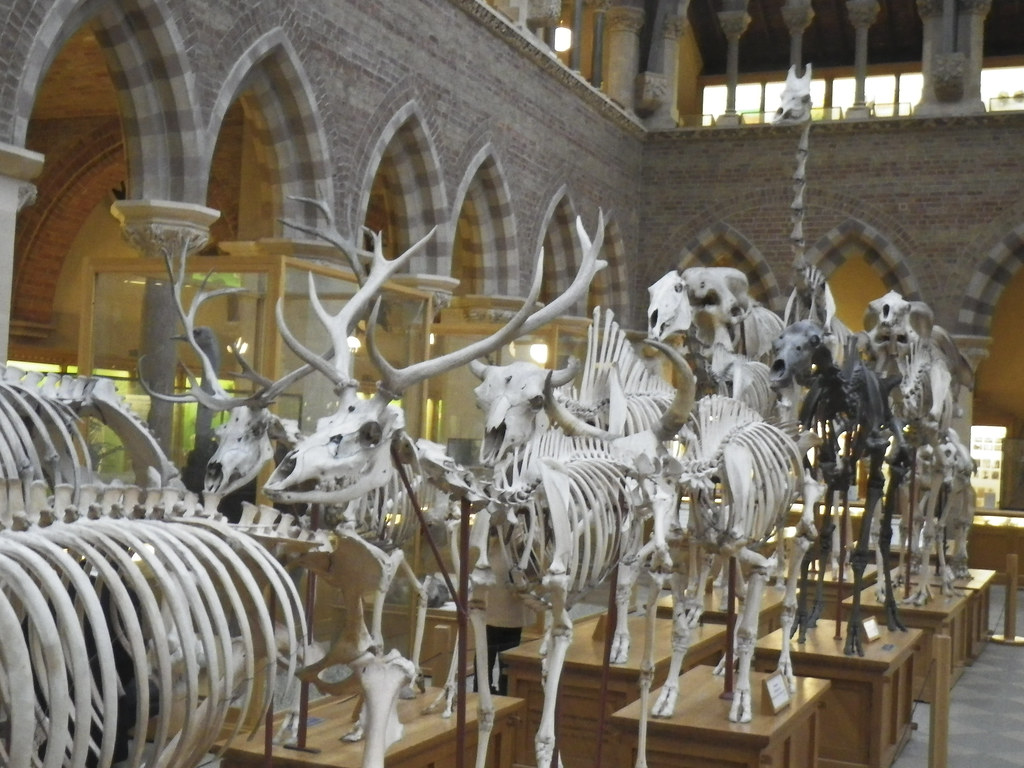
On exhibit at the Berlin Museum of Natural History is the dinosaur Giraffatitan brancai, which, like a giraffe, had a long upright neck and forelimbs longer than its hindlimbs. Notably, Giraffatitan is a specimen of colonialism, having been collected from the locality of Tendaguru in the colony of German East Africa (Tanzania today) between 1909 and 1912 and brought back to the German Empire’s capital.


Here in Berlin from Africa,

taken from Tendaguru’s hills!


Lofty among the atrium’s

glass and steelwork high overhead,


eye-socketed summit of bone—

The Giraffe Titan, astride Earth


once again! Do not strain your necks

as you gaze upward in awe, dwarfed


by Mesozoic proportions—

Depleting a continent green,


between this cavernous ribcage

and pelvis sat the source of its


insatiable appetite that

was fed by devouring its way


across Africa’s rife lushness

Strung along these gargantuan


bones were insensate muscles, their

violent contractions swinging


the limbs lumbering wantonly

to leafy troves snatched by its maw.


Next, note how the skull would look out

from this neck tall as a tree’s trunk,


the inhuman heights distancing

higher thoughts from the disasters


waged as each footfall would convulse

the earth, the trail of footprint scars.


Do grasp ladies and gentlemen,

that before you stands the terror


of its time, hunger incarnate

covered in scales, a creature who


by a glutton’s nature, would not

leave a single leaf on a twig


as whole forests suffered its teeth,

entire lakes flowing as rivers


guzzled down a sluice-long throat,

vast wilds fouled to wastes by sludge dung.


My good people, I implore you

to know that this scourge preyed upon


lands homing other animals,

availing itself of food


that would sustain them, untroubled

by whether then they might perish.


Woeful species that could not flee

Were left to the famines sprouting


from its presence, fields of ribs bleached

by the sun, with any challenge


extinguished by the immense weight

crushing bodies beneath four feet.


Be thankful that our Berlin Beast

is but a nightmare’s memory


bound to this defunct skeleton—

Please though take care to remember:


Evolution has a knack for

repetition, reinventing


wings among birds, bats, and beetles,

sleek fins among sharks and dolphins—


She’s likewise over the ages

rehashed her ravaging Titan,


finding a new form to harbor

its continent-gorging greed.


From Europe’s soil, her behemoth’s

avarice arose once again,


albeit in a much smaller

human’s stature. Staking feeding


grounds in Africa through charnel

colonies, this voracity


without end tries in vain to cram

itself full, stuffing its mouth with


diamonds and sapphires, rubbers sap,

gold and copper, clear-cut timber


medicinal herbs, ivory

and hides, animals bound for zoos,


fossils destined for museums,

plantation-grown cocoa and cane,


coffee, sisal, and palm’s red oil,

despoiled rivers and vistas, lands


fertile, grasses for cattle, men

yoked faceless for beast’s hard labor.


If you were to tremble at just

the mention of such crazed desire


not content until Africa

was consumed down to mere pebbles,


I could not blame you. However,

do know I tell you these horrors


alongside the bones showcased here,

so you can recognize as truth


that a rapacity apt for

a dinosaur can masquerade


as something human, giving you

no future reason to gawk, breath


stopped by a gasp betraying

an ignorance of our darkest


nature. Take this chance to acquaint

yourselves with this recurring bane


so to know when it walks the Earth

again, as we can but surely


wager that this monstrosity

will be reborn at a mere whiff


of wealth wafting from soil, luckless

lands left to fend off famished jaws.


Brandon Kilbourne is a Pushcart-nominated poet and research biologist from Louisiana who is currently based at the Museum of Natural History Berlin. Since 2018, his work has appeared, or is forthcoming, in Poet Lore, Ecotone, Obsidian, Tahoma Literary Review, Artemis, West Trade Review, Split Rock Review, The Fourth River, Santa Fe Literary Review, Panel Magazine, Slant, Sky Island Journal, Catamaran Literary Reader, and elsewhere. His work has also been translated into Estonian in Sirp.
Dey said to sit and wait behind dees bars

and as it was, I heeded dey commands

because I knew dey light and I was dark.

Dey promised me a trial was at hand,

but damn if I ain’t tryna lee dis place.

No food and all dis heat sho’ ain’t no joke

but lissen here, da smile on my face

was big when all dem boys came in and broke

me out! And I could hardly stand but dey

paraded me aroun’ fo’ all to see.

Befo’ dey took me to da bridge, I say,

Dat white girl dere, she happy as can be!

They didn’t let me turn around to check.

The trial was the noose around my neck.


K.O. Bailey is a recent graduate of Washburn University, earning his English degree, with an emphasis in Creative Writing, and a minor in Film & Video. As a member of Sigma Tau Delta, he is a well-rounded author of fiction, non-fiction, poetry, and screenplays and is currently working on a historical-drama screenplay about the real-life lynching of four people in Shubuta, Mississippi in 1918. In addition, he is working hard on a poetry collection inspired by a recent grant-funded trip to the National Memorial for Peace and Justice in Montgomery, Alabama. Follow K.O. (@kobaileybooks) on Instagram.”

Zero is equilibrium, balance

The moment before overdraft

And every night, I watch you lose the zero

Stumbling, falling, cussing these four walls into blank discursive space

Swaying back and forth, like a flag for the nation of our trauma

Back and forth, beyond the negatives or positives

Fumbling, dropping, spilling

You lose the zero in so many ways

But never more than when you stand in front of me with your child eyes

And 50 becomes 5


Snake Charming

For thousands of chainmail-clad nights

I watched you cleanse yourself of demons on the kitchen floor

Pulling snakes from your throat

And hope from your head

Years of resentment under foot

I step softly

And laugh as you watch me

Swallow the serpent of our collective pain


Worldly

Where the train goes, my heart goes

Getting off at every station

Stay for a minute, stay for a year

Each place the same in culmination


In every new city, I worry

There’s nowhere further to go

Yet eventually, the trip continues

Always a new place down the road


Most places, there’s nothing to keep me

Nowhere to rest my head

A quiet escape in the morning

An empty impression left on the bed


But what is it to stay here

To breathe with the seasons change

To know this place throughout

To sing and praise its name


Aubrianna Snow is a Mi’kmaw writer and feminist living and working in Treaty Six Territory, Canada. A graduate of MacEwan University’s journalism program, she writes primarily creative non-fiction and poetry. As a survivor and violence prevention worker, she centres themes of healing from interpersonal and systemic violence. You can find her work in Chatelaine and Muskrat Magazine. Find her on twitter at @aubrisnow or on her webpage aubriannasnow.com.

Dad. You thrive in my dreams. You fly on a magic carpet

of colors. I wish to join you, but you don’t involve me.


I see you falling from the sky. You look like a ship,

large, mechanical, and terrifying. When you land at my feet,

you transform into an organism, a salamander.

Even so, you look more threatening than the ship.


As if you’re hearing my thoughts, you decide to become

a lungfish with a large head. I stroke your head, your eyes

so beautiful. You’ve evolved in your choice of breathing

organs and sound, equipped with extra lungs. How perfect!

No more fluid build-up, oxygen therapy, or the pills you hated.


We laugh about how we both love eating fish. We walk to my

house which is big and made of glass like a greenhouse of plants.

You do not use the door but squeeze in-between the wall and floor,

then crawl into the living room. There’s no telling your limits.


I step outside to call an aquatic company that owns a swimming pool

and specializes in creatures like you. I want to buy you a tank. I fidget

with my phone and desperately press numbers which get erased

the moment they reach three. How to dial a full ten? Eventually,

I return to the room and find that you’ve died in a blue bucket

after chopping yourself to pieces. My sister appears and wants

to cook you. I am distressed. I tell her you’re not a fish! A slice

of salmon materializes and my sister says, Some fish are red,

others whitish-brown—which is the color you are now. Like tilapia,

she adds. I don’t see her point, although I feel less troubled.


The Man Who Changed His Name Twice

Is now old. He lives in the country

plowing land from sunrise to twilight.


He grows carrots, cucumbers and

cauliflower, but he never eats them.


He tends an orchard—mixed fruit trees

and grapes. He makes wine he drinks.


Smells of rancid olives, bitter,

and the color of bruised blackberries.


Every time he squeezes grapes

he cries, remembering the lives


he took, and those he’d promised

to serve and protect but left behind.


He buries the pain in the soil

while tending the veggies.


Can’t stand chopping,

Can’t stop breaking.


Are You Now Afraid for Your Color?

Awake, my people, awake

To love, to burning love

Feel once more the heat of your desire,

Sensuous needs you so callously crucify.


The world does not need your decorum,

your modicum, your sacrifice

The world needs your rage,

your radiant joy, your outrageous gladness.


Rake the logs, rouse the embers

Breathe the fire and consume the darkness

Ignite the bones that have forgotten the power

of touch. Dispel the blanket of sepia gloom.


Bring back pleasure, delicious flavor

And the music that’s your heartbeat.

Aching joy, astounding joy,

The sound of your laughter.


Mildred Kiconco Barya is a writer from Uganda now living in North Carolina. Her publications include three poetry books, as well as prose, hybrids, and poems published in Shenandoah, Joyland, The Cincinnati Review, Tin House, and elsewhere. Her fourth full-length poetry collection, The Animals of My Earth School, is forthcoming from Terrapin Books, 2023. She’s working on a collection of creative nonfiction essays, Being Here in This Body. Barya is a board member of African Writers Trust and coordinates the Poetrio Reading events at Malaprop’s Independent Bookstore/Café. She teaches creative writing and literature at UNC-Asheville. She blogs at MildredBarya.com . She is on twitter at MidiBarya and on instagram at MidiBarya.

I beg permission to trample emotions

I am writing to only one of the twenty-eight

outraged lovers of Peru

(who have now become forty-one)


Perhaps I stand alone in wanting

to be certain that there are bodies

that the bullets didn’t harm or leave cold?


That there are deceased similar to those, to those that

sometimes result unharmed, when the martyr

is completely transformed by martyrdom?

So much so, that his retina took in the casing

that killed the assassin?


What fault do I have in wanting to know today the person

who no longer exists?


In wanting to know how many barefoot kids

were in the school,


How many elderly remained

sitting in the walkway,


How many sisters sell in that spot 

that which matters to no one anyway


How many names of girls were tallied

in the evenings

or if it was just one that kept him from sleeping.


I will speak in a low voice near the place where they buried you

That many have remained quiet and she

didn’t wait.

But these are the emblems worn by all the defeated.

It is because the passion of this predisposition

Has been forgotten by humankind.

Listen: they said that death attracted you more

than your own spine.

That remains true beyond doubt.


Song for Aida

Against a background of green paint chipping

a rude white cross stands out

shields surge in a line

In the embroidered backpack, full of pebbles

the boy is missing.


The rebellious woman has become an atom

Violet bruises call our attention

One more jarring movement and order established.

She is one with her flag

contemplating her Wiphala.


We now are all brothers

A bandage falls apart

as if exhibiting his thigh finely sculpted

by labor both urgent and primitive.

You realize how we need each other.


Today they carried away Aida.

Meanwhile, in the hills,

the female relatives rock in their arms the hard stones

Barely twelve noon… and already scheming!


Not allowing even a slit!

They close ranks!

She disappears…

Into pure heart!

They want to hug you comrade.


They Sat on Stones

They are not women, they are vigilantes

Who sat on the stone

Out of love for the land, and thus

their discussion carried their dreams


They are not women, they are warriors

Who put pardons in storage

Out of loathing for the sky, and besides

they didn’t give in to beatings or insults


They are the mothers of martyrs

Who remain complete and their fabric is sincere

They become fired-up miners

in tunnels where explosion is imminent


They are moms, sometimes, of traitors

Who don’t know the monologue of power

They discuss the commands of the powerful in conversation

And their desire is adulterous and parricidal


I understand them and even approve of their reasoning

They have made of suffering a work of art

They are the birthers of this battle for Humankind


Alex Anfruns is a professor, an educator, and a Spanish militant anti-war activist. Co-author of the documentary, “Palestine the Besieged Truth” (Agencia Catalana de Cooperación, 2008), he has lived in Spain, France, and Belgium — the country where he worked as a journalist (Association des Journalistes Profesionnels, AJP). His articles have been translated and published across a wide array of international media outlets. He has worked as a political analyst at Telesur, RT, and Abya Yala TV. The topics he investigates include international relations between the Northern and Southern Hemispheres and development in Latin America. He can be found on his website AlexAnfruns and on twitter.

Laid off from my job, given one day to pack

thirty years into two copy machine paper boxes.


Rolled them out to my car with my bike and never looked back.

I hear school buses come and go in the morning and late afternoon


and witness light shifting and shadows pouring out

like ghosts from another life.


I go to the thrift store, buy a new top

in case for a zoom interview.


Make chicken noodle soup and write sad poems.

Inside of every poem is a God trying not to forget you.


Pick fruit from the abundant tree

bake crisp, pie, bread.


Apply for jobs, apply for jobs, apply for jobs.

Change my middle name to Wait. 


Apply for jobs some more

Inside of every poem is a God saying


Thank you for your interest but.

Browse the internet, sweep the floors, do the dishes.


In the seconds between rejection and acceptance

look in the mirror to see who I am.


Fold the laundry, wait for a delivery

fumble then rise, fumble then rise.


Upload my resume, then retype the whole thing

into a separate application page.


Watch the spinning death of my computer.

Weed the garden, plow through mail.


Watch my severance dwindle.

Inside of every poem is a God


with nothing left to say.


Labor Day, After A Layoff

We move the chairs

from shade to sun and back


as September light cascades.

Shadows, fickle, move and change


like memory into our minds and out.

The sky spills blue from its dusty cup


as a glossed, glassed stillness seeds us with inertia.

Somewhere an apple waits upon a desk.


I taught and more for forty years. 

When I was young before the first bell rang,


I bought new socks and underwear

for everyone in the house. 


The day yellow now

has changed the sound of traffic


even the engines are filled with less desire.

I taught them words for living


One student wrote

After my mother died,

I stopped playing the piano. 


Ann Iverson, writer and artist, is a graduate of both the MALS and MFA programs at Hamline University. She is the author of five poetry collections. Her poems have appeared in a wide variety of journals and venues including six features on Writer’s Almanac.  Her poem “Plenitude” was set to a choral arrangement by composer Kurt Knecht. She is also the author and illustrator of two children’s books. She is currently working on her sixth collection of poetry, a book of children’s verse, and a collection of personal essays.

I am from somewhere, in Africa.

I am from Eastern Nigeria

a region where foods speak our traditions.

where roasted yam means the New Yam Festival,

is used to celebrate the New Year,

to celebrate the god of yam.

I am from Igboland

where pounded yam is the emblem

of a good beginning,

where a nursing mother eats pounded yam

with ogbono soup

to revive strength,

and to celebrate the naming of her new child.

I am from Eastern Nigeria,

where the power of the wrestler

comes from Akpu and egusi soup,

a region that eats Abacha

to celebrate harvest season

when Abacha is used to tell about

the birth of cassava, the time of cassava

which tells the representation of Abacha

and it becomes the new beginning of cassava,

the rebirth of a season.

I am from a region, a land

where garri tells a new moment

of life, where we eat to survive

the long time of harvest.

I am from the Eastern part,

where okpa tells our logo

and it becomes our breakfast.

I am from Eastern Nigeria,

where every food feeds

our traditions.

Oliver Sopulu Odo is a Nigerian writer who has been published by Okada Books. His poetry has been published in the fifth edition of the Chinua Achebe Anthology as well as the End SARS Anthology 2020, organized by the society of Young Nigerian Writers. He was a contributor in the J.J. Rowling Anthology, 2021. Oliver was longlisted in 2022 for both The Green We Left Behind Contest, organized by Arts Lounge Literary Magazine, and the Spectrum Poetry Anthology. He won the Kepressing Anthology prize (Rebirth) in 2022.  He can be found on instagram at oliver_sopulu_odo and on Facebook at Oliver Sopulu Odo. 

Braudel of France said live in London a year you will not know London

but France you will know deeper[1]

I say

live in Cape Town a year

be uniquely dazzled   冰糖葫蘆[2]  

syrup lacquered fruit ice water dip

live in Johannesburg for seven 

tap the expanse of Southern Africa   barazi[3] 

peas ample from two night soak

visit wine capital Stellenbosch twice   الشاي[4]

mint rinsed in first splash of boiled water

be scalded by inequalities sousing all of these


[1] See On History, by Fernand Braudel (University of Chicago Press 1989), originally, Ecrits sur l’histoire (Flammarion 1969).

[2] Latin: bīngtáng húlu/rock sugar calabash; snack of Northern China

[3] Breakfast dish of Swahili coast

[4] Latin: it-tay/Moroccan mint tea

Salimah Valiani is a poet, activist, and researcher. Her poetry collection, 29 leads to love (Inanna 2021), is the 2022 winner of the International Book Award for Contemporary Poetry. She has published four other poetry collections: breathing for breath (TSAR), Letter Out: Letter In (Inanna), land of the sky (Inanna), and Cradles (Daraja). Her story-poem, “Dear South Africa,” was selected for Praxis Magazine‘s 2019-2020 Online Chapbook Series. Her audio book, Love Pandemic, has just been released by Daraja Press. She lives in many places and crosses borders regularly. Find her on Facebook at SalimahValianiPoet.

Be wary of anyone filled with confidence,

insisting that everything was better before

the world went insane, suddenly too small

to satisfy the untold exigencies we inherit.


For one thing, humankind has always been

unbalanced: people with skin in the game

seldom tire of telling us it’s good business

having the powerful slice the pie of society.

And few of us feel unfairness more keenly

than artists caught between buying bread

and selling their souls, our markets incapable

of sustaining those who bear beautiful gifts.

To create one needs to live, and staying alive

means feeding the machine, so it’s impossible

to find peace, unless you abandon your Self—

believing that The Creator Has a Master Plan.

Sean Murphy has appeared on NPR’s “All Things Considered” and has been quoted in USA Today, The New York Times, The Huffington Post, and AdAge. A long-time columnist for PopMatters, his work has appeared in Salon, The Village Voice, Washington City Paper, The Good Men Project, Memoir Magazine, Decolonial Passage, and others. His chapbook, The Blackened Blues, was published by Finishing Line Press in July, 2021. This Kind of Man, his first collection of short fiction, is forthcoming from Unsolicited Press. He has been nominated three times for the Pushcart Prize, twice for Best of Net, and his book Please Talk about Me When I’m Gone was the winner of Memoir Magazine’s 2022 Memoir Prize. He served as writer-in-residence of the Noepe Center at Martha’s Vineyard, and is Founding Director of 1455, a non-profit literary organization (www.1455litarts.org). To learn more, and read his published short fiction, poetry, and criticism, please visit seanmurphy.net/ and twitter @bullmurph.

Ripened mangoes, sliced watermelons

Discovering the girth of our throats


As our tongues paddle the depths of their fleshly rivers

We make sure to slurp on our elbows even when

Rivulets attempt to meander off.

We desire rock-hard abs and snatched waists

So will worship these murals of health

Even if we are not willing acolytes

We will crunch hard and swallow deep

Our bodies have to be cleansed of the fat

And paraded to the world,

Cathedrals of desire,

the Olympic flame.

David Agyei–Yeboah is a young artist from Accra, Ghana. His poetry, fiction and hybrids are published/forthcoming in The Lumiere Review, GUEST (from above/ground press), Ethel Zine & Micro Press, Afritondo Magazine, Ta Adesa, Tampered Press, and elsewhere. He was long-listed for The Totally Free Best of the Bottom Drawer Global Writing Prize 2021  from the Black Spring Press Group, UK. He was also shortlisted for Ursus Americanus, 2022 and was a finalist for Harbor Editions, 2022 (Small Harbor Publishing). He scarcely tweets @david_shaddai and posts mini covers on Instagram @davidshaddai. David is a dedicated fan of Frank Ocean, Asake, Gyakie and Oxlade.

i heard out of the corner

of my ear, my grapevine,

the tv guy droning on about

what the condemned

order for their last meal

before execution,

how thoroughly unpalatable

the statistics, like pre-chewed cardboard.

if it were i, i’d refuse to eat,

or else demand something

impossible to make and with

ingredients such as truffles,

requiring a world search,

or so deathly sweet — rows and rows

of death by chocolate

decadence and hot fudge,

that i’d bulimia

it back on the executioner,

or i’d order singing, stripping waiters

to bring me in my dinner.

why is food

the last thing of earth?

is it the christ deal, this last meal?

or is it because

we come bawling into

this world for food,

and that’s how we must go?

how can anyone eat,

knowing their destination is the hot seat?

and why is there

this primal, human need to murder,

to frenzy feed on empty greed?

then, i considered a message

from a lawyer to his friend,

that he was going to attend

a death penalty conference.

what can you say? some things you wish

not to contemplate.

so, i’ll have the happy meal, with fries,

and dish it up on a limoges plate.

Juley Harvey is a prize-winning poet who worked as a journalist in California and Colorado. She was recently featured at the Tall Grass Writers Guild Virtual Open Mic from Chicago. Her work has appeared in more than forty-five publications, including nine of the black-and-white series of Tall Grass Writers edited by Whitney Scott. Recently, she joined the Tall Grass Writers board of directors. She is a member of the Writers on the Brink writer’s group in Estes Park, led by award-winning Western author, Kevin Wolf.

When you were a little boy

You once got so mad that it bled

out of your nostrils

Leaving an enraged mess of molten magma

that would burn you as it flowed.

“Oh no!” Mama said, when she saw it

“You better clean that up!”

You looked at the boiling pools of lava

on the floor and cried

You tried to gather it all up,

but your hands were too small

and the pain was too great to contain

Your hot tears formed rock hard mounds

filled with thick greasy matter

You watched them in awe,

Suddenly realising what to do.

You scooped a lump of the mixture

into your hand, dipped it into the angry lava and swallowed it

lump by lump until it disappeared

Now you’re an adult and people whisper

when you walk by

How does he stay so calm?

Doesn’t anything make him mad?

But they don’t know that the anger

is still there leaking, simmering inside you

You don’t even know

Do you?


Lola Labinjo is a London-based writer, linguist, and educator whose work has appeared in Postcolonial text and Black Lives Anthology. She is a self-confessed recovering plantain addict who’s not really recovering at all!  When not writing, she can be found travelling, discovering, and creating. She can be found on Medium at Lola – Medium.