Jackboots and helmets demarcate us and freedom. 

Plus in binoculars, multiply with machine guns, divide by 

bows and arrows and the ever ubiquitous police dogs 

who growl yellow teeth, salivate for captured flesh and the 

sum equals a walled city, a concentration camp. Here 

inmates are ducks, our destiny lies with a hunter’s 

loaded gun. Daily we watch killers bump up and down in 

armoured cars, aware that they will shoot should rebels 

venture near the line. Sometimes we hear noises and 

sometimes we see the incidental plume, tall, beautiful, 

shaped like a chute and particles, falling poetically to 

earth and we know that that is another victim gone. 

Always we see stuff, always stuff moves up and down, 

stuff we can’t see but which we suspect to be solids and 

liquids, diodes you can connect and koboom goes the earth. 

Then there are the trucks, laden with fruits and vegetables 

and always trucking out and never in and we wonder why 

oppressors can sit under trees and munch on dates 

while natives grow thin in the legs and fat round the belly. 

The kingdom of man suffereth violence and men of violence 

take it and blessed are the weak, for they shall be decimated. 

The border is where you come when you are done with running, 

when all you want is to sneak among the crowd, read your 

obituary, find out how you died—fast, or slow, alone or with 

neighbours calling your name, uninjured or bleeding from your 

head while shrapnel fell and bulldozers shifted bricks and 

concrete. The border: a net, spun by a spider, cast by a crab, 

dragged by a shark while fish fumble and flounder. The border: 

Ukraine, Gaza, Bịafra, Mexico, Armenia, Rafah—

you, me, the hunger, anger, blood, bile, cold, sweat… 

The border: a flock of queleas when at dawn they 

cloud the neems and jacarandas.


I Wake with the Intention to Show You Beauty

(for Obianuju) 

but instead death strikes in the form of a falcon, 

this dawn of a harmattan season when doves 

preen overnight feathers, coo into the cool 

of sunless clouds—the move so quick, so precise 

it drowns my happiness, cuts short my laughter. 

I watch talons lift, head toward the rocks and the 

lifting of claws is the lifting of pages of a book I 

closed last night for the final time. Or so I thought. 

Memory beckons me, grief draws me to the dance floor, 

I waltz with tribes, waltz with rifles and machetes, spin 

till I become drunk on a war and the chaos it left in bodies 

of a tribe. Here is the bitter truth: in the game of survival 

we give or take all. Beta anụ bụ n’aru nama. Here 

is the music that keeps all nature grooving: the 

python tests his muscles on the bush pig and the deer. 

A pebble, placed in a catapult, shot aimlessly 

cannot save a dove, carried high into the clouds. 

I would not have pointed at birds had I known a 

quest for beauty would translate into a lesson on blood 

and how it can stain our best day…Come, nkeọma, 

return to the room and to mama. Playthings there are 

more rewarding than watching death display his wildest 

skills. A father has nothing to return to than a book I 

closed last night, its commas and comas. That is the balm I rub, 

drug I drink. That is where I fish for answers, angle for 

clues to help me crack the code of country, history, memory. 

Help me make sense of mornings such as this.


I Told You You Would Win a Jackpot

(for Bosede, for Akunnia)

I remember vaguely, not photographically or diagramatically. 

(Nowadays I remember in grey and burnt umber, 

in ultramarine and periwinkle blue). I remember he said:

this is your sister and left a boy to unmorse the code. 

I remember a room and you, stretched on a bamboo bed. 

A crow sauntered across your cheek and a canary 

crooned into your voice at the joy of seeing the bone 

of your bone. I remember that despite the 

needle sticking from your wound we talked and laughed 

ever after. Your fascination with uniforms and boots

matched my fascination with rifles and mortars. 

His fascination with weapons and their makers

canceled our fascination with a world, 

spinning in a space choked with gasses. 

I remember that shortly after the doctors 

laid down their tools in surrender to the power of poison. 

I remember the last scene: it was in my room and 

he sat on a chair, cried bowl, after bowl, after 

desalinated bowl. I remember I looked on: 

was it with a brow of bricks, a heart of stones? 

I remember the trip to Ihiala, green leaves 

stuck in the front and rear, mourners mouthing 

onye o’melu dibe while a giant popped chocolate bars 

into his mouth: the giant being earth, chocolate, 

what remains of earth. I remember you. I remember him. 

I remember the current that swept you away, 

remember the isle where it deposited you, a place 

you wrote to say is the epitome of cool, 

rifles do not bloom and the words stroke and poison 

do not belong in your idiolect. 
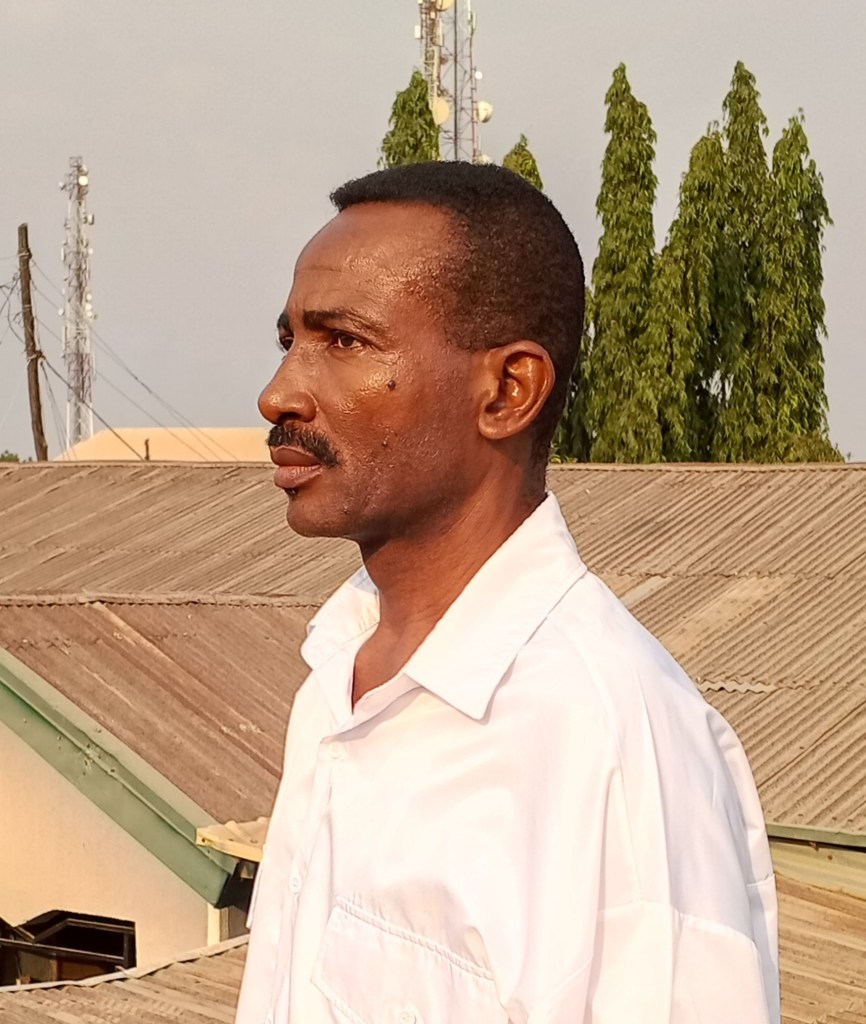

Victor Osemeka is a Nigerian of Igbo extraction. His poems explore the spaces between man versus man, man versus nature and man versus divinity. Aside from writing, he draws and paints. He has work published or forthcoming in Brittle Paper, African Writer, Morning Star UK, The Marrow International Poetry Australia and Consequence Forum. Find him on Facebook @Victor Osemeka, on X @Osemeka1123V and Instagram @victorchukwu645.
I ride to O’odham country

Passing by la niña blanca

Reclined on barbed wire, 

on desert shrines and their faded flowers


She tips her head back,

And soaks up the sun.

Bleached bone upon dust, 

upon dust.


Dust:

In plastic beads

Bottle caps, 

And stained tulle.


And then I see the crosses stretching 

to marigold fields,

And coke bottle sky.

I pass her by.


And she laughs. 

and all of us are:

Beads on bone

Bone on dust,

And coke bottle sky.


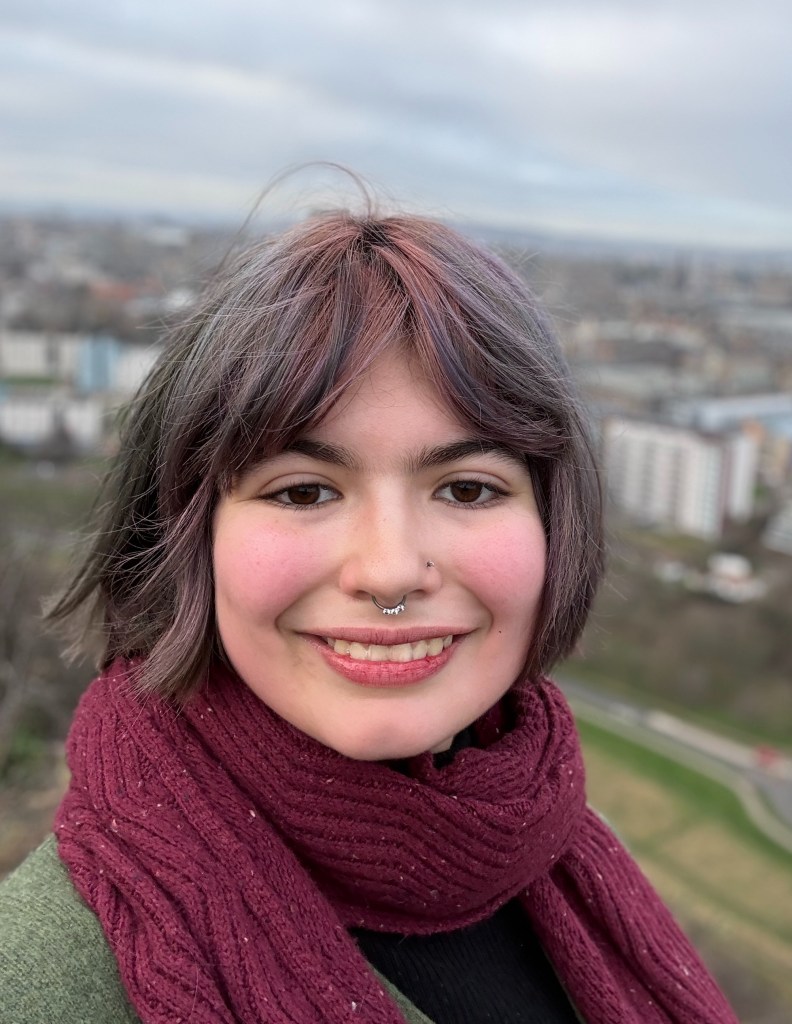
Amalia Castillo-Morrison is a Chicana writer living in Fairfax, Virginia. She likes collecting uranium glass and strange antiques. Her work has been published in Oddball Magazine.

Hail Africa, Mother of Grace:

where the rain beats you in July

and the sun burns in March.

They crawled into the limbo

of space and arrived at our shores,

deadened the strings of the djembe,

that whispers to us the dialect in

which we use to cast cowries and

pour libations upon our hallowed path.

They broke the nose of our ancestral faces.

Alas! The vagabonds are all here,

covered in Bald White; with sandalled feet

and heavy boots, awashed in foreign scent

to make war upon our house.

They saw us and marvelled between

puffs of blue waves of tobacco smoke.

And proclaimed: close your eyes let’s pray!

Her gold-plated breasts are broken

And the pyramid on which she

leans is fallen.

Mazi if you could go out and cry

to your kins and brothers;

tell Kanayo, Olisa, and Mkpa

that they have befallen us with evil;

tell them their house is falling,

and the yam barn in the fence

have been eaten by termites.

Tell them, while the strangers idle here

we suffer, and eat dust, watching

the raven and vulture hover above

our broken palm frond roofs.


Echoes in Chant

“Freedom is not just about being able to do what you want, but about being able to be who you are, without fear or shame, and to fight for the liberation of others so they can be who they are too.”

— Assata Shakur

Through the language of our mother tongue

we juggle through the remains

of colonial dent, we press our hope

upon the dreams we carved out

of our common struggle.

We pray to Ọya and swirl

like her waters flowing freely

in the veins of our body!

We dance to the music of mourning

while we carry the placard of an identity

in our hearts. When we feel weary

and unable to proceed in this dire straits

and our throats dried of thirst —

we tap and sip strength from the palm wine!


Teacher Don’t Teach Me Nonsense”


Fela Kuti was right!

Mungo Park discovered River Niger.

The unfair narrative of an invader

that carries fire, burning a people down

from their history and values.

This is the tool of control embedded

in our educational system — and we do

trail behind it seeking approval with our

beaten and imprisoned tongue.


many years

since the sandalled feet left

scramble for Africa


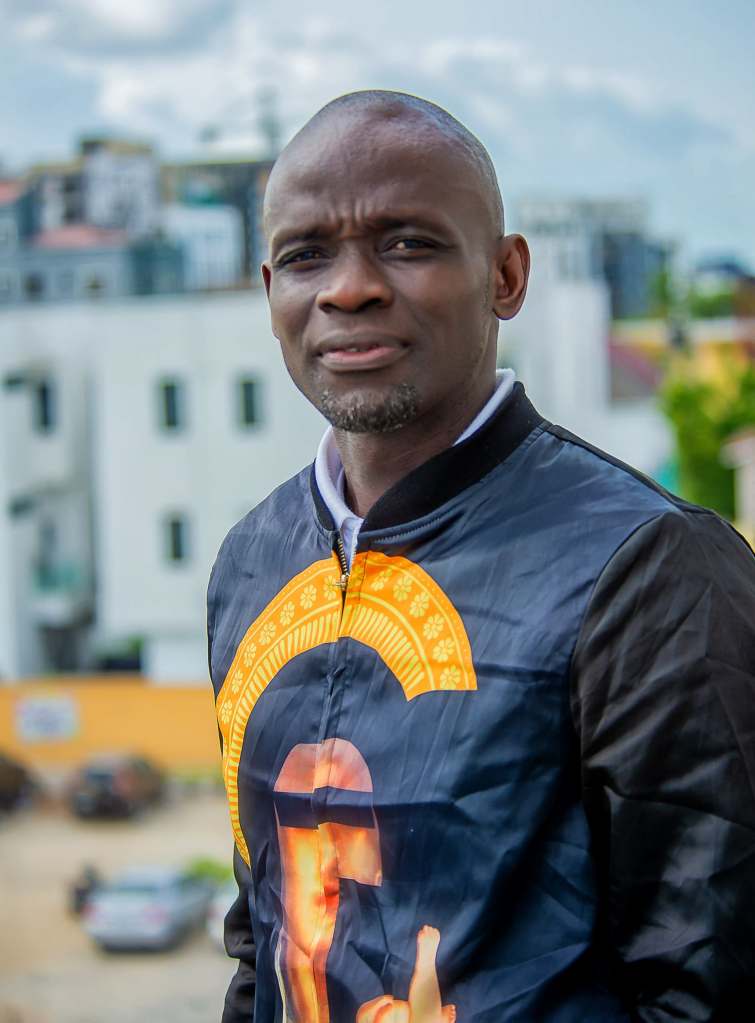
Uchechukwu Onyedikam is a Nigerian haiku innovator and interlingual poet fusing Igbó and Yorùbá linguistic textures with short-form poetry. His work appears in Presence Haiku Journal (UK), Wales Haiku Journal, Asahi Shimbun (Japan), and is archived at Japan’s Museum of Haiku Literature. A forthcoming critical essay in Presence explores weaving African languages into haiku. He seeks to relocate to Cardiff, UK, via Global Talent Visa to enrich British short-form poetry with underrepresented voices. Follow him @MysticPoet_ on X.

(for Black History Month)

handpicked from the colour wheel of humanity, a hued placard was paraded on the streets of light as a misfit. the race sheltered in this shadow of light was not proud enough and paraded like a martyr before being leashed. we could have been kind enough to our history before history abandoned us in the whispers of ancestors. there seems a millennial woe on this skin of mankind— black is now the self-pity of nights, the pedigree of crime & profanity, the void of esteem in the n-word lifted by hip-hop. you’re a broken egg from the manhandles of a delinquent black cop in your homeland. the black eyes of the law see what is white that ascends the pyramids only. the earth is an eyeball of monochromes. cataracts of inhumanity blind the black man from his kindred, and when the white cotton is separated from the darker ones in the laundry, the blacks turn a blind eye to what belongs to their source and agitate for a place in a whitewash. home has never been kind to them either. the keys to their doors were swallowed by rotund key holders. we hawk the hoes of our names to foreign lawns. our plantations are left uncultivated, unlike our virgin hairs. our forests are overdue for harvest, while we witness the innocence of our cousins in vain.


Heritage

We cradle humanity with nature’s foot grounded in our communal spirit.

Like Eden, stripped of the hides of paradise, we bask in the purgatory

Bestowed on us by those who preached heaven to us with bottles of gin.


Across the Nile and the Sahara, our voices, drums, and plantations

Are bound by the heritage of liberation in the face of civilisation.

Skin deep, we are crafted from the brown soil with the science of melanin.


Like cattle, we’re milked by thirsty nomads on pastures we now long to graze.

On our heritage’s never-ageing forehead, our fathers and mothers’ toil

Wrinkles with time, and our sweats mirror the sun and quench earth’s thirst.


We now struggle to harvest from the blessed soils and trees.

On the desert of drought is our oasis, but for our strength drawn

From our ancestors’ blood and spirits.


With our right hands, we guide our children home, where lies the food,

Fabrics and tongues of our kinsmen, uniformed by anthems of proverbs,

Poetry and songs laid on the drums and strings, swinging our sisters’ hips

And throwing our brothers’ bodies in acrobatics.


May the sacred rivers and soils of our heritage not be adulterated

By foreign narratives in time’s library.


Tukur Ridwan (He/Him) is a Nigerian author of three poetry chapbooks, poetry mentor at SprinNG Writing Fellowship, and the winner of Brigitte Poirson Monthly Poetry Prize (March 2018). Publications include Aké Review, Feral, Disabled Tales, Poetry Potion, Coalition Works, Stripes, Engendered, Afrocritik, and many more. His poems were shortlisted in the Collins Elesiro Poetry Contest (2019), the Eriata Oribhabor Poetry Prize (2020), the Bridgette James Poetry Competition (2025), and also featured in the Eyes that Speak Art Exhibition by Prince Saheed Adelakun in 2024. He loves black tea, sometimes coffee. Find him on X at @Oreal2kur and Instagram at @Oreal2kur. He can be found on Facebook at Loba Ridwan.

The spring lilies bloom early amidst an artist’s palette of litter.

Dumping freckles the dunes. A pregnant hound sniffs for food


before nestling beneath a tattered shopping bag. Corrugated sheets

make for bad walls along the beachfront. But what can the rust


eat away that hasn’t already been effaced? I’m holding on to the

last dregs of winter, praying it will carry me through July. Summer’s


become a consequence we’re still learning to tolerate, like love

stories like mine. I watch the vlei evaporate up into a sky of


telephone wires and hills birthed from waste. How even the earth

isn’t a stranger to scabbing over the parts of us we’re told to hide.


My mother tells me I have to make something of my life. Guess I’m

at the age where I should have figured things out by now. She insists


that there was something here once, but I’m too young to tell you

what. The city puffs plumes of smoke into the air that blend right


in with the clouds. I can’t breathe when we stop at the red light,

right next to a child reaching out an empty McDonald’s cup to the


traffic. Don’t look away like I have. To advertisements peeling ripe

off buildings that will outlive me. Has everything always been this


small? How even Table Mountain can be carried away by the elements.

Subsumed by the clouds like a floating castle or a wayward son.


Disappearing without ever truly leaving. I always wonder what it’ll be

that I leave behind when the time comes, or when I walk into it like an


oncoming train. I scry the lines on my palms for a clue. There was something

here once, something to hold onto. I just can’t seem to recall what.


Wayden Rogers is a Coloured South African poet whose work appears in 3Elements Literary Review and is forthcoming in Ouch! Collective. When he isn’t incessantly refreshing Submittable, he’s probably listening to MARINA or avoiding his to-read pile. His poems explore the landscapes, both internal and external, that shape the stories we inherit. You can find him on Instagram at wayden.rogers.

Ngur yina yɛ ɛ wo?

Tat e, mam ɛ zɛ?

Ngur yina yɛ ɛ wo?

Xara yina yɛ ɛ po?

Liia nɛ nam, tat

Lɛɛa mɛ lɛngina

Where is our ancient town?

Oh, father, who am I?

Where is our ancient town?

Where is our city ?

Talk to me, father

Tell me our history


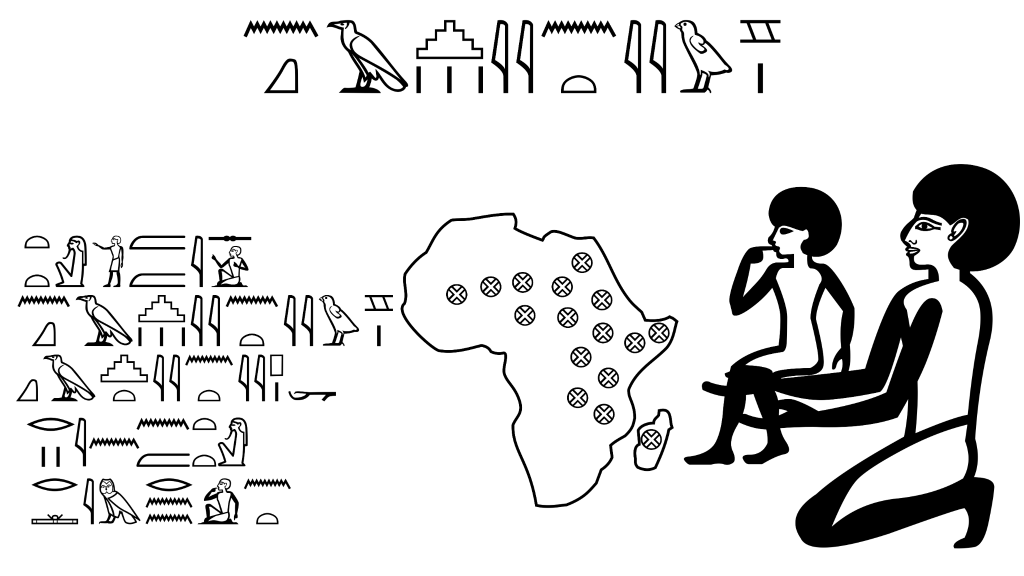
P. Aubham Edouhou was born in Makokou (Gabon) and is a Bekwel and Ikota speaker. He graduated in Letters (Portuguese-English) from Pelotas Federal University (UFPel) in 2019. He has a Master’s degree in Letters (Language Studies) from the Federal University of Rio Grande (FURG) and is currently a doctoral student in Letters (Literary Studies) at the Federal University of Rio Grande do Sul (UFRGS) where he studies Kandian (African) Literature in Kandian languages. He promotes the hieroglyphization, coptization and meroitization of Kandian languages.

Decolonial Passage is honored to announce the nominations for next year’s Pushcart Prize Anthology. This list includes writing published during the 2025 calendar year. Congratulations to the nominees!


Poetry

Jesse Gabriel Gonzalez – “Moon Blues”

Yanis Iqbal – “and how shall i walk when the street sings of fire?”


Short Stories

.Chisaraokwu. – “The Visitor”


Essays/Memoirs

Bright Aboagye – “Do They See You?”

Stone Mims – “A Letter to My Grandfather”

Kimberly Nao – “I, too, am California”

This rented basement is soundproof, so when

the bass guitar of homesick, make-up band      shudders

for a gone homeland, it’s resonance

pounding into the ground floor,


island children become the beat,

with bones that are loosely hem together,

rocking to and fro against the wave of non-personhood,


because when the                                                   

village where I was born  drops into the

belly of the metropolis undigested it becomes,

in anonymous ways it falls back out as


droppings,


my village & I

& this second-hand bass guitar

if dropped in the belly of this township’s  lake

would no longer be    flotsam swirling downstream,


I am broad big nosed with a  high visibility quotient accent,

accented tongue tied  up in all of this,

I stay a little off     on the periphery

always with bilingual understanding  of other’s tossed epithets,


thinking if my village fell in their lake,

I’d be an anonymous, emaciated island,

banana republic slurs,


solace is in this party 

the bass guitar like a rebel   a    runaway note  

from impersonal stiff-upper lips,


and the bass reminds my bones that I am             free

and the unkept  bass stands away from the corralling,

pounding, deep pounding heartbeats, the floor to trembling

and the bass is deep down the basement of this patrolled township


because my village is uncomfortable in the belly of the metropolis

and I dance because I am free,

I dance because the bass is a lone


actor


breaking the coupling links,

blistered fingers thumbing pylon strings,

because my birth village lives in this bass sound.


White Shirts Came in the Dark — Took Away Emmett Till

those shirts

that were washed clean & crisp

fluttering in an eerie breeze,

no evidence of the meandering blood,

of the boy

at the bottom of the reticent river,


in monochrome circa pictorials

of pyrrhic victory

leaning  on their arms their unblemished starlets,

a legal rinsing, that remake the guilty sinless,


some pieces of the Mississippi soil was of  a silent hypocrisy

some pieces of the land was less hostile,

& still some pieces of the land opened up willingly

to hide the drip  the  drip staining secrets,


upturned   uprooted stones

tire tracks in putty slurry mud,

silent mud, conspiratorial reticent mud,


white shirts that were washed clean of stains

iron crisp like  newly minted dollar bills,


multifaceted monochrome story,

of a boy yanked from innocent sleep,

bleary eyed, forcing his heels to fit in his shoes,

it’s a boy      stillness     of a  boy

at the bottom of a river of death,


of other folks in white shirts

washed clean also,

and the boy, inflated with carbuncle unearthed from the bottom

of the unwashed

never to be cleaned river.


Eaton Jackson is a Jamaican-born writer, living in America. His work traverses the fault lines of migration, faith, and resistance. Rooted in the dual consciousness of island and diaspora, these writings speak against erasure by reclaiming language and memory from colonial afterlives. His works have been published in Passager Journal and Kinship Quarterly. Eaton’s writing envisions freedom not as a destination, but as a continual, communal practice of becoming.

As I was kidnapped

As I was disappeared

As I was tortured

As I was murdered

My only consolation

Was

Your words

Your laugh

Your sorrow

You

American friend

Who offered me

A hug

Before returning to

Domestic bacteria

As I was kidnapped

As I was disappeared

As I was tortured

As I was murdered


Eraldo Souza dos Santos (they/them/theirs) is an Afro-Indigenous historian and writer from Rio de Janeiro, Brazil. They are currently writing a family memoir with their mother, Nilva Moreira de Souza, probing how she, then a seven-year-old child, was sold into slavery during Brazil’s military dictatorship in the late 1960s. Pieces stemming from this project are forthcoming in Best Small Fictions 2025 and POETRY Magazine. Souza dos Santos has been selected by Yaddo, the Blue Mountain Center, the Kimmel Harding Nelson Center for the Arts, the Oxford Centre for Life-Writing, the 2025 Tin House Autumn Online Workshop, and the 100th Middlebury Bread Loaf Writers’ Conference to work on this project. You can find him on Twitter/X, Blue Sky, and Instagram.

Decolonial Passage is honored to announce the 2025 nominations for the Best of the Net Anthology.  This list includes writing published between July 1, 2024 and June 30, 2025.  Congratulations to the nominees!


Poetry

“His Tousled Hair, His Toothly Grin” by Eric Braude

“color you dark” by Ashley Collins

“The Ancestor’s Song” by Leslie Dianne

“Sonics” by Joanne Godley


Fiction

“Michael, Deportee” by Stephenjohn Holgate

“From Glasgow Without Love” by Albrin Junior


Creative Nonfiction

“I, too, am California” by Kimberly Nao

“Note From Nonpeople” by Serhat Tutkal

When the flooding starts, and the rich flock to

their yachts, the rest of us will inherit the beach-front views

only to climb up trees and whine at God—but you promised!


And God, starting his Prius, shouts back something about carbon

footprints: his but the size of a seraphim’s, ours lug-soled

and everywhere, even the damn Moon.


And that will be that; we’ll re-draw the maps and

eat more fish. Eventually, tired of tuna, the yachts

become rockets, sailing through the thickened atmosphere.


When the terraforming starts, wheat will be the first to fail;

the last will be rice, abandoned in the smaller craters.

In the end, palm trees will populate the Moon.


It makes sense, the Moon having everything they need:

sandy dirt, unfiltered sunlight, and islands, which,

in the absence of liquid water, deliver the seas


and wide-open shores palmeras crave, deep in their green hearts.

If the Antilles can hook-and-crook the Caribbean from the Atlantic,

surely Tranquility can be found cleaving to its own islands:


the wreck of the Ranger; the breezeless flag; the sunken

heel of a tall boot…indeed, palm trees were made for the Moon.

Too frugal now for fire, the rich will scrap their ships by hand,


committing to this one last colonial undertaking.

Foundations will be dug, small houses hammered out

and thatched over, all beneath great glass domes and the future.


Back on Earth, most of us will be dead, but hey—we got a

brand new Moon, which, as always, watches, spinning

its gears against gravity, the tempo of the spheres.


The palm trees, in their understanding, try to show the Moon

what comes next. It’s one thing to be a fixed point in an idea

of the sky, eclipsed at a distance by the transit of catastrophe—


it’s another thing entirely to brace against a heaving chest, carrying,

not by choice, the shadow puppets of fire and smoothbore bullets.

But matches are rationed now, posing too great a risk to the domes,


guns a laughable waste of precious metal.  Yes,                 

World War Moon will be fought with sticks and stones and

coconuts. And the domes will hold up marvelously.


And when the Moon spins on, with no one left to inherit the shade,

maybe the few of us on Earth will look up and whisper blessed be

the palm trees, for theirs is the kingdom of Heaven — or, at least, good night.


Jesse Gabriel González is a poet from the great state of New Jersey. He holds an MFA from the University of Oregon and a BA from Cornell University. He was the recipient of a Contributor Award from Bread Loaf and an Anaphora Arts fellowship. His poetry appears in The Seventh Wave. He serves as an Editorial Assistant for Poetry Northwest.

the soil does not shake—
it memorizes.
here, even the stones rehearse their lines
in syllables of smoke.
a man’s words dry in mid-prayer,
still tasting dust from last week’s funeral.
the wind is a radio station now—
it plays a scream remixed into pop beats,
go back, snake, traitor, rapist, rootless goat,
the chorus looped with the smell
of sandalwood and burning tires.

a pony rider in the hills
bled into a pine tree,
and the sap does not know
whether to clot or to weep.
he was reciting,
not a creed,
but the names of his daughters.

in the plains,
a woman strings her silence
into a necklace of broken SIM cards,
walks sideways past the temple’s loudspeaker
blaring the anthem of a war
she never enlisted in.
her grocer now sells her rice
as if measuring gunpowder.

every window is a gun barrel,
every child’s name
a reason to evacuate the future.
in Agra, they buried a man
without his name—
only a label:
“retribution.”
it is easier that way,
easier for the press release,
easier for the bullet.

who attacked whom?
the question dies in the first comment thread.
facts are too slow.
truth is throttled by 4G
and dressed in a uniform of pixels—
AI-generated martyrdom,
HD nationalism with export-quality rage.

they uploaded a song
before the blood dried.
it asked us to leave.
leave what?
the land that remembers our ancestors’ coughs,
the wells we named after heartbreak,
the callouses of our dead
still softened in its soil?

He wears his beard like a crosshairs.
his name is a GPS tag.
he walks into a clinic,
and the doctor’s eyes
scan him for nations.
no illness,
only allegiances.

tell me,
how shall i carry my skin
when it is now a declaration?
how to walk into a school
where history has been rewritten
as an eviction notice?

the country
is an anthem sung backwards.
its rivers choke on slogans.
its justice is a bulldozer
that has forgotten how to pause.

and still—
we mourn the dead.
even when mourning itself
is suspect,
surveilled,
licensed.

they ask:
why didn’t you go?

but tell me,
what do you call leaving
when your body itself
is the country’s last remaining witness?


 Yanis Iqbal is studying at Aligarh Muslim University, India. He is the author of the book Education in the Age of Neoliberal Dystopia (Midwestern Marx Publishing Press, 2024) and has a forthcoming book on Palestine and anti-imperialist political philosophy with Iskra Books. His poems have been published in outlets such as Radical Art Review, Rabble Review, The Ekphrastic Review, Culture Matters, Live Wire, Apocalypse Confidential, Neologism Poetry Journal, Bitter Melon Review, Cafe Dissensus, Palestine Chronicle, Frontier Weekly, and others. Two of his poems were also selected for inclusion in The Anthology of Contemporary Poetry: Meet the Poets of Today. You can find him on Twitter/X at @yanisiqbal.

after Benjamin Netanyahu,

United States Congress, July 24, 2024


In America, a murderer receives a standing ovation.

Meanwhile, bodies tally against the ground faster

than we can count.

I can’t quite decide what is more disturbing;

the chilling sound of applause cheering genocide,

or the large-scale catastrophe scorching the world.


It’s difficult to hope. It’s difficult to still believe in

our deserved forgiveness.


But I return to that soft and tender place in me that

reaches beyond anger. I return, again, to the wide open

grief stretched before us like a prayer rug. Not just for

the violence, but for the ineffable conditions that create

hardened cruelty in the hearts of the few, and the

unnerving ignorance shielding empathy from the many.


Towards what end do we hope to arrive? The only land

we get to own is the mapped terrain between first gasp

and final whimper. Nothing else is truly ours. Not even

this perennial breath we’ve been given.


What then? After your clapping victory.

What will you do with the terror in your heart?


Moudi Sbeity is a first-generation Lebanese-American poet and transpersonal therapist, and the author of the forthcoming books Want A World (Fernwood Press, 2026) and Habibi Means Beloved (University of Utah Press, 2026). In a previous life, Moudi co-owned and operated Laziz Kitchen, a Lebanese restaurant in Salt Lake City. Moudi was also a named plaintiff in Kitchen v. Herbert, the landmark case that brought marriage equality to Utah in 2014. As a person who stutters, they are passionate about writing and poetry as practices in fluency and self-expression. They call the Rocky Mountains in Boulder, Colorado home. Find them on Instagram at @moudi.sbeity and on Substack at moudisbeity.substack.com.

the night comes for us,

when mercenaries

scan palm leaves

for drops of blood

of martyrs. martyrs who

write poems about

the living. martyrs

left dead to the

pulses of the solo river

without a sound.

the night comes for us

as suharto flies turbo jet

bullets through the sky

as if timor could never

rest and if they rest then

kissinger cuts his molars

in washington restlessly

calling to some

lockheed factory in louisiana,

flat rate

express delivery

to indonesia.

the family of deer in the

presidential palace graze

on dirty money reserves

turbo jet bulleting from

the cayman islands.

the night comes for us.

the sparrows

silent witness

silent extrajudicial

bullets upon our dissent.

every worker is a fugitive under martial law.

the sparrows

continue their flight.

the night comes for us.

even in death

kissinger never

lets go of his choking hands.

if night surrenders

to moonlight,

we will hear the martyrs speak.


Patricia Kusumaningtyas is a tech worker and film/music writer based in Brooklyn, NY. Their poetry and prose have been published in Discount Guillotine, Fruitslice, Major 7th Magazine, and Dead End Zine.

Start small:

pour a glass of wine like you mean it.

Toast to the black dog pawing through snow,

leaving tracks that look like hieroglyphs

for “almost.”


Outside, the trees lean conspiratorially.

Inside, the cat reads your mind

and knocks a glass off the counter.

You laugh—

but it sounds wrong, like broken glass,

or an old cassette tape unraveling.


The news came in last week:

Colleen’s gone.

Julie’s gone.

You’re still here,

dancing to a Beatles record

because grief won’t let you sit still.

The groove is a time machine;

the lyrics are a curse.


At some point,

you’ll stand on the porch,

watching a hydrangea fight

for its life in the wind,

and think:

This is survival.

This is all it ever was.


Sabyasachi Roy is an academic writer, poet, artist, and photographer. He contributes craft essays to Authors Publish as a guest writer. His poetry has been published in The Broken Spine, Stand, Poetry Salzburg Review, Dicey Brown, The Potomac, and other print and online magazines. He has written several essays on wildlife and culture, and he is a published photographer with a cover image in Sanctuary Asia. Find him on EyeEm at sabyasachi13 and on instagram at pensoftworks.