Decolonial Passage is honored to announce the nominations for next year’s Best American Essays Anthology. This list includes writing published in 2025. Congratulations to the nominees!


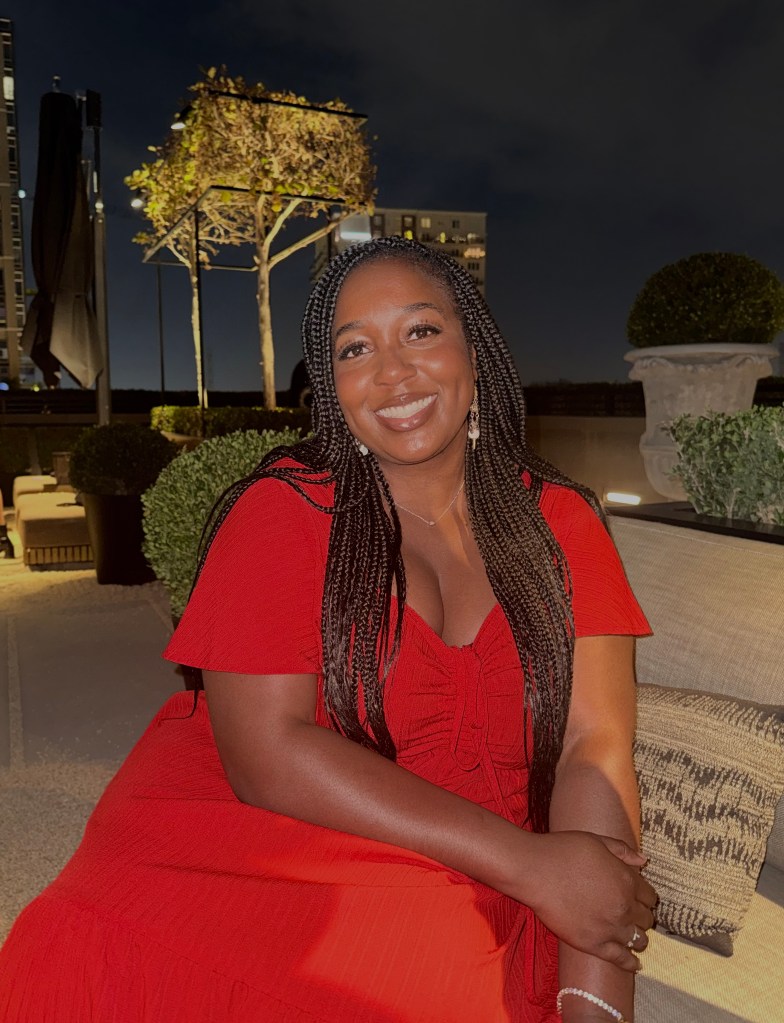
“A Letter to My Grandfather” by Stone Mims


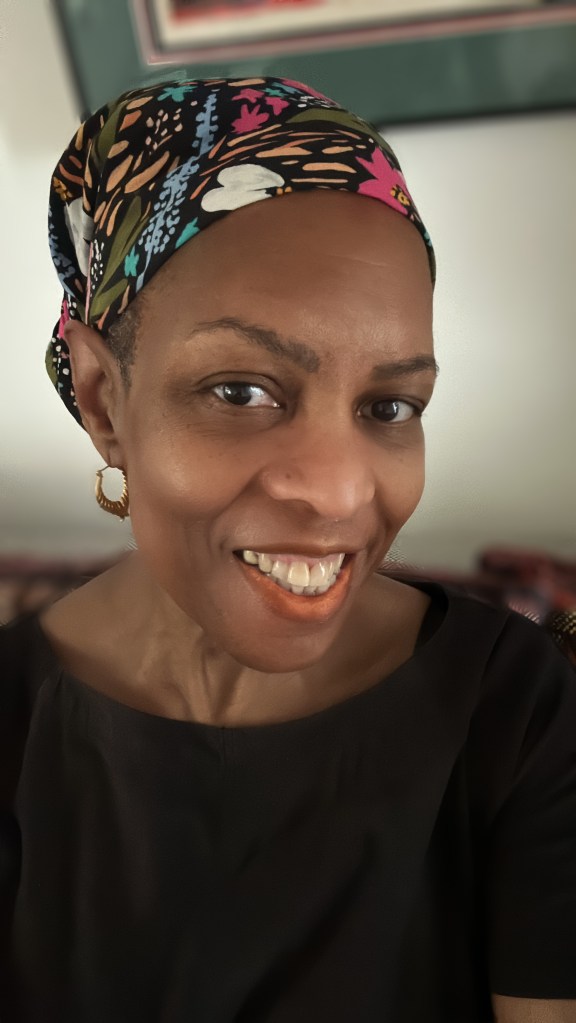
“I, too, am California” by Kimberly Nao


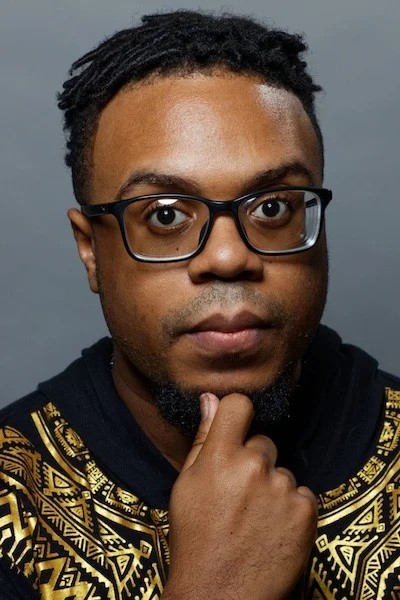
“Eid Mubarak, America” by Gemini Wahhaj

“and neither of them ever/

said what they meant/

and i guess nobody ever does”

  • Nikki Giovanni

“Sometimes you gotta’ take a stand. You can’t let people do what they do—you don’t have any representation anywhere. Don’t nobody in Baton Rouge give a flip about you…If you don’t take a stand, that means that you are giving consent for people to do what they do.”

  • Samuel E. Mims


12/15/2024 – 11:00 PM

To Samuel Earl Mims, my Paw Paw:

I don’t know if people are conscious of their last moments when they go; I will always remember yours. You were lying next to my father, watching the Packers trounce the Seahawks. The hospice nurse had just informed you—precisely and clinically—that you had very little time left. But while we were all reckoning with disbelief, you seemed devoid of panic; you chose to spend the rest of your life with your son and your wife and all the other people who mattered to you the most. You were always decisive that way. I got to call you briefly before you went quiet for the last time. I used that brief window of time to tell you all the things that I should have said to you when you weren’t standing in such intimate proximity to death.


I know now, after the fact, that I should have called you more, but calling you, every time, meant confronting the fact that you were leaving. The evidence of that passing showed itself in the thinning of your bones and the weariness behind your steps. Death loomed over you in such a way that I could not help but avert my gaze, to look anywhere and at anything other than reality; but in those short moments of courage in which I was able to confront death (and therefore see you),  I noticed a brilliant irony: you were stronger than ever. Even with your hollowed-out muscles and wobbling limbs, you beat death back from you with such intensity and determination. You were the immovable object standing in the way of the unstoppable force that comes, eventually, for us all.


Last summer, another white nurse in a white lab coat told us that you would not make it through the fall, and yet here you were, on the phone with me, still fighting, in the middle of December. I recognize now that you were the type of Black man who lived his entire life defying the condemnations and expectations of white people; it only made sense that your death would be a similar demonstration of that old John Henryism. Still, regret seized my heart and mind; it occurred to me, as I was confessing to you the things that needed to be said between us, that we Black men have nurtured a counter-intuitive, and perhaps violent, tradition.

 
Why is it that we only share the most necessary words when we are hanging so perilously close to a precipice? It also occurred to me that, because you couldn’t reply in your condition, this might be the only conversation we ever have where I get the last word. It may be the only conversation you’ve ever had where someone else procured the last word. And then you slipped; that’s the best way I can articulate it. One moment you were here moaning and groaning, caught in that invisible struggle against time, and then you were gone; silence and death rushed in to fill you up—all the spaces that had, only moments ago, been saturated with love, wisdom, and strength. And as your body emptied itself of you, I felt something dense, firm, and perfectly unnamable fill my own. I suspect that I may spend my entire life trying to define this sense of transference, but in trying to define this new weight, I have been forced to reflect on your life and, therefore, my own.


You were raised in Louisiana; I was raised in Georgia. From a young age, we both witnessed what is undoubtedly a genocide ferociously nipping at the heels of Black children. The great orators of the Sorrow Songs, folks like Bessie Smith and Billie Holiday, and Nina Simone, gave form to the reality of this genocide in their songs and wailings. Every American has seen, in all its horrible glory, the strange fruit—the bleeding, broken body of a Black child taken too early. And with each bloody rendition of this American archetype, that festering rot that we call injustice grows ever more pervasive, embittering the air all around us.

 
Everyone can see the fruit, but few are cognizant of the roots, the seeds, or even the stems of the issue. The branches of the massacre tree run its fingers through the prisons, where 1.1 million men who look like us remain enslaved under a caveat of the 13th Amendment, and through White America’s obsession with guns, the same ones that fire disproportionately through the streets of Atlanta, Chicago, and Shreveport. A long and verdant field of white supremacy nurtures these violent realities, maintained only by the phenomena described so eloquently by Ralph Ellison. The modern American has rendered himself selectively mute, blind, and deaf to his history; he refuses to see that he has constructed his democracy atop the bones of an entire people!

Still, the roots of the problem, the source of that willful disability, undoubtedly begin in the classroom. You know as well as I do that Fred Hampton does not exist in Southern history books, and Angela Davis’s testimonies have similarly been obliterated from the curriculum. The classrooms of Georgia Public Schools consistently fail to mention the lives of Baldwin, Cleaver, and Giovanni.

The only images of Black excellence my classmates and I received were the vague silhouette of Martin Luther King Jr., intentionally watered down, and perhaps a (hyperbolically propagandized) caricature of X. I did not discover those other heroes until I went to college; instead, every February, for seventeen long years, we were told that we descended from slaves and that King was the sole Black participant in American history—an eloquent accident of the white man’s burden. Anyone could see how a student who was told that he emerged from a culture without value would struggle to even dream of self-esteem under these conditions. To make matters worse, the reality taught in the classrooms, of Black people in bondage, is corroborated by the news networks in the homes; thus, many of my friends and associates viewed the prisons as an inevitable destination on the horizon. This is the deathly pedagogy that instructs its darker-hued students to march dutifully, unquestionably towards death.


I grew up under this system, but I did not struggle, like so many do, to develop a sense of self-worth. I’ve never imagined myself in chains, and I have, for the most part, always assumed that some relative success would come my way. And I managed this without Baldwin or Giovanni or Du Bois; I managed to construct a dream for myself out of nothing. But what I now realize is that the only reason I was able to escape the mental trap of the not-so-far-from-Jim-Crow South is that I had the privilege of watching you do it first. In a state known for having the highest incarceration rate for Black men, you went to college. Not only that, but you did it only ten years after the country began to, legally, move towards integration.

You went on to join the US Military in 1969, where you served in Germany and Korea and attained the rank of colonel, after finishing your bachelor’s degree, and you only allowed yourself the relief of retirement after thirty long years of commendable service. That was in ‘99, two years after I emerged into this world. By then, you’d shifted your focus to activism. You’ve facilitated peaceful protests between the Minden Police Department and local citizens. Later, you went on to adorn the uniform yourself as a school resource officer, hoping to intervene in the lives of young people before they were swallowed up in our world of narratives.

As a leader in the Concerned Citizens Campaign, you helped advocate for the safe disposal and removal of fifteen million pounds of explosives at Camp Minden and the prevention of “open burn”, ultimately preserving the environment of the area to this day. But I think the work that you were most proud of was that which you did as a religious leader. After spending eleven years serving as a minister at Galilee Ministry Baptist Church, you built your own church, the Shepherd’s Hut, which has donated thousands of dollars to local public schools throughout Webster Parish.

I have realized, growing up, that to many members of our community, you are some strange amalgamation of folklore hero and legend, but to me, you’ve always just been my grandfather. That is not to say that I did not realize that you were a great man. On the contrary, you always made exceptionalism and greatness seem so natural; it emanated from you in such a way that success seemed as inexorable, for you, as the tide’s coming and going. Now that you have passed, I can admit to myself that there have been times when I have wondered if I could ever live up to the standard you set before me. I now realize that your example was never meant to be a shadow from which I should emerge; rather, your legacy has served as a shield, protecting me from the fate that has overcome so many of my friends and associates, the children of the world who wear skin painted so much like my own. In a time and place carefully constructed to ensure your failure, you have managed to navigate the world with integrity. And so, once again, even though I did not stumble upon the Harlem Renaissance or the Black Arts Movement or the Black Power concept until many later years, I never had to wonder what type of man or person I wanted to be in this world. I always had you to model that for me. Your example has unhindered me from many of the challenges that I could have all too easily faced. 


Last year, when this all began, before you were diagnosed, but after the pain started to needle at your heart, we snuck out of the house while my grandmother was busy, loaded ourselves into your pickup truck, and absconded with some meat pies from the local gas station. GG had just put you on what you called a “vegan diet,” —which was really just a diet with slightly less salt, and you asked me to help you cheat the warden. After we had our pies, you wiped the grease off your stained overalls and said to me, “You watch a baby grow up into a man and then a man regress right into a baby.” It occurred to me then that you’d impossibly waged war against Jim Crow for your entire life to maintain your dignity, and you feared that death would rob you of it. As I said before, I don’t know if people are conscious of their final moments, but I can assure you that you left this world with the same grace and dignity with which you lived. And for me, a child who has grown up as a grim spectator to the slaughters of Trayvon Martin, Freddie Gray, and so many others, I cannot tell you enough how much I needed you to show me that it is possible to live beyond the terms set forth by the historical record. You spent twenty-seven years teaching me how to live in this world with integrity; you have now shown me, like a gilded north star, how to die with it intact. Throughout this week, I have felt your passing in waves of terrible anaphora; the grief truly comes and goes. But one thing that has stayed with me all my life is pride in being your grandson.

I want you to know, wherever you are now, I will not allow time to end your sermons. Your words will continue on through my voice and actions, and in every single word I write from this point forward. My father, uncle, sister, and I carry your initials; this Christmas, you gifted us each with the weight of your legacy.

Rest easy, Paw Paw. We will carry it from here.

–Your Grandson,


Stone Erickson Mims


Stone Mims is a writer and educator based in Northern Michigan. His work, both in the classroom and on the page, examines the complexities of Black life. He holds an MFA in Creative Writing from The New School and a BA from Bard College. Mims has been a writer-in-residence at Château d’Orquevaux and attended the Kenyon Review Writers Workshop. His memoir-in-essays, Just Another Native Son, was a category winner in the 2025 Memoir Prize for Books from Memoir Magazine. His writing has appeared in Politics/Letters Live and Ignatian Literary Magazine. He is currently represented by Midnight Literary Agency. You can find him on Instagram.

All you ever wanted was to be seen. For someone to read your writing, give remarks, identify you, respond, criticize, and recognize your work. Although it never happens, you share your writing: hoping it will resonate, hoping they will love it, hoping someone will notice your tone, hoping that life will be better after all.

No retweets, no reshares, not even a casual, “This was nice.”

And every time, there’s a distinctive level to the pitch following the uncountable rejections you have received: from the magazines you admire, from people who claim to “support upcoming writers.” And every time you send work to them, there’s a beauty in how they bounce back to you with an “unfortunately”.

The sadness wells up, pushing at the back of your eyes, threatening to tumble and rain down. Your mind floats to everything you’ve tried. Every thought that has rained in your mind. You just want to be heard, to have someone see you, for people to read and cherish the gift/curse you’ve always had.

***

You’d written what you thought was your best. You spent hours reading and rereading, trying to get it just right. And still, they didn’t see you. And when someone finally did, they didn’t listen. They didn’t understand the fight in your words, the way you were writing for more than yourself, for your family, for your future, and for the dreams you thought were simply living in your head.

Every story you wrote was a piece of your life. You’d disguised it in other characters and other settings, but it was always you in there: your struggles, your hopes, your truths, dancing with reality within the lines.

***

That night, as you walk into Valco Hall, the heavens open into you, and you look for a sign to sort your problems. You think about what you’ll say to Fatau, your roommate. You’ll ask him for help for the first time. You don’t want to; nonetheless, you’re running out of options. You don’t want to bother your mother. She’s done too much already, always standing by you, always encouraging you even when things were hard. You know she doesn’t have the money.

Today feels like your last chance. You know Fatau will say yes if you ask. He’s kind, always thoughtful, and has shown you how good he can be. However, you’re not close to him. You’ve never been close to anyone.

Most of the time in the room, it’s just you. Talking to yourself, laughing at your own jokes, planning stories in your head, and speaking out loud to yourself. You’ve read your drafts alone and clapped for yourself because no one else ever did. Fatau never noticed. He probably thought you were mad. Or he never heard you probably.

When you step into the room, his friend is there. The one with the braids, the one from your mother’s home country. You’ve never told him that. He might ask too many questions, and you don’t feel the urge to answer him. You are never fond of sharing too much about yourself.

You greet them, but they don’t even look up. They’re busy, playing on the PS5, their faces lit up by the movements on the screen and their mouths shouting out words to people who only live in such realities. You move around the room, from your bed to the balcony, hoping both will notice you, say something. Recognize your agitation. They don’t.

That’s how it’s always been.

***

You think about the time you tweeted, tagging all those advertising agencies, hoping someone would see it. No one did. You remember scrolling through LinkedIn, sending messages to HR managers, and pouring out your heart into every word. One of them read your message. You saw the “seen” tick, but he never replied.

In your emails, you even said, “If you’re not interested, just send me a rejection. I’ll understand.” They didn’t bother. You followed up, again and again, sending more messages into the same nothingness.

You think back to the time you waited for a response from Ogilvy, your dream company. The delay dragged on until you gave up, deciding to move on and start school again. Then, out of nowhere, they called you for an interview. You sat across from them, explaining that you were now back in school. They nodded politely, and you knew in that second, the job was gone before it even began.

You remember that day. The day you received a call from Insel Communications, the rush of adrenaline as you checked your balance. Twenty-five Ghana cedis. Just enough for an Uber to East Legon. You booked the ride anyway, stomach tight with worry, but excitement overflowing in your soul the way a caged bird sings of freedom. You had been waiting for this.

The boss was accommodating. He was short and made sure his words carried the room, making him taller than his frame. He was in a meeting. You knew it had to be the Gong Gong Awards. You had spent nights combing through industry articles, memorizing jury members’ names like a desperate student before an exam. Your life, at that point, revolved around these professionals, their movements, their triumphs. You followed them the way the tide follows the moon — pulled, fidgety, unable to resist, and determined to play its part.

Then you saw him.

A glance. No! It was a frozen second suspended on the screen, appearing with every wish that you had once made to be near him.

 Andrew Ackah. The man whose career you had studied the way Christians study the scripture. His words had guided your dreams, his achievements, a map to places you wanted to go. You had stalked his life online, knew the places he worked, the books he recommended, the speeches he gave, and even where he stayed with his family. And now, here he was, a few feet away, discussing something with the director of Insel online. You needed the job more than anything just so you could… be so close to your industry idol, just so your dreams could sprout from the ground.

While still in the meeting, the director turned to you and asked about your favorite book.

Gone Girl” you said without thinking. A lie. A reflex. You couldn’t have told him the truth. You couldn’t have said your favorite book was by Akwaeke Emezi, a writer whose words were home to you but whose identity you feared would betray you before you even had a chance.

Then came the test. The page in front of you looked surprising. The creativity you carried as a second skin abandoned you. This is copywriting? You knew, even before handing the horrible handwriting back to them, that you weren’t going to get the job. The Uber fare had been a gamble you lost. So, you walked.

From East Legon to Bawaleshie to Legon. The rain came down in sheets, filling your shoes, soaking into every piece of your trousers and the white boxer shorts you bought before the Kantamanto fires. You prayed. Not for another job, not even for a sign. It should just be for something, anything, to remind you that you were still headed in the right direction.

Four days later, hunger was eating itself around your stomach. You lay on your bed, staring at the ceiling when your phone rang. Regina, an administrator from another company. A meeting on Monday.

This time, you borrowed from MTN Quick Loan.

The journey was long. A crawl through traffic, through neighborhoods that screamed wealth and places you had never been. The estate was lovely, your first time in one. You wanted to work there. To belong there, to smell like them. And you crossed your hands to do your best in the interview.

Thomas, the boss, liked you or so you thought. You could tell from the way his eyes shone when you spoke, the way he nodded, delighted and impressed with your background.

“Great diction,” he said. “You’re eloquent. You have quite a presence.”

And for a moment, just a moment, you believed you had finally found a place where you fit.

Then you walked out, the door clicking shut behind you. But something kept your feet planted just outside, your breath moving in rhythm to your curiosity. You listened to him and the other board members.

Laughter. Its sound had cruelty in its throat. The one that stung more than mosquito bites.

“He’s too effeminate. Probably gay. Sounds too much like a girl.”

The words cut like glass lodged in the gums, impossible to ignore. And your mouth opened in shock to the words. Your breath faster, heartbeat swifter, the promise of belonging disappearing behind the door as you bid bye to the estate.

They never called back.

And despite your follow-ups, your emails, and your polite check-ins, the silence was its own kind of answer.

***

It wasn’t the first time life had teased you with possibilities only to snatch them away. After your bachelor’s degree, you struggled just to start National Service. When you finally got a placement, you worked hard, but no one noticed. You felt invisible. It’s almost as if you didn’t exist in the same world as everyone else. You were a ghost people spoke to when needed and ignored when you desired them to see you.

You dreamed of studying abroad, of leaving everything behind to start fresh. But when you asked for help, no one came through and it was a battle too big for you to even start. After National Service, you sat at home, endlessly applying for jobs. Every email you sent felt more personal than the last, and the rejection came like rain in June.

You thought going back to school would fix everything. Another degree?! Surely that would open doors you reassured yourself. You gathered what little savings you had left to buy the university forms, not even sure where the money to pay the fees would come from.

Your mother, who always stood by you and supported you, scraped together what she could. She used the last of her savings to help pay half the fees after you got admission. That left you to figure out how to survive.

Feeding yourself? You didn’t know how you’d manage, so you left it in God’s hands and hoped for the best.

***

The first day you walked into Legon Interdenominational Church, you hoped to find something more than sermons and praises. Perhaps someone there would see you, connect with you, and perhaps help you. Instead, you got leftover food and free meals from the events you attended. You were grateful and ashamed, feeling smaller with every bite that you took.

And then there was love. Or at least, what you thought was love. It arrived like a promise and left you the way a bad memory is never forgotten. Your honesty became a joke; your confession was something to laugh about, and the betrayal following it stung so painfully in your heart that it left you questioning if anything in your life was real.

***

You think about the day you wanted to end it all. You were tired. Too tired of fighting, exhausted from trying, bushed out of feeling as though nothing you did would ever be enough. That was the day someone finally noticed you. He reached out to help, but even then, he didn’t listen. He didn’t hear the way you were saying you couldn’t take it anymore. He should have just let you be without interfering with your journey to the next life.

And you’re still here. Somehow, you kept going on.

It’s hope that keeps you moving, stubborn, and persistent in the way a weed grows out through a crack in the pavement. Or maybe it’s just the voice inside you that refuses to give up.

Now, you stand on the balcony with the cool metal rail under your fingers as you stare out at the night. You feel invisible; you always do. A part of you wants to scream, to force the world to turn and look at you. The words fail you. Your mouth is buried inside.

Sometimes, you wonder if it’s because you’re a man — the reason no one sees you and makes your struggles easy to ignore. You think about the female celebrities whose beauty seems to do all the talking, opening doors and winning attention in ways you can’t.

You blame something bigger. It’s not you at all. Possibly, it’s the country: the way it feels like it’s designed to work against you and the way your soles crack from running around. You keep trying, putting in the effort. Trying, and yielding to a lack of results. It’s as if the system is broken. As if no matter how hard you try, the soil just won’t give back your results.

It feels like God has forgotten you. He doesn’t see you. You’ve prayed so many times, poured out your heart, fasted, and still nothing changes. No answer, no sign, no rain. Just nothing. The faith you once held onto so tightly now feels shaky, and it could slip away at any point in time.

You climb into bed, your roommate and his friend still glued to their video game, still not paying you any attention. You pull the sheet over your head, trying to block out the world and let everything disappear. The sadness feels enormous. It’s pulling you under, and you let it. You let your thoughts carry you away, far from the noise, far from everything. Far into somewhere else.


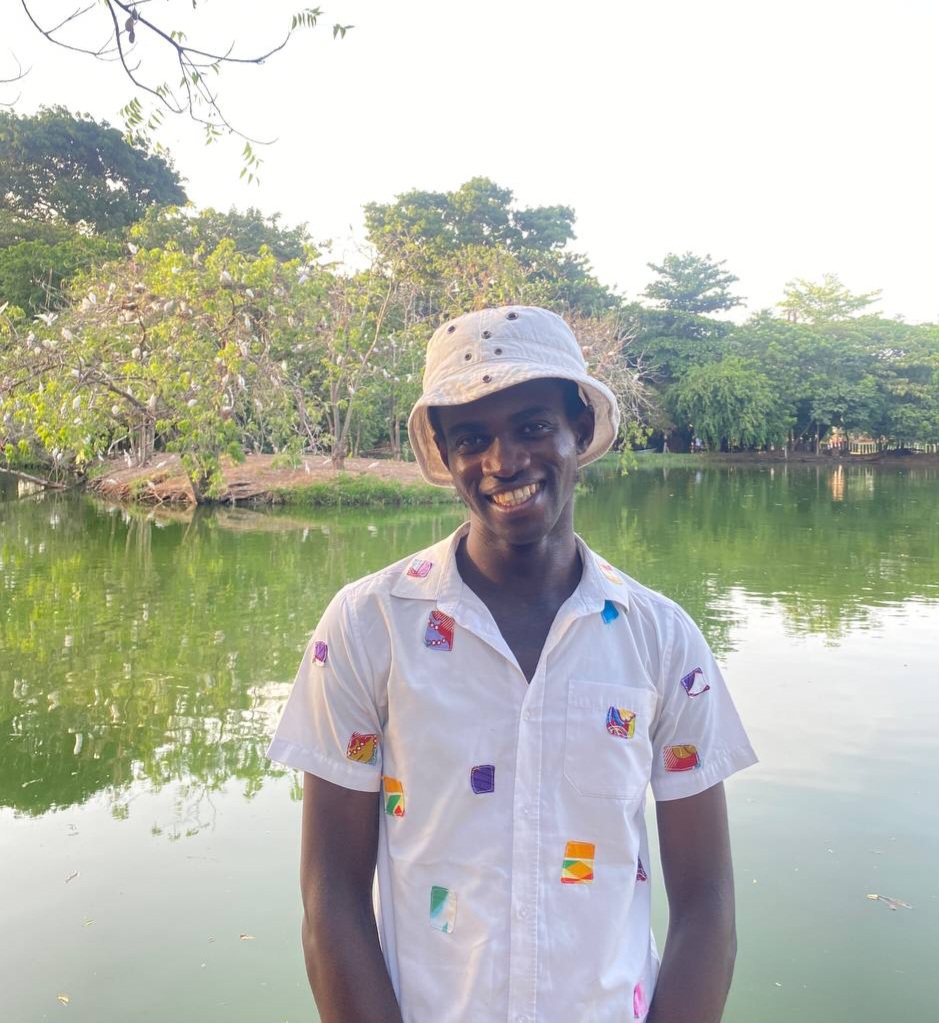
Bright Aboagye counts Aja Monet and Akwaeke Emezi amongst his influences. He dreams of becoming a surrealist blues poet, writer, and restaurant entrepreneur. Bright hopes that his work inspires and gives hope to all who engage with it.  He can be found on Medium, Blogspot, and Linkedin.

I remember a little kid who spent his summers at his grandparents’ house.

He stayed out most of the day, but he really liked their house. He was fascinated with the backyard, a backyard without fences or anything separating it from the path leading to the mountains. He used to take a walk to the mountains. He loved that.

He spent most of his days going around mountains, eating lots of blackberries. He drank water from the river. When it was late, he came back to play football with other kids on the street. They set up two stones as goalposts on either side of the street. He thought the games were fun.

At night, he sat on the small balcony that served as the entrance to the house. He read whatever books he had brought with him from the city. Having no TV in the house didn’t bother him at all. His grandmother sometimes complained that he was wasting too much electricity, but she let him read his books anyway.

Unless it was one of those nights.

On those nights, they had to turn off all the lights. Then, close the curtains tight. And get away from the windows. The kid knew that he shouldn’t make loud noises. He knew he should act as if he didn’t exist. They all acted as if the house didn’t exist. Or the neighborhood. Or the city. Or the entire people. They didn’t exist according to official reports, so they had to act accordingly. The kid knew it was time to make himself invisible, imperceptible, inaudible.

Then, the noise started. Guns screamed. Humans screamed. Animals screamed. The kid didn’t know which side the screaming guy was on. He learned that dying men scream alike. He was scared. He was embarrassed by his fear, but he couldn’t help it. He hid under the divan. He remembered when his grandfather said, “If you recite Al-Nas and Al-Falaq, you will be protected from anything.” He had already memorized them even though he didn’t understand Arabic.

The kid started murmuring with a Basmalah, “Qul auzu birabbin nas…” Then, “Qul auzu birabbil falaq…” He repeated all the verses in Arabic. Again. “Al-Nas,” “Al-Falaq.” He didn’t understand what he was saying, but he kept saying it. The noise went on. People screamed. The kid repeated Arabic words.

The noise died down. Just like other similar nights. The kid was fine.

He planned to go on with his day after sunrise. Unless there was curfew. Curfews could last for days. He read when this happened. He never had many books with him, so he read the same books again and again.

 The night the kid violated curfew, he wanted to watch the final game of Turkish Sports Writers Association Cup between two major İstanbul football teams: Galatasaray and Fenerbahçe. He walked a couple of minutes to his friend’s house, just down the street towards the feeble stream.

After the game, he wanted to go back home. His friend’s mother told him he should stay, but the kid thought it wasn’t a big deal. He left the house to go home. Then, he heard the noise created by lots of gunshots.

His mother and aunts told this story so many times that he isn’t sure if he remembers it or if he just recreated the whole thing based on what he was told. What he thinks he remembers is that he hid behind the stone wall, terrified, waiting for the shots to stop. They were most likely just warning shots. Then, a bright light emerged from an army vehicle. The kid put his hands up and slowly walked towards the vehicle. He vaguely recalls a couple of surprised soldiers. But who knows if he just made this up at some point? He barely remembers his aunt coming from the house. He remembers returning home. He doesn’t think he knew how to recite “Al-Nas” and “Al-Falaq” at the time; he must have learned that later.

When the kid played football in that street, another kid screamed, “Tank!” Then, they took the ball and the four stones that served as goalposts and ran. They returned after the tank passed. They put the stones back and continued playing. None of them were surprised. Tanks passed at least once a day.

If you ask me now, I’ll tell you the kid doesn’t exist anymore. I’ll tell you he became a grown man.

I won’t tell you that he still remembers how to recite “Al-Nas” and “Al-Falaq.”


Serhat Tutkal is a Kurdish academic. He is currently a postdoctoral researcher funded by the Secretariat of Science, Humanities, Technology and Innovation (Secihti) in Mexico. He has a PhD from Universidad Nacional de Colombia (Bogotá) with a dissertation on the legitimation and delegitimation of Colombian state violence. He teaches courses on armed conflicts, dehumanization, racism, colonialism, and qualitative research methods. You can find him on Mastodon and Bluesky.

The first time I saw her, she stretched as far as the eye could see in every direction. I’ve never seen God, but I imagine it’s like taking in the ocean for the first time. The ocean was my home — the only home I ever knew. The ocean kept me alive and gave me hope for the future.  

A future where I could be with her for all eternity.

At eight years old, I came home to an empty house, overwhelmed, scared, and exhausted. I could only call my mom in case of emergencies. Unfortunately, fear was not an emergency. I pulled my blue beach bucket out from the closet and meticulously laid all my shells on the floor. I carefully placed each one on paper towels and sorted them according to how they made me feel. Now, I realize why the bucket was so special to me. It represented freedom. The freedom to cry, the freedom to be heard, the freedom to be seen, and the freedom to live judgment-free.  My life seemed full of struggle, even my early years reeked of trauma.

My childhood wasn’t the worst, nor was it a cakewalk. It was marked by abuse, emotional neglect, and abandonment. I grew up in a predominantly Black neighborhood and attended a private Catholic school where I was one of six Black children. I endured years of being made fun of for having “nappy” hair, being “ashy,” “too loud,” “too ghetto,” and “too fat.” When I went home, the neighborhood kids called me “White girl,” said I “talked White,” told me I tried to sound “too smart,” and teased me for wearing a uniform.

I look back on those times, and I’m grateful my mother didn’t keep a gun in the house. Kids can be cruel. I lived in a constant state of anxiety, fear, anger, and self-loathing. I remember longing for death in elementary school. Why am I here? What’s the point of living? No one wants me here. In those moments of desperation, I imagined the ocean’s waves crashing on the shore and beckoning me to reunite with her. The second my feet hit the sand, none of that mattered. The warm sand on the soles of my feet and the grainy beads between my toes instantly cheered me up.

I always bring books to read at the beach, but I never read them. You would think that after decades of going to the beach, I would have learned to leave my books at home. I haven’t. The beach awakened my inner child — the child who didn’t get to exist outside of the beach, the latch-key kid, the kid who had too much responsibility, the child whose dad left and whose mom emotionally departed around the same time, the kid who was misunderstood and bullied.  

She came alive at the beach.

My favorite beach gift was sand dollars. I kept them on top because they were fragile, and I loved them the most. The bumpy, slightly porous texture of the outside and the beautiful pentagon star-shaped holes in the middle made them priceless to me. I held each one. I relished feeling the cold, hard shells in my hand, tracing each groove with my fingers. I rubbed the textured ones against my cheek, closed my eyes, and imagined myself lying in the sand. I felt the waves pulling and pushing my body. I didn’t know it at the time, but it was these small moments of visualization that rescued me from darkness. 

No beach trip was complete without seashells. I came home with my bucket full and happily relived the day. The beach is one of the only places on Earth that bestows gifts freely. As a kid, I remember the shore being filled with shells of all sizes. Perfectly shaped, no cracks, no holes, for as far as the eye could see.

Now, the beach gifts have changed. There are no more sand dollars. I would have better luck finding an intact kidney than an unbroken conch shell. All the years of being polluted and pillaged have finally taken their toll on her. Despite this, she still provides food, life, and shelter for countless species, including us. I decided to stop taking shells and enjoy her beauty while I still can.

The cool air reignites my childlike innocence. The saltwater, dripping down my face, cleanses me of all emotions. The once-cold water now feels like the most heavenly bath. I never want to leave. I long to be a mermaid who can swim away from this life on land and be amongst those who accept me in the sea. The ones who love me no matter the color of my skin, regardless of my pants size, and despite my shoes. They embrace me. Submerged in the blue-green water, I feel the comfort of being in the cosmic womb and the unconditional love and scorn of a parent who disciplines me whenever the limits are pushed.  

Looking out into the distance, I feel humbled by the vast open ocean. Water to my left, water to my right. The powerful waves knock me down and lure me back for more. Now and then, I feel something brushing past me, a colorful fish or a sprig of seaweed. I’m delighted and fascinated, watching schools of fish swim so close. Bright blues and pale yellows dance in the water around my feet. The water is so clear, I can see through to the bottom. No lifeguard forces me to take a 15-minute break.  I happily float for what feels like hours on my back.  The heat from the bright white sun beams down on my skin. I feel like the happiest Thanksgiving turkey.

The ocean saved my life on numerous occasions…I wonder if she knows.

Does she know that other than my daughter, she was the only one who stopped me from hurling myself off a cliff in 2023? When I lost everything within a couple of months. When I discovered the love of my life lied about our entire relationship. Resented my daughter and me. Lured me to Durham under false pretenses. Strung me along with talk of marriage. Lied about me like a dog, painted me out to be a narcissist, posted my intimate photos and videos on websites for all to see, and created fake profiles using my information to spite me. Does she know that the grief almost broke me? That the embarrassment destroyed me? I lost all trust in people. 

Can she sense that it was only memories of being with her that comforted me? The solace of feeling her warm embrace enveloping my body. I closed my eyes and imagined I was there, with her…in her, and for a moment, thoughts of her gave me respite from the torment. Focusing on her relieved me from intrusive thoughts. The times when doors were broken, laundry baskets thrown, and threats made. When I ignored red flags and inflated green ones.

It was only the smell of salt and seaweed carried by the breeze on a humid day that eased my pain. 


Lauren McNeil is thrilled to make her literary debut on Decolonial Passage and grateful for the opportunity to share her voice. Before this publication, you could find her writing in random notebooks, on scraps of paper, or on the Notes app on her phone. A former nurse turned budding creative, she eagerly seeks out opportunities to share her unique perspective. She is a beacon of light in dark places and hopes to inspire future generations. You can find her on Substack and on YouTube.

Decolonial Passage is honored to announce the nominations for next year’s Pushcart Prize Anthology. This list includes writing published during the 2024 calendar year. Congratulations to the nominees!


Poetry

Byron Armstrong – “We are Music”

Ada Chinara – “Gliding”


Short Stories

Musu Bangura – “Night Watch”

Nwafor Emmanuel – “You Are No Longer Welcome Here”

Michael Ogah – “Forgotten Memories”


Essays/Memoirs

Eraldo Souza dos Santos – “Everything Disappears”

I prefer to be considered a particular person, although I’m from Nowhere.  Where I come from doesn’t exist. This creates a confusing situation since logic dictates that everyone come from somewhere. It looks like I defy logic. I come from Nowhere. It has been told to me many times, by many authorities, and government officials, and all sorts of serious people in their decent suits. I see no reason to doubt them. I’d rather doubt your logic.

Strangely, I don’t have a language. People where I’m from speak in a nonexistent language. It has been stated by many experts and authorities, and there is no reason to doubt them. But I also don’t speak much of the nonexistent language. I speak some existing languages, but I cannot call any of them my native language. As a result, I have no language of my own. I borrow other people’s languages. I speak weirdly with my unusual accent and occasional pronunciation errors. I guess everyone assumes I must be speaking well in some other language. I don’t. To me, every language is a foreign language. Every word I utter is borrowed. I have no words of my own.

I speak in these foreign languages in my head when I take walks. They become entangled, creating a creole language that would be unintelligible to nearly everyone else. Maybe that is why I like talking to myself. I also like walking. I usually combine these two favorite activities of mine.

If I have to move from one place to another, I always prefer to walk. I enjoy walking the most when it isn’t directed towards the aim of arriving somewhere. Because when you aren’t walking towards somewhere, it can be said that you’re walking to Nowhere. So, I know that if I don’t walk towards a specific place and I still insist on walking, I’ll eventually arrive Nowhere. And that is where I’m from. I go out and walk aimlessly, secretly hoping that I may eventually visit my hometown: Nowhere. I miss Nowhere. All these somewheres have been tiring me for quite some time now. They are very noisy and full of unpleasant faces.

I never get to visit my Nowhere though. Sometimes I find myself in Nowheres that are not exactly like mine. I may see nonpeople there, sitting on both sides of the long street that runs through Nowhere; but they won’t be sitting on short stools. That is how I know immediately that this isn’t my Nowhere. They may drink something, but it won’t look like black tea. They may speak some nonexistent languages, but I won’t be familiar with them. “I’m at someone else’s Nowhere again”, I say to myself when this happens. It’s still good to visit Nowheres even when they’re different than mine. The familiarity of Nowheres is usually nice. But not always. Not when I see an intruder, for example. The intruders are also all too familiar to me, but there is nothing pleasant about them.

The intruders are actual persons in a Nowhere full of nonpeople. There are always some of them in Nowheres, but you usually manage to avoid them. They come from somewhere, you see, and they speak existing languages. They tend to wear nice uniforms. They are hostile to nonpeople wherever they find them. They can smell us. It doesn’t matter that I’m not from this particular Nowhere. Nonpeople are nonpeople. The intruders know that. They don’t like being in a Nowhere. They take it out on us.

You can also see these intruders in existing places. That is where they come from, after all. They look at us with disdain, they can tell that we are one of the nonpeople. They know we come from Nowhere and we don’t belong here. We don’t belong anywhere, except for Nowhere, obviously. They make us feel that. They talk about their somewheres, and their somethings, and their someones with absolute confidence. We can’t talk about our Nowhere, and our nothing, and our nonpeople with the same confidence. We become silent. Our weirdly pronounced foreign words become reserved for our conversations inside our heads. Until we decide to write them down.

Let us nonpeople take long walks whenever we can. It may get us Nowhere.


Serhat Tutkal is a Kurdish academic. He is currently a postdoctoral researcher at El Colegio de México in Mexico City. He has a PhD from Universidad Nacional de Colombia (Bogotá) with a dissertation on the legitimation and delegitimation of Colombian state violence. He teaches courses on armed conflicts, dehumanization, racism, colonialism, and qualitative research methods. Find him on Mastodon at fediscience.org/@SerhatTutkal and on Bluesky at serhattutkal.bsky.social.

Written by a person deemed ethnically ambiguous.

I know France isn’t a racist country, and I am not Arabic, so to speak. I’d like to believe that my resume, my showreel, my social media, or even my face speak for themselves, but apparently, they don’t. My mom has been fully integrated in France since she moved there as a child; yet she’s experienced systemic racism her whole life. She thought that giving me a French first name would be sufficient since I was born in Paris, white and atheist. Apparently not. In primary school, a kitchen server refused to serve me pork, said I should ask my mom if I could have some. That was just the beginning.

But France isn’t a racist country.

I started auditioning as an actress. Casting directors kept asking me about my origins, my ethnicity. I told them I didn’t speak Arabic, that I was born here in Paris, and raised in French culture. They continued asking about my origins.

But France isn’t a racist country.

They asked me to audition for a masseuse role, a Middle-Eastern-looking woman who loses her temper and starts “acting ghetto” with the customers of a five-star hotel because she “just can’t help it, it’s her nature”.  Then they asked me to audition for Fatima’s sister and learn a bit of Arabic. I could do that, right? They asked me to wear a hijab, to play a Syrian refugee. They asked me to play a Muslim YouTuber doing a DIY on how to put on a hijab. They asked me to play Samia, sitting by her husband’s side in a car before being pulled over by the police. “Hey, can you come in and audition for Suburban Arabic Girl Number Four? Basically, you’re with your homies in the subway, and you make a fuss, start yelling at people, throwing things around!”

 But France isn’t a racist country.

You can easily tell France isn’t a racist country when you walk around Paris accompanied by my mom who has dark skin. Besides the aggressive stares and whispers when we go to posh places, I have witnessed her getting pushed by a Karen’s trolly in a fancy market and followed by security guards when we stepped inside various stores. We even had a saleswoman tell my mom as she tried on clothes that she looked more like “someone dealing narcotics at the bottom of the building.” And then: “Are you going to pay cash? Wonder where that money comes from,” followed by condescending laughter. For the record, this last incident happened when my mom tried on a three-thousand-dollar coat that we bought despite everything.

But France isn’t a racist country.

It’s actually easy finding work in France when you have Middle Eastern ancestry. I’ve recently come across the most encouraging video on social media, about a Middle Eastern man who graduated as an airline pilot but couldn’t find work because of his name. A few years ago, I remember reading about another Middle Easterner who applied for a managerial position, got an interview where the employer told him he had the right qualifications, but couldn’t be hired because frankly, “no one will accept being managed by an Arabic man”. For my part, I remember when I applied for a job as a receptionist, and the recruiter pressured me to know if I had a criminal record. Because she “would find out eventually.”

 But France isn’t a racist country.

“So, tell me something: Where are you from? Really from? Oh, gee, why are you getting so cranky about it? It’s just a question! I’m trying to get to know you better! Are you ashamed of your roots? Don’t you want to act as a standard-bearer for all Arabic peoples? Stop playing the victim already! How dare you call me racist. I was about to introduce you to the best couscous restaurant in town! I bet it’ll taste exactly like the one in your country! What did you think of the movies directed by Riad Sattouf?”

But France isn’t a racist country.


Zoé Mahfouz is an award-winning actress, screenwriter and content creator. Her humor pieces have been published in Defenestration Mag, Wingless Dreamer Publisher, Spillwords Press, A Thin Slice of Anxiety and Witcraft. You can follow her on Tiktok @lessautesdhumeurdezoe.

Our grandparents sit us down and teach us where we come from: Africa, enslavement, Jim Crow. Our parents tell us where it’s safe to travel and where our brown skin makes us targets. Fear infects our dreams.

They don’t talk about us much in their history books. Erasing us and those whose land was stolen. It’s hard to find accounts of those who went before us, but we know we were resilient. We know we survived.

They teach us to be ashamed of the hair on our heads. We women are pressured to straighten our hair with caustic chemicals or cover it with a wig. Our wild coils are beautiful, but they say we look unprofessional.

We are paid less but are expected to be exceptional. If we dare to be average, they call us lazy. We have no money to leave our children. All we have are stories to pass down.

We have siblings, cousins, friends who aren’t here anymore, executed for the crime of being Black. We shout the names of the dead, write them on placards, print them on t-shirts. Trayvon, Breonna, George. When we protest the murders, they call it a riot.

Sometimes we dream of better days, but those dreams are haunted by the dead. Sometimes we dream of justice, but in the end, we always wake up.


Claudia Wair is a Virginia-based writer whose work has appeared in Pithead ChapelAstrolabeTangled Locks JournalJMWW, and elsewhere. You can read more at claudiawair.com or follow her on Instagram @CWTellsTales

“It’s okay, we’re talking about those Black people. You’re different.”

“You can’t possibly be cousins with her (with your dark hair and brown skin); you   look nothing alike.”

“I know that you think he’s cute, but Koreans don’t go for darker-skinned people.”

“You’re so beautiful and olive complected.”

“She’s an Oreo; more Black than White. She talks White.”

“What’s up with your hair?”

“Your Mama doesn’t know how to do your hair; you shoulda let me do it.”

“Do you feel like you’re more Black or White?”

“What are you?”

“You look exotic; where are you from?”

“My Dad doesn’t know that your Dad’s Black; he thinks you’re Mexican, so it’ll be okay.”

“There’s not supposed to be a Black person in this show; it’s not historically accurate! Oh, sorry. You’re half. That shouldn’t offend you, right?”


Jassy Ez, or Jasmine Ezeb, is an English Literature instructor in New Orleans, Louisiana. She enjoys teaching World Literature to her students and witnessing their light bulb moments as they make connections between old myths and modern-day society. She has a Bachelor’s degree in English Literature from the University of Holy Cross, and she was awarded Best English Student at her graduation. When not working, she likes to spend time with family and friends, explore small bookshops, and record audiobooks.

My momma, who woke up before the roosters crowed and before the early birds tickled worms from the earth, was always the last person ready. As I walked by her room before gracing my spot on the couch for the morning wait, she had on her robe and was just setting the temperature of her curling irons. The third time I checked, she was scrutinizing two almost identical necklaces. Holding one to her chest in front of the mirror, then shaking her beautiful black curls to and fro as she reached across the basin for the other. 

I remember bouncing on the edge of the couch, Bible gripped tightly, as Bobby Jones’ gospel played in the background. Pink peacoat layered on top of a pastel-colored dress, ruffled matching socks, gloves, and polished shoes. Momma assured us that rather than vain pageantry, our attire was symbolism of our adoration for the Lord. When she said this, I imagined angels seated like a panel holding large boxing-style score cards in their wings and watching each of us as we entered the sanctuary. Their task: to rank our attire in order of holiness. As I pondered their nodding in approval or blushing in disdain, I spun my head from the clock to the television so quickly it appeared the hands stood still. Nonetheless, we would be late to church once again.

Throughout the washing of dishes, and syruping all of our pancakes, and ensuring each hair on all four of our heads was in place, she licked her thumb. Swiping a lingering crumb from Leilon’s face, she was finally ready. En route, I begged to crack a window as our dusty van seemed oversaturated with my anxiety and momma’s bitter perfume. The ride usually took about eighteen minutes allowing either for a nap or several minutes of my wishing my mother were a more aggressive driver. She drove as if we were floating on clouds, cranking up The Clark Sisters’ Living in Vain as we coasted. My stomach could have easily competed with the world’s best on beam — tossing and turning in and out of knots. Fifteen minutes late and probably missing all of praise and worship, I struggled to place each foot in front of the other while entering the double doors to the church. Not a single thing would be different on the program; yet I scanned its contents, feeling as though I heard an ominous “tisk” and vowing to make up what we had missed later at home. Momma said God was our everything – a healer and a way maker. And we should be grateful for all He’d done for us — life, groceries, and clothes. But we were always late.

It never made sense to my tween brain. How could she love God so much, dedicate an entire day to honoring Him, but show up late every time? How could she be so rude?  How would God know we took him seriously as we slumped into the last pew of the sanctuary? During my Saturday night scarries — what I called my anxiety-filled dreams on Saturday nights –each church member would turn around in unison, heads shaking in disgust, as we dragged in like stale bread. How many points off would we receive on the scales of good and evil? How would God know I truly cared if we missed half the sermon or praise and worship? As I pondered God’s love evaluation system, questions bounced around in my dome like pickle balls at a senior center. I soon realized I’d left my eyes open, and my head was up instead of bowed during the benediction. How would I ever make it to heaven?


Jasmine Harris is a multi-genre writer and educational specialist featured in the Hidden Sussex Anthology, Prometheus Dreaming, Syndrome Magazine, and several others. She most recently served as the 2023 Arts and Science Center of Southeast Arkansas Arts in Education Artist in Residence.  Harris focuses her writing on celebrating Black culture and community, intersectional identities, and the evaluation of popular culture. She frequently quotes her inspirations as Maya Angelou, Ntozake Shange, and Tupac Shakur. Stay updated with her work and projects through her website https://jasminemharris.weebly.com or on instagram at dr_harris.

This tongue will never force words from a body that wants to remain shut. But I am packing in things you will need for the journey. I feel the heaviness of your secrets. Pin in strength and ask if this is what people want to help you carry. No, it’ll kill them, I say. It’s better you don’t say it. Some parts of me still believe you deserve saving. You deserve any ear that wants to listen, so I cut in. (And this is painful.)

I find you crying, and this is almost like a home I’ve lived in before. I find familiar paintings I left on the wall—stretches of red colours, begging me to stop, begging me to leave, begging me to wait. When it hurts to share, it hurts to even find solace in the eyes of people who will genuinely help ease the pain. When it hurts to share, we do not know if we want to share or not. We do not know when you have to leave because some parts of us will want you to stay.

I’ve been here before. Exactly what the others tell you. But when I tell you this is not a good place to rent, trust me, I do not say this to comfort you. I say this to tell you that there will only be a burial after a burial, a funeral with no song, and on days when you can’t let go of what is to be left gone, you will run back digging to reach the corpse of everything that burns your nose, of everything that will make you close your mouth shut while you want to vomit. (And this is painful.)

And that’s too much heaviness for you to carry. That is too much pain. That is too much for your eyes to hold in. When these words find a place close to you, I hope you hand them an axe to cut through your doors. I hope it breaks through your windows. I hope it gives you sunshine, air, and all the feels to stay open. (And this won’t be painful.)


Something New

Whatever happens in the womb of a woman is a time capsule, and I am told it’s the man who puts everything there.

He tills the grounds, ploughs, wets each side and plants the seeds. Every sweat that breaks loose from his face is water to quench his thirst for the hard work he does.

The woman holds everything in until a labour is due, and I’m told this is done with pain. Pain is the only belt one wears to create something new. They do all this with their hands and hold on until the time of harvest.

I want to ask them why they do this—I won’t say they do this for pleasure. I want to know how long they intend to love their fruits—I won’t say forever; it depends. I want to ask them if they think only about themselves when they argue. I want to know if they feel the pain they cause to other lands when they set theirs on fire. I won’t call the shots. I won’t say the children; the fruits and the farmlands have a lot to say, a lot to ask, and a lot to know about what happens during the farming season.

I’ll be quiet. I’ll have my peace. I’ll let them wonder what their pain does to us.


I Am Nothing But Rust

People perceive I have the strength of a wall, and anytime they want to build trust, they use me as a pillar. In their conversations, they mention my name as a verb. A sure ticket to get the work done. An assurance. A soothing tap on the shoulder, the blues in their skies. The star that waits beside the moon.

The wind comes knocking, and I’m supposed to hold still, bleed where I am cut, and break the mouth that wants to shout this pain away into smiles because I can’t afford to let anyone down. And imagine if we wore our intentions like handbags. I bet people would really see how often I give up.

How often I tire of being a punching bag that sleeps over and over every night for another round of training because it needs to be there for others and not itself.

I’m that thing that will fit in every bag. Like a comb or a perfume, or anything that stays to be used.

And they say the value of a thing is in its usefulness, but what they don’t say is that every useful thing must be treated with compassion for it not to lose its colour. And here, I’ve lost my colours, and I am nothing but a rust writing you a poem. I am nothing but rust, reminding you to give me back my shine.


Richard De-Graft Tawiah is a creative writer, spoken word poet, and LLB graduate from Central University. He is a 2022–2023 Nadèli Creative Cafe Bootcamper. He’s fueled by his passion for words and the change they bring. His journey includes volunteering at the Foundation for Educational Equity and Development where he channels his love for community service through literacy and youth empowerment. He also volunteers at Nadéli Creative Company on the Book of the Month Team. His works are published and forthcoming at the Global Writers Project, Ghanaian Writers, Nadèli Creative Company, and elsewhere. Find him on instagram at richydegraft, on Facebook at Richard De-Graft Tawiah, and on LinkedIn at Richard De-Graft Tawiah.

November 2023: Trans-ekulu, Enugu.

All my life I have viewed death at arm’s length, through the lens of a stranger. Even the death of other family relatives smelled differently, almost like a faraway thing. But when I think about my parents, I wonder the colour grief would assume when they exit this earth. When it finally strikes home, would death take on a smell too putrid for catharsis? Would grief succeed in stealing the rooms in my body, becoming too intimate to eject?

*

A light rain patters down the roof of our house while I thumb through an old album of pictures. I am sitting in one of the four black sofas, tucked in a rectangular ring. I don’t know if this is my mother’s favourite chair, but she never fails to plop down on it whenever she strolls into the living room. I believe when someone does something or uses a thing, unconsciously, over time, that action or thing becomes a vital part of them. Just like this sofa has become a repository of my mother’s body, imbibing her scent and warmth. The sofa sits on the left, beside a glass center table, directly opposite the TV plastered to the wall. It’s a privilege to take my mother’s seat, to rock my body against the spaces she’s been. At this point, I stop fiddling with the pages, and close my eyes. Instead of me, I imagine her on this chair, and train my ears to the gentle tap of her hands on the arms of the chair. On most evenings after a shower, my mother wears a faded blue and black patterned wrapper. Even now, I picture the wrapper flung around her body and inhale the dry muskiness that speaks of age.

Mama, a retrenched bursar, is not dead. She’s in Abuja, with my father, who works with the Ministry of Mines and Steel Development. My parents are both alive but sometimes I fear that one day, the thread holding their existence in place would snap and all that would remain are memories heaped on history’s back. My father is 5.8 feet, taller than my mother, and he wears a dark skin, while my mother is the colour of ripe pawpaw. Both have fairly large noses to accommodate their round faces; unlike Papa, Mama has a pair of beautiful bright eyes. But sadly, these features are slowly eroding with the passage of time. My mother’s hair is now glazed with specks of white, and unlike her, my father wears a cleanshaven head and beard, as if he’s determined to make a case against nature, a demand for his youth. In the pictures, my parents’ bodies have witnessed a series of metamorphoses. There’s a picture of them, taken when their eyes were full of light and ardor. A time when they wore their afros with style, thick and glossy, and grinned. Against a black and white background, Papa can be seen sporting an afro, a craggy beard and a pair of bootcut trousers. He poses in front of a tree, his arm resting on the shoulder of another man in afro. There’s a tenderness to my mother’s pose: the tilt of her head to one side, the smile on her face, the graceful arch of her back as she plants a hand on her waist, her knee-length gown devoid of pleats. In today’s world, their pose could be tagged prosaic and their clothes too simple to meet the new wave of high fashion taste.

There are other pictures of my parents taken at different places and events. Some of them make me laugh, smile and cry at intervals. I hold a picture against the light and blink back hot tears. It was probably taken in 2013, but the memories are fresh as dew. Somewhere in Kogi State, we are standing in front of a church building, posing before a camera: our parents and three brothers, my sister and I dressed in white beside the Bishop clad in a purple vestment. We have just been confirmed, newly conscripted soldiers of Christ, and everyone else is radiant with smiles except me. I don’t know how to smile before a camera and each time I force it, my face comes out squeezed. I remember that day, the sun boiling over our heads, the sweat dribbling down my face as the photographer urged me to smile a little, and my parents glaring at me.

Years later, I wish I had smiled. I wish I wasn’t a mimosa plant, always shutting myself out of the world, away from my parents each time they stepped into my space. Growing up, love was measured in small dosages and passed around. When we greeted our parents, we added sir or ma, thanked them after every meal, chanted“Daddy welcome, Mummy welcome”, following their return from work or the market. There were no hugs. It wasn’t a taboo to hug our parents or siblings, but it could be viewed as perfunctory, too elastic to be real. Our parents were the adults I was first introduced to early in life, and without the strings of cordiality properly binding us together, I saw them only as parents—people who had decided to be married, have children, protect them and provide their needs. I didn’t fully understand the reason for the chasm between my parents and me or my sudden withdrawal each time they tried to reach out, to show affection. Perhaps, it had something to do with the countless times they fought in our presence without a speck of regard for us, their children, our feelings. Or the moments Papa launched vile words at Mama from the quiver of his mouth that ran like a faulty tap, unashamedly, even while we pleaded with him to stop. Maybe I couldn’t comprehend how two individuals, living under one roof, could become depositories of distinct attributes. How they could so easily morph from the sweet-loving couple they had been moments ago into ravenous wolves determined to tear each other to smithereens.

Still, one thing stood out among us: our love for the mundane. Like telling stories or spending the whole weekend huddled in front of the screen, watching Africa Magic or Telemundo (despite my love for both gradually fading away). My parents, especially Mama, fed us with stories of people, places and moments in their past life. She told us about the Biafran war, how some people fled their homes in terror, and those who could not escape the onslaught ended up as dead bodies lining the streets of Okigwe. How a mother had flung her crying baby into the bush to escape being seen by the soldiers and returned hours later to find the spot where she had thrown the child empty. The baby was gone.

My growing up was bushwhacked by bouts of illnesses that ate into my time for school and house chores. Yet, I remember being struck by malaria and fever at the same time. It was so profound that I was confined to my bed for days, only wriggling off to the toilet to vomit. I thought I was going to die. One evening, the door squealed open, and my father walked in.“Imeriagha?” he said. “How is your body?”I could barely nod or open my mouth. His eyes were laced with fear as he asked if I had vomited again, and I nodded my response. He leaned in and touched my head and said my body was too hot. It felt awkward, his hand on my body, his outright display of warmth and affection, the way he said “ndo.” I was so used to my mother’s touch—her hand running down my body, as if trying to massage the hotness away, her measure of love—that his felt alien.

*

Over the years, the gulf between my parents and me has congealed into walls; so, I’m making a deliberate effort to break through them. I am 27 and still living with my mother. As a teacher working at a private school, it’s almost suicidal to plant my hope on monthly salary. After school, I scuttle from house to house for home lessons, because I’m trying to make ends meet. Because I’m so passionate about being successful, and because I want to be available for my parents. To help oil their path towards senescence, to support them financially just as they’ve done for me.

Despite all these, I try to carve out time to be with my family; and although it’s difficult to fully comprehend my parents when they talk, I provide a listening ear. Where needed, I humour their dry jokes, cringe at the death of an old friend, stifle the urge to lash back at my father when he insults me. I don’t blame them when they fail to recall what I told them some days ago. Neither do I remind them of the staleness of their stories. On second thought, who gets tired of old wine?

Maybe everything happening to my parents—the sudden loss of memory, the stories they tell that sound like songs on repeat—is all part of the ageing process. But I’m scared of losing them. In the pictures, I compare their lives from whence they started to where they are, and I feel so hog-tied at the hapless reality of their slipping away. I scroll through my phone’s gallery and pause at a photo of them standing beside my younger brother, dressed in a convocation gown. This picture is the most recent I have of my parents, and I can’t help but imagine how stilted they look from those wrinkled lines, how fragile the smiles on their faces appear, the exhaustion on my mother’s face. It’s mentally tiring to picture a moment when their smiles, faces and voices would become bags of memories I’d have to carry throughout my life.

*

Two months ago, Mum slipped off a flight of stairs at the back of the house and twisted an ankle. Whenever I remember this incident, how I had been absent from home when it occurred, my heart hammers against my chest. Sometimes I imagine a different scenario: what if her head had landed heavily against the block of cement and not her hands? What if she lay on the ground, still, her eyes wide with tears, blood oozing out of a gash in her skull, the world moving on without her?

The X-ray showed that she sustained a fracture, and the doctor suggested a bed rest. Still, Mama has a resilient spirit. “I’m healed in Jesus name, no need for any bed rest. That doctor thinks I’m going to return to that hospital. God forbid!”she says each time I beg her to take it easy on herself. Then, my father calls to complain about his sight failing him, perhaps cataract, and he wants to go under the knife. I don’t tell him that I hope he doesn’t have the surgery, that I’m scared of losing him. Instead, I pray for him to be healed so he doesn’t have to go under the knife.

Nowadays, I know I have no control over anything: my parents’ complaints, the fear of losing them to the cold grip of death before I finally find my balance in this shifting world.

In “The Slipping Away,”Chinonso Nzeh concludes his essay on a brighter note, stating his resolution to live in the moment that includes his parents.“I want to enjoy the now with them. Every moment with them holds meaning for me. I count one to ten when they provoke me; it cools the burning fury in me. I ask them if they need water or food. I call them to check up on them.”

Just like Chinonso, I do my best to live in the moment with my parents. I don’t wait for birthdays or any such precious occasions in their lives to gift them presents; I do it before, when the means unfurl. I strive to make them laugh while I continue to fill my head with the possibility of having them alive for many years. I choose to bask in the euphoria of their joy, laughter and tears.


Ewa Gerald Onyebuchi is an Igbo storyteller from Nigeria. He writes short stories, essays and poems with deep interest in feminism, sexuality, queerness and religion. His works have been published in Isele, Afritondo, Uncanny, Brittle Paper, and elsewhere. He was long listed for the Abubakar Gimba Prize for Creative Nonfiction 2023 and the Brigitte Poirson Short Story Prize 2023 amongst others. 

Image by Gorleku Sampson Tetteh

Dear Mr. President,

I am a photographer with huge concerns for the environment. Please allow me to tell you a story about my Mama’s village.

You see, once upon a time, in the middle of the village, there existed a huge forest called Python-Forest. The forest seemed to bother the people in the village because it was home to many animals including some enormous African pythons. From time to time the pythons came and stole livestock, poultry, and the like belonging to the people of the village. One day they agreed to get rid of the pythons.

In doing so, they cleared the whole forest. It was a good bounty – trees were to be used as firewood, forest game as food, and extra land was acquired for agricultural purposes. In the end, everyone thought it was needed and mostly for the best. Decades later, somebody thought and realized that it did not rain like it used to. Years later, someone else thought and realized that when the pythons were around, it rained heavily. And in the rainwater, the pythons came from the forest for their livestock and poultry. Ah! The python-forest was no more! Nor was the rain.

You see Mr. President, the fruits and rewards of nature’s existence are enjoyed together by all. The rain falls upon every land where we then have sunshine for all and clean air for all to breathe. But when we convert resources of nature into economic resources, not everybody benefits. You would agree that the distribution of our nation’s wealth is unfair and unequal. You should agree because the masses agree, and agreement amongst the masses is the most powerful, more powerful than the office you occupy. It is my prayer that the masses know this.

Mr. President, I would like to bring to your attention the quarrying activities going on in Shai Hills. The activities going on in Shai Hills is a crime against nature punishable by death. Judging according to “an eye for an eye”, the activities are killing the people and destroying the beauty of our land along with it — the land our forefathers fought to protect, only to be destroyed by selfish individuals and for profit.

Mr. President, I am a photographer who has fallen in love with the beauty of our landscape. Have you seen the magnificent inselbergs at Shai Hills? To look upon them when they appear silhouetted in front of an enchanting sunset sky is truly magical. Please, pause for a moment and try to picture that. You will be left in absolute awe of our God. It really is a magical place to be.

Here is the problem: the quarry dust is clogging the lungs of men, women, and children in these communities. The quarries are too close to the people. Have these humble citizens been condemned to death? Must they rise up against you like their forefathers did against the colonial masters before the quarries stop?

The quarries are leaving big holes in the earth. How would you feel if you were living with a big hole in your tummy? The earth is alive, Mr. President, and right now it is dying with all her beauty.

You see Mr. President, though you should, we do not think you know of everything that is happening on our land. Given that countries have suffered the effects of quarrying and now have to invest billions into restoring the land, your experts will tell you this is true. Why then are we going the same way? Please tell us how it benefits our country and her people to allow those historical inselbergs in Shai Hills to be reduced to rubble? Tell us with every shred of honesty in you, Sir. If it’s the money, then I can tell you there’s always another way, as one would tell a criminal. And the way we are going as a country is an unpardonable crime against nature. Shai Hills holds unearthed history; lives have been lived atop the inselbergs; discoveries are yet to be made; the professors are out overseas seeking more wealth. Money seems to be ruling the world, and we have become the weapons of destruction of this earth.

By executive order you can end this. Declare the Shai Hills resource reserve a national park. That will expand the reserve’s land space and then the quarry licenses will be rendered invalid. Just like that. That should be the end of the wicked who destroy the land. It is what the people want. Your experts will tell you it is the right thing to do. You would then go on to plant trees to replace the quarries because trees protect the land, as the hair protects the head and its contents. The trees will heal the earth and clean the filthy air in the city, which is only 45 minutes away. You see, a huge, concentrated number of trees in a national park at Shai, just 45 minutes from the capital, is bound to attract a lot of our shit called co2 away from the city. The trees need the co2, hence they will attract it. They go for it, kind of like we also go in search for food. That is what trees do.

Let’s face it Sir, the capital stinks! If it didn’t, once in a while you’d find yourself turning off your a/c and rolling down your windows to inhale the fresh air (if any). Let us not leave the stench to only the windowless troskies. And outside of the cities, God knows there are limitless untarred road networks, even in Shai where the historical inselbergs are destroyed for construction purposes.

I have asked my fellow citizens what is up with the fighting in parliament? Have we elected a babbling, bumbling, band of baboons? Shouldn’t they be united in building our nation?

Mr. President, as Ansel Adams once said, “It is indeed horrifying that we have to fight our own government to save our environment”. This means the governed are fighting amongst themselves, and Christ the Savior of the Christians as the “Christians” in this country love to put it, said that “a nation that fights against itself shall not stand”. We want to stand tall, Mr. President, and we believe you do too.

Mr. President, if you really care about being a true son of the land, start acting in benefit of the environment. Make that executive order now! Stop the activities that are destroying the historical inselbergs at Shai Hills.

Our youth shall be employed to plant trees to heal the land. Hell, if they won’t, the world will send volunteers to do so if need be. God knows they want to come!

The quarrying will eventually bring down the Shai Hills resource reserve. I have witnessed the rocks atop the inselbergs cracking over time. It is just a matter of time before they come rolling down. People from all walks of life come to climb them all year round, people from countries where they are immensely cared about. We need to start caring, Mr. President, in order to prevent a disaster from happening. Better safe than sorry. It will ruin our reputation as one of the tourist hotspots. Tourism is the new gold anyway. Stop the quarrying and turn to it. That will yield more money since that is what we want. And it will protect the earth in the process.

 Abandoning a well-paying job to photograph our landscape has taught me that money for daily bread is essential. I believe the same for my country. Destruction isn’t the way; doing the right thing is. By doing the right thing, we are brought face to face with the help we need. Photographing landscapes is the right thing for me, just as protecting the land from vampires is the right thing for you to do.

Mr. President, I hang on to hope that you shall act to stop the mindless quarrying at Shai Hills. Always know that three things will last forever: faith, hope and love. Love is the greatest. Move for love, Mr. President. God loves all, he is more favorable to one who loves.


Tetteh Unity

Afterword

My photographs convey the simple yet wonderful beauty of nature that nature gifts us season after season. In the rainy season, trees blossom and bear fruit; the fields turn green; wildflowers bloom bringing with them beautiful insects like bees and butterflies; the sky is blue and snow-white clouds appear, travelling across the sky from east to west.

The trees shed their leaves in the dry season, teaching us that we have to change with the season. Bare naked trees become beautiful portrait subjects with a background of an enchanting December sunset sky.

We tend to miss nature’s gift of beauty due to our now busy lives, or worse because of urban and industrial development. In a hundred years, man has changed the face and beauty of the earth more than nature has changed herself. Entire forests destroyed; whole mountains brought down. We have polluted bodies of water killing the life in them, made filthy our shores, and the list continues.

Nature is our best chance at emotional and physical survival, yet we destroy her. Are we not harming ourselves? Poisoning ourselves by our own thoughtlessness and greed?

Ansel Adams (God bless his soul) once wrote, “Since all life and it’s continuity are dependent upon the earth, our ultimate security must rely upon wisdom, compassion, determination and the awareness of the unity of man and nature.” I agree.


Gorleku Sampson Tetteh is a Ghanaian and a landscape photographer from the Kingdom of Kasunya who is deeply in love with nature’s beauty. Through his lens, he captures the soul-stirring moments that connect us to the earth and fill our hearts with joy and wonder. He acknowledges how every sunrise kisses the land with warmth and color, and every sunset paints the sky with dreams. In the arms of untouched landscapes, he finds peace and purpose—a feeling he strives to share with all through his photographs. The images are a reminder of the magic that surrounds us and a call to protect the precious gift that is our planet.

The airport officer opened my passport on his desk and looked at my photo. He put the boarding pass on top of it and held his pen. But he didn’t mark it right away. Instead, he stared at my eyes. I tried to act normal, just being myself. Four and a half seconds passed, and I started to worry. Had I doubted myself? He finally took his eyes off me and drew a half circle on the boarding pass. Then he handed me my passport, and I took it back. I started walking toward the airport inspection point which was crowded. One of the officers was guiding people forward. Behind me, people were waiting. I just wanted to pass through quickly. My passport had been issued less than a year ago. Have I changed so much?

For as long as I can remember, I have always liked the photo on my passport; but that was never true for my driver’s license and ID photo. The picture on my very first driver’s license was a little black-and-white photo attached to a corner of an opaque white card – imagine a guy with black hair and thick brows staring out into the world from a low-res photo wrapped in plastic, featuring a small hole. There is nothing in his eyes that I could say is attractive. He doesn’t seem bold or smart. And why is he so low-spirited? Why does it seem he doesn’t have anything to offer? No, it’s not like me. I don’t like it. I have never liked it.

As the airport officer stared into my eyes, I wanted to help him out. I wanted to say, “Come on, dont bother, man. I pinky promise that its me!”

Like everyone else, I like some of my photos better than others. Perhaps the ones that were taken at a specific angle. Those taken from down and a bit to the left or maybe kitty-cornered or from some special angle! I don’t know. Those photos that reflect Ali. Those that are similar to me. In those moments when you want to be yourself in a photograph, which self do you refer to exactly?

In the photo of my very first passport, I wore a green T-shirt. I was a young pal with a pair of glossy eyes staring out of the frame. It’s like I wanted to get out of that two-by-three quadrangle. You can see the fearlessness, the soul in my eyes. I want to go . . .” “I fear nothing . . .” It’s like I was whispering something like that to myself. Why not wear more formal clothes? Who takes his passport picture with a T-shirt on? The funny thing is, I used the same picture for my l-20 letter and also for the American Embassy. I didn’t care if the officer asked what kind of picture it was. Maybe that was the reason I could take my visa sooner than others. The photo was taken ten years ago. It’s Ali during those years, those days when I wanted to prove the freedom in life, with that round neck and green T-shirt! With that uncombed gelled hair! Could all of this be compressed into just a few thousand pixels? In those few inches of paper? Maybe that’s what photographs are made for — an attempt to fit all of life into a color or black-and-white image.

I put my shoes, bag, and coat in a plastic basket and left it on the conveyor to pass through the X-ray device. In front of me, there was a huge cylindrical scanner. There was a person before me, standing in the middle of it with his hands up, staring straight, waiting for it to take his nude photo!

I have never taken a nude photo before. A full-body nude picture! Well, I have seen myself in the steamy mirror of my bathroom, of course. Or when I change my clothes at home. But even those images are half-naked in my head. Not fully. Fully naked photos are frightening. Being naked is frightening. It was my turn. I took a few steps forward. I stood inside the big cylinder and put my hands up. The device turned, and a light passed through my eyes rapidly. Electromagnetic waves record your naked picture, whether you have your clothes on or not. It doesn’t matter if you’re smiling or not. If you’re beautiful or . . . I never heard that anyone would ever want to know how his photo in the airport inspection device would actually look.

The officer pointed with his hand, meaning that I could pass. I came out of the big cylinder and stood aside. I was standing with my arms folded, looking as the conveyor was pushing the plastic baskets forward one by one. My coat, bag, passport, and shoes were closing in, inside a big plastic basket.

Why did it take so long? Was it me that had changed so much, or was it the photo that was so different from me? I reasoned that if airport officers worked eight hours a day, and took ten seconds to match a person’s face with their passport photo, it would be three thousand people a day, sixty thousand a month, and more than six hundred thousand people a year. What in the world do they see in people’s faces? Fear of going, doubt of coming. Hope of getting back? If she won’t let me go. If he won’t let me come. Hope she doesn’t notice that I have changed. Is it actually possible to put all of these in a single photo? How much can a photo tell about someone anyway? They say you should not use a photo taken more than six months ago. Six months? No, not even that long, let’s assume six weeks, six days, or even just six minutes ago! Am I the same me, even right after the photographer pushed the shutter button?

I’m thinking about the airport’s scanners. Maybe those huge cylinders might be able to take a beautiful photo of you without even trying to do so. Even without your favorite clothes. Even without a smile on your face. Without shadows and highlights and without fear. That flawless art of nudity.

I like my passport photos best. My ID card and driver’s license are nothing to me but official certificates of identification. But my passports are permits. Permits for leaving! I know this by experience that any permit to leave is a blessing to me. Its photo is closer to the Ali that I know. Whether or not it’s colorful or black-and-white, it’s bright. It’s alive. It has color! And I don’t mean “color” literally, as in a “color photograph.” I mean that it is the perception of the world I create and give in my photos. I have seen black-and-white photos of myself that had more color than the colorful ones and vice versa. My passports have always been colorful, but my certificates of identification . . . not so much.

I took my things from the basket, put on my shoes, and walked to the gate. The hallway was crowded. People were carrying their suitcases. The airport-speaker was announcing the flights one by one. On the way, I was constantly looking around. I wanted to find a mirror.


Ali Motamedi, artist and educator, explores themes of travel, immigration,
and identity. His essays and short stories, published in literary magazines in Farsi and English, intricately weave these themes. Holding a PhD in civil engineering and having studied fine
arts at the City University of New York, he seamlessly combines his
engineering background with artistic vision. Additionally, his photography graces group and solo exhibitions in Iran and the US. Since 2014, he has led students in engineering, critical
thinking, and creativity courses nationally and internationally. He can be found on twitter and instagram.