In the Great Room of the mansion his father’s father built with the purse the colonialists paid him for his service in the first war, my Papa, dressed in full regalia, his favorite pipe snug between his lips, motions the visitor to join him at the table. Papa, a shrewd-minded military man with a penchant for stout and three-fingers whiskey on the rocks, had successfully commandeered a ragtag troop into battle over the amply equipped rebels and won. Three times, officially. Unofficially, ten times. When he demanded retirement after achieving the rank of General, the President was so distraught he named Papa the first and only Field Marshal in our nation’s history.
Above Papa’s head, the fan whirls a frantic hum into the room. Sweat builds across the visitor’s brow despite the simple white and silver agbada he is wearing without head covering. He removes a pale red handkerchief from his pocket, dabs his eyes — avoiding Papa’s — and folds it in his hands. Papa daftly moves his pipe to the other corner of his mouth. The visitor shifts in his seat and licks his lips. He ignores the glass of water before him, his leg quivering beneath the table. Papa eyes the visitor patiently, swirling the ice cubes in his glass of whiskey to shapelessness. A passing police siren joins the fan’s hum.
The visitor, not much older than Papa, has the lazy demeanor of a lousy crook whose sole talent is to steal stolen things from those who have already committed the crime. The type to boast of his feigned bounty while dribbling palm wine from his lips, staining his shirt. The kind our people dismiss until necessary. A scar from his left ear to his chin assaults his otherwise unremarkable face. His scent of malt, sweat, and menthol cigarettes fills the Great Room, invades my lungs. Papa is testing him.
Papa breaks the silence with a joke meant to insult the visitor. The visitor laughs loudly, at first, then chuckles as if he understands nuance. Papa knows the laughter is false, but he indulges him. This, after all, is the way men are with my father: they love him and fear him at once, show all their cards while desperately trying to convince him that they have no cards at all.
“Adanne,” I recall Papa saying to me while we hunted deer, “Not everything we do is about right or wrong. Rather, it is about hierarchies of power and powerlessness. Know where you stand.”
If my mother had her way today, I would be with her at the market or sipping tea with wives and daughters of military men. But I find solace in Machiavelli and Dante, the speeches of Azikiwe, the discourse of men. Papa never discourages it, indulges his first-born’s proclivities. Gives me seat at his table, always. Permits me to speak at will. To the chagrin of his peers, though they’d never show it. I have learned secrets in the Great Room — its high ceilings and oversized furniture conceal nothing, expose everything.
Today, I sense something amiss. I do not speak. My hands press into my lap. Waiting. After the briefest of exchanges, of which no one outside this room will ever know, the visitor rises from the table, walks past my chair, and brushes my shoulder with a single finger. His touch lingering long enough to brand me in the manner of old men, from the old days. This done in the same manner as in the stories my mother used to tell me when I was small, before I thought them too childish to remember.
“Nne,”Papa says, “Please show our visitor to the door. Eh-heh, you’ll be going to his place next Tuesday to pick up a gift for me.”
“Yes, Papa.”
I, too, rise, joining the men.
The visitor smiles, this time his gapped teeth showing, his tongue at the edge of his dry lips. He follows me to the door, bows his head, then leaves. I won’t soon forget the smell of him.
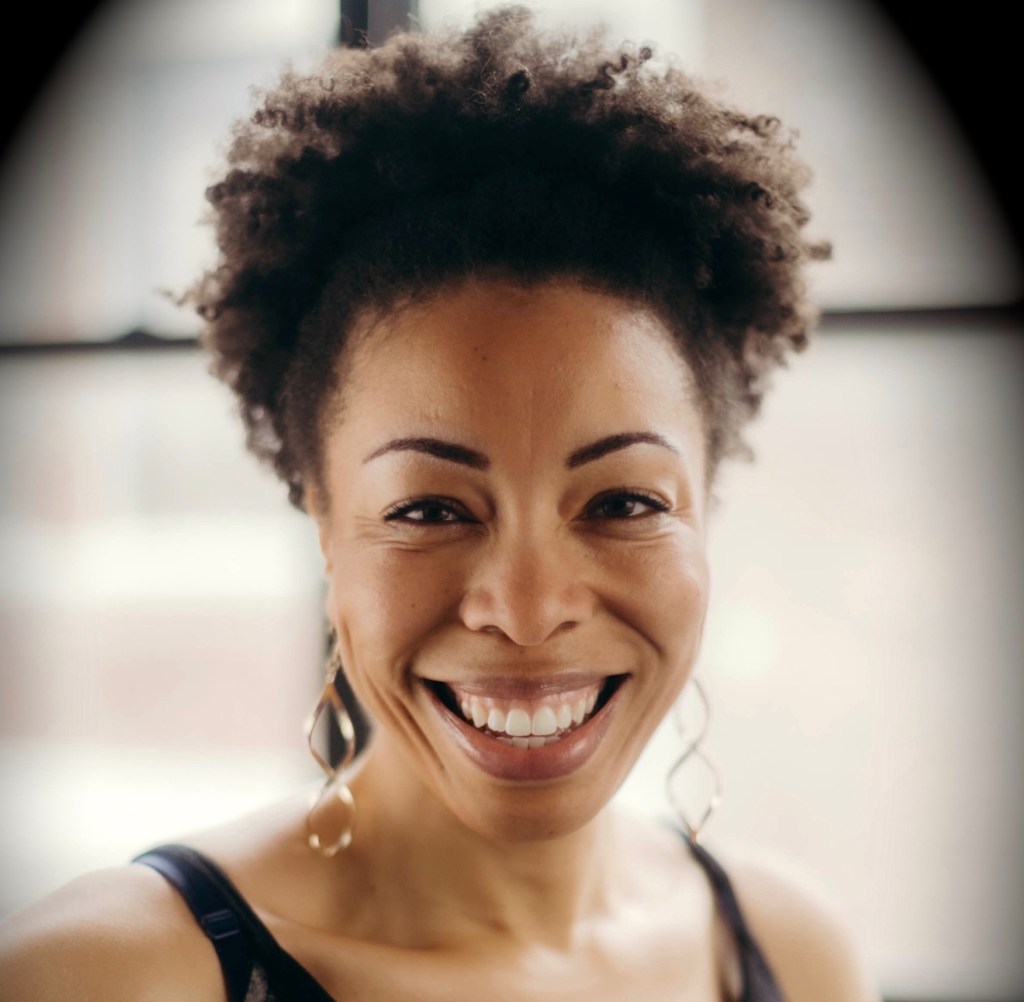
.CHISARAOKWU. (she/her) is an Igbo American transdisciplinary poet artist. Drawing inspiration from her Igbo heritage, quantum physics, indigenous healing practices, and the natural world, her poetry weaves archives, film, and collage to explore memory in the African diaspora. Published in literary and academic journals, .CHISARAOKWU. has received fellowships from the National Endowment for the Arts, Cave Canem, Vermont Studio Center and more. Learn more about her practice at www.chisaraokwu.com, and you can find her on instagram at naijabella.
 the Decolonial Passage