
The first thing Zain decided to do when he landed in New York City was walk.
He walked for blocks and blocks, breathing in air that throbbed in his skin, crawled into his lungs and choked him on the vast matrix of the city. He longed to touch the metal of the subway and see if it was as cold as it looked. He wanted to go to Brooklyn so he could come back to London and agree with his colleagues at the fin-tech start-up, that Bed-Stuy had become too gentrified.
He had never been to New York, and the journey thrilled him whilst his nerves also rattled like loose change. He sat on the plane at London Heathrow, looking outside, waiting for it to roar its monstrous engine, engulfing his ears and making him hold his breath, saying ‘Bismillah’ as it sped along the runway.
He wasn’t planning on seeing family in America, but his Amma had let it slip to relatives in New York that her son was coming, mainly for work.
‘Tell him that his cousin Jamal wants to invite him for dinner. He insists.’
Panic had risen in Zain. He was already anxious about landing at JFK airport, possibly being questioned about his Muslim surname. To make the journey and see Jamal all these years later, after what happened seemed too much. But he acquiesced for his mother’s sake.
It would be fourteen years since he’d seen his cousin on his Abba’s side. He remembered the remote, intense, forbidding presence in Jamal. The sky he kicked the football into was not the same as Zain’s sky. The shaved, zig-zag lines on the side of his head did not look the same as it did on other boys. It was cooler, sharper, more threatening. He often took two steps back when there was a crowd huddling in conversation at a gathering. Always slightly further out, aloof, never wanting for company. So when, aged fifteen, he upped and left with his parents to move to Queens in New York, everyone was surprised apart from Zain.
When Jamal started following him on Instagram two years back, he thought about removing him. But then he became curious, checking Jamal’s posts every now and then which were mainly of his two daughters and his wife, an Algerian American who wore hijabs in pastels. Sometimes he posted flowery pictures of his favourite hadiths. Only one picture showed Jamal. He had a short, crisp beard, and his big eyes and nose no longer stuck out the way they used to, but rather had smoothed into his face, soaking up the rest of his features.
Would Zain tell him everything about his life? About his boyfriend Tarun, who was half Jamaican and half Indian and cooked him a meal every evening? Then there was Ahmed, the lover they took into their bed twice a week, who ate breakfast with them wearing a silk robe, a gentlemanly version of the titans they had been in bed the night before.
Would it surprise Jamal to hear about these things? Maybe not.
As the plane took off, Zain mulled over those days they spent in their youth. Jamal grew up to be more of a man than him. That’s what he envied. Not because Zain loved other boys but because Jamal had a certain steeliness in his masculinity. He walked silently with a single cigarette behind his ear, big puffer jacket shielding his body as protection from the police carrying out stop and search on the tube. His trainers as white as snow, his gold chain, his talking about girls and pussy and teachers at school who were as dumb as fuck. Whereas Zain felt too soft, too yielding and vulnerable, always looking for approval everywhere he went. Sometimes, the fear of making eye contact with others became too strong in case they could see deep into his pain. But with Jamal, Zain couldn’t hide.
#
“You wanna kick a ball about?”
“Sure.”
It happened the day Jamal slept over when they would all be travelling to a family wedding together.
The grass was damp from the morning’s drizzle; Jamal kept consciously looking at his trainers whilst Zain looked at Jamal. Did he know? Did he know that Zain felt like he was about to blow himself up with secrets? He tried to tackle him and get the ball off him, but Jamal was too good.
“Pussy, come and get it.”
It hurt being called pussy. He tried to throw Jamal down, but he wasn’t strong enough and soon the stronger boy had him in a headlock, fists clenched, and knuckles fastening themselves like bolts under his jawline. He held him in so tight that Zain couldn’t breathe and started beating him in his stomach, his legs, his arms, fighting to be set free. But something shifted. Whether Jamal had released Zain out of pity or it was done out of mercy, Zain wasn’t sure, but tears were streaming down his face from feeling choked. He hit his aggressor square on the jaw, seeing the blood come out of his mouth with satisfaction.
“Good,” Jamal said. “Good, good.”
They sat together on the step, Jamal with a crumpled tissue on his lips to stop the blood flowing.
“I’m sorry man.”
Jamal lifted his palm up though he was looking straight ahead. They sat in silence for what felt like years. The most painful, raw silence Zain had ever felt in his life.
Later that evening, Amma told Zain that Jamal would have to share his bed. “It’s only for one night.”
His single bed could just about house both of their slender bodies. He could hear Jamal’s breathing, deep in sleep. Except Jamal wasn’t sleeping, and he wanted to move his hand along to see if he was as hard as he was.
Their bodies found each other under the covers. Jamal’s hands were delicate but brutal, murdering his body with tenderness. His mouth was warm and wet, cleansing the hurt out of every bone, every organ. When Zain woke up the following morning, his soul felt rearranged. All the objects in the bedroom from his comb to his school books felt charged with power.
But Jamal did not look at him at breakfast and during the wedding sat as far apart from him as he possibly could. The silvery shimmer in his eyes had turned to flint, and Zain knew that there would be no more football and no more sleepovers. It wouldn’t be long before he would hear from his Amma that Jamal’s family would be moving to America.
Ever since, Jamal would come to mind, less so over the years, but still with a jolt. He thought of him when seeing a group of men on the bus, victorious with fighting from the night before, or when he sat in a pub with a bunch of post-graduates, suffocating under the weight of their intellectualism, looking for a way out, into something real.
#
He closed his eyes as the plane landed and bounced along the runway.
At passport control he tensed up, but he was let through with apparent ease.
He grabbed his suitcase and exited the airport, the air feeling smooth in its warmth. He hailed a cab and upon sitting inside, took out the crumpled piece of paper with Jamal’s address on it.
“Where to, brother?” the cab driver asked. His name badge said Hafiz.
“I’m not sure,” Zain replied.
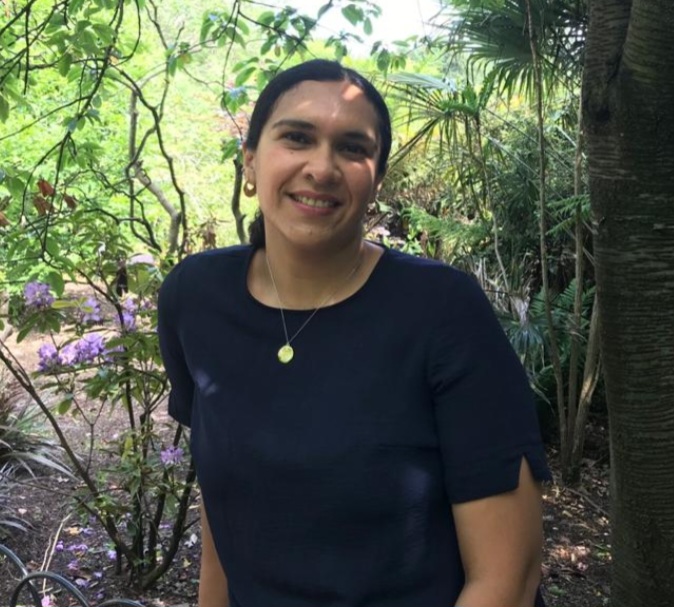
Sophia Khan is a writer, teacher, and graduate of King’s College London. Currently residing in the city where she completed her studies, she is a member of REWRITE London — a community organisation for writers that supports and champions Black Women and Women of Colour. She is presently on their mentoring program and has been published in their online magazine. Sophia is currently working on a collection of short stories set in the UK and in Bangladesh.
 the Decolonial Passage