
I remember a little kid who spent his summers at his grandparents’ house.

He stayed out most of the day, but he really liked their house. He was fascinated with the backyard, a backyard without fences or anything separating it from the path leading to the mountains. He used to take a walk to the mountains. He loved that.

He spent most of his days going around mountains, eating lots of blackberries. He drank water from the river. When it was late, he came back to play football with other kids on the street. They set up two stones as goalposts on either side of the street. He thought the games were fun.

At night, he sat on the small balcony that served as the entrance to the house. He read whatever books he had brought with him from the city. Having no TV in the house didn’t bother him at all. His grandmother sometimes complained that he was wasting too much electricity, but she let him read his books anyway.

Unless it was one of those nights.

On those nights, they had to turn off all the lights. Then, close the curtains tight. And get away from the windows. The kid knew that he shouldn’t make loud noises. He knew he should act as if he didn’t exist. They all acted as if the house didn’t exist. Or the neighborhood. Or the city. Or the entire people. They didn’t exist according to official reports, so they had to act accordingly. The kid knew it was time to make himself invisible, imperceptible, inaudible.

Then, the noise started. Guns screamed. Humans screamed. Animals screamed. The kid didn’t know which side the screaming guy was on. He learned that dying men scream alike. He was scared. He was embarrassed by his fear, but he couldn’t help it. He hid under the divan. He remembered when his grandfather said, “If you recite Al-Nas and Al-Falaq, you will be protected from anything.” He had already memorized them even though he didn’t understand Arabic.

The kid started murmuring with a Basmalah, “Qul auzu birabbin nas…” Then, “Qul auzu birabbil falaq…” He repeated all the verses in Arabic. Again. “Al-Nas,” “Al-Falaq.” He didn’t understand what he was saying, but he kept saying it. The noise went on. People screamed. The kid repeated Arabic words.

The noise died down. Just like other similar nights. The kid was fine.

He planned to go on with his day after sunrise. Unless there was curfew. Curfews could last for days. He read when this happened. He never had many books with him, so he read the same books again and again.

 The night the kid violated curfew, he wanted to watch the final game of Turkish Sports Writers Association Cup between two major İstanbul football teams: Galatasaray and Fenerbahçe. He walked a couple of minutes to his friend’s house, just down the street towards the feeble stream.

After the game, he wanted to go back home. His friend’s mother told him he should stay, but the kid thought it wasn’t a big deal. He left the house to go home. Then, he heard the noise created by lots of gunshots.

His mother and aunts told this story so many times that he isn’t sure if he remembers it or if he just recreated the whole thing based on what he was told. What he thinks he remembers is that he hid behind the stone wall, terrified, waiting for the shots to stop. They were most likely just warning shots. Then, a bright light emerged from an army vehicle. The kid put his hands up and slowly walked towards the vehicle. He vaguely recalls a couple of surprised soldiers. But who knows if he just made this up at some point? He barely remembers his aunt coming from the house. He remembers returning home. He doesn’t think he knew how to recite “Al-Nas” and “Al-Falaq” at the time; he must have learned that later.

When the kid played football in that street, another kid screamed, “Tank!” Then, they took the ball and the four stones that served as goalposts and ran. They returned after the tank passed. They put the stones back and continued playing. None of them were surprised. Tanks passed at least once a day.

If you ask me now, I’ll tell you the kid doesn’t exist anymore. I’ll tell you he became a grown man.

I won’t tell you that he still remembers how to recite “Al-Nas” and “Al-Falaq.”
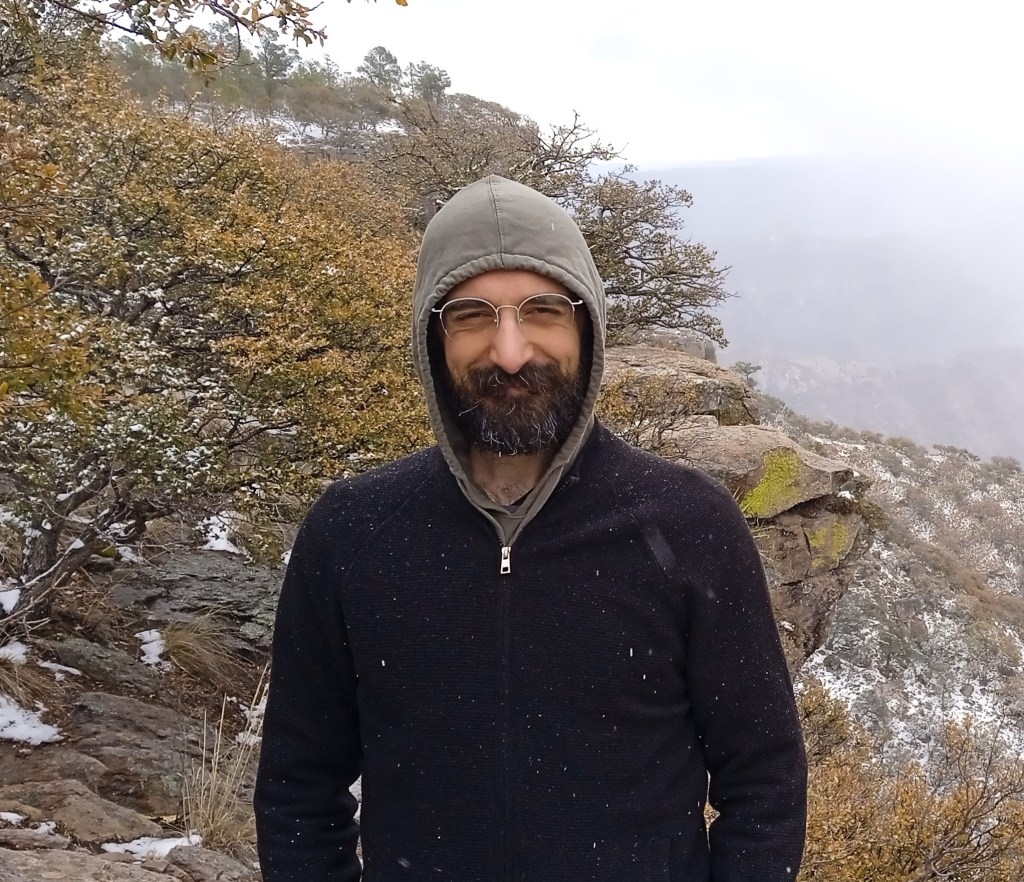

Serhat Tutkal is a Kurdish academic. He is currently a postdoctoral researcher funded by the Secretariat of Science, Humanities, Technology and Innovation (Secihti) in Mexico. He has a PhD from Universidad Nacional de Colombia (Bogotá) with a dissertation on the legitimation and delegitimation of Colombian state violence. He teaches courses on armed conflicts, dehumanization, racism, colonialism, and qualitative research methods. You can find him on Mastodon and Bluesky.

The first time I saw her, she stretched as far as the eye could see in every direction. I’ve never seen God, but I imagine it’s like taking in the ocean for the first time. The ocean was my home — the only home I ever knew. The ocean kept me alive and gave me hope for the future.  

A future where I could be with her for all eternity.

At eight years old, I came home to an empty house, overwhelmed, scared, and exhausted. I could only call my mom in case of emergencies. Unfortunately, fear was not an emergency. I pulled my blue beach bucket out from the closet and meticulously laid all my shells on the floor. I carefully placed each one on paper towels and sorted them according to how they made me feel. Now, I realize why the bucket was so special to me. It represented freedom. The freedom to cry, the freedom to be heard, the freedom to be seen, and the freedom to live judgment-free.  My life seemed full of struggle, even my early years reeked of trauma.

My childhood wasn’t the worst, nor was it a cakewalk. It was marked by abuse, emotional neglect, and abandonment. I grew up in a predominantly Black neighborhood and attended a private Catholic school where I was one of six Black children. I endured years of being made fun of for having “nappy” hair, being “ashy,” “too loud,” “too ghetto,” and “too fat.” When I went home, the neighborhood kids called me “White girl,” said I “talked White,” told me I tried to sound “too smart,” and teased me for wearing a uniform.

I look back on those times, and I’m grateful my mother didn’t keep a gun in the house. Kids can be cruel. I lived in a constant state of anxiety, fear, anger, and self-loathing. I remember longing for death in elementary school. Why am I here? What’s the point of living? No one wants me here. In those moments of desperation, I imagined the ocean’s waves crashing on the shore and beckoning me to reunite with her. The second my feet hit the sand, none of that mattered. The warm sand on the soles of my feet and the grainy beads between my toes instantly cheered me up.

I always bring books to read at the beach, but I never read them. You would think that after decades of going to the beach, I would have learned to leave my books at home. I haven’t. The beach awakened my inner child — the child who didn’t get to exist outside of the beach, the latch-key kid, the kid who had too much responsibility, the child whose dad left and whose mom emotionally departed around the same time, the kid who was misunderstood and bullied.  

She came alive at the beach.

My favorite beach gift was sand dollars. I kept them on top because they were fragile, and I loved them the most. The bumpy, slightly porous texture of the outside and the beautiful pentagon star-shaped holes in the middle made them priceless to me. I held each one. I relished feeling the cold, hard shells in my hand, tracing each groove with my fingers. I rubbed the textured ones against my cheek, closed my eyes, and imagined myself lying in the sand. I felt the waves pulling and pushing my body. I didn’t know it at the time, but it was these small moments of visualization that rescued me from darkness. 

No beach trip was complete without seashells. I came home with my bucket full and happily relived the day. The beach is one of the only places on Earth that bestows gifts freely. As a kid, I remember the shore being filled with shells of all sizes. Perfectly shaped, no cracks, no holes, for as far as the eye could see.

Now, the beach gifts have changed. There are no more sand dollars. I would have better luck finding an intact kidney than an unbroken conch shell. All the years of being polluted and pillaged have finally taken their toll on her. Despite this, she still provides food, life, and shelter for countless species, including us. I decided to stop taking shells and enjoy her beauty while I still can.

The cool air reignites my childlike innocence. The saltwater, dripping down my face, cleanses me of all emotions. The once-cold water now feels like the most heavenly bath. I never want to leave. I long to be a mermaid who can swim away from this life on land and be amongst those who accept me in the sea. The ones who love me no matter the color of my skin, regardless of my pants size, and despite my shoes. They embrace me. Submerged in the blue-green water, I feel the comfort of being in the cosmic womb and the unconditional love and scorn of a parent who disciplines me whenever the limits are pushed.  

Looking out into the distance, I feel humbled by the vast open ocean. Water to my left, water to my right. The powerful waves knock me down and lure me back for more. Now and then, I feel something brushing past me, a colorful fish or a sprig of seaweed. I’m delighted and fascinated, watching schools of fish swim so close. Bright blues and pale yellows dance in the water around my feet. The water is so clear, I can see through to the bottom. No lifeguard forces me to take a 15-minute break.  I happily float for what feels like hours on my back.  The heat from the bright white sun beams down on my skin. I feel like the happiest Thanksgiving turkey.

The ocean saved my life on numerous occasions…I wonder if she knows.

Does she know that other than my daughter, she was the only one who stopped me from hurling myself off a cliff in 2023? When I lost everything within a couple of months. When I discovered the love of my life lied about our entire relationship. Resented my daughter and me. Lured me to Durham under false pretenses. Strung me along with talk of marriage. Lied about me like a dog, painted me out to be a narcissist, posted my intimate photos and videos on websites for all to see, and created fake profiles using my information to spite me. Does she know that the grief almost broke me? That the embarrassment destroyed me? I lost all trust in people. 

Can she sense that it was only memories of being with her that comforted me? The solace of feeling her warm embrace enveloping my body. I closed my eyes and imagined I was there, with her…in her, and for a moment, thoughts of her gave me respite from the torment. Focusing on her relieved me from intrusive thoughts. The times when doors were broken, laundry baskets thrown, and threats made. When I ignored red flags and inflated green ones.

It was only the smell of salt and seaweed carried by the breeze on a humid day that eased my pain. 


Lauren McNeil is thrilled to make her literary debut on Decolonial Passage and grateful for the opportunity to share her voice. Before this publication, you could find her writing in random notebooks, on scraps of paper, or on the Notes app on her phone. A former nurse turned budding creative, she eagerly seeks out opportunities to share her unique perspective. She is a beacon of light in dark places and hopes to inspire future generations. You can find her on Substack and on YouTube.

My momma, who woke up before the roosters crowed and before the early birds tickled worms from the earth, was always the last person ready. As I walked by her room before gracing my spot on the couch for the morning wait, she had on her robe and was just setting the temperature of her curling irons. The third time I checked, she was scrutinizing two almost identical necklaces. Holding one to her chest in front of the mirror, then shaking her beautiful black curls to and fro as she reached across the basin for the other. 

I remember bouncing on the edge of the couch, Bible gripped tightly, as Bobby Jones’ gospel played in the background. Pink peacoat layered on top of a pastel-colored dress, ruffled matching socks, gloves, and polished shoes. Momma assured us that rather than vain pageantry, our attire was symbolism of our adoration for the Lord. When she said this, I imagined angels seated like a panel holding large boxing-style score cards in their wings and watching each of us as we entered the sanctuary. Their task: to rank our attire in order of holiness. As I pondered their nodding in approval or blushing in disdain, I spun my head from the clock to the television so quickly it appeared the hands stood still. Nonetheless, we would be late to church once again.

Throughout the washing of dishes, and syruping all of our pancakes, and ensuring each hair on all four of our heads was in place, she licked her thumb. Swiping a lingering crumb from Leilon’s face, she was finally ready. En route, I begged to crack a window as our dusty van seemed oversaturated with my anxiety and momma’s bitter perfume. The ride usually took about eighteen minutes allowing either for a nap or several minutes of my wishing my mother were a more aggressive driver. She drove as if we were floating on clouds, cranking up The Clark Sisters’ Living in Vain as we coasted. My stomach could have easily competed with the world’s best on beam — tossing and turning in and out of knots. Fifteen minutes late and probably missing all of praise and worship, I struggled to place each foot in front of the other while entering the double doors to the church. Not a single thing would be different on the program; yet I scanned its contents, feeling as though I heard an ominous “tisk” and vowing to make up what we had missed later at home. Momma said God was our everything – a healer and a way maker. And we should be grateful for all He’d done for us — life, groceries, and clothes. But we were always late.

It never made sense to my tween brain. How could she love God so much, dedicate an entire day to honoring Him, but show up late every time? How could she be so rude?  How would God know we took him seriously as we slumped into the last pew of the sanctuary? During my Saturday night scarries — what I called my anxiety-filled dreams on Saturday nights –each church member would turn around in unison, heads shaking in disgust, as we dragged in like stale bread. How many points off would we receive on the scales of good and evil? How would God know I truly cared if we missed half the sermon or praise and worship? As I pondered God’s love evaluation system, questions bounced around in my dome like pickle balls at a senior center. I soon realized I’d left my eyes open, and my head was up instead of bowed during the benediction. How would I ever make it to heaven?


Jasmine Harris is a multi-genre writer and educational specialist featured in the Hidden Sussex Anthology, Prometheus Dreaming, Syndrome Magazine, and several others. She most recently served as the 2023 Arts and Science Center of Southeast Arkansas Arts in Education Artist in Residence.  Harris focuses her writing on celebrating Black culture and community, intersectional identities, and the evaluation of popular culture. She frequently quotes her inspirations as Maya Angelou, Ntozake Shange, and Tupac Shakur. Stay updated with her work and projects through her website https://jasminemharris.weebly.com or on instagram at dr_harris.