The house on Tennessee Avenue,
like that one up on Beulah,
was gone in less than 30 minutes,
even though it had weathered
every storm in Chattanooga
for at least one hundred years.
The frame resisted the heat,
outliving the rooms that lay
charred and smoldering inside.
Green moss ignores
the No Trespassing sign, repainting the siding,
and the trees continue to deposit leaves into the awning,
no hands in autumn to remove them now.
A maple tree still guards and shades the house,
even with some limbs missing
from the fire that disabled it
the first time this house burned.
buds bursting defiantly through what remains,
lush leaves growing, growing.
A sign says Condemned,
but memories are still dwelling there–
the stench from a white hood
and sheet robe, once a dingy white, now
burned black
in the bottom of the Tennessee family’s cedar chest.
A sign says Do Not Enter
yet it does not stop the ancient spirits,
whispered intentions to burn crosses and men
as religious sport-
plans drifting up and down
the splintered staircase on sun rays
filtering through the missing roof.
Add it to another chapter of darkness
and retribution perhaps? in Chattanooga
Add it to the history of the neighborhood
Underneath the shadow of Lookout Mountain,
named
St. Elmo.
And Bobby’s Barbershop Didn’t Make It
Bobby’s Barbershop chairs are lined up
in the junkyard.
It is their cemetery, and this is
their gravesite.
At certain times at night, you can catch
a glimpse of chairs revolving,
as if Bobby and the other barbers are standing behind them,
discussing The Man with invisible clients, asking
If Covid was a conspiracy to take away
all they had,
all they were.
Dreams are in this junkyard–
The American Dream, A Dream Deferred, all
of what Bobby once believed would create
happiness, would take him on a vision journey
to that road not taken,
the road he took…
and now it’s come to this.
The tickets out of wherever that pit
the dreamers tried to escape from,
are now torn and scattered all over,
tornadoes cannot even lift and take
Over the rainbow.
Ticketed dreams lie in their own graveyard,
fading and indiscernible
under overcast skies.
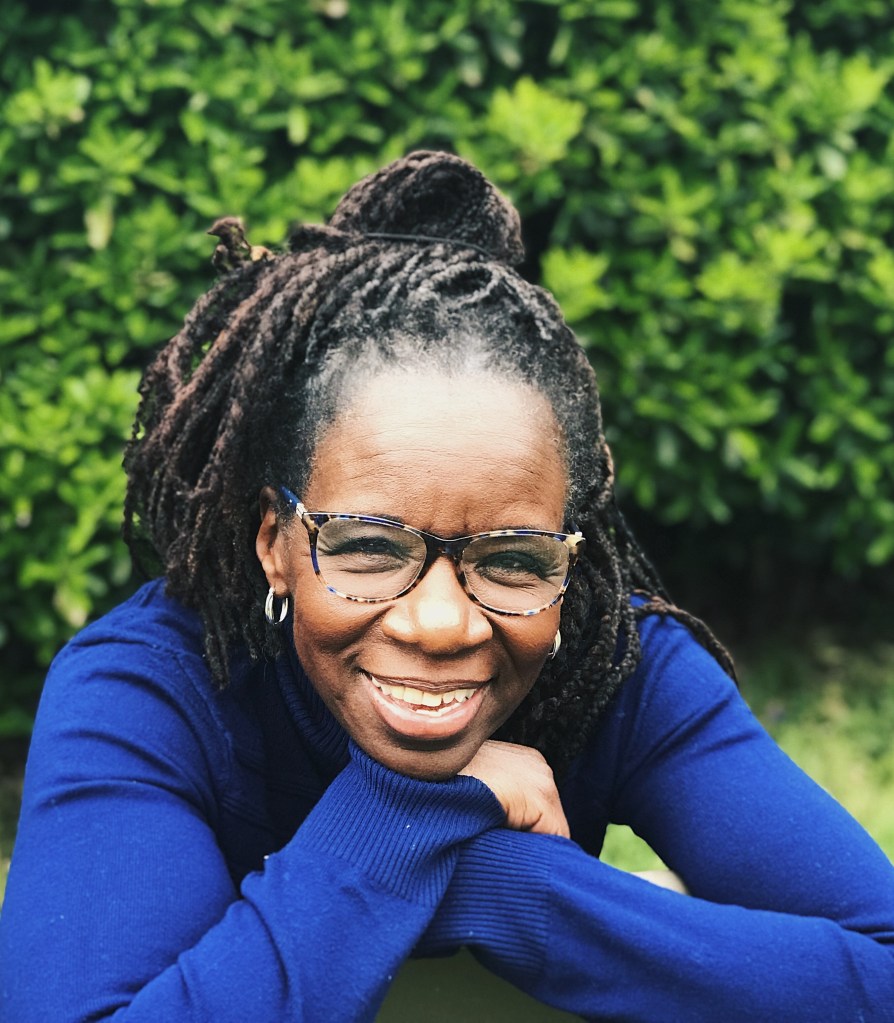
Cynthia Robinson Young is the author of the chapbooks Reflections of a Feral Mother (2024) and Migration (2018). The latter was named Finalist in the 2019 Georgia Author of the Year Awards. Her work has appeared in journals and magazines including The Amistad, Rigorous, Poetry South, The Writer’s Chronicle, and in the anthology, Dreams for a Broken World (Essential Dreams Press, 2022). A native of Newark, New Jersey, she lives in Chattanooga, Tennessee. Cynthia is currently working on a novel. You can find her at cynthiarobinsonyoung.com and on Facebook.
 the Decolonial Passage