
My land
My hope
The embodiment and foundation of my future
The integral and most natural wealth of my past
The only thing left of the confident desire I had to nurture
The upholding of relations so vast
The only remnant of existence found in the tall trees that have grown behind my grandfather’s grave
Sheltered by his power and his generosity and the obvious benevolence he gave
But every great man makes a mistake
And if only we weren’t centuries apart I would have sat with pure wisdom and discussed the profound generation we were trying to make
Forget the interference of the evil earth as it swallowed his voice; his blood still runs through my veins
And his knowledge through my brain
Don’t disremember that the tributes in his biography weren’t in vain
But shiver at the similarity in our names
And the inquisitive lass this granddaughter became
Or the legacy in his pictures that have been framed
I talk about my land
Not the red mud that encompasses the main roads in Anambra
Or the big Anglican church in Oba
Or the streets surrounding Isu
Or the local government settling pending issues
I talk about my soil
My story begins at the sight of the wall
Built from the heavy bags of cement my great-grandmother lifted before her fall
My story begins at the roots of the orange tree, my orange tree that gives fruit and shade
And in the hope that the trees at my backyard are filled with ripe plantain
And at the sound of the banana leaves whose flutterings sound like rain
And the complaint of dried leaves of the boldness of the wind to disturb them from where they had been lain
My story begins as I stand before the three-story building I am forced to face
My story begins at the dark ceramic tiles shielding grandfather’s resting place
My foundation was derived from the secrets I haven’t been told
And the hidden tales that I’m sure will unfold
And the noiseless breeze that whispers deep gossip in my ears as it passes by
And the curiosity that questions the hardness of my soil and wonders how it became dry
My soil is angry
Not because of the interlocking that has mocked its originality
Or in the lack of culture when observing a traditional formality
Or in the sweet tongues of this generation that have gone numb to the nectar of the palm fruit
Or in the audacity of my kinsmen that claim to be from Akalaka’s roots
I know not what my soil is angry about; but it is my soil and I should know better
But how can I when I am oblivious to the past agreements and hidden letters?
Who angered my soil?
Be it a king or a peasant, you shall appease my soil
For even your lifetime isn’t time enough to build courage for the disrespect of my father’s toil
Who angered my soil?
Be it an indigene or an outcast, you shall appease my soil
For the beads of sweat that drip from your head will feed my soil with oil
I Love You
In English, we say I love you
But in Igbo we say, Afulu m gi na Anya
Literally translated to I will always see you
I will see you when the crowd is choking and I can barely breathe
I will see you even if my eyes are gorged out by those envious of our love
I will see you beyond your bare breasts and bead covered waists
I will see you in the deepest depths of the night
I see you, I will always see you
I see you so much that I see nothing else
Afulu m gi na anya
I see you my love, I love you
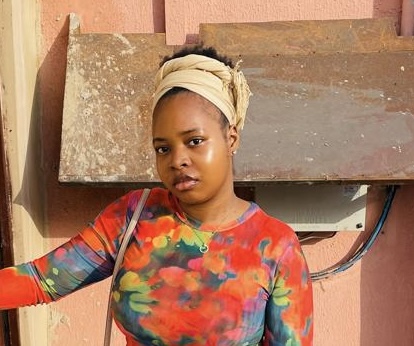
Angel Obi is a Nigerian writer, medical student, and cultural explorer whose work spans poetry, personal reflection, and intergenerational storytelling. Her writing delves into land, identity, heritage, and the intersections of tradition and modern life. Published in Decolonial Passage, Angel seeks to illuminate diverse perspectives and lived experiences through language, memory, and imaginative narrative.
 the Decolonial Passage