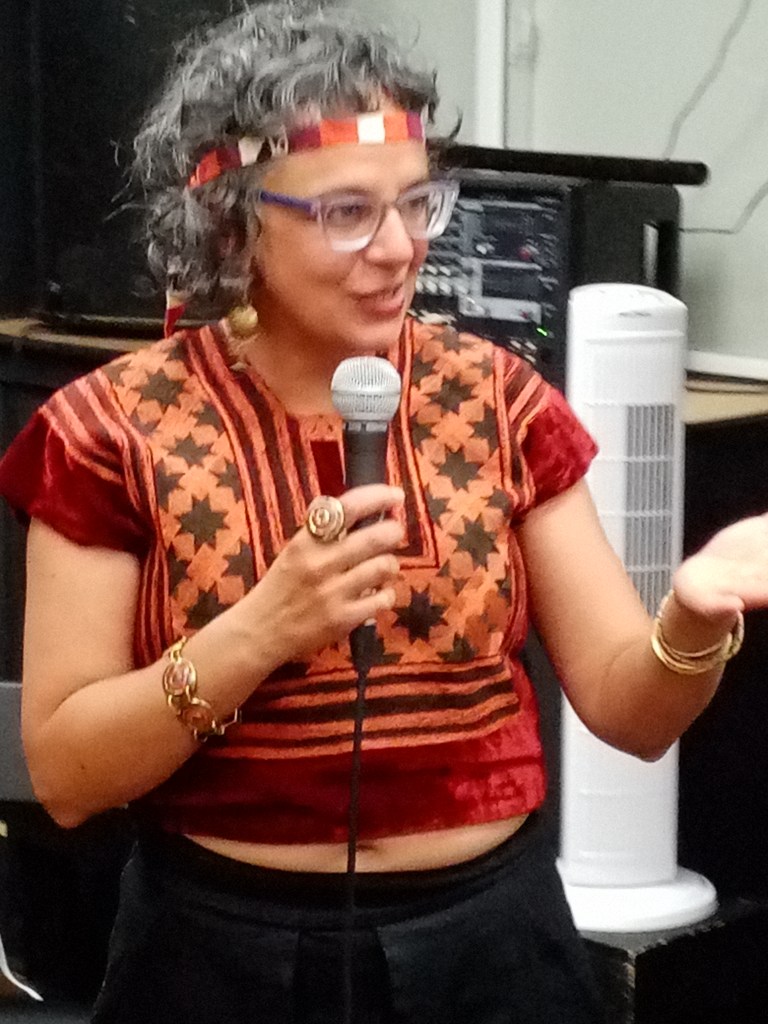
“and neither of them ever/

said what they meant/

and i guess nobody ever does”

  • Nikki Giovanni

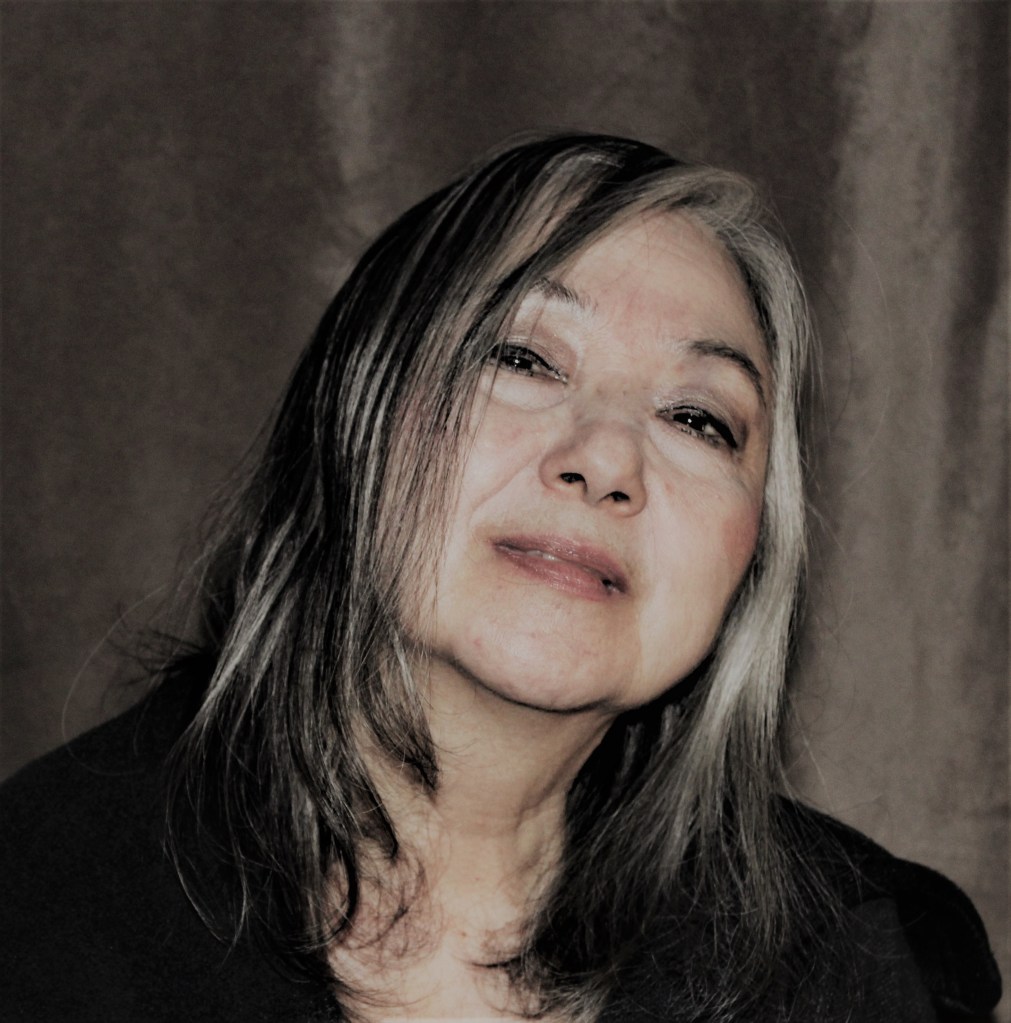
“Sometimes you gotta’ take a stand. You can’t let people do what they do—you don’t have any representation anywhere. Don’t nobody in Baton Rouge give a flip about you…If you don’t take a stand, that means that you are giving consent for people to do what they do.”

  • Samuel E. Mims


12/15/2024 – 11:00 PM

To Samuel Earl Mims, my Paw Paw:

I don’t know if people are conscious of their last moments when they go; I will always remember yours. You were lying next to my father, watching the Packers trounce the Seahawks. The hospice nurse had just informed you—precisely and clinically—that you had very little time left. But while we were all reckoning with disbelief, you seemed devoid of panic; you chose to spend the rest of your life with your son and your wife and all the other people who mattered to you the most. You were always decisive that way. I got to call you briefly before you went quiet for the last time. I used that brief window of time to tell you all the things that I should have said to you when you weren’t standing in such intimate proximity to death.


I know now, after the fact, that I should have called you more, but calling you, every time, meant confronting the fact that you were leaving. The evidence of that passing showed itself in the thinning of your bones and the weariness behind your steps. Death loomed over you in such a way that I could not help but avert my gaze, to look anywhere and at anything other than reality; but in those short moments of courage in which I was able to confront death (and therefore see you),  I noticed a brilliant irony: you were stronger than ever. Even with your hollowed-out muscles and wobbling limbs, you beat death back from you with such intensity and determination. You were the immovable object standing in the way of the unstoppable force that comes, eventually, for us all.


Last summer, another white nurse in a white lab coat told us that you would not make it through the fall, and yet here you were, on the phone with me, still fighting, in the middle of December. I recognize now that you were the type of Black man who lived his entire life defying the condemnations and expectations of white people; it only made sense that your death would be a similar demonstration of that old John Henryism. Still, regret seized my heart and mind; it occurred to me, as I was confessing to you the things that needed to be said between us, that we Black men have nurtured a counter-intuitive, and perhaps violent, tradition.

 
Why is it that we only share the most necessary words when we are hanging so perilously close to a precipice? It also occurred to me that, because you couldn’t reply in your condition, this might be the only conversation we ever have where I get the last word. It may be the only conversation you’ve ever had where someone else procured the last word. And then you slipped; that’s the best way I can articulate it. One moment you were here moaning and groaning, caught in that invisible struggle against time, and then you were gone; silence and death rushed in to fill you up—all the spaces that had, only moments ago, been saturated with love, wisdom, and strength. And as your body emptied itself of you, I felt something dense, firm, and perfectly unnamable fill my own. I suspect that I may spend my entire life trying to define this sense of transference, but in trying to define this new weight, I have been forced to reflect on your life and, therefore, my own.


You were raised in Louisiana; I was raised in Georgia. From a young age, we both witnessed what is undoubtedly a genocide ferociously nipping at the heels of Black children. The great orators of the Sorrow Songs, folks like Bessie Smith and Billie Holiday, and Nina Simone, gave form to the reality of this genocide in their songs and wailings. Every American has seen, in all its horrible glory, the strange fruit—the bleeding, broken body of a Black child taken too early. And with each bloody rendition of this American archetype, that festering rot that we call injustice grows ever more pervasive, embittering the air all around us.

 
Everyone can see the fruit, but few are cognizant of the roots, the seeds, or even the stems of the issue. The branches of the massacre tree run its fingers through the prisons, where 1.1 million men who look like us remain enslaved under a caveat of the 13th Amendment, and through White America’s obsession with guns, the same ones that fire disproportionately through the streets of Atlanta, Chicago, and Shreveport. A long and verdant field of white supremacy nurtures these violent realities, maintained only by the phenomena described so eloquently by Ralph Ellison. The modern American has rendered himself selectively mute, blind, and deaf to his history; he refuses to see that he has constructed his democracy atop the bones of an entire people!

Still, the roots of the problem, the source of that willful disability, undoubtedly begin in the classroom. You know as well as I do that Fred Hampton does not exist in Southern history books, and Angela Davis’s testimonies have similarly been obliterated from the curriculum. The classrooms of Georgia Public Schools consistently fail to mention the lives of Baldwin, Cleaver, and Giovanni.

The only images of Black excellence my classmates and I received were the vague silhouette of Martin Luther King Jr., intentionally watered down, and perhaps a (hyperbolically propagandized) caricature of X. I did not discover those other heroes until I went to college; instead, every February, for seventeen long years, we were told that we descended from slaves and that King was the sole Black participant in American history—an eloquent accident of the white man’s burden. Anyone could see how a student who was told that he emerged from a culture without value would struggle to even dream of self-esteem under these conditions. To make matters worse, the reality taught in the classrooms, of Black people in bondage, is corroborated by the news networks in the homes; thus, many of my friends and associates viewed the prisons as an inevitable destination on the horizon. This is the deathly pedagogy that instructs its darker-hued students to march dutifully, unquestionably towards death.


I grew up under this system, but I did not struggle, like so many do, to develop a sense of self-worth. I’ve never imagined myself in chains, and I have, for the most part, always assumed that some relative success would come my way. And I managed this without Baldwin or Giovanni or Du Bois; I managed to construct a dream for myself out of nothing. But what I now realize is that the only reason I was able to escape the mental trap of the not-so-far-from-Jim-Crow South is that I had the privilege of watching you do it first. In a state known for having the highest incarceration rate for Black men, you went to college. Not only that, but you did it only ten years after the country began to, legally, move towards integration.

You went on to join the US Military in 1969, where you served in Germany and Korea and attained the rank of colonel, after finishing your bachelor’s degree, and you only allowed yourself the relief of retirement after thirty long years of commendable service. That was in ‘99, two years after I emerged into this world. By then, you’d shifted your focus to activism. You’ve facilitated peaceful protests between the Minden Police Department and local citizens. Later, you went on to adorn the uniform yourself as a school resource officer, hoping to intervene in the lives of young people before they were swallowed up in our world of narratives.

As a leader in the Concerned Citizens Campaign, you helped advocate for the safe disposal and removal of fifteen million pounds of explosives at Camp Minden and the prevention of “open burn”, ultimately preserving the environment of the area to this day. But I think the work that you were most proud of was that which you did as a religious leader. After spending eleven years serving as a minister at Galilee Ministry Baptist Church, you built your own church, the Shepherd’s Hut, which has donated thousands of dollars to local public schools throughout Webster Parish.

I have realized, growing up, that to many members of our community, you are some strange amalgamation of folklore hero and legend, but to me, you’ve always just been my grandfather. That is not to say that I did not realize that you were a great man. On the contrary, you always made exceptionalism and greatness seem so natural; it emanated from you in such a way that success seemed as inexorable, for you, as the tide’s coming and going. Now that you have passed, I can admit to myself that there have been times when I have wondered if I could ever live up to the standard you set before me. I now realize that your example was never meant to be a shadow from which I should emerge; rather, your legacy has served as a shield, protecting me from the fate that has overcome so many of my friends and associates, the children of the world who wear skin painted so much like my own. In a time and place carefully constructed to ensure your failure, you have managed to navigate the world with integrity. And so, once again, even though I did not stumble upon the Harlem Renaissance or the Black Arts Movement or the Black Power concept until many later years, I never had to wonder what type of man or person I wanted to be in this world. I always had you to model that for me. Your example has unhindered me from many of the challenges that I could have all too easily faced. 


Last year, when this all began, before you were diagnosed, but after the pain started to needle at your heart, we snuck out of the house while my grandmother was busy, loaded ourselves into your pickup truck, and absconded with some meat pies from the local gas station. GG had just put you on what you called a “vegan diet,” —which was really just a diet with slightly less salt, and you asked me to help you cheat the warden. After we had our pies, you wiped the grease off your stained overalls and said to me, “You watch a baby grow up into a man and then a man regress right into a baby.” It occurred to me then that you’d impossibly waged war against Jim Crow for your entire life to maintain your dignity, and you feared that death would rob you of it. As I said before, I don’t know if people are conscious of their final moments, but I can assure you that you left this world with the same grace and dignity with which you lived. And for me, a child who has grown up as a grim spectator to the slaughters of Trayvon Martin, Freddie Gray, and so many others, I cannot tell you enough how much I needed you to show me that it is possible to live beyond the terms set forth by the historical record. You spent twenty-seven years teaching me how to live in this world with integrity; you have now shown me, like a gilded north star, how to die with it intact. Throughout this week, I have felt your passing in waves of terrible anaphora; the grief truly comes and goes. But one thing that has stayed with me all my life is pride in being your grandson.

I want you to know, wherever you are now, I will not allow time to end your sermons. Your words will continue on through my voice and actions, and in every single word I write from this point forward. My father, uncle, sister, and I carry your initials; this Christmas, you gifted us each with the weight of your legacy.

Rest easy, Paw Paw. We will carry it from here.

–Your Grandson,


Stone Erickson Mims
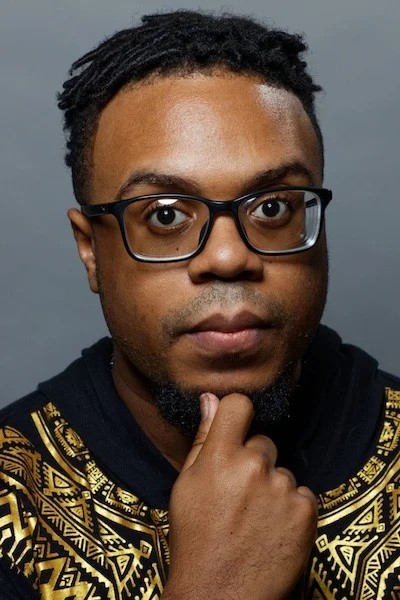

Stone Mims is a writer and educator based in Northern Michigan. His work, both in the classroom and on the page, examines the complexities of Black life. He holds an MFA in Creative Writing from The New School and a BA from Bard College. Mims has been a writer-in-residence at Château d’Orquevaux and attended the Kenyon Review Writers Workshop. His memoir-in-essays, Just Another Native Son, was a category winner in the 2025 Memoir Prize for Books from Memoir Magazine. His writing has appeared in Politics/Letters Live and Ignatian Literary Magazine. He is currently represented by Midnight Literary Agency. You can find him on Instagram.

I teach​ poetry to my students at university.


            I tell them all about

                        Eliot’s objective correlative

                        Keats’s negative capability

                        Coleridge’s organic unity


            I make sure they understand

                        rhyme, rhythm, prosody

                        alliteration, allusion, apostrophe

                        metonymy, metaphor, synecdoche

                        imagery, symbolism, hyperbole

                        enjambment, anaphora, blah blah blah


            I teach them 

                        all that I’ve been taught

                        by my poetry professors

            and they seem happy!

I teach​ poetry to my students
but      

what I don’t teach them is that


none of this stuff makes great poets
or real poetry!


that to become a poet

you need to have had your home
            stolen from you

            your dreams confiscated,

            your hopes held hostage


you need to have heard

            the cacophony of the Merkava

            the bellowing of the bulldozer

to have appreciated the irony
            when your ancestral olive trees
            became charcoal
you need to have heard

            the onomatopoeia

                        in the roar of the rocket
                        in the bomb’s boom
                        to have spotted the alliteration in

                        “we will waste you in the womb!”


To write poetry
you need to have seen
            your brother blown to pieces

you need to have spotted
            your sister’s curly hair
            under a mountain of rubble
            to have removed her teddy bear
            from her loosening embrace

            to have wiped blood clots
            off her face


you need to have seen
            tearless mothers
            identifying their sons

            one after another
            in mass graves

            fathers

            rocking their pale princesses to sleep

                        fast, sound, deep!

you need to have known

            what it feels like

            to write your name
            on your small limbs

            so they may identify you

            when you become unidentifiable
you need to have learned

            how to swallow
            the sight of your best friend’s
            charred body
            to get used to the word “gone”

                           one
                                       by
                                                one.


To be a poet
you need to have seen this
            known this
                        felt this
with every cell in your body
and that is ​why
                         Palestine

has so many great poets.


Forgive me, my students!

I have lied
                and lied
                             and I am ashamed of myself.


Hossein Nazari is an Assistant Professor of English literature, a translator, and poet. He writes poetry in English and Persian and has translated poems between the two languages. His academic articles on English literature, including on such poets as W. B. Yeats, Czesław Miłosz, Robert Frost, John Milton, T. S. Eliot, and Sylvia Plath have appeared in many prestigious international journals. Hossein’s poetry explores the themes of displacement, exile, loss, home(lessness), memory, identity, and nostalgia.

One

Ai, Eraldo, I think people have always made me a slave, in one way or another. After so many years, how many?, I don’t remember…, Dona R. arrived at the puteiro and asked your aunt: Where is Nilva?

That was in 1971, I believe. Dona R. is still alive, you should go to Teófilo Otoni to ask her this before she dies. Your grandmother worked for her. She did the ironing, cleaned the house, that sort of thing. Your aunts and I worked in her house since we were small children. I worked for her until I disappeared and also when I appeared again, before your grandmother sent me to Rio. Dona R. went to the whorehouse, the whorehouse was full of men, she got your aunt out of there and made her tell where I was. That’s all I know. Your aunt had come back to town very recently. A gentleman saw your aunt in the whorehouse area and told Dona R. They went there with the police, but the police had to stay outside.

I think the house and the farm were near Feira de Santana, but I could be wrong. Back then, my hair was very, very long, but as they didn’t want to take care of it, they cut it short like yours. I couldn’t comb my own hair alone either. I was very small. I could only see the town when they took me to the farm in their car during the holidays.

I don’t know what they produced on the farm. It was a very small farm. I looked after the children in the family. They were four or five, I guess. Me? I was probably a bit older. They were already walking, and how they were walking…! All the time. And I had to go after them. Two children, that’s it. Every night they would take a piece of an old mattress and put it in that little corner of the room for me to sleep on it. There was only room for my feet if I shrank down, and I didn’t have a pillow.

I don’t remember what they all looked like. Up until I was 20 or 21, I could remember their faces perfectly. Today I only see shadows. No, I don’t remember their names. Everything disappeared from my mind. But if I close my eyes now, I can see your aunt’s face perfectly.

Two

A police car was there when we returned from the farm. The policeman was kind to me. He asked: Is your name Nilva? I said yes. I don’t think I was afraid. He said: I need you to tell me if you know some people. Then he went to the car, and your aunt got out of one of the back doors.

No, I don’t remember realizing that Brazil was going through a dictatorship. I know because you have told me and because since Dilma was elected, they’ve been talking about it on TV all the time, haven’t they? The dictatorship started the year I disappeared, is that it? Ai, I only started learning all these things when I became a dumb old woman…

I think I disappeared in 1968. I think I spent three years in Bahia, but your Aunt Nires said it was much, much longer. Seven, she says… I don’t know now. Could it really have been that long? Who knows…

It was because the policeman arrived with your aunt that I tried to run away. I remember trying to run across the street. I shouted, It was her! I tried to get away from her. The policeman immediately grabbed my arm. It hurt. He said I shouldn’t be afraid. Maybe it wasn’t a policeman, but someone from the Juvenile Court?

Your grandmother got out of the police car, she was there too. I thought I’d never see her again. That she had forgotten me. I didn’t even know where I was.

That was how I reappeared.

Three

It was a normal, white, lace dress that your grandmother used to make me wear on Sundays. The dress had disappeared, but when your grandmother decided to sell the house, your Aunt Nires found it in a box and threw it away. You know your aunt. She said the dress was grimy.

What she told me was that when I disappeared, your grandmother put a nail in one of the living room walls and hung that dress on it. She only took the dress off the nail when I reappeared. Maybe some kind of simpatia? It was just an old dress, and you love keeping old things. I can’t wait to get rid of all those papers in your room to make room for the books in the boxes. The albums must be there. By the end of the month I want to clean the house, this house is filthy.

She left at dawn that day and went to the street market to buy food with Mom. She came back and left at about 11, 11 o’clock, and told your Aunt Nires to let her take me to your grandmother to buy a pair of shoes. Mom’s orders, Nires wouldn’t say no. Then she took me to a place where there were only truck drivers. And we traveled from Teófilo Otoni to Bahia by truck.

I don’t know if she gave me to them, if she sold me to them… Perhaps “selling” is too strong a word… I don’t think anyone knows, will ever know what really happened. Your Aunt Nires doesn’t think she sold me… Whenever we passed a highway police station, she would gently lower my head so that the police wouldn’t see me. I didn’t think anything unusual was going on. I trusted her. I was used to going out with your three older aunts, I just couldn’t go out alone.

No, it wasn’t your aunt who drove the truck… It was a truck driver. Your aunt didn’t even know how to drive. Today, I think they did get some money in exchange for me… That’s at least what I think…

We arrived at a big house. Your aunt and the truck driver went in and talked to the couple who lived there. When the conversation ended, she said, Nilva, I’ll be right back. Then the couple took me to a room with a little mattress in the corner. A mattress from a child’s crib.

Then the next day, when I woke up, they said: Your sister’s gone and she’s not coming back. And I’m going to stay here? Then they said: Yes.

The bad thing was that it wasn’t just looking after the children. They put me in charge of waxing the whole house, too. Especially a large room where they kept things like old furniture. This room was also used as a garage. I used to clean all the house on my knees. That’s why, when your grandmother found me, my knees were so bruised, dark, to the bone. I never understood why they always asked me to wax everything all the time. I would put the wax on the floor, and the Black maid would wax it. The waxer was too big for me.

I liked it when they took me to the farm. I was freer there. I could eat fruits off the tree. The cooks treated me very well there. They were Black, too. Breakfast had cheese, bread, and cornbread. They would ask: Do you like this? If I said yes, they would always prepare it for me. Lunch was much better too, with chicken, pork, beef… Everything was very tasty. Maybe because they felt sorry for me… The other house also had a maid, but she was much more reserved.

I never understood why your aunt didn’t come back to pick me up from there…

Your aunt told the police that we had traveled there by bus. But when the policeman, I’ll never forget his nice suit, talked to me alone in a room, I said no that we had traveled by truck. He asked me, Do you remember the truck driver’s name? I said no… The truck driver had vanished, never to appear again.

Four

It’s been so long since I’ve seen these photos! Your Aunt Neuza, yes. She seems happy in these photos, right? I don’t know who the rest of these people are, they’re all whores. The bichinha loved to drink… That man must be the pimp, those are perhaps the clients. I think she preferred whoring because it was less work than being a maid cleaning a madam’s house. Or she really liked it? I don’t know. She loved drinking with these people. Your grandmother never said anything about it. She lived with us, for sure. Once she stopped drinking, she would suddenly start shaking a lot, looking sad. Then your grandmother would shout: Nilva, Tico, go and buy your sister a shot of cachaça at the little store! I would bring the glass from home. I carried the glass very carefully so as not to spill it.

She wouldn’t let me get close to my boyfriends. She threatened to kill all of them. She said to Dica once: If I see you together again, my knife will find you!.. When I came back from Bahia, I only slept in her bed, afraid that your other aunt would kidnap me again, at night. I loved running my fingers through her hair before sleeping…

Once she put alcohol on her own body and set it on fire. I think it was because she fell in love with a man who cheated on her. She spent a long time in hospital… Several parts of her body became wrinkled after that. She was very, very beautiful…

Once she was in the city center and got into a fight with a woman. She stabbed the woman several times. No, I don’t think the woman died… Neuza went home calmly. She hid the knife behind our big, old radio and went to sleep. Then the police arrived in the morning. Does Neuza live here? Yes. Can we talk to her? Yes. Then your grandmother woke her up. Did you stab so-and-so? Yes. And where’s the crime weapon? Oh, just a moment. She gave the policeman the knife, full of blood. She was locked up for a long time…

She died of that m-disease that I don’t like to say the name of.

Five

Imagine, if you’re the grandson of a German or a Swiss! Your grandmother was very beautiful. Black but with big blue eyes, you can imagine. And she spoke German. I think she worked for some German family? Remember when she spoke German to you? She was illiterate but spoke German! Crazy.

I don’t know who my father really was. All your aunts and uncles don’t have their father’s name on their birth certificates. Neither do I. I think each of us has a different father… You must meet Dona D., too, before she dies. It was her niece who bought your grandmother’s house ten years ago. She loves a good gossip! She knows everything but only plays jokes. One day she said to me: You have the same mark over your eye as your father. Could it be that my father, or your grandfather, is still alive?

Your grandmother always said that my father was J.L. He always hated me. He never lived in the same house as we did. He lived with another woman. I was good friends with his sons. I don’t know why they put it into our heads that we had to call him dad. Maybe he was Neuza’s father. Maybe also the father of that aunt of yours who stole me from your grandmother. I think he had her with another woman but didn’t want to take care of her, and your grandmother decided to adopt her. You know, we love to adopt girls in this family. She was the only white one among us.

One day his children and I went to play. G. ended up hurting himself on the barbed wire on the farm. We carried him to our father’s house. Your Uncle Tico ran because he couldn’t tolerate blood, a coward as always. Dad took G. to hospital and then told your grandmother that I had been responsible for the accident. And she gave me the worst beating of my life. He kept smoking that pipe of his while she beat me until I pissed myself from the pain. When G. was discharged from hospital, he said it wasn’t me. But it was too late. Your grandmother had decided to send me to Rio to work in the house of one of her sisters-in-law.

Six

I don’t know why the police haven’t arrested your aunt. I think your grandmother preferred not to press charges so as not to see her daughter spend a lifetime in jail… She got angry when we asked her about this. When I came back, your aunt was still living there, as I said… Life as usual. That’s why I used to sleep in your Aunt Neuza’s bed for fear of being kidnapped at night.

But one day she disappeared like dust. I think your Aunt Neuza threatened to kill her in revenge. Your grandmother looked for her for a long time, everywhere. In vain. Perhaps Neuza’s knife found her.


Eraldo Souza dos Santos (they/them/theirs) is a Brazilian writer currently based between Paris and São Paulo and a 2022 LARB Publishing Fellow. He will join Cornell University as a Klarman Fellow in Summer 2024 and the University of California, Irvine as an Assistant Professor within the Poetic Justice Cluster in Fall 2025. His first book, to be published in 2025, is an autobiography of his illiterate mother and a meditation on the lived experience of Blackness and enslavement in modern Brazil. At the age of seven, his mother was sold into slavery by her white foster sister. It was 1968—eighty years after the abolition of slavery in Brazil and four years into the anti-communist coup d’état, during the month in which the military overruled the Constitution by decree. By weaving in extensive archival research and interviews, the novel narrates their journey to Minas Gerais—where she was born—and Bahia—the Blackest state in Brazil, where she was enslaved on a farm for three years—to investigate why the family that enslaved her has never been brought to justice. It also narrates his grandmother’s journey to search for her missing daughter. You can keep up with Eraldo on Twitter at @esdsantos and Instagram at @era_o_eraldo.


–For Myesha Jenkins, who transitioned in 2020, after 72 years in Africa and the Diaspora


still bringing us together

two and a half years on

Tuesday poets what’s app group

you created for Myesha’s Memoirs

podcasting our poetry and jazz

to celebrate your life

soon to end


Jozi House of Poetry

where we first met

at the Bioscope where you started it

and chose to move to the Afrikan Freedom Station

when Maboneng became too lit


Out There Sessions you spawned at The Orbit

adding a new instrument    stanzas

to valves reeds and keys

featuring so many poets  musicians

rarely yourself


you and a few springing

Feelah Sistah! Collective

poets still backstage early

21st century Africa

Soft fists…

Heaving the needles

as Plath once wrote


how in Laughter Remembered you

rendered the poetry of a young girl’s

fierce hug

raw truth

unfurling art for humanity in schools branching beyond

the choice few into South Africa’s many languages 

spoken  written  drawn 


mushrooms that first appeared

in my mint patch day after you passed

orange on green yesterday

white on green today

What are you doing out so late, ma?

you once wrote

playing mushrooms in mint

you answer

like stanzas and jazz


Salimah Valiani is a poet, activist and researcher. Her poetry collection, 29 leads to love (Inanna 2021), is the 2022 winner of the International Book Award for Contemporary Poetry. She has published four other poetry collections: Breathing for Breadth (TSAR), Letter Out: Letter In (Inanna), land of the sky (Inanna), and Cradles (Daraja). Her story-poem, “Dear South Africa,” was selected for publication in Praxis Magazine’s 2019-2020 Online Chapbook Series. Her audio and chapbook, Love Pandemic, was released in late 2022 by Daraja Press. See more about her work on Facebook at SalimahValianiPoet.

Reputation for decay, for violence


where billie used to sing. The rows in a tableau, the decades of eviction

and their fruits. Strange


the murals brightly painted, icons I’ve not heard of.

Conflicted histories in the list


for English B: Wilkerson and Hooks, Staples, Ta-Nehisi.

How to know what’s implicit? Black


communities fanning out like wings. Black

on the map the outline of an etherized


insect: what you see when you pin the red

line of a city slinging plaques


for people you’ve not thought of.

Around the picturesque, the lakes and parks


“You see a spot on a window, and sometimes you don’t see

past that spot,” the heritage director says,


though tourist maps will scrub the areas in gray. Invisible?

No gift shops where the cops go rogue in episodes of Homicide.

No iridescence.


crawling toward mirage

EL PASO—If only you can get therefrom desiccated beds along

forests of saguaro, in fiendish shade of canyons … to walk out in the open


Some argue

the narrative becomes too difficult to understand

if you give away


the ending first, cut

from the bottom


who? for instance, the bones under the bones exposed,

scattered by the coral snakes and rattlers

for instance, what? the tatty blankets hanging on barbed wire 


somewhere near black mountains, where?

flayed in dehydrations, when?


why and why?

Notes, below the fold: Anything you want

Shrewd coyotes making the arrangements


cities at dusk, winter light

“As long as I kept walking I didn’t hear [the cries] ….” — Beckett


Water sounds like wind, wind like water over riprap, over

fallen masts that straddle the embankment. Black

rocks form entanglements. Black

ballast for the ship of night the wind is navigating.


Fog settles in the darkening. Along the falls, a figure with a dog.

A figure backing books, looks to where a deer is bounding

toward the bus. Near miss

where children in my thinking

wait with flashlights for their mothers’

gas-lit stoves. Light from cell phones.


Flash of the explosion. They cover themselves with cardboard.

They fall with their mouths open.


Kathleen Hellen is an award-winning poet whose latest collection Meet Me at the Bottom was released in Fall 2022. Her credits include The Only Country Was the Color of My Skin, Umberto’s Night, which won the poetry prize from Washington Writers’ Publishing House, and two chapbooks, The Girl Who Loved Mothra and Pentimento. Featured on Poetry Daily and Verse Daily, Hellen’s poems have won the Thomas Merton prize for Poetry of the Sacred and prizes from the H.O.W. Journal and Washington Square Review, as well as from the Maryland State Arts Council and Baltimore Office of Promotion & the Arts. She can be found at KathleenHellen.com and on Facebook.

Inspired by We Wanted More by Justin Torres

I    

Cornucopia

Our veritable stock-house bulged at the seams. My father would order prime cuts

of lamb, clams and mussels, saffron, soy sauce, and pickled ginger. Pastries from

miles away, baklava, croissant, linzer torte, black & whites, and rugelach.

He reinvented himself as a wholesale candy and tobacco dealer in Poughkeepsie.

If we wanted a Mars bar, he brought home a case. We have mouths full of

mercury. Two of my mother’s brothers, both dentists, filled our cavities.

II  

Hunger

There were four of us—David, Paul, Laurie Ellen, and me. We never went hungry

unless our father locked us in our rooms without dinner. If Mother failed to sneak

us a snack in her apron pocket, we ate toothpaste to fill our grumbling bellies.

We were always hungry, but food had nothing to do with it. We hungered

for a cease fire. For a cessation of screaming. For doors to close gently

rather than slam as my father left in a rage, spewing epithets like shrapnel.

We were hungry to be called our sacred names, given at birth.

Names never sullied by our father. When he called me cunt,

Shanah Leah could only do so much.

Leslie B. Neustadt is a retired attorney, poet, and collagist. The author of the book Bearing Fruit: A Poetic Journey, her work is inspired by the beauty and power of the natural world, mortal joys and struggles, and an unwavering commitment to human and civil rights. Her poems have been published in numerous anthologies and journals. She is artistic director of Women Writers and Artists Matrix, and a former board member of the International Women’s Writing Guild. She produces a bi-monthly workshop series for the Guild and has taught writing workshops in the Capital region of New York.

Decolonial Passage is honored to announce the nominations for next year’s Pushcart Prize Anthology.  This list includes writing published from February to October 2022.  Congratulations to the nominees!

Fiction

“The Trenchcoats” by Ngumi Kibera

“Don’t Come Looking for Me, Father” by Joao Melo

Poetry

“Certify this Land” by Abdulmueed Balogun

“Climbing Walls” by Eaton Jackson

“Southern Report from Amy Jacques Garvey” by Geoffrey Philp

“song for mashombela” by Zama Madinana

I have always  known that “Black is beautiful” even before I became aware of the popular phrase that is now a cliché. Black is beautiful because Black skin is the most durable of all human skins on earth. Its pigmentation is  resistant to many skin diseases. It’s a covering that slows and belies the scourge of aging

Have you ever seen a senescent White man? Mr. Joyman is my paramount boss and owner of a flourishing bakery in Port Harcourt. He is sixty-seven, with a frame slightly bent not by sickness, but old age. A sixty-seven-year-old African is still fully erect. A sixty-seven-year-old African is still blessed with a tough, smooth skin. And some, still boyish! The African blood is a beauty that displays its soldiery in the war against virus and bacteria. Have you ever wondered why in the past the colonisers from the West were easily afflicted and sent out of the world by malaria, cholera, and dysentery? Have you ever wondered why the newest afflicter, coronavirus, has killed far more white blood than a black blood? That is the answer.

Africa also had another beauty, a greater one in the past. I am a voracious reader. Sundays free me from my bakery’s assignments. We do bake on Sundays, but as a supervisor, I have the privilege of staying off work. It is a privilege that affords me the time to read books about different facets of life. I am more a fan of literature and history. I have a bulk of these books, more so than any other kind, in my mini library at home. It is from my home library I draw out this past beauty of Africa, written in poetry:

“Rejoice and shout with laughter

Throw all your burdens down,

If God has been so gracious

As to make you Black or Brown.

For you are a great nation,

A people of great birth

For where would spring the flowers

If God took away the earth?

Rejoice and shout with Laughter,

Throw all your burdens down

Yours is a glorious heritage

If you are Black, or Brown.”


Gladys Casely Hayford, an African American woman titled her poem, written in the 1930s, “Rejoice” because she wanted Africans to be proud of a glorious heritage, a great birth, and a great nation. Casely Hayford makes me realize that Africa had an impressive past, unlike what the likes of former President of France, Nicolas Sarkozy, wants me to believe. The Frenchman gave a speech on July 27, 2007 at Cheikh Anta Diop University in Dakar, Senegal in the presence of an audience of 1,300. He said: “The tragedy of Africa is that the African has not fully entered into history…They have never really launched themselves into the future. The African peasant, who for thousands of years has lived according to the seasons, whose life ideal was to be in harmony with nature, only knew the eternal renewal of time… In this imaginary world, where everything starts over and over again, there is room neither for human endeavor, nor for the idea of progress.”

Unfortunately, or rather, ironically, Sarkozy said this at a center of learning named after a great Africanist, Cheikh Anta Diop. Diop was an anthropologist and a historian. He was among the first whose works dug out the glorious history of Africa hundreds of years ago. The first Black man to point out through his findings that the ancient Egyptians were Black. Yet his findings are still debatable on the table of scholars and historians.

While some researchers and archaeologists believe the Black race entirely populated ancient Egypt, others see the ancient land as multiracial with  the Black man existing among the Hamitic and Semitic inhabitants; Black pharaohs also sat on the Egyptian throne. Other historians give a flat no to the concept of Black inhabitants in ancient Egypt. But the doubtless truth is Africa has a history of abundance. The Sarkozys of this world attempt to deny that and reduce our ancestors to peasants who were only in tune with their natural surroundings, and dead to ideas and exploits.

The Francoise-Xavier Fauvelles of this world will continue to counter the fallacy with: People like to think of Africans as more rooted in nature than culture. But history teaches a different lesson: of kings, diplomats, merchants.” And the Mutabarukas of this world will continue to educate with his reggae song, “Great Kings of Africa.”

Ironically, Anta Diop’s namesake and fellow Senegalese, poet David Diop, gave a glowing tribute to Africa of old during his short life on earth. I can still remember Diop’s most famous poem titled, “Africa:”

“Africa my Africa

Africa of proud warriors in ancestral savannahs

Africa of whom my grandmother sings

On the banks of the distant river

I have never known you

But your blood flows in my veins

Your beautiful Black blood that irrigates the fields … “


My library holds a history book called The Story Called Africa, written by Maina Maikasuwa. Maikasuwa, through extensive research and quoted works from other researchers, Europeans and Africans, unearthed an authentic African story. It is a balanced story of “gory” and glory. I heard the book won a prize a few years ago.

But my former favorite books on Africa were: Toward the Decolonization of African Literature by Chinweizu Ibekwe and How Europe Underdeveloped Africa by Walter Rodney. Now my favorite is the voluminous work by Amanga Habinomana titled The Unveiling of Timbuktu.

The Rwandan author chronicles the gradual rise of Timbuktu, a sort of city state in the ancient empire of Mali. Initially this African city was a large storage house for salts and other goods. It was a waiting area for traders to choose goods for trading at big markets. Travelers coming from Europa, Arabia and the Americas brought gold to trade for salt. Some of these traders chose to make Timbuktu their permanent residence, and before long the village became a small town and, in turn, a city.

By the early 1300s, Timbuktu had become a hub, a center of attraction, and the pride of the Malian empire. People came from across the continent. Europeans were awash with rumors of Timbuktu’s abundant wealth and resources. It was said that, in 1324, Mali’s sultan-leader, Mansa Moussa, travelled for pilgrimage to Mecca with 60,000 slaves and servants and with an abundance of gold. During his visit to Cairo in Egypt, the price of the precious metal dropped precipitously. Explorer Ibn Battuta from Arabia visited the famed city 30 years later, and his descriptions of the bustling city stoked the flames of European imagination.

During the period, Europa (as Europe was called then) was plagued by the ice age and the bubonic plague. Listening to the constant impressive tidings about a faraway African city spurred a dream they wished to achieve. They dreamt of streets lined with gold in Timbuktu. The city was a sort of African El Dorado.

Can you imagine that? White folks longing to visit an African city? Wow! Timbuktu was at that time, what London, Dubai or New York means to Africans in our present days. Many Western historians will never broadcast this African history of glory.

I also read that the peak of Timbuktu’s greatness occurred in the late 15th century. And guess what the prime commodity in the city was? I know many will shout out gold! But it wasn’t; it was books! Hundreds of scholars studied at the almost 200 maktabs (Quranic schools in Mali).  These scholars worked as scribes, which increased the number of manuscripts in the City-state. Visitors to the city, especially scholars were specially welcomed and entertained in the hope that they would share their knowledge and books.

 I read a Nigerian newspaper that has a column squarely dedicated to African Literature and history. The columnist quoted from the words of an American intellectual at California State University, Brent Singleton. Singleton graciously, or rather, factually corroborated Habinomana’s Unveiling Timbuktu, about the importance of books during the golden day of the land. He said, “The acquisition of books is mentioned more often in Timbuktu than any other display of wealth, including the building and refurbishment of mosques.

Like Timbuktu, the Nok civilization is also a reminder of Africa’s beauty.  The old-time civilization was located in the southern part of Kaduna state, Nigeria. The people of the land had perhaps the finest sets of terracotta in the world. It’s no wonder, bulks of these sculptures, stolen by thieves, are still nowhere to be found.

The Benin civilization, unlike Nok’s, has good news about her stolen artifacts. Not too long ago, French President Emmanuel Macron demanded the return of twenty-six artifacts that were stolen by the French colonial power in 1894 from the kingdom of Benin. The stolen goods have been returned and were received by Oba Ewuare II, the current Benin monarch in the modern day Edo state of Nigeria. In 2014, his predecessor had received two artifacts taken from the Benin kingdom in 1897 during an invasion by British soldiers which resulted in the monarch going into exile. But why steal from a people considered inferior and crude? Well, perhaps, that will be a discussion someday.

Africa had produced great minds in the past and has produced new great minds today. These include Soyinka, the first African man to win the Nobel prize; Wangari, the first African woman to win the Nobel prize; Okri, the first African to win the Booker prize; Evaristo, the first black woman to win the Booker prize; Adichie, for her feministic revolution and impressive mastery of writing stories; Kperogi, for his unusual mastery of the English language – an exceptional wordsmith; and Weah, the first African to be crowned world footballer of the year by FIFA in 1995 and the only African to date.

Africa has produced firsts worldwide. Ethiopian Haile Gabreselasi, was the first human being on earth to run a marathon with a world record time of 2:03:59 in 2008. African American Ben Carson became the first doctor in the world to perform the first successful neurosurgical procedure on a fetus inside the womb, the first to dissever a set of twins conjoined at their heads, and the first to develop new methods to treat brain-stem tumors.

“Africa’s history has been badly distorted,” says a friend of mine whom I visit. Like me, he is passionate about the history of our Africa. Often times, when we converse, our conversations unconsciously revert to history. I visit him on a Sunday with two loaves of bread as a gift. Bassey is a chronic consumer of Joyman Sweet Bread. I use the adjective “chronic” to describe my friend because he eats bread and drinks tea to a state of disgust; at least, that is how I see it. I have never seen anyone else eat bread and drink tea for breakfast, lunch and supper. And when he wants to add something different, it is either bread and beans, or bread and akara, or bread and moi moi, or bread and butter. But the day I met Bassey adding okra soup, I understood he badly needed redemption from his addiction. He had sliced the Joyman Sweet Bread into two halves and smeared it with two spoonfuls of a thick okra soup.

“Bassey, what on heaven and earth are you eating?”

“Okra pie,” he replied gleefully with a mouthful of the odd combination.

“Okra what?” I asked with a repulsive mien mixed with something like a smile.

“You don’t know what you are missing. This is hyper delicious and nutritious.”

It would have been a great disservice to my pal, going to his house without Joyman Special Bread. Ha ha ha! So, we sit on the only settee in the living room which also doubles as the bedroom. His bed is directly opposite his settee. We are still full-blooded bachelors. The need for living for a two-room apartment for family has not arrived. I confess I rented a room and a parlour a few months ago to free myself from the harassment of my immediate boss who kept chiding me for being a supervisor living in a single room. “Don’t you know you are the only supervisor in the world living in a single room?” He would mock.

The reason I said our history has been badly twisted,” Bassey continues, “is because of two things. First, because of the racist slur unleashed on Bernadine Evaristo last year by the BBC when she became the first Black woman to win the prestigious Booker Prize. Without this age of information technology, her achievement would have been deleted, twisted or buried forever like the achievements of some African greats in the past. No one would have known her as a Black writer of worth. She would have become hearsay, a rumour, a myth.

I listen attentively to my friend’s analysis even though I remember everything with more detail. It was in October 2019 that Evaristo’s historical feat was bruised by the racist utterance of a presenter on the world’s most popular radio station, the BBC. I still remember every word uttered as the presenter said, Now, this is a bit different from the Booker Prize earlier in the year where the judges couldn’t make up their minds, so they gave it to Margaret Atwood and another author, who shared the prize between them.”

The first Black woman to win such a coveted prize as the Booker was contemptuously reduced to a nameless “another author” while her white co-winner was named. The degrading comment instantly sparked a public outcry. Evaristo, herself, understandably provoked, tweeted to her huge fans on twitter. She said disappointedly, “BBC described me yesterday as ‘another author’. How quickly and casually they have removed my name from history – the first Black woman to win it. This is what we’ve always been up against, folks.”

The BBC apologised and stated that their presenter’s words were not intended to belittle Bernadine Evaristo. Whatever. The damage has been done.

“My second point is,” Bassey continues, “how can a race be labelled as inhabitants of the Dark Continent? Do you know what that means?” Of course, I know, but I shake my head to listen.”It means the race is full of shit and negativity. It means the race has never been blessed with exploits and adventures; therefore, it has no history. A fat, smelly lie peddled by white racists.”

Bassey puffs out carbon dioxide from his nostrils; a glum appearance dampening his visage as if the lie and mischief are newly inflicted. As if he is the new Kunta Kinte. Ha ha ha! That is Bassey, always an emotional being. I release a throaty cough to pave the way for me to speak, but Bassey speaks on. He says,”But we must, just like Chinweizu and Habinomana, continue to kill the lie and rise to speak about our truth: Our undiluted African story, a story of worth. We must rise up in spite of the heavy burden of falsehood and hatred on our heads bent to pin us down forever. Maya Angelou told us to rise above our enemies’ lies. Remember her poem, ‘Still I Rise’?” I nod. The first stanzas of the poem captured what I just said now. She says:

“You may write me down in history

With your bitter, twisted lies,

You may trod me in the very dirt

But still, like dust, I’ll rise.”


I leave Bassey that evening with a truth he agrees with. The truth is that we can only rise if we love ourselves and unite, like Bob Marley’s “Africa Unite” encourages. After all, part of the injustice of lies and slavery meted out on us were rooted in the inharmonious postures we assumed  and the lovelessness reeking out among us. We may be playing the second fiddle now, but we must have a hidden plan to become an equal economically with the West. We need a new Sankara, Lumumba, Sisulu, Biko, Che, Brutus, Gani, Bitek, Mitshali, Zik, Rodney, Mandela, Kenyatta, Sawaba, Tosh, Marley, Macaulay, Awolowo, Funmilayo Kuti, Balewa, and more; we can attain this feat.

Langston Hughes, a great African American poet, talked about this equality years ago in his poem, “I, Too”. He said:

“I, too, sing America.

I am the darker brother.

They send me to eat in the kitchen

When company comes,

But I laugh,

And eat well,

And grow strong.


Tomorrow,

I’ll be at the table

When company comes.

Nobody will dare

Say to me,

‘Eat in the kitchen,’

Besides,

They’ll see how beautiful I am

And be ashamed!

I, too, am American.”


We must be proud of who we are to achieve this equality. We must be proud of Africa to beautify Africa. Stephen Adinoyi’s “My African Pride” echoes that pride when he says:

“Oh Africa, so proud to be yours

Your colour on me, my glory

And I vow not to bleach

Sweet Africa, wish every day I could make merry

For the graceful natures of your abode

Low I bow sometimes to kiss your lovely soil

Which beneath lie my ancestors

Proudly, I cherish my differences from other races

My colour is my crown

No reason to frown

Loving the way I was born

Oh Africa, with you no boredom.”


Finally, it’s necessary to say this: the West is not the eternal enemy of Africa. We have gained some things from the White man. Their advancement in science and technology is one of the sweet pies they have shared with us. If we are fortunate to become strong economically, we mustn’t rustle our feathers on their faces in their presence. But rather, stretch open arms of harmony to them. The world badly needs this.

Again, Stephen Adinoyi says it well in his poem called “Black or White,” about this harmony I desire. He says:


Open your arms

To Black or White

It’s no mistake

For that Hand to make

Black and White

Able to make

All Whites

All Blacks

But He makes Blacks and Whites

His discretion makes the difference

Yet in the difference lies sameness

Inside the White

Lies the replica of the Black

Colour is no crime

Cos the content is one

All fashion so fine

By the greatest Divine

Open your arms

To Black or White


Stephen Adinoyi is a writer of prose and poetry. His poetry and a short story have won multiple prizes. His published novella is titled “Teen of Fifteen.” He is a fellow of the Ebedi Writer Residency. His writing has been published in various newspapers including New Nigeria Newspaper and The Sun. He has been published in numerous journals and literary journals including Ebedi Review, and Ake Review. His writings have been anthologized in several publications including Fireflies, After The Curfew, and Footmark. He is the Chairman of the Association of Nigerian Authors, Kaduna Chapter.