Start small:

pour a glass of wine like you mean it.

Toast to the black dog pawing through snow,

leaving tracks that look like hieroglyphs

for “almost.”


Outside, the trees lean conspiratorially.

Inside, the cat reads your mind

and knocks a glass off the counter.

You laugh—

but it sounds wrong, like broken glass,

or an old cassette tape unraveling.


The news came in last week:

Colleen’s gone.

Julie’s gone.

You’re still here,

dancing to a Beatles record

because grief won’t let you sit still.

The groove is a time machine;

the lyrics are a curse.


At some point,

you’ll stand on the porch,

watching a hydrangea fight

for its life in the wind,

and think:

This is survival.

This is all it ever was.


Sabyasachi Roy is an academic writer, poet, artist, and photographer. He contributes craft essays to Authors Publish as a guest writer. His poetry has been published in The Broken Spine, Stand, Poetry Salzburg Review, Dicey Brown, The Potomac, and other print and online magazines. He has written several essays on wildlife and culture, and he is a published photographer with a cover image in Sanctuary Asia. Find him on EyeEm at sabyasachi13 and on instagram at pensoftworks.
From high-end restaurants

to invitation-only shops. Department

store spies have shadowed me.


An outcast in exquisite malls

featuring items they assume are

beyond this minority’s grasp.


Pure judgment in their eyes

I sense when I arrive. It’s always

‘that look,’ and thought process.


“Who let you in?”

“How can you afford to walk through

these doors?”

“Wrong color, wrong place.”


I have received this slight

despite my talent or intellect.

Snide compliments behind smiles.


It’s a look I have witnessed

and learned to ignore from racists,

and elitists who still believe in ‘Jim Crow’

laws.


I am well aware of my skin tone

and the unwarranted bias produced.

I belong where my life takes me

your opinion is not invited to attend.


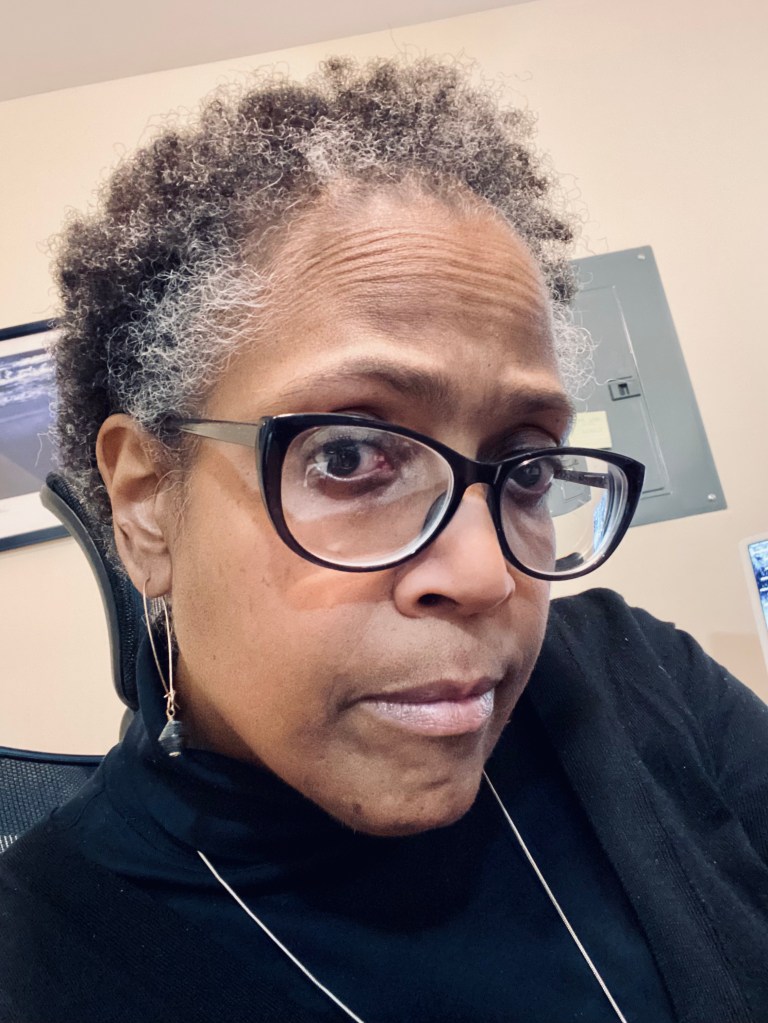
Dana I. Hunter (she/her) holds the title of Top Poet in the NAMI NJ: Dara Axelrod Expressive Arts Poetry Contest and has been featured in Heather Stivison’s Ekphrasis! Poets Respond to Art in the Gallery. She was featured at Pleiades Gallery in NYC and has been published in table/FEAST Literary Magazine, The National & International Goddess Anthology 2024, The Journal of Undiscovered Poets, and Open Minds Quarterly. She has a B.A. in Mass Communications and resides in New Jersey.

The sky is cracked

The stars are not hiding

And the Earth suffers it all.


The moon shrivels to a sickle

I’ve been nibbling it every night

Now the constellations are my clock.


All the trees dry their clothes

Only the fig tree shares its shade

My garden has grown into a desert.


Heaven has sailed far from me

My Earth is sinking like a boat

Wind lifts dust to the mountaintop.


Everything that belongs to me scatters

Soya beans, sorghum, bananas blow away

My world has been swept away by wind.


Heart’s Desert

You sink in sands of sorrow

Drenching all chambers with drought.


The well is far from my workplace

I’m drowning with a dry throat.


I dream of downpours pounding the dam

But rise to the reality of roughness. 


Thirst has burnt the building

The blaze blocks all exits.


Your desert slithers like fire

You burn in a sea of sand.


Trycent Milimo is a Zambian based rising author of poetry, fiction and children’s books. His writing is featured in two Sotrane Publishers anthologies — Centennial Reflection: Celebrating the Life and Legacy of Kenneth Kaunda, and the TriState anthology, Reflection on Political, Economic and Cultural Independence in Post-Colonial Rhodesia and Nyasaland. He is the 2024 regional winner of the inaugural Bridgette James online poetry competition. The poem was then featured in the PENNED IN RAGE online journal. He is the 2024 third runner up for Zambian Best Poet Valentine poetry competition and was shortlisted for Zambian Arts Publishing House Valentine poetry competition.

For Neida


What is black, white, and red all over if not checkered

flannel and blood: the Chola enclosure.

Forgive me, Father, for I have survived despite cops’

best efforts to send me into that good night.

Two times now, I’ve gone running with pigs at my back, hoping,

wishing, my little siblings see me get back.

I was in the fields fighting those red clowns, but in

my heart of hearts, I’m not truly down.

I ripped off their paisley bandanas, all

for the girl who called me ‘mana.

Por mi culpa por mi culpa por mi gran culpa, the

navy beads on my neck, son mi disculpa,

I pray for a rider, the ones with polished metal, to

take my siblings far away to something betta’,

I rebel, I rebel to stay in the house tonight,

there’s a war on the streets, and I have been asked to fight.

My mother won’t look at me, and my father’s gone cold,

and the only gift I’ve gotten was not to grow old,

I turned fourteen, grabbed a switchblade, dark lip liner,

and concealer to hide my new shiner.

Cordero de dios, que quitas el pecado del mundo,

nos dejastes en esa casa y eso no fue justo

The only love I know is from the end of a belt,

and my brother and my sister don’t know the hand they been dealt.

So hear out my bargain as it stays between you and me,

the three dots on my cheek mean the holy trinity

Keep me from losing breath while I run on the gravel,

and send us an angel with nimbus and dazzle,

for you my lord I’ll lay down the navy

if you keep my parents away from us babies.


Noel Munguia-Moreno is a first-year poetry MFA candidate at Rutgers-Newark where he teaches Intro to Creative Writing. He spends too much of his time thinking about which coffee to drink or laughing at horror movies. He writes of heritage, the physical land and environment, and our individual myths. Find him on Instagram at noel_fromhell.

I teach​ poetry to my students at university.


            I tell them all about

                        Eliot’s objective correlative

                        Keats’s negative capability

                        Coleridge’s organic unity


            I make sure they understand

                        rhyme, rhythm, prosody

                        alliteration, allusion, apostrophe

                        metonymy, metaphor, synecdoche

                        imagery, symbolism, hyperbole

                        enjambment, anaphora, blah blah blah


            I teach them 

                        all that I’ve been taught

                        by my poetry professors

            and they seem happy!

I teach​ poetry to my students
but      

what I don’t teach them is that


none of this stuff makes great poets
or real poetry!


that to become a poet

you need to have had your home
            stolen from you

            your dreams confiscated,

            your hopes held hostage


you need to have heard

            the cacophony of the Merkava

            the bellowing of the bulldozer

to have appreciated the irony
            when your ancestral olive trees
            became charcoal
you need to have heard

            the onomatopoeia

                        in the roar of the rocket
                        in the bomb’s boom
                        to have spotted the alliteration in

                        “we will waste you in the womb!”


To write poetry
you need to have seen
            your brother blown to pieces

you need to have spotted
            your sister’s curly hair
            under a mountain of rubble
            to have removed her teddy bear
            from her loosening embrace

            to have wiped blood clots
            off her face


you need to have seen
            tearless mothers
            identifying their sons

            one after another
            in mass graves

            fathers

            rocking their pale princesses to sleep

                        fast, sound, deep!

you need to have known

            what it feels like

            to write your name
            on your small limbs

            so they may identify you

            when you become unidentifiable
you need to have learned

            how to swallow
            the sight of your best friend’s
            charred body
            to get used to the word “gone”

                           one
                                       by
                                                one.


To be a poet
you need to have seen this
            known this
                        felt this
with every cell in your body
and that is ​why
                         Palestine

has so many great poets.


Forgive me, my students!

I have lied
                and lied
                             and I am ashamed of myself.


Hossein Nazari is an Assistant Professor of English literature, a translator, and poet. He writes poetry in English and Persian and has translated poems between the two languages. His academic articles on English literature, including on such poets as W. B. Yeats, Czesław Miłosz, Robert Frost, John Milton, T. S. Eliot, and Sylvia Plath have appeared in many prestigious international journals. Hossein’s poetry explores the themes of displacement, exile, loss, home(lessness), memory, identity, and nostalgia.

University of Cape Town, 1966


Not six feet from me,

Bobby Kennedy,

about two countries 

settled by the Dutch, British,


one went astray—

South Africa, I heard.


When I settled in America,

anti-apartheid meetings thrilled  me—

injustice anywhere is injustice

everywhere scrawled on walls.


Now I know The Talk,

of men who produce a video—

a black man running from their guns—

as “evidence” that shooting him


was justified.

Kennedy’s strayed country

(I looked it up)

was not South Africa.


Uprising

We felt South Africa from our feet, 

toes browned by common dust,

for all that we knew 

we knew by raw sole.


Worn paths among bush,

our quiet dread of snakes,

the hard reddish soil, 

rose through our loins. 


Avocado trees crept low,

branches for cradles. There,

when off our feet, we hung,

chatting till the sun blew out.


Durban 1965

Alan Paton, a writer, led South Africa’s Liberal Party.


Brylcreemed, he scowls,

invoking The Almighty. 


One Man One Vote.

The government threatens


to take him down 

to solitary the instant


he slips from fame abroad. 

Two men in hats and well-


pressed suits, backs to speaker, 

shunt from listener


to listener, as if collecting

in a church—big one’s notepad


open for interrogations, small one

kneeling with his massive apparatus,


taking frontal flashbulb photos. I think 

I’m followed home.


Eric Braude grew up in South Africa. He won the 27th annual Eagle-Tribune/Robert Frost Foundation Spring Poetry Contest and wrote the front matter poem for the anthology Songs from the Castle’s Remains. His poetry has appeared in South Florida Poetry Journal, Constellations, Apple Valley Review, J Journal. I-70 Review, Panoplyzine, Book of Matches, Frost Meadow Review and elsewhere. His work has been nominated for a Pushcart Prize. Eric is a computer science professor at Boston University.

When cousin Primo came home

From the Viet Nam War,

I was in my junior year

At Roosevelt High School.

The same high school he attended

Two years earlier, kicked out

A week before graduation

For smoking a cigarette.

He enlisted that summer,

Otherwise going to jail 

Was a real probability. 

He was sent to Boot Camp 

And Germany that first year.

The Army quickly determined

He was jungle-scout material,

Lead man in a three-man squad

Sent to the Viet Nam war.

He was shot five times,

The other two were killed.

Four bullets in the torso,

Shot once in the head,    

He was given up for dead.

A surgeon at a MASH hospital

Found him on a stretcher,

Put a fiberglass plate 

In his head under his scalp

To cover the path of the bullet.

The day that I saw him

He was in my mother’s kitchen

Wearing a hat to cover the wound.

He lifted the hat

Revealing a wide pink scar 

The entire length of his skull

Growing his brown hair to conceal.

He never wore a hat before.

I reeled from the sight,

Wanted to cry for him,

That would have been un-manly.

He chortled a sardonic laugh.

One-hundred percent disabled,

He would never work again

Or lift anything heavy. 

I also envisioned my fate

There in my mother’s kitchen,

A dilemma similar to Primo’s.

A dumb kid from the neighborhood

Unready for the likelihood  

Of being drafted at age 18

And unable to vote until 21.     


Stephen Barile is an award-winning poet from Fresno, California and a Pushcart Prize nominee. He attended Fresno City College, Fresno Pacific University, and California State University, Fresno. His poems have been anthologized, and published in numerous journals, both print and on-line. He taught writing at Madera College, and CSU Fresno

after “Born Again and Again” by DaMaris B. Hill, Breath Better Spent

“Your woman tongue can hoist bodies into heaven.”


That’s why I keep my

lips lightly rouged,

pressed, rarely wet.

My mouth opens

only upon conviction.

Heaven got no rooms for irreverent

‘hoes, liars, cheats, beasts.

Meanwhile, hell writing another bill of sale,

buying territory for expansion,

gentrifying dreams, redlining

degrees of treachery.

In a world of flames,

rent ain’t affordable.


My mouth opens

only upon conviction

in case heaven runs short-

free rooms Gabriel

prematurely assigned.


Tamara J. Madison, poet, writer, and editor, is the author of Threed, This Road Not Damascus (Trio House Press – print and EAT Poems – audio). Her writing is inspired by her ancestry and relations. Her work has been reviewed and published in various journals and literary magazines including The Amistad, Appalachian Review, Poetry International, Cider Press Review, and World Literature Today.  Tamara has also shared her poetry on the TEDx platform. She is a MFA graduate of New England College and an Anaphora Arts and Ucross fellow. She currently teaches English and Creative Writing and is completing a new full-length mixed-genre collection. Find her @tamarajmadison on Instagram, Facebook, and X/Twitter.

I read that you walked

across the continent

searching for your

ancestral home

3 small moving dots

seen from the wide

sky’s view

the clouds pulling you

East whenever you lost

your way, the ocean mist

hiding you from your

enemies and turning

you into motion poems

ancient songs were

carried by magical

lizards and snakes and

spread across the earth

to show you the way

and you gather the

stories of your people

and hold them inside

your bones


There you are in

the midst of the past

dancing and dancing in

the flow of time

tying an invisible knot

to the constellations

strengthening your lifeline

to your people’s wisdom

as the ghosts of your people

appear around you like

notes to be played

and songs to 

be sung


Leslie Dianne is a poet, novelist, screenwriter, playwright, and performer whose work has been acclaimed internationally at the Harrogate Fringe Festival in Great Britian, the International Arts Festival in Tuscany, Italy and at La Mama, ETC in New York. Her stage plays have been produced in New York at the American Theater of Actors, Raw Space, Puerto Rican Traveling Theater, and Lamb’s Theater. She holds a BA in French Literature from CUNY and her poems appear in The Wild Word, Sparks of Calliope, Quaranzine, Flashes, and elsewhere. She is a Pushcart Prize and Best of the Net nominee.

if i could color you dark,

i would.

you’d be just like me, a paranoia queen—

your heart always racing,

your ears always keen

for the bigoted men whispering.


if i could color you dark,

i would.

you’d learn how they see you young,

how to push when others hate,

how to live when a brother’s been hung—

you’d learn to carry that weight.


if i could color you dark,

i would.

you’d feel that bullet in your chest

as they wear that silent pin.

they trade your brown skin best

for the unarmed cost of melanin.


if i could color you dark,

i would.

you’d see your dark as the villian—

how they turn when they can’t profit.

white privilege starts to fill in

while your people take the grand hit.


if i could color you dark,

i would.

so you could know the pain is true—

so you could know the hurt it spits

as your color is returned to you

and my skin can’t be purged of it.


I See

I see dark red spilling out

On the concrete grounds.

It’s not mine this time, I say,

It’s not mine.


I see dark red filling the streets,

People are stepping over it.

They don’t want to touch it, they say,

They don’t want to touch it.


I see dark red drying in the crevices

Of the blue man’s shoes.

That boy was no good, he says.

That boy was an animal, he says.

That boy was reaching, he says.

That boy was a black man.


I see dark red spilling out

On the concrete grounds

And I wonder how long I got

‘Till I see my own dark red,

Right there, on the ground,

Drying in the blue man’s crevices.


marginalized

to be black & woman

is to learn how

quick they are

to love you &

how easy it is

for them to

dismiss you.


Ashley Collins is an Oregonian writer who received her MFA at Northern Arizona University. When she isn’t writing or reading, she is thrifting, collecting obsolete items, and watching bad movies.

In a white land                                       

where the antithesis to homogeneity

is a face of colour                                  

sprung from the root of diversity,

it’s easy to feel colonial privilege

weighing down heavy on your sprouting dreams

through closed doors and lost opportunities,

till your voice is voiceless

and you are relegated to nothing more

than a statistic that paints

your otherness grey.


In a white land

a man of colour

sticks out like a sore thumb

at a job interview where the employer

suffers from snow blindness,

or at a routine traffic stop

where the police questions your identity

with their fingers poised on the trigger.


In a white land

a man of colour

struggles to be valued,

to be seen,


to be.


Jeevan Bhagwat lives in Scarborough, Ontario. His work has been widely published in literary journals and websites such as Queen’s Quarterly, The Windsor Review, The Feathertale Review, The Prairie Journal, and is forthcoming in Canadian Literature. In 2003 and 2005, he won The Monica Ladell Prize for Poetry from the Scarborough Arts Council, and in 2015 he was the recipient of the Scarborough Urban Hero Award for Arts & Culture. His poetry books include Across The Universe Poetry Anthology (The Ontario Poetry Society, Beret Days Press, 2024), Luminescence (IN Publications, 2020) and The Weight of Dreams (IN Publications, 2012). You can find him on Twitter/X at @j_bhagwat.

Staring at the floorboards,

warm cherry slat knots make

half a bison face.


She stares me down.

Sees I am also in knots.


The stain darkening her ears

also runs from me, trickling through

wood grain hair.


Surrounded by forest, and dripping

sugar bark, everything reminds me

of who I don’t know I am.


Everything almost the same colour

as the hide of her memory

As an already ripe, turning summer.


Sarah Sands Phillips (b. Tsí Tkaròn:to, Canada) is a Red River Métis/British-Irish interdisciplinary artist and poet. She holds an MFA from the Ruskin School of Art at the University of Oxford (2019). Sands Phillips has exhibited in Canada and internationally. Her art and writing have appeared or are forthcoming in tba: Journal of Art, Media, and Visual Culture; Tokyo Poetry Journal; Yellow Medicine Review; NUT: Volume II; and Hart House Review, among others. She is currently based in Tokyo, Japan. She can be found online at www.sarahsandsphillips.com and on Instagram @sarahsandsphillips.

“Is that a birthmark?”


You’ve kissed every shade of melanin on my body.

And never wondered why a hue was born.

Until now.


Curiosity is flattering

After all, desire is the dream of knowing


The dream of knowing love

The dream of knowing a lover


As far as you know now, every spot on my body was completed at conception

A divine design unmarred by clumsy falls and cruel hands.


So, I hesitate.


Not wanting to shatter perfection.


Perception.


My skin collects memories of pain in pigment

I am at my core, a nostalgic being


These markings are curated on my surface

Like masterpieces of a gallery

Viewed but never known


But as a creator of art

The maker of my marks

I owe my audience truth


“No, It’s a scar”


 Honesty is blissful in our world

Laying in your arms


The birth of the scar delivered from my memory

Transferred from my skin to your mind

By your fingertips


Caressing the outline of my creation.


J.S. CLARK (she/her) is an essayist and poet known for powerful explorations of vulnerability, love, growth, trust, and resistance. As a queer Black Brazilian-American writer, her intersectional identities deeply influence her work which seamlessly blends personal and collective experiences. Clark’s essays and poetry offer raw honesty and profound introspection, capturing the complexities of human relationships, framing sensitivity as a strength, telling stories of truth, and highlighting the transformative power of love. Her unique style and perspective make her a refreshing new face in contemporary literature, inspiring and connecting with diverse audiences through her compelling literary voice.

Decolonial Passage is honored to announce the nominations for next year’s Best Small Fictions Anthology.  This list includes writing published from January to December 2024.  Congratulations to the nominees!

Flash Fiction

“A Striking Space” by Katie Coleman


“Fufu, Sardines, and Tomato Sauce” by Sabrina Moella


“Memory/I send myself” by Wangũi wa Kamonji


Prose Poetry


“I Come to You by Chance” by Richard De-Graft Tawiah

how did Grandpa Brown get his land?

one hundred fertile acres incited

centuries of silly questions

like “were mules included?”

truth faded into mystery,

answers, hearsay

from dead voices.

Great Grand Lee of native blood whispered,

“do what white folks say,

and they won’t kill you.”

his life, our land depended on smiles and waves.


we were not warriors.

land rich. impoverished.

what remains?

battered boards,

remnants of our homemade 5-room shanty.

grouted well

that nourished 16 children, livestock, cotton.

pine trees

rooted in proud carolina soil.

dusty roads

with boot prints bound for northern highways.


after Grandpa died, i never returned to the farm.

in my mailbox, form letters from profiteers

begging for land or timber.

is there guilt in selling one’s homeland?

truth discovered it is not my land. it is God’s land.

no guilt or commandment in a smile. only life.


Eleanor Jones is an African American with Catawba and Monacan Native ancestry. A communications executive and equestrian, her Southern United States poetry and prose have been recognized internationally through contests and publications sponsored by Sun Magazine, Current Words Publishing, Maryland Writers’ Association, Washington Writers’ Publishing House, and Wingless Dreamer Publishing. Eleanor’s nonfiction has appeared in Essence, People and The Washington Post. Check out her new Instagram @eleanorjjjoneswriter.