“Take Haiti, for example,” the professor said. I tensed up a little. I was sitting in an American university classroom when Haiti came up in conversation, and I was curious to hear what would be said about us. “You’ve probably heard of the cholera outbreak there. You can see how the earthquake that happened earlier that year led to it.” My body was now alert, as though it were rejecting something harmful. “The earthquake caused massive destruction, including damage to the sewage system. Water became contaminated, people drank unclean water, and they got sick.”
He stood behind the lectern, advancing through his slides. Our eyes were fixed on him as if they could absorb everything he knew. We were graduate students studying public health. We believed in prevention, in planning before disaster strikes. That was why we spent our afternoons in auditoriums and classrooms discussing disease, health systems, and environmental risk.
My right hand shot up in the air.
#
I first heard about the cholera outbreak in a foreign language, far from home, in Mexico, in the Fall of 2010. I was leaving class when my public health professor stopped me at the door. “Attilus, ¿qué es lo que está pasando en Haití ahora?” I did not understand at first. Then he said the word cholera, and I got more confused. I did not know what to answer until later I saw the headlines on social media.
#
Now, spring 2019, I was in New Jersey, and another professor in another foreign language was reminding me that I could not escape the headlines from my homeland. In his mind, he was explaining how natural disasters can be linked to infectious disease. But in my mind, he was wrong.
“Go ahead,” the professor, in New Jersey, said.
My mouth grew dry. My heartbeat accelerated. I did not speak English as fluently as many of my classmates, and I knew my accent would grow heavier while nervous. Still, I had to speak. Leaving the statement unchallenged would not only allow the professor to repeat it. It would allow my classmates to carry it forward as truth.
As I lowered my hand, I thought of my family in Port-au-Prince — the fear in their voices when I called to confirm what I had heard, the way they spoke of the lave men avan w manje campaign demanding residents wash their hands before every meal. My body was in a classroom in New Jersey, but my mind was not anymore. It traveled back home. The truth was calling my name.
#
In the summer of 2018, I was in Haiti, under the tropical sun, returning after eight years. I came back as part of a cohort for a social medicine course. Our goal was to move beyond the biological definition of disease and understand how social, economic, political, and environmental systems make people sick and prevent them from receiving care.
We traveled through rural Haiti — walking along dirt roads, crossing paths with women carrying agricultural goods on their heads, visiting patients in their homes, walking through communities that rarely appeared in official reports.
People told us stories about the United Nations Stabilization Mission in Haiti, MINUSTAH, which had been in the country since 2004.
I was not surprised by much of what I heard. The mission had long been marked by allegations of human rights abuses. Residents described military operations in poor neighborhoods that resulted in civilian deaths with little accountability and no justice for their families.
What surprised me was something else.
The same mission that had arrived claiming to bring peace was linked to a cholera outbreak that would kill thousands of Haitians. When the local people became sick, the blame was turned back on them.
We met the late Mario Joseph, a lawyer who had spent years collecting testimonies and seeking reparations for families affected by cholera. He listened to survivors, documented their stories, and challenged one of the world’s most powerful institutions.
His statement has stayed with me ever since:
“This was biological warfare against the Haitian people. Can you imagine something like this happening in New York City, where the United Nations is headquartered, and then blaming the American people? Never. Can you imagine them not providing reparations to the victims’ families? Never. Does that mean American lives matter more than Haitian lives?”
His words unsettled me — not because I agreed with every aspect of the comparison, but because they forced me to face a difficult question: whose lives are considered valuable enough to protect? Which deaths demand accountability, and which are treated as unfortunate statistics?
That question led me to what remained of the MINUSTAH base, approximately twenty feet from the Artibonite River.
My father is from Gros Morne, in the department of Artibonite, named after the river. The Artibonite — the longest river on the island, and the second longest in the Caribbean — nourished my ancestors long before I was born. I had never crossed it, but I understood what rivers mean in Haiti. I had crossed others in Jérémie, where I was born.
I could imagine the children playing by the side of the river. Jumping. Laughing. I could imagine their mothers washing laundry on its banks, talking to each other about their daily lives. Their fathers moving goods to the nearest market on small boats or pipirits — bamboo rafts. Their grandparents beside the family horses, drinking from the river.
To us, a river is not simply a geographical feature. It is part of us, and we are part of it. It feeds us. It connects us. It shapes our understanding of the world and our place within it.
Dlo se lavi — Water is life.
That is why describing the river as merely contaminated feels insufficient. To many Haitians, the river did not become contaminated.
The river became sick.
Waste from UN personnel, carrying cholera bacteria, entered the Artibonite watershed. Rivers do not recognize borders — they carry microbes from one community to another, and eventually into people’s bodies. The Artibonite, which had sustained life for generations, became a vehicle for death.
When the river became sick, so did we.
During the colonial era, millions of Indigenous people in the Americas died from infectious diseases introduced by European colonizers. Disease became a weapon of conquest — intertwined with dispossession, domination, and forced labor. Centuries later, UN personnel introduced cholera into Haiti. An estimated ten thousand people died from it (in addition to the more than three hundred thousand who died in the earthquake).
One is left to wonder: did colonialism — as a force, as a structure — ever truly end? Or did it simply mutate, repackaging itself in new forms, arriving this time not with ships and crosses, but with blue helmets and big smiles?
The average Haitian peasant — without an epidemiology degree, without a medical credential — was the first to identify the source of the outbreak. They saw the latrines at the MINUSTAH base. Its proximity to the river. They made the connection. But MINUSTAH officials fired back, insisting Haitians themselves were to blame. Those who should have been answering difficult questions were instead pointing their fingers at us for a disease that had been absent from Haiti.
This is epistemic injustice: the systematic denial of credibility to people not because their evidence is weak, but because of who they are. The UN, once cornered, called for more foreigners (read: international experts) to investigate what the peasants already knew. Perhaps the officials believed they could talk their way out of it. Perhaps they counted on the world having more sympathy for institutions than for the poor. But in the end, the lab studies confirmed what the peasants had been saying from the first day.
There is a particular kind of arrogance — colonial arrogance — that allows outsiders from powerful nations and institutions to arrive on foreign land, exercise power over local lives, cause devastating harm, and then blame the victims for what follows. This is what environmental engineer and scholar Malcolm Ferdinand calls the colonial inhabitation of the Earth: a way of living in the world that treats certain landscapes, and certain peoples, as expendable.
#
The professor in New Jersey was still waiting.
My classmates’ eyes were on me.
“I am Haitian,” I said. “I survived the earthquake you are referring to. Haiti had not experienced cholera for more than a century. The strain was not from us, and we were unfamiliar with the disease, which contributed to the disastrous response. The cholera outbreak did not begin with Haitians. It began with UN personnel.”
The room was quiet.
“Thank you for clarifying,” the professor replied. Then he moved on to the next slide.
The professor’s face was too far away to read, and I didn’t turn around to look at my classmates.
I don’t know if anything I said that day changed their perception of Haiti. It did not bring back the dead. It did not deliver justice to the families who had lost someone.
Yet it mattered.
Because memory matters. Accountability matters.
And because the river remembers, even when the world prefers to forget.
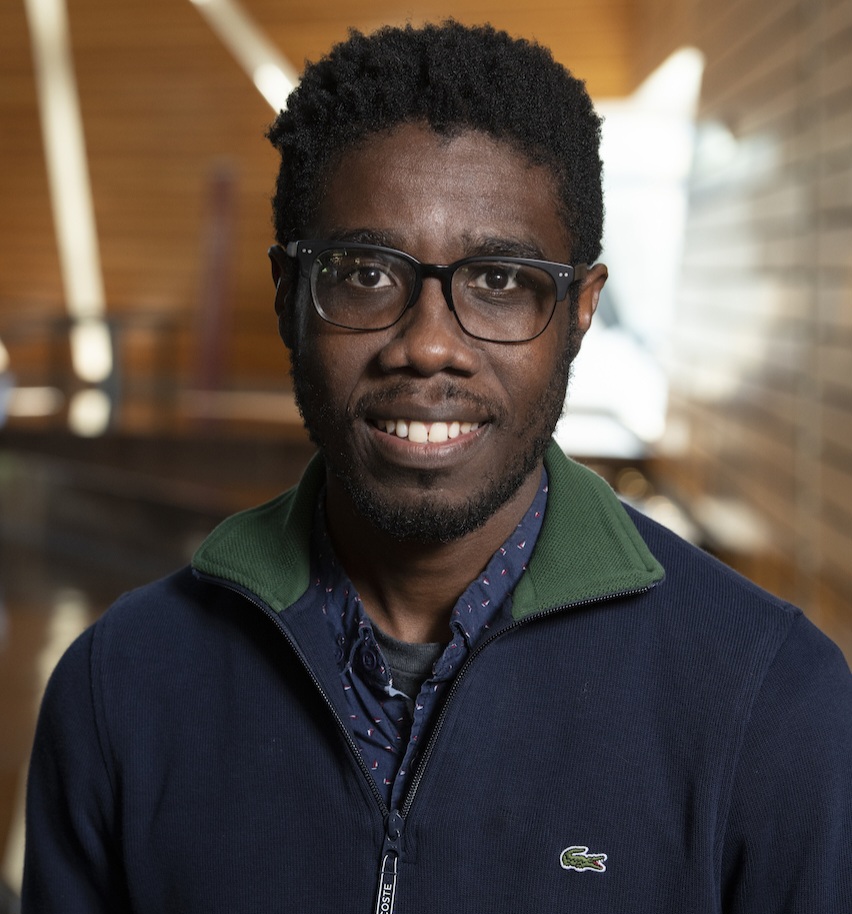
Jonas Attilus is Haiti-born psychiatrist working in rural Minnesota. He serves both rural and Native American communities. As a member of the Minnesota Refugee and Immigrant Writers Group, he writes in Haitian Creole, French, Spanish and English. His writing appears in Solstice Literary Magazine and Intima: A Journal of Narrative Medicine. His memoir, What the Ground Couldn’t Shake, will be published by Split Lip Press in Fall 2027. Read more of his work at JonasAttilus.com. Find him on Substack, Instagram, and Threads @jonasattilus.

