
In Fall 2022, I took the course Women and Minorities in Mass Media for my graduate curriculum at Jackson State University. During the second week of class, we discussed how cultural hegemony affects society today, what it shows us about minorities, and how they are represented. After some discussion, our instructor asked us to name a character we saw ourselves in and why, and to explain the relevance and importance of this character in our lives. More specifically, a character we saw on screen. The question got me thinking about any character I have ever seen in which I saw myself, or a version of myself. After honest reflection, I admitted not only to the class, but to myself, that the character I saw myself the most in was Pecola Breedlove, from Toni Morrison’s novel The Bluest Eye.
I first became acquainted with Toni Morrison after reading Well-Read Black Girl by Glory Edim. It was the summer before my senior year of high school. My English syllabi throughout grade school never mentioned the Nobel prize author. Not only was I introduced to Morrison, but I also learned of many other Black authors I had not heard of. Edim made the books sound like classics, and yet every book I considered a classic had a White author behind the pen. So, I went on a mission to read more Black authors and found myself holding a copy of Morrison’s The Bluest Eye. I have read this novel many times since, and I did a study of the novel in a critical analysis theory course during undergrad. I wrote two papers on The Bluest Eye in the 2020-2021 school year and still consider it to be one of my favorite novels. It wasn’t until hearing my professor ask the question about characters that we saw ourselves in that it finally clicked why I loved this book, why I kept writing papers about it, and why it was my response to my professor’s question: I saw myself in the character Pecola Breedlove because I was Pecola Breedlove.
Pecola Breedlove is a dark-skinned Black girl who grew up in Ohio in the 1940s surrounded by White people and their influence. She has only one wish in the world: to have blue eyes. Pecola lives in a world of Eurocentric beauty standards and is criticized every day for lacking those characteristics — dark skin instead of milky white, kinky hair instead of straight, brown eyes instead of blue. What a world it must have been for eleven-year-old Pecola to see how life treated those who had everything she did not? To hear comments on the playground about her skin color, to be picked on because of her hair, to never hear that she was beautiful because the world decided that description was only meant for people who looked nothing like her.
Pecola felt familiar to me because I was a dark-skinned child on white playgrounds. I grew up as one of three Black kids in each grade throughout elementary school, and I attended predominately white schools throughout middle and high school. Among my teachers, classmates, and in extracurricular activities, I was one of the “only ones,” and I began internalizing negative perceptions about my own appearance. I know how Pecola felt when she looked in the mirror and thought she was ugly because her nose was wide and her lips were big. I remember how much I wished, just like Pecola did, that the world treated me like every blonde-hair-and-blue-eyed girl who stood beside me. I never realized I was different from those White girls until my parents told me, and, as I got older, the world continued showing me the same. Seeing how White people were treated and knowing that it was because there was something fundamentally different separating me from them didn’t make me angry. It made me wistful. A world catered to them exactly as they were. How could I not wish to have everything they had?
I saw that beautiful meant straight hair instead of kinky and asked my mom for a perm because all the White girls had straight hair. I saw that beautiful was light skin instead of dark and learned about skin bleaching because all of the pretty girls had lighter skin. I started learning those differences and applied them to my life, and no one was there to tell me not to. Pecola thought that beautiful was blue eyes instead of brown and made it her mission to get those eyes because all the beautiful girls had blue eyes.
I know why Pecola wanted blue eyes … because I wanted them too.
My relation to and identification with Pecola Breedlove wasn’t solely based on a shared wish for blue eyes. Rather, I related and identified with her because I knew Pecola’s exact thought process when she determined having blue eyes was going to make her beautiful. Outside of my own home and church, I was never in areas where I was anything other than the minority. I don’t think anyone truly considers the mental toll this can have on a child. Growing up immersed in a culture different from your own encourages assimilation rather than differentiation, especially when you are lacking positive reinforcements for your own experiences. It is a powerful thing for the world to tell you that you are not enough. We are not stronger than the world by ourselves. How was Pecola supposed to fight off the world’s influence? How was I? Both young, both impressionable, both yearning for a place where we felt loved. Pecola did not grow up loving her blackness because the world wasn’t telling her to. Our society encourages and compliments whiteness and tears down anything that doesn’t fit into that paradigm. Pecola wasn’t told to love her hair, skin, or features; I know that feeling. I wanted to be beautiful, too. I wanted to feel pretty. I wanted what everyone else seemed to have, but they all had the one thing that I didn’t.
I have spent so much of my life wishing to be something other than what I am. I remember thinking I’d be pretty if I was lighter. Maybe if I was slender instead of having curves. A smaller nose instead of a wide one. When everyone around you is different, it is only natural to want to assimilate. When the world is telling you what it deems acceptable, it almost becomes a necessity. I sat in classrooms with White kids and teachers, and I sat in many rooms where I was the only Black kid. Being around them it never felt like a good thing to be Black. Around them, Black always felt like a burden. Until I got older, it didn’t occur to me that there might be an experience different than mine.
For others, blackness was natural. It wasn’t until I was in college that I finally had a Black teacher. I was in graduate school the first time I sat in an academic setting where there were only Black people at the table, and Black women at that. I know why Pecola wanted blue eyes. I know why she was ready to risk her life to fit in. I know why fitting into the white stereotype was at the forefront of her mind. I know why she would rather feel insane in whiteness than sane in blackness. Pecola was a victim of circumstance and had no one to advocate for her blackness. Ultimately, the one thing that saved me from Pecola’s fate was learning there was nothing wrong with my blackness; there was something wrong with my surroundings.
My early years were spent hearing how my education would not be worth as much if it came from a Black institution, and that to hold true to the label of being smart, I had to be educated in white spaces. And yet, I am writing to you now from the campus of my HBCU where I am pursuing my master’s degree. I’ve seen and experienced being Black this past year in a way I never have before, and I have fallen in love with a large part of myself I spent too long denying. The world made me feel like it shouldn’t exist, but I realize now that the society I was exposed to was never meant to encourage me to be Black. Instead, I was supposed to suppress anything that discouraged me from what a white school of thought deemed acceptable. This is why I know Pecola’s struggle, and why I connect with her.
Cultural hegemony influences ideologies about groups of people. We are subjected to a paradigm which both consciously and subconsciously affects our lives. Our racially biased media encourages some things and discourages others. Because the world convinced Pecola that her blackness was not enough, she succumbed to believing that whiteness was. I spent most of my life thinking that Black people had no spaces in which we were safe from the white gaze, and that we would have to spend our lives assimilating into a white society. Because of my surroundings, I knew nothing else. Yet here I am, living and realizing that is not true. I held onto the belief that when I found myself immersed in different circumstances, in different surroundings, and with different people, it would change me. I am happy to say that I was right.
There are many things I learned and am still unlearning. I had many perceptions and misconceptions about being Black, all of which shaped my views about Black people. I often think about how different my life would have been if I had had a Black teacher when I was younger or if I had seen a Black heroine in the stories I read. Where would I be now if I had been introduced to more images of blackness and told it was okay for me to be me? Pecola Breedlove was not exposed to positive images or affirmations regarding herself or other Black people. Unlike Pecola, I am now at a point in my life where I know all the things that make me Black also make me beautiful. And I know that my experience of not having as much Black culture does not negate my blackness. I am all of my experiences, and I remain Black through them all. One of the hardest lessons in my life was learning that is okay. I fought the societal belief that I had to be something other than who I was in order to be successful and accepted. And I won.
Coming from predominantly white spaces to now existing in spaces where being Black is a footnote in my life rather than a defining characteristic, I am grateful for my journey. People will spend their whole lives wishing to conform to the world instead of living their truth. I conformed, but now I am free. And this is the only space I desire to exist in now. I know why Pecola wanted blue eyes. But I no longer do.
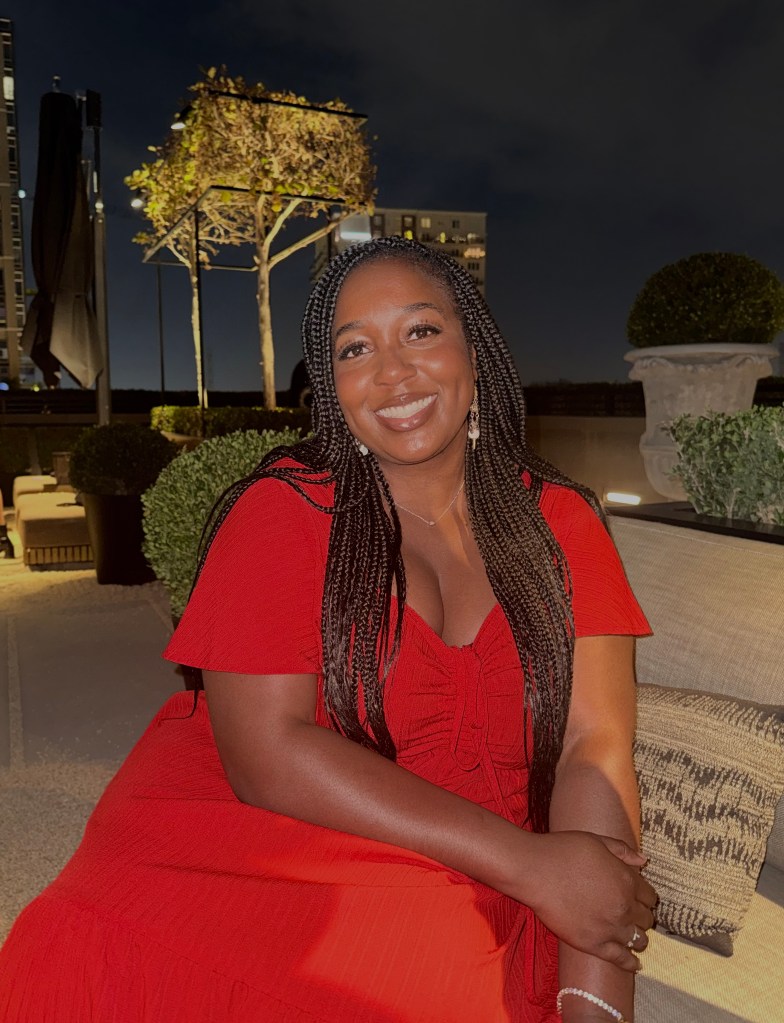
Lauren Washington is a North Louisiana native with a passion for reading, and rediscovering her passion for writing. You can keep up with her reading and writing journey on Instagram at @laurenreads.alot.
 the Decolonial Passage